An Indie Author’s Social Media Primer | First Thoughts

Everyone’s got an opinion on how best to use social media.  These two simple words have become the locus for more blogs, podcasts, and even heated offline debates than any other subject in the last five years––or more.  In part we can attribute this pervasive conversation to the fact that the advent of social media has radically altered the average Westerner’s daily routine as well as that person’s basic expectations of relationships, whether we’re talking about relationships with other individuals, or with the companies and other institutions with which you or I might have some connection.  These days, for example, it’s entirely reasonable for consumers to expect their favorite companies––whether Nike, or Denny’s––as well as their favorite celebrities––be they Rihanna or Neil Gaiman––to have active and responsive presences on social media networks like Facebook, Twitter, and Instagram.  And while Lady Gaga won’t be able to respond to each and every tweet lobbed her way over the course of a day, the fact that she responds to any tweets renders her a more accessible figure to the average Twitter user.

IMG_0976

But we’re not just here to gab about the latest and greatest in Facebook updates and how to use the Twitter app––even though, certainly, those two will rank among many other topics we’ll examine over the coming weeks.  We’re here, first and foremost, to talk about how to market your self-published book.  It’s already hard enough to break into the market when it comes to books, especially self-published books––talk about a daunting proposition!––without a guide or even professional assistance; we exist to make your life a little bit easier.  To that end, each and every social networking tool I address will be tied back to this notion of marketing, and marketing specifically as a newly-published or on-the-verge-of-published indie, hybrid, or self-published author.

The first social network that everyone thinks of is still, by and large, Facebook.  And don’t worry, we’ll absolutely talk about how to use Facebook effectively.  It is important to note, however, that the bigger a platform is in terms of user base, the more “crowded” the market will seem to a reader seeking new material.  It is vital that an indie author knows the ins and outs of Facebook updates and feeds and public profiles and so on and so forth, because the vast majority of any author’s potential readers will have Facebook accounts; however, it’s just as vital for a self-published author to establish a certain degree of comfort with at least a couple of the lesser-used platforms, because they will be both more “discoverable” and more visible without the throng of other authors competing for attention.  To that end, I will take a stroll through each of the quote-on-quote “major” social networking sites, including:

  • Twitter
  • Tumblr
  • Instagram
  • Snapchat
  • YouTube
  • Pinterest

… but I will also examine lesser-known or more specialized platforms, such as:

  • Goodreads
  • Etsy
  • LinkedIn
  • Flickr

… because, ultimately, it’s the tools we’ve neglected that end up most surprising us with their unexplored possibilities.

There’s a lot more to using social media for book promotion, however, than simply knowing the names of the most popular sites or even how to set up an account with and update each one.  There are a whole host of other behaviors to discover, observe, and adopt––”best practices,” so to speak––than just generating content.  Authors have to know, for example, the inside tricks.  They have to know the whys as well as the wherefores: why does engaging your readers on multiple platforms translate to better book sales?  Why is it important to track your social media efficacy using analytics?  And most importantly of all, why is it necessary to create a strategy, a plan for your social media campaign?  I’ll walk with you through the theory––and together, we’ll peel back some of the layers that lie between us and a social media repertoire that actually makes a difference.  We’ll debunk some myths, learn some new things, and slowly work our way through.

Together.

(Since that’s kind of the point, in the end, of social networking.)

I hope you’ll join me in building this Social Media Primer!  If you have any questions, comments, suggestions, or contributions, please use the comment field below or drop us a line at selfpublishingadvice@gmail.com.  And remember to check back each Wednesday for your weekly dose of social media know-how. ♠

KellyABOUT KELLY SCHUKNECHT: Kelly Schuknecht is the Executive Vice President of Outskirts Press. In addition to her contributions to the Outskirts Press blog at blog.outskirtspress.com, Kelly and a group of talented marketing experts offer book marketing services, support, and products to not only published Outskirts Press authors, but to all authors and professionals who are interested in marketing their books and/or careers. Learn more about Kelly on her blog, kellyschuknecht.com.

Conversations With A Self-Publishing Writer 6/19/15

WRITING CONFERENCES III

Today I continue my list of thoughts about preparing to attend writers’ conferences.  Every writer will develop their personal method of preparation; however, the following are “tried and true” ways that I hope will blend with your own successful practices.

* BE PREPARED TO NETWORK.  There are many terms for this activity these days, but my favorite is “tribe”—developing a tribe of family, friends, co-workers, church acquaintances, neighbors, walking buddies, etc.—who know you well enough to be interested in what you have written.  This will include ALL the attendees of the writers’ conference you’re attending.  Simply showing up at the conference indicates the common interests shared.  Don’t be shy to talk with these folks about your book and ask for their card.  With the information written there, you have instant tribe initiation.

* BE KIND, COURTEOUS and HELPFUL. If you’ve ever been approached by an over-eager car salesperson, you’ll immediately understand how NOT to approach folks in the conference venue.  Even though the hours set aside for “free time” (which really means networking—not sleeping) is short, prepare yourself to think that you have hours to spend with each person you meet.  This gives them the opportunity to actually talk to you and, in turn, allows a real connection to be made.  There is an old saying that is very true: Value others above yourself and they will see the value in you—and your book.

* BE READY TO SPEAK ELOQUENTLY ABOUT YOUR PROJECT.  Writers’ Conferences offer face-to-face “meets” with Editors, Agents and Mentor-Authors who have agreed to talk with writers.  There will be very little time allotted for you to present your concept, your outline, your book to them.  I am working with a friend to develop Postcard Presentations for these potentially valuable moments—a nicely outlined “story” about YOUR STORY that can be discussed while talking with these folks AND be given to them.  Many things can be stated succinctly in those few minutes, yet with a postcard in hand to give them, they will remember you.  The most important item to place on the card will be your 1-sentence statement about your book.

My bottom line thought for you today is to prepare for every conference journey with realistic expectations.  We all carry those BIG DREAMS in our heart wherever we go.  We want people to recognize that this book is the best thing since vanilla-caramel-mocha-lattes were invented.  However, the “instant-ah-ha moment” with an agent or editor and contract offer very rarely happens.  Actually, I don’t know of anyone who has experienced this.  So, be prepared to learn all that you can absorb at the conference as well as bring home all the information you can to gain more knowledge about this craft of writing.  You’ll be miles ahead of those who chose not to attend that conference!

Royalene ABOUT ROYALENE DOYLE: Royalene Doyle is a Ghostwriter with Outskirts Press, bringing more than 35 years of writing experience to authors who need “just a little assistance” with completing their writing projects. She has worked with both experienced and fledgling writers helping complete projects in multiple genres. When a writer brings the passion they have for their work and combines it with Royalene’s passion to see the finished project in print, books are published and the writer’s legacy is passed forward.

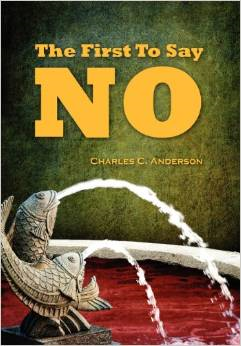
Weekly Self-Published Book Review: The First to Say No

Book reviews are a great way for self-publishing authors to gain exposure. After all, how can someone buy your book if he or she doesn’t know it exists? Paired with other elements of your book promotion strategy, requesting reviews is a great way to get people talking about what you’ve written.

When we read good reviews, we definitely like to share them. It gives the author a few (permanent) moments of fame and allows us to let the community know about a great book. Here’s this week’s book review by Midwest Book Review:

the first to say no

The First to Say No

Charles C. Anderson

Publisher: Outskirts Press

ISBN:9781432791032

I was quickly drawn into this read by author Charles C. Anderson. The story, if you will, is set in Parkview Hospital emergency department in Virginia. It is here that we meet Dr.Kate Taylor as her story and so many others begin to unravel. It seems many of the doctors and nurses are being rapped and other acts of violence are occurring that are not being dealt with. People come in and use the hospital to ‘get fixed up’ so they can go back out and do their drugs, stealing and killing, all at other’s expense.

Kate lost her father at a young age and the one tender memory she had was with him at the local park. Now that memory has been tarnished by a gang called the Plagues who are overtaking the city. The danger of going to the park, or anywhere alone, is wide spread. This gang kills, steals and rapes at will, not being stopped, even by the local police, who are now on their payroll. In this story Kate decides enough is enough and gathers those she can trust to fight back. She does not have the backing of the hospital, or the police, but she has behind her what is right.

I was amazed at this read and upset. I suppose I do not want to think that there are so many who will turn their heads not to stop evil just for the mighty dollar. I was also upset to finally understand how much of our nations finances are being thrown away just to help heal druggies who will not accept help to stop their habit. There are so many needy elderly people that are not receiving help or just the poor that are turned away, this truly is not fair and should be stopped. This is a great book, although troubling. The truth that is brought forth should be read by every American. Thank you, Dr. Anderson.

Self-Publishing Week in Review: 6/16/15

As a self-publishing author, you may find it helpful to stay up-to-date on the trends and news related to the self-publishing industry. This will help you make informed decisions before, during and after the self-publishing process, which will lead to a greater self-publishing experience. To help you stay current on self-publishing topics, simply visit our blog every Tuesday to find out the hottest news.

Give Me a Self-published Author Over One From a Traditional Publisher Any Day

Self-published crime fiction author Christina Larmer shares her self-publishing story. She talks about all the support she received from fellow self-published writers and how seeing a self-published book on a top selling book list motivated her to take the leap. This is an inspiring read.

Indie Author Teams Up with Local Bookstores to Promote Serial E-Novel

When children’s author Michael Daley decided to self-publish his YA race car thriller as a six-installment serial, he turned to area bookstores for help. This is an interesting read for authors looking for marketing ideas.

How to make a lucrative living as a self-published author: Everything you need to know

Rachel Abbott gives her top tips on how to self-publish your novel. Retiring early to start writing, she was rejected by publishers, so she did it herself. She is now a best-selling author making a lucrative living on her own terms.

If you have other big news to share, please comment below.

ABOUT KELLY SCHUKNECHT: Kelly Schuknecht is the Executive Vice President of Outskirts Press. In addition to her contributions to the Outskirts Press blog at blog.outskirtspress.com, Kelly and a group of talented marketing experts offer book marketing services, support, and products to not only published Outskirts Press authors, but to all authors and professionals who are interested in marketing their books and/or careers. Learn more about Kelly on her blog at http://kellyschuknecht.com.

5 Tips to Improve Your Writing this Summer

Summer is the perfect time to work on your writing projects and start the self-publishing process. Each week this month, I will offer advice to help you achieve your writing goals this summer. Be sure to check out the last two posts: Kick Off Summer with Self-Publishing and Self-Publishing Authors, Take A Vacation.

This week I’ll share five writing tips to help you achieve your writing goals this season:

1. Read, read, and read some more.

Summer is the perfect time to catch up on your reading wish list and reread some of your favorites. As you sit by the pool or lounge on the beach, be sure to have a stack of books with you. Read a variety of materials over the summer — books in your genre, classic books, books you normally wouldn’t read, newspapers, magazines, even children’s books. Reading is one of the best ways to improve your craft and find inspiration.

2. Browse Pinterest.

Now, you might be thinking that Pinterest is just a way to avoid actually writing, but it can be a great resource for writers. You can use it to collect inspiration for your stories as well as promote yourself and your work. The key is to be strategic in how you spend your time when on the website.

3. Practice writing.

While it’s important to work on your writing project, it’s always fun and smart to take time to just work on the craft of writing. Read a book or blog about improving your craft. Do short writing prompts. Join a writing group. Try writing something in a different genre. All of this “playing” can improve and inspire your writing projects.

4. Try something new.

Novelty is important for writers because the best characters and stories are often inspired by simply living life. This summer take time to try new things. Go to a new restaurant. Visit a museum. Go to a sporting event. Take a class. It doesn’t matter what it is. It just has to be something you’ve never done before.

5. Create a writing space.

Where you work impacts your productivity and creativity. While everyone’s ideal work space is different, it is important to set up an area in your home, or find a place you can go to, that helps you get in the mood to write. Make it clutter free. Hang quotes or photos that are inspirational. Have all of the materials you need in one place. Play some inspiring music.

I’d love to know, what are your doing this summer to improve your writing?