Traditional Printing vs Print on Demand… What is the Difference?

One of the biggest decisions for self-published authors is whether to choose traditional printing or print on demand (POD). As a publishing consultant, I am constanly asked questions about the differences and benefits of traditional printing versus print on demand. Below I have answered three of the most common questions I’m asked about POD . Hopefully, the answers will give you a better understanding of the two types of services and help you determine if print on demand is right for you.

Why should I choose POD rather than traditional printing?

Most authors who select POD want their self-publisher to handle distribution and fulfillment as well as the actual printing of the books. This allows the author to focus on what they do best – writing, and hopefully marketing, their books – instead of managing inventory, packaging orders, and shipping books to the buyer.

Why is the per book cost higher for a POD title compared to a traditionally printed title?

The more you buy (of anything, from books to business cards) from a traditional printer the lower your unit cost. Whether you print 100 copies of an item or 1000 copies, your set up costs are the same, and they are amortized over the entire print run. Typically, buyers  order more than they actually need  to achieve a lower unit price.  In POD, the cost of your book is the same for book number 1 and book 2000 because each book is printed one at a time and the set up is included in every individual copy.

So why would I accept a higher unit price?

Authors that select POD are doing it for two specific reasons. The first is they want their self-publisher to print the book and deliver it to the purchaser without them having to be personally involved. The second is cash-flow. Inventory costs money. Buying 2000 books, for example, at $3.50 per book will require an investment of $7,000.00. In a nutshell, POD authors are trading a higher per book cost for the luxury of not having 1000’s of dollars worth of inventory sitting in their home office.

POD is a great option for authors who are concerned about time management and inventory cost. After all, authors should be writing and marketing not storing, packaging, and shipping books.

I’d love to hear your questions, advice, and experiences with traditional printing and print on demand.
ABOUT WENDY STETINA:
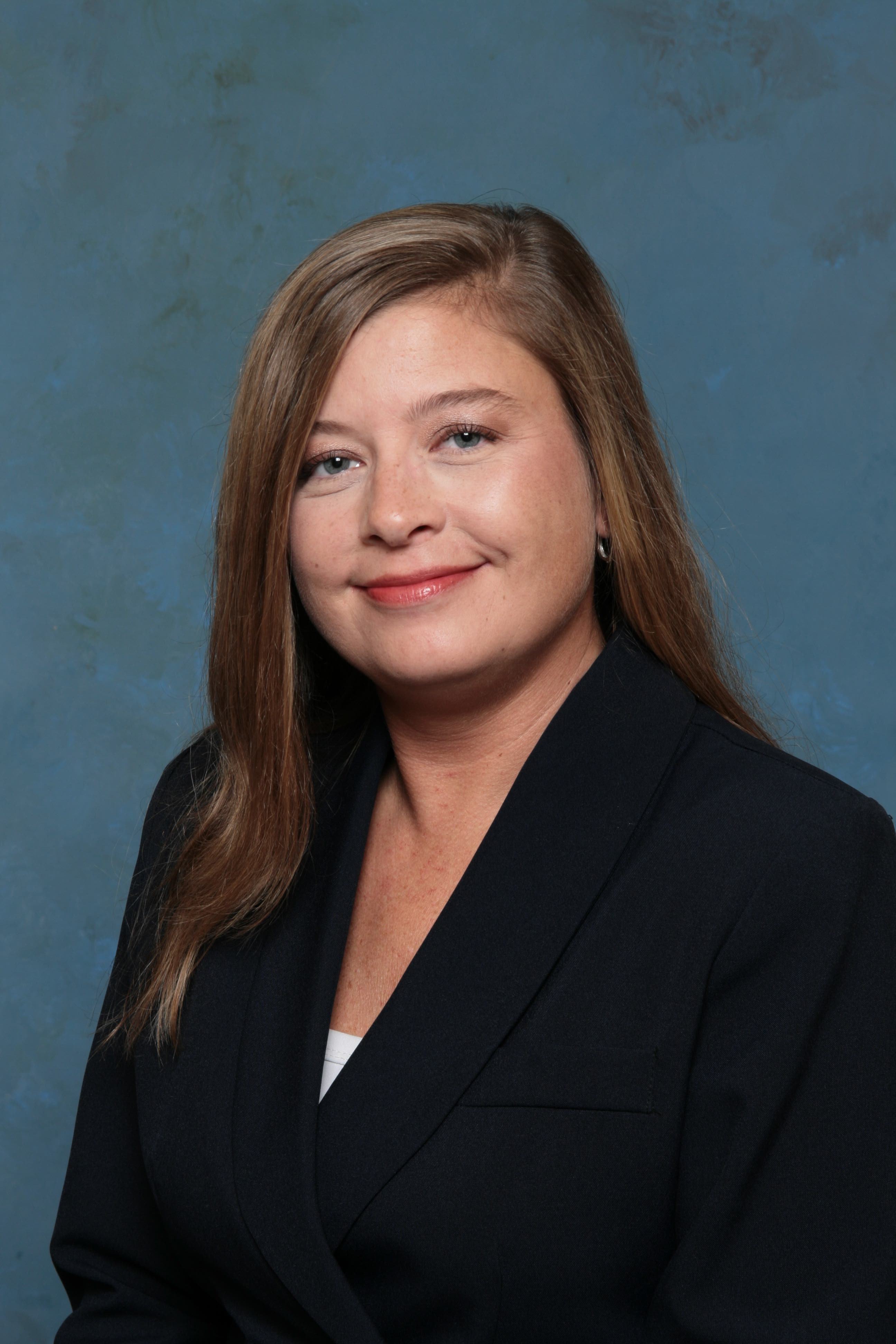
Wendy Stetina is a sales and marketing professional with over 30 years experience in the printing and publishing industry. Wendy works as the Director of Author Services for Outskirts Press. The Author Services Department is composed of knowledgeable customer service reps and publishing consultants; and together, they all focus on educating authors on the self-publishing process in order to help them publish the book of their dreams. Whether you are a professional looking to take your career to the next level with platform-driven non-fiction, or a novelist seeking fame, fortune, and/or personal fulfillment, Wendy Stetina can put you on the right path.


The Importance of Illustrations

They say, “A picture is worth a thousand words.” Don’t think that is true? Ask yourself, “Would A.A. Milne’s children’s classic, Winnie-the-Pooh, be just as charming without the illustrations from Ernest Shepard?” Maybe, but the beautiful illustrations have brought the world of the Hundred Acre Woods to life. Award-winning illustrations are often the difference between a good book and a GREAT one.

Finding the Right Illustrator

The illustrations in your book help communicate your book’s value to readers and buyers. As a children’s author, you must remember that children are you audience but adults are your buyers. You need to produce a book that is appealing to both children and adults. One of the ways to do this is by combining your story with great pictures.

When choosing an artist, make sure their style meshes your vision of the book. There are a wide range of illustration styles, so it is essential that you choose one that helps convey your message. Self-publishing companies such as Outskirts Press allow you to choose the artist who best fits your needs.

How Illustrators Are Paid

Payment arrangements typically include a flat fee or royalties and usually depend on where you find your illustrator. Self-publishing companies are a good place to look for an illustrator. Some companies such as Outskirts Press don’t require you to publish your book with their companies to use their illustrators but offer a discount on services if you do publish with their company. When considering a self-publishing company, be sure to read all of the fine print.

Another option is to hire a freelance illustrator without going through a middle man. This can be done by searching sites such as www.guru.com and www.elance.com. You can also talk to other writers to find out which illustrators they recommend.

Before hiring an illustrator, make sure you look at sample work. Ask yourself, is this how I want my illustrations to look? If not, keep searching. There is an illustrator out there whose style will complement your story.

Beyond Picture Books

Illustrations aren’t just for children’s books. Pictures can enhance any book. Whether you are in need of a book cover, an interior image, or a full series of illustrations, there is an illustrator you can bring your book to life.

Cheri Breeding ABOUT CHERI BREEDING:
Since 2005 Cheri Breeding has been working as the Director of Production for Outskirts Press. In that time, she has been an instrumental component of every aspect of the Production Department, performing the roles of an Author Representative, Book Designer, Customer Service Representative, Title Production Supervisor, Production Manager and, Director of Production. She brings all that experience and knowledge, along with an unparalleled customer-service focus, to help self-publishing authors reach high-quality book publication more efficiently, professionally, and affordably.

Color Printing vs. Black and White Printing… What is the Difference?

When you choose to self-publish a book, you must decide you want the interior of your book printed in color or black and white. This decision impacts the look of your book as well as the price. When considering your options, it is important to understand the process as well as the benefits of each choice.

Colored Printing

Colored printing is typically used for smaller manuscripts averaging 30 to 50 pages. These are usually books geared towards children. Because illustrations tell half of the story in a picture book, color is extremely important in children’s books. It captures the imagination and brings the story to life.

Black and White Printing

Black and white printing is typically used for longer manuscripts. This not mean that you will have a black and white cover. It simply means that the interior pages of your book will be printed in black and white. This option is more cost-effective for longer manuscripts because of production cost and market price.

How is this different from traditional publishing?

In traditional publishing, the black and white pages of a manuscript are printed on one press while the colored pages are printed on another. After all of the pages are printed, the manuscript is assembled. Print on demand (POD) publishing works a bit differently. Each page is printed individually on the same press. This means that just some spot of color will require your manuscript to be printed on the colored press. This immediately increases the cost of your book because the colored press is more expensive to maintain and operate. It requires a more skilled operator and heavier, more expensive paper.

What options do authors of long manuscripts have?

As an author of a long manuscript, you need to not only consider the production cost of your book but also the market price. Long manuscripts that are published in color have a higher market price because of the production cost. This in turn typically results in poor sales because readers are unwilling to buy a book that is overpriced compared to other books of similar lengths.

This does not mean that you have to publish a dull book. If you want to include images in your longer length manuscript, you can use a grayscale. Your manuscript will still be printed on the black and white printer, but your colored images will be converted to black and white. This is an option that is frequently and successfully used by POD authors.

If you are passionate about your book being published in color, it is an option. Just be prepared for higher costs, and plan for a higher market price. One of the perks of self-publishing is that you are in control of your book. You decide how it will look, so make the choice that is best for you and your readers.

ABOUT WENDY STETINA:
Wendy Stetina is a sales and marketing professional with over 30 years experience in the printing and publishing industry. Wendy works as the Director of Author Services for Outskirts Press. The Author Services Department is composed of knowledgeable customer service reps and publishing consultants; and together, they all focus on educating authors on the self-publishing process in order to help them publish the book of their dreams. Whether you are a professional looking to take your career to the next level with platform-driven non-fiction, or a novelist seeking fame, fortune, and/or personal fulfillment, Wendy Stetina can put you on the right path.

Am I Self-Publishing If I Use a Self-Publishing Company?

When you decide to publish your book, there are essentially two well-traveled paths you can take – seek out an agent/publisher or self publish. Of course, there are a few other options in between but most authors fit into one of either of those buckets. Traditionally published books are those that the author doesn’t have to pay to publish. Normally the author secures representation by an agent, is sometimes provided an advance, and allows the publisher to do all the “work”. Of course, these authors still have to market their books, but all of the production costs are absorbed by the publisher. When you self-publish, you pay all of your own costs and are in complete control of your book.

Some that are from the school of thought that if you use a self-publishing company to publish your book, you aren’t really “self-publishing”. That couldn’t be further from the truth. You are as much of a self-published author as any other author.

Let’s take it one step further. Dictionary.com defines the adjective “self-published” as “having published one’s own work independently: a self-published author”. The site also defines the adjective “independent” as “not subject to another’s authority or jurisdiction”. Most self-publishing companies, including Outskirts Press, allow authors to have complete control over their book. So, by definition, authors that are able to exercise full creative freedom over their own work are self-published authors.

Using a self-publishing company is much like hiring a freelancer to work on your book. Why pay someone else to publish your book? The answer is simple – because you are a professional in your field, but not necessarily as well-versed in the world of publishing. Do you plumb your own toilet? Repair your own car? Wire your own electricity? Probably not. Can you? Sure – but you would lose more money in the time it takes you to learn how to do those things than it would cost to hire a professional. The same is true for publishing a book. In the end, will your “savings” really be worth it?

Have you ever published a book on your own? Would you do it again?

ABOUT WENDY STETINA:
Wendy Stetina is a sales and marketing professional with over 30 years experience in the printing and publishing industry. Wendy works as the Director of Author Services for Outskirts Press. The Author Services Department is composed of knowledgeable customer service reps and publishing consultants; and together, they all focus on educating authors on the self-publishing process in order to help them publish the book of their dreams. Whether you are a professional looking to take your career to the next level with platform-driven non-fiction, or a novelist seeking fame, fortune, and/or personal fulfillment, Wendy Stetina can put you on the right path.

How Much Will it Cost to Self-Publish My Book?

Today’s post is by publishing industry expert, Wendy Stetina.

How much will it cost to self-publish my book? That’s a loaded question.

There are many factors that go into how much it will cost to self-publish. Your cost will be dependent on the route you choose — whether you opt to do all of the work yourself, outsource some of the work, or hire a full-service self-publisher.

If you do all of the work yourself, the costs will be minimal and dependent on your skills and knowledge. Some of the top things you will be responsible for are (in no particular order):

Of course, this only scratches the surface as there is quite a bit involved with turning a manuscript into a published book.

A good alternative for those who have a bit of book industry savvy is to outsource small jobs that are a part of the book creation process. Of course, your costs for these jobs will be dependent on the quote you receive from the professional you intend to hire.

Lastly, if you have limited knowledge or would rather leave book creation completely to the industry experts, you can choose to go with a full-service self-publisher, like Outskirts Press.

A good rule of thumb would be for an author to invest an equal amount in production and marketing. Serious non-fiction authors, for example, should plan on investing around $5000.00 – $7000.00.  This would break down into approximately $2500.00 – $3500.00 for the creation of the book (designing interior, editing manuscript, cover design, etc.),  and $2500 – $3500.00 to launch the book (book launch parties, marketing efforts, book orders, etc.). Post launch there needs to be an ongoing marketing effort.

DISCUSSION: How much did you spend to create and distribute your book?


ABOUT WENDY STETINA:
Wendy Stetina is a sales and marketing professional with over 30 years experience in the printing and publishing industry. Wendy works as the Director of Author Services for Outskirts Press. The Author Services Department is composed of knowledgeable customer service reps and publishing consultants; and together, they all focus on educating authors on the self-publishing process in order to help them publish the book of their dreams. Whether you are a professional looking to take your career to the next level with platform-driven non-fiction, or a novelist seeking fame, fortune, and/or personal fulfillment, Wendy Stentina can put you on the right path.