Self-publishing and Your Blog

When it comes to writing a book, nothing necessitates production like demand. Whether that demand is real or imaginary is irrelevant when it comes to motivation. Of course, “real” demand is certainly better in terms of promotion and readership. But “imaginary” demand also accomplishes the same goal — incentive for you to write a certain amount within a certain period of time.

You’ve found this blog. Do you have one and would like to share? If note, think about starting one.  Short for web-log, blogs are online diaries that allow you to post content quickly and conveniently for the world to see. Each blog posting is time-stamped with the date and time of your entry. Other readers can post comments to your blog if you allow them to.

Blogs that are updated consistently and frequently are more popular than those that languish. There’s your demand. If you want a blog with “buzz” you will find yourself motivated to add to it every day. Even if you’re only adding a paragraph with every posting — those entries add up.  Keeping ahead of your public’s expectations is a great motivator to write!

– Karl Schroeder


Share this Post

Self-publishing, Literature and Pop Culture

I opened the Books section in yesterday’s New York Times Urban Eye to read the headline, “Why Literature Doesn’t Matter.” Really? How sad. It matters to me. It matters to my family, friends, and colleagues. It matters to the self-publishing authors I work with every day. Literature doesn’t matter… I wish someone would have told me.

According to Urban Eye, a recent Sunday Book Review article penned buy novelist Kurt Anderson was to fill me in. Anderson writes, “During the 1960s and ’70s…people who hadn’t read a word of a first-rate contemporary novel — no Cheever, no Bellow, no Salinger, Heller, Styron, Doctorow, Updike or Roth — nevertheless knew the novelists’ names… And then everything changed.”

But book sales in the US have remained strong, and are even growing over previous years in Europe. Despite the current recession effects, statistics show that readers are still buying books. Not matter? Anderson goes on to claim, “But irony of ironies, after literature was evicted from mass culture, pop culture itself began to fragment and lose its heretofore defining quality as the ubiqui­tous stuff that everybody consumed.”

Ah, I’m seeing to whom, or rather to what, Literature doesn’t matter to – pop culture. Wait, then this is a good thing for authors and readers. The fragmentation that Anderson talks about is the segmenting of consumers into smaller, more clearly defined profiles. What that means to self-publishing authors of fiction, non-fiction, etc., is not that your work doesn’t matter, that Literature doesn’t matter, but that it doesn’t matter to everyone. Perfect, now you can coordinate and focus your subject matter and marketing efforts to readers who will benefit from, and buy your books.

Talk to your self-publisher early on about your custom marketing plan.

Karl Schroeder


Share this Post

Google Book Settlement & Registering your Self-published Book

Perhaps you’ve been following news about the Google Book Settlement over the past few weeks. The overall implications of the deal are still unclear, with notable opposition coming from The Authors Guild and the American Society of Journalists and Authors.

The details of the settlement involving copyright concerns and royalties first initiated through the Google Library Project in 2004 are a bit esoteric and apparently complex. Don’t be overwhelmed. There is no downside to registering your self-published book, so don’t miss the deadlines.

Outskirts Press has provided a step by step overview of the process in their most recent newsletter. Check it out here.

<DIV ALIGN=”CENTER”>
<!– AddThis Button BEGIN –>
<a href=”http://www.addthis.com/bookmark.php?v=250″><img src=”http://s7.addthis.com/static/btn/lg-share-en.gif&#8221; width=”125″ height=”16″ alt=”Share this Post”></a>
<!– AddThis Button END –></DIV>

Self-publishing Book Marketing Advice – Readers that Count

Placing your book in front of readers that matter is one of the most important elements in successful book marketing of your self-published title. This  should be high on your long range radar even as you write.

What does this mean? The smaller, most identified reader base the better off you’ll sit. Does your non-fiction piece focus on Green Building and Design? Your fiction take place in the US Civil War? Or your title introducing relevant ways to manage a company during a recession?

Each of these examples presents you, the author, with a strong, identifiable reader base. Should you care if someone who blogs incessantly about the Harry Potter series doesn’t know or care about your book? Without question, no.

Should you take note if Robert Morris mentions your B2B management or effective leadership piece? Absolutely. He is an individual influential on a specific topic that will bring others to your book.

The bottom line challenge is finding which circles, critics, and resource that matter to your book and convincing them of its value. Its in trying to please everyone that we become invisible – something like the law of diminish returns.

Doesn’t writing sometimes seem to be the easiest part?

– Karl Schroeder

Self-publishing’s Strongest According to Inc. Magazine

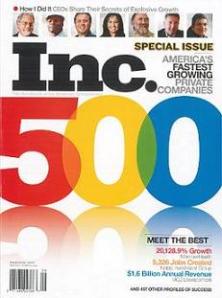
Inc500Cover2Inc. Magazine released its annual top 500 fastest growing US businesses yesterday. Outskirts Press, Inc ranked #268 on the list, and exclusive among full-service self publishing outfits. With on-demand publications up 132% over the previous year, Outskirts Press finds itself the fastest growing provider in the fastest growing segment of the book publishing industry. Congratulations Outskirts Press.

Author Solutions – the only other self-publishing related provider recognized, came in at 3266 among the top 5000 companies.

Congratulations self-publishing.

– Karl Schroeder