7 Tips to Highly-Successful Interviewing for Self-Publishing Book Promotion

share your story author interview

All self-publishing authors should be well-prepared to give interviews. Whether in writing (email/blog interviews), over the phone, or in-person in front of a microphone or camera, the ability to speak articulately about you and your book pays endless dividends. These tips will help.

  1. Anything you say during an interview can be recorded, so choose your words wisely. Off-color jokes may be entertaining in context, but taken out of context can shed a negative light on your image. Try to ensure nothing you say can be misinterpreted.
  2. There is no “off the record.” Even if the interviewer or journalist honors that particular disclaimer, things you say “off the record” still paint a particular “picture” for the interviewer, which will reveal itself within the slant of the piece or from other questions when the “record” is turned back on.
  3. Don’t use acronyms, confusing terminology, or jargon. Your book may be very complex or scientific, but that doesn’t mean you have to be. Demonstrate your intelligence and proficiency in your subject matter by “translating” those confusing terms and concepts so the lay-man can understand it, too.  If you absolutely must use a term that few people will understand, be sure to define/describe it.
  4. Identify three key points you want to convey during the course of the interview.  Prioritize them like this: The most important point falls at the end of the interview, the second most important point falls at the start of the interview, and the third most important point falls somewhere in the middle.
  5. A popular writing adage is “Show, don’t tell.”  Show the interviewer (and the subsequent audience) how your book will entertain/educate them through a personal story or analogy.  This is much more effective than telling them…
  6. Write down ten potential interview questions.  Make the questions a part of your media kit, your book club kit, your virtual book club kit.  Many interviewers may just ask your questions verbatim (less work for them), or may ask a slightly paraphrased version of them.  There’s nothing quite as comforting as answering an interview question you wrote yourself.
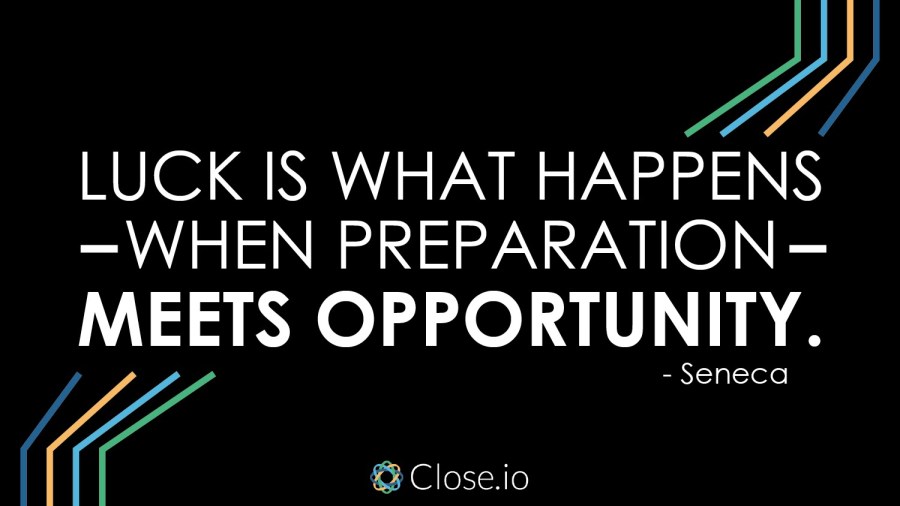
  7. Practice, practice, practice. Practice answering those ten questions in front of a mirror. And then practice answering those questions in front of a friend or family member. Try to avoid reading your answers. Have them memorized.  As Seneca said: “Luck is what happens when preparation meets opportunity.”

seneca luck quote


brent sampson
In 2002, Ernst & Young Entrepreneur of the Year Semi-Finalist Brent Sampson founded Outskirts Press, a custom book publishing solution that provides a cost-effective, fast, and powerful way to help authors publish, distribute, and market their books worldwide while leaving 100% of the rights and 100% of the profits with the author. Outskirts Press was incorporated in Colorado in October, 2003.
In his capacity as the Chief Executive Officer and Chief Marketing Officer, Brent is an expert in the field of book publishing and book marketing. He is also the author of several books on both subjects, including the bestseller Sell Your Book on Amazon, which debuted at #29 on Amazon’s bestseller list.

What is the difference between a Publishing Guide and a Publishing Kit?

Nearly all online self-publishing companies offer authors an “incentive” to join their newsletter or mailing list. In most cases, this is the company’s own “Publishing Guide.”  These guides vary from sleek sales brochures to informative books covering the process of self-publishing (typically with that particular self-publishing company).

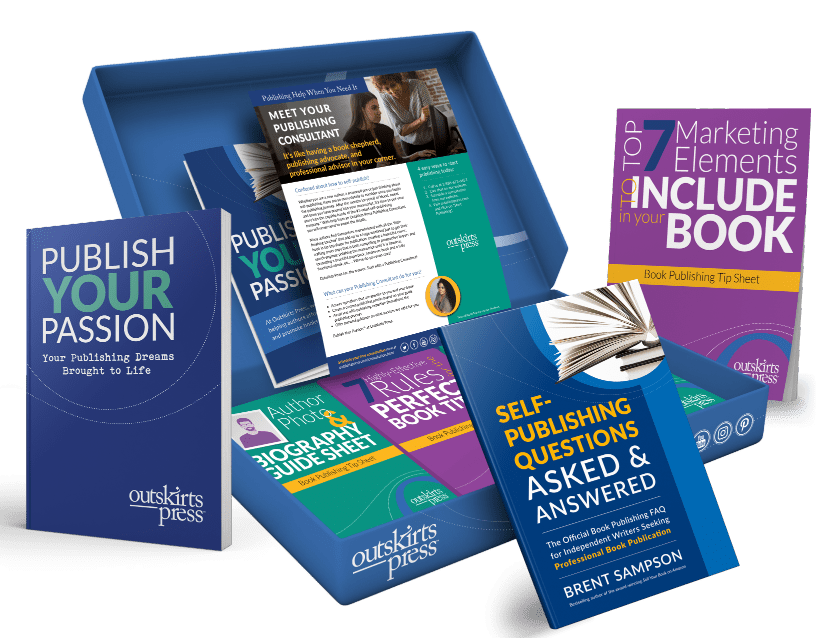
outskirts press publishing guide

Other self-publishers offer “white papers” or “tip sheets” or “advice columns” focusing on one or more specific topics or obstacles an author may face when publishing a book. While often more informative (at least about said topic or obstacle), these white papers are usually much shorter, and therefore of less perceived value, than a “Publishing Guide.”

An elite few combine their publishing guide with a robust collection of white papers and tip sheets to create a Publishing Kit for prospective clients. The guide typically markets the company and its offerings, perhaps sheds light on the self-publishing and book marketing processes, and shines a light on a successful author or two.  The white papers, advice columns, and tip sheets, on the other hand, identify core questions or issues facing many writers and offers suggestions or solutions to pave an author’s path toward publication.

Outskirts Press launched its brand new Publishing Kit this February, featuring their publishing guide, self-publishing white paper, brochure, and a collection of tip sheets covering everything from best practices for book pricing to book title considerations/recommendations.  Plus, my latest book, Self-Publishing Questions Asked & Answered is included as a bonus. New clients can get the Publishing Kit instantly at https://outskirtspress.com/book-publishing.html#ebooks


brent sampson
In 2002, Ernst & Young Entrepreneur of the Year Semi-Finalist Brent Sampson founded Outskirts Press, a custom book publishing solution that provides a cost-effective, fast, and powerful way to help authors publish, distribute, and market their books worldwide while leaving 100% of the rights and 100% of the profits with the author. Outskirts Press was incorporated in Colorado in October, 2003.
In his capacity as the Chief Executive Officer and Chief Marketing Officer, Brent is an expert in the field of book publishing and book marketing. He is also the author of several books on both subjects, including the bestseller Sell Your Book on Amazon, which debuted at #29 on Amazon’s bestseller list.

Self-Publishing Questions Asked & Answered

In January, Outskirts Press President Brent Sampson released his latest book involving the self-publishing industry, titled Self-Publishing Questions Asked & Answered: The Official Book Publishing FAQ for Independent Writers Seeking Professional Book Publication.

cover (19)

The book is comprised of three parts. Part one defines self-publishing and identifies the advantages of self-publishing today. It also describes the differences between independent self-publishing, full-service self-publishing, and so-called “free” self-publishing.

Part two breaks down the publishing process by answering basic questions involving BISAC codes, pricing, editing, ISBNs, copyright, and more.

Part three focuses on book marketing by identifying the important components of a book marketing plan, naming twenty effective marketing tactics, five steps toward getting Amazon book reviews, and a number of highly recommended and vetted book contests.

The book is available in paperback from Amazon and Barnes & Noble for $9.95, and will soon be available on the Kindle and Nook.

Visit the official webpage here: https://outskirtspress.com/SelfPublishingQuestions.


brent sampson
In 2002, Ernst & Young Entrepreneur of the Year Semi-Finalist Brent Sampson founded Outskirts Press, a custom book publishing solution that provides a cost-effective, fast, and powerful way to help authors publish, distribute, and market their books worldwide while leaving 100% of the rights and 100% of the profits with the author. Outskirts Press was incorporated in Colorado in October, 2003.
In his capacity as the Chief Executive Officer and Chief Marketing Officer, Brent is an expert in the field of book publishing and book marketing. He is also the author of several books on both subjects, including the bestseller Sell Your Book on Amazon, which debuted at #29 on Amazon’s bestseller list.

How to Make a Book Club Kit as a Self-Publishing Author

How would you like to sell 10-15 books at a time, rather than just one? You would?! Well, then keep reading, because Book Club Kits are one of the best-kept secrets of savvy book marketers.

book club

What is a book club kit, you ask?  We’re glad you asked! A book club kit is a bunch of your books and some other materials all packaged together in either a canvas bag or a storing box (or something even more fun and creative).  The most obvious customers for book club kits are book clubs, but the less obvious (and more fruitful) customers for your book club kit will be libraries.  Rarely do book clubs purchase books anymore, since that requires buying 10-15 copies of a single book.  Book clubs usually rely on libraries.  But even finding 10-15 copies of the same book across multiple libraries is challenging, which is why many libraries stock book club kits to loan out to local book clubs.  Rather than loaning out 10-15 copies of a book, they loan out one book club kit.  Who sells book club kits to libraries?  Authors!  

And that’s where you come in. So let’s get started.

  1. Decide how many copies of your book you are going to include

The best thing about making and then selling book club kits is you get to sell multiple copies of your book at once.  But don’t get overzealous.  If you cram too many copies of your book into your kit, the kit sales price may be too high for some libraries, and the kit itself may be too heavy.  Most book club kits range from 8-15 copies, and the number often depends upon the size of the community being served by the library.  So how do you decide how many copies to put into your kit? You ask!  Visit your local library and ask to browse their book club kits.  See how many books are in other kits. Ask the librarian which kits are the most popular.  Ask the librarian how many copies he/she would recommend, or what their budget is for purchasing kits.  All this information will help you decide how many copies to include in your kit.  Remember, your kit doesn’t have to be the same size for every library. You may have one kit comprised of five books for a smaller neighborhood library and another kit comprised of 15 books for a large metropolitan library.  

  1. Decide how you are going to package your book club kit

The number of copies you decide to include may determine how you are going to bundle your kit, since a canvas bag doesn’t carry as many copies of a 400-page hardback as a 28” x 18” plastic storing bin. On the other hand, a customized canvas bag (more on that in a second) makes a better first impression than a big bulky bin. Although if you opt for the bin (available in different quantities for different prices on Amazon), be sure to at least create custom stickers to put on the outside of the bin identifying yourself and your book.

  1. Customize your bag or bin

If you opt for a canvas bag, you can customize it by printing either your book cover or your author photo on the outside of the bag, along with its title. You may even want to add “Book Club Kit” onto the side of the bag, too.  How do you create custom canvas bags?  Through websites like Zazzle or CaféPress.  They’re a little more expensive if you do single-units, but they represent the most economic way to start until you grow confident enough to buy larger quantities, at which point you can go to a local printer for a better deal.

If you opt for a plastic storage bin, customize a sticker to put on the outside of the bin (using the same print-on-demand sites mentioned above).  The title of your bin is NOT the title of your book.  The title of the bin (or bag) is BOOK CLUB KIT.  The subtitle is your book title, and your author name.

  1. Create your “table of contents”

The similarities between a book and a book club kit just keep going and going, don’t they? Not only have you titled your kit BOOK CLUB KIT but now you get to create a Table of Contents… and in this case, it literally is a listing of all the contents of your kit.  You can get fancy and make this single piece of paper colorful, or artistic, or even laminated, but the ultimate purpose is to specifically mention every component of your kit, including the quantity of each component (especially important in regard to the number of copies of your book).  This is how the librarian will ensure kit has been returned without any missing “pieces” after each club borrows it.

  1. Include your author photo and author biography

Book clubs discuss books, sure, but they also discuss authors, so be sure to include your author photograph (8.5×11 on glossy paper, if possible), and your author biography.  These are typically elements you’ve already created for your book’s publication, so it’s usually a simple matter of reprinting them for the purposes of your kit.  It’s not necessary to print more than one copy of these elements, even if your kit contains 10-15 books.  The book club leader or administrator will hold onto the rest of the elements of your kit, including your photo and biography, for display and/or discussion during their actual meetings.  You may even want to include more comprehensive and personal information about you and what motivated you to write the book. After all, these are the elements of a book club kit that makes it valuable for book clubs.

  1. Include discussion topics

Most book club kits suggest discussion topics for the leader or moderator of the club as a means for spurring conversation about your book once everyone has read it.  One of the most magical things about being a published author is being the creator of your particular “world” in fiction, or the expert voice over your particular subject in non-fiction.  Members join book clubs for exactly this insight, so be sure your book club kit delivers.  Ask questions about your main characters. Offer alternative endings your considered.  Mention particularly difficult choices you, as the author, had to make when writing your book.  Summarize the choices you made and why. Ask the book club members what they think about your choices.  These discussion topics should “match” your author biography page in the kit, so if you laminated your author bio, laminate your discussion topics, too.  Every element of your kit should look professional and branded.  Many authors include all the separate pieces of paper in a branded or customized folder, to keep them pristine while rattling around in your kit surrounded by heavy books.

  1. Go social

Book club members also join book clubs to learn about new writers and to experience new books.  Even if they just borrowed your book from the book club kit for the purposes of their meeting, that doesn’t mean they won’t buy your book after-the-fact.  Be sure to include one piece of vital information in every kit: Purchase information and, if you’re open to discussing your book personally with readers, author contact information. Even if you shy away from one-on-one contact, you can suggest to members of the book clubs that you welcome honest reviews on Amazon and you often respond to individual reviewers in the “Comments” section.  The possibility that their review could spark a reply from the author may provide enough incentive for your book club readers to compose reviews on Amazon and/or Barnes & Noble (which is always a good thing).  If you are the more extroverted type of author, you can even suggest the coordination of a skype or facetime discussion, or offer your time to “appear” on a book club’s blog as a special guest.  

  1. Put it all together

Once you have all the components of your kit, bundle them all together in your canvas bag or plastic bin.  Then, find your customers.  You can do a search for libraries on Google.  Price your kit so that it’s a good deal for the library and also profitable for you (the books will typically be priced at the wholesale, rather than retail price).   Congratulations! Your book is now part of the book club circuit!


brent sampson
In 2002, Ernst & Young Entrepreneur of the Year Semi-Finalist Brent Sampson founded Outskirts Press, a custom book publishing solution that provides a cost-effective, fast, and powerful way to help authors publish, distribute, and market their books worldwide while leaving 100% of the rights and 100% of the profits with the author. Outskirts Press was incorporated in Colorado in October, 2003.
In his capacity as the Chief Executive Officer and Chief Marketing Officer, Brent is an expert in the field of book publishing and book marketing. He is also the author of several books on both subjects, including the bestseller Sell Your Book on Amazon, which debuted at #29 on Amazon’s bestseller list.


How to Market Your Book on Facebook

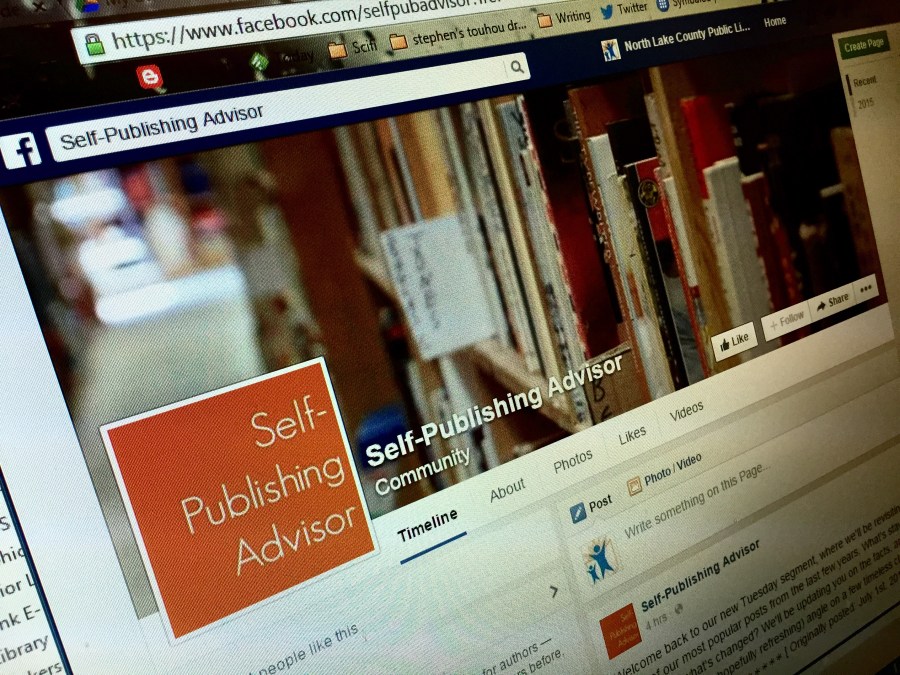
Facebook

Immediately after you’ve published your book, it’s time to get into marketing. Here’s what you need to understand in order to jumpstart your book marketing campaign on Facebook.

  1. You need a fan page – NOT a personal page.

Personal pages and fan pages function very differently. A fan page offers a one-way relationship between you and the fan; fans see your updates, but you don’t see theirs. A person only needs to click “like” to immediately become your fan. With a personal page, a potential fan has to send you a friend request, which is an intimidating barrier for people who don’t actually know you. Even more importantly, personal pages have a friend limit and only fan pages give you data on how fans are interacting with your posts.

  1. Any given Facebook post will only reach a small percent of your fans.

Fans are people who clicked “like” on your page, but they will not automatically see your updates.

Facebook has become so popular that it had to develop an algorithm to prioritize the flood of posts available for a person’s news feed each day. Say, for example, that one of your fans is a fan of 100 other pages and has 400 personal friends. All of those pages and friends represent hundreds of possible messages going to that person’s news feed. Only a few of those messages will be shown. Your new fan may actually never hear from you again, depending on whether or not you understand number 3…

  1. Likes, comments and shares mean almost everything on Facebook.

Facebook chooses what to show and in what order based on which friends and/or pages a person engaged with in the past. “Engaged with” means the person clicked, liked, shared or commented on a post.

If a fan doesn’t take one of those actions on your posts regularly, the algorithm will decide they aren’t really a fan, and that person will rarely, if ever, see your content again. You could have 10,000 fans but literally be talking to a near-empty room if Facebook is methodically removing your posts from their feeds due to lack of engagement. That means you should write every post in a way that facilitates likes, comments, or shares.

  1. Small tactics can make a big difference in driving “click engagement.”

Here are some tips for encouraging clicks:

  • Experiment with post timing. The average post is only shown in feeds for about 3 hours. If most of your fans are on Facebook in the evening but you always post in the morning, they’ll never see you.
  • Be concise. Studies have shown that posts between 100 and 250 characters (less than 3 lines of text) receive about 60% more likes, comments, and shares than posts greater than 250 characters.
  • Use different types of posts. Some fans click mostly on links, others engage mostly with questions, and some click mostly on photos. To maximize the number of fans who engage with you, use a variety of post types.
  1. Your cover photo is premium real estate to market your book.

You have 851 x 315 pixels worth of space to market your book. Use this space to show off an image of your book. You can also promote a tour or giveaway here.

  1. Connect Facebook with promotional apps.

Use Facebook to successfully host a book giveaway with apps like WooboxRafflecopter, or Shortstack on your Facebook page. Be sure to advertise it on your cover photo space. Or use a video app to create a book video to post on your Facebook Page (or purchase a book video trailer).  Show your readers the author behind the writing. People connect with those they can relate to and adding a video of your book will increase interest. Plus, Facebook’s autoplay video feature will entice users to pay attention.

  1. Link Facebook with a way to purchase your book.

Be sure to link to your online shop (whether that’s on your publisher’s site, Amazon, Barnes and Noble, or your own website). Dedicate a button on the dash below your cover photo for “Shop.”  This will be more successful if you regularly post positive book reviews on Facebook. Reviews are among the best ways to get more eyes on your book. Not only can you get in front of the reviewer, but the reviewer may also recommend your book to others. Don’t expect people to automatically review your book. Actively ask for reviews on your Facebook page.

  1. Use the “Promote” feature.

Under each of your Facebook posts, there is a button that says “Promote.” For a relatively small amount of money, you can get more of your fans to see specific posts. The cost depends on your particular fan base, but typically runs around $5 per thousand people you want to reach. You can also promote your post so friends of your fans will see it. Paid promotion is a great tool for getting important posts in front of as many people as possible. It’s also a great way to get back into the feeds of people you’ve lost due to lack of engagement in the past; if a person engages with a paid post, they’ll be more likely to see your future unpaid posts. Paid posts give you a chance to win fans back!

  1. Be consistent and generous.

The key to engagement is consistent posts that your fans consider valuable. Try to post daily. From time to time, post an image of your book and an offer they can’t refuse, such as free chapter of your new book. The most important thing is to grab people and bring them onto your page. Make sure you use the word “free” in your posts. You want to offer them something to reward for them visiting your page.


brent sampson
In 2002, Ernst & Young Entrepreneur of the Year Semi-Finalist Brent Sampson founded Outskirts Press, a custom book publishing solution that provides a cost-effective, fast, and powerful way to help authors publish, distribute, and market their books worldwide while leaving 100% of the rights and 100% of the profits with the author. Outskirts Press was incorporated in Colorado in October, 2003.
In his capacity as the Chief Executive Officer and Chief Marketing Officer, Brent is an expert in the field of book publishing and book marketing. He is also the author of several books on both subjects, including the bestseller Sell Your Book on Amazon, which debuted at #29 on Amazon’s bestseller list.