Welcome back to our new Tuesday segment, where we’ll be revisiting some of our most popular posts from the last few years. What’s stayed the same? And what’s changed? We’ll be updating you on the facts, and taking a new (and hopefully refreshing) angle on a few timeless classics of Self Publishing Advisor.
If your self-published book is available for sale at Amazon.com, Barnes & Noble (BN.com), and other sites, you want to be sure your online listings have book reviews. You can always be sure your book has at least 1 review by asking one very close friend or relative to write a review for your book.
Once you have one review, your job is to solicit others. Obviously, if you’ve given some of your books away to friends or families, you should ask them to write a review in exchange for the book. As you continue to give them away, suggest to your customers that it would be helpful to you if they took the time to write an honest online review. People like to help people, but usually only do so if you ask.
BONUS: Once you have reviews, you can use them in quotes for further promotion. For example:
“Best Book Ever!” — Amazon.com review.
Your book detail page on Amazon and Barnes & Noble have links for writing reviews of your book. If you haven’t done that yet, do it right away.
Remember, in order to write a review for a book on Amazon, each reviewer must have an Amazon account with which they have purchased something. This is how Amazon verifies the identity of the reviewer. They don’t need to buy your book, per se, they just need to buy something, anything, from Amazon. But it is nice if they DO buy your book, so suggest that to your friends first.
Seven years on, and we’ve had ample time to expand upon the notion of book reviews and how beneficial they can be for your self-promotion strategy as an indie or self-published author! And when I say ample, I mean that we’ve literally written essays on the subject. For a litany of our best book-review-related material, check out this link, and this one, and this one. Oh, and don’t forget our last in-depth primer post on the matter!
If the intervening years between 2008 and 2015 have taught me anything, it’s the power and influence of positive––and authentic––book reviews. Which is why, when I look at my words from so long ago, the ones I want most to revisit are these: “[Reviewers] don’t need to buy your book, per se, they just need to buy something, anything, from Amazon.” While the fact remains true that an Amazon reviewer isn’t strictlyr required to buy a book or an ebook to review it––and there are certainly many circumstances in which readers may legitimately acquire a book without purchasing it through Amazon or purchasing it at all––I see now that my words, out of context, might encourage authors to strong-arm their friends and loved ones into posting Amazon reviews out of obligation, rather than genuine interest. I cannot stress how wrong I would be to encourage this notion. Reviews should never be given unwillingly.
Let me say that again: Reviews should never be given unwillingly. We should try to avoid creating situations in which false approval is the platform upon which we launch our careers as authors. As indie and self-published authors, we’re striving to shake off the constraints and residues of the so-called “Big Bad Publishing Institution,” a process which puts the torque into the word “spin” and serious money behind works and authors that critics are paid to laud. We can work the system, yes––and self-promotion is in large part knowing how to cultivate a certain degree of cunning––but we should never sacrifice our self-respect.
Which is why we keep revisiting this idea of the book review.
There are so many ways in which we can be both cunning and conscientious, both the serpent and the dove. Our past posts will lead you deeper into the specifics, but suffice it to say: don’t be afraid to go after reviews, and to openly and honestly ask for them, to outright challenge your readers and those who fall within your social sphere to offer them up … and also, don’t forget that the best review is an honest review, and the best way to keep hooking in good and honest press is to write another brilliant book. Even better, if that’s possible, is helping out a fellow indie or self-published author by exchanging books and promises to support each other with favorable––and honest!––reviews. What better way to cut through the bureaucratic red tape of traditional publishing than to participate in the broader exchange of thoughts and ideas with the whole self-publishing community? Up and at ’em! ♠
ABOUT KELLY SCHUKNECHT: Kelly Schuknecht is the Executive Vice President of Outskirts Press. In addition to her contributions to the Outskirts Press blog at blog.outskirtspress.com, Kelly and a group of talented marketing experts offer book marketing services, support, and products to not only published Outskirts Press authors, but to all authors and professionals who are interested in marketing their books and/or careers. Learn more about Kelly on her blog, kellyschuknecht.com.
In contrast to last week’s post, which looked at a social media platform that is less-used (might I even say underused?) by indie and self-published authors, this week we’ll be examining the other end of the spectrum–at a platform that has been mined so often and so thoroughly for its marketing potential that setting up a profile has almost become a requirement. I’m talking about Goodreads, if you haven’t already guessed, a website we’ve looked at before on Self Publishing Advisor. Fortunately for us and for you, however, it’s a website that keeps evolving, and keeps generating new possibilities. I can definitively say that most authors know some of the buzz about Goodreads, but very few know all of the ways in which this platform can be of use.
For those of you who are new to Goodreads (and don’t be ashamed if you are, despite what I just said about authors definitively knowing things–there’s always going to be some new corner of the Internet to explore!), what is this website? In short, it’s a cross between Facebook and Amazon for readers and writers and those involved in the dissemination of books. All users can create profiles, log the books they’ve read or are reading or want to read, rating them out of five stars and posting book reviews as they go. You can find your friends by interlinking your Goodreads account with Facebook or Twitter or Amazon, or by using their email addresses. (Goodreads was purchased after its stratospheric rise by Amazon, so a lot of its features (like reviews and “buy from these retailers” links) are already well-integrated into that other behemoth of the book industry.)
Authors get even a little more love, in that they can create specialized “Author Pages” that list their books (including pictures of their book covers), link to blog posts, and allow authors to create and manage book giveaways. Goodreads is so passionate about making promotion easy for authors that it has even put together a comprehensive web page describing how to best use their features–you can find that here–and have left me almost nothing to add except a little style and flourish.
No, that’s a lie. I still have a lot to say about Goodreads!
Debunking the Great Goodreads Myth: “If I have Facebook and Amazon, I don’t really need another spot to store all my book recommendations, do I?”
Oh, but there’s something so incredibly satisfying about falling into a community that shares your passion for literature, isn’t there? Amazon was created to sell things, and its “social” structures were integrated into that website after they were proven to be marketable. Facebook was created to be social, and its “profitable” structures were integrated into that website after they were proven to have social elements. Goodreads, on the other hand, was designed around the reading experience, to aid and abet readers and writers in sharing their love of literature. Both social and marketable elements shaped the platform’s earliest concepts, and so the fusion of these two aspects is 100% seamless. To be sure, it won’t replace your Facebook or your Amazon account, but it occupies a third space–and an equally compelling one, in my opinion. It fills a niche and fills it perfectly.
Top 5 Best Practices:
1. Set up an author page. Do it. There’s no excuse not to, not when the resources are literally right there at your fingertips, delivered on a platinum platter by Goodreads’ own staff. And if you’ve already published books, don’t worry–you can “capture” existing books in the system and take ownership of them, even if one of your readers has beaten you to entering the vital statistics into the system. And if you run into trouble, the Goodreads staff are always quick to respond to both emails and posts in their help forums. There’s a seemingly endless list of possible situations that the staff will troubleshoot for you. Remember all of my past references to “findability”? Setting up a Goodreads author page and filling in as many of the empty fields as possible will, without fail, make you more findable. Have you googled a book recently? More than half of the top search results for the average book link back to Goodreads–reviews, book pages, author pages, and forum posts.
2. Be a reader–an active reader. Quite apart to the other benefits of being an avid reader (which I’m sure you are, already!), being an active reader on Goodreads has some serious benefits for your self-promotion methods. The more books you review–actually review, not just leave a three- or five-star rating–the more people will see your name and follow the name back to your author page, and land on your books. Even established authors with big followings will benefit from reading and from using Goodreads as the tool it was designed to be–a platform for sharing one’s passion for the printed (or digitized) word. Other readers pick up on passion, enthusiasm, and authenticity. I have been followed by a whole host of strangers on Goodreads who see my reviews, and you can bet they form a perfect nucleus of potential new readers.
3. Encourage your readers and followers to write reviews. Elsewhere, even offline or apart from Goodreads, reviews are a wonderful–or even necessary–component of a sound marketing strategy. Whenever you click on a book page in Goodreads, you’re delivered a whole sheaf of reviews, and the ones with the most “likes” are prioritized by the website to be displayed at the top of the sheaf. Other readers and respond to reviews by liking, or by replying with their own comments. However you incentivize the posting of reviews on your own books (see my next point), make sure that you do incentivize it! At the very least, encourage your readers to check out your Goodreads author page. The more people who interact there, the more links and metadata that is generated, and the more “findable” you are through indexing search engines like Google and Bing!
4. Host a giveaway! I’ll admit it, I’m a giveaway addict. (And I know I’m not alone–FREE BOOKS?!?! Who wouldn’t be?!) Goodreads makes hosting a giveaway so incredibly easy. I will sit there for hours perusing the list of upcoming giveaways, signing myself up and crossing my fingers that I win this or that one. New readers will find you simply by virtue of the fact you’re holding a giveaway … and this is before you even let your existing fans and social media followers know that they can enter! (And again, don’t be afraid of the Goodreads forums. There’s a lot of excellent information to mine there.) You can only host a giveaway if you’re a book’s author or a bookseller, and there’s a heavy emphasis on giving away new books, upcoming releases, and new editions of previously published books. By limiting giveaways in this way, Goodreads has cultivated a certain level of respectability and credibility that you won’t find in a lot of other places.
5. Join a group. Goodreads is built around networking, so make sure to take full advantage of all of the networking options on the website–whether that’s creating a book list through Listopia, or posting reviews of books you’re reading, or posting blogs to your author page, or joining a group. The groups are where a lot of the fun happens, and you can find a group to fit even the most specific interest. There are book groups based on genres, on careers (librarians and booksellers are well-represented, as you might expect), on where you live or used to live (the LA Transplants book club group looks quite interesting), what you do in your leisure time, and, of course, a whole bunch of groups that cater specifically to you, the indie or self-published author (including this one!). If you haven’t already found “your people,” you might just find them in a Goodreads Group. You’ll find encouragement, information, instruction, and feedback. The key to a good group experience is, as with all things social media, living as authentically online as you do offline.
Most Overlooked Feature:
In my mind, this one comes down to two possibilities: Goodreads Events, and Listopia. In some ways, I feel as though Listopia is on its way out while Events is still quietly going strong and perhaps growing in its possible offerings. In essence, you can use Events to organize real-life or digital meetups, including book readings and sales or online promotions. You get to invite both current Goodreads users as well as non-users (by sharing the link), and you can manage each event to meet your personal preferences for a “public” versus “private” or “restricted” guest list. Yes, Facebook also provides options for event invitations and meetups, but they’re less specific to the book industry–and, simultaneously, less likely to be stumbled-upon by new readers. In any case, you can’t hurt your chances by trying it out!
I hope you’ll join me in building this Social Media Primer! If you have any questions, comments, suggestions, or contributions, please use the comment field below or drop us a line at selfpublishingadvice@gmail.com. And remember to check back each Wednesday for your weekly dose of social media know-how. ♠
ABOUT KELLY SCHUKNECHT: Kelly Schuknecht is the Executive Vice President of Outskirts Press. In addition to her contributions to the Outskirts Press blog at blog.outskirtspress.com, Kelly and a group of talented marketing experts offer book marketing services, support, and products to not only published Outskirts Press authors, but to all authors and professionals who are interested in marketing their books and/or careers. Learn more about Kelly on her blog, kellyschuknecht.com.
Another week, another new social media platform. You might think we would have run out of new ideas and methods for digital connection by now, but the list of possibilities only seems to keep expanding––and in some cases, though not all, the platforms are enduring. Instagram is one of those platforms, and it may just turn out to be one of the most useful ones there is for the self-published author looking to dive into the whole marketing-by-networking process.
It’s not that Instagram doesn’t have its fair share of detractors (believe me, it does)––but then, which social media platform manages to keep all of its users happy, all of the time? There are journalists out there who firmly believe that marketing your books through social media is an endeavor bound and doomed to fail; they are, however, in the minority. And a lot of authors, like indie poet Mirtha Michelle, have found promotional success after creating authentic and dynamic relationships with their fans. “I don’t try to be anything I’m not,” she writes. “I’ll post pieces of who I am.” All social media platforms present opportunities to connect in this way, but Instagram in particular has found a dedicated and loyal user base––industry professionals are beginning to recognize that Instragram’s model of encouraging its users to post images of day-to-day activities is something we can rely on to stick around, unlike some other quote-on-quote “faddish” platforms.
So, what is Instagram? To tell you what it is, we first have to clear up the biggest myth of all––that is, what it isn’t:
Debunking the Great Instagram Myth: “It’s all cats, lattes, and what you had for breakfast.”
Instagram is one of the most streamlined social media platforms out there, in part because it has been engineered almost exclusively for “mobile” use––that is, as an app for smartphones. Users snap a picture on their smartphone’s built-in camera of what’s going on around them, edit it to look artsy or gritty or incandescently pretty using one of the app’s “filters,” and then post the picture for their friends, family, and other followers to “like” and comment on. Users have only to scroll through their feeds with the swipe of a thumb to view all of the pictures taken by all of the people they follow. Ease of use and the built-in appeal of a visually-driven interface makes Instagram an engaging digital space, and it has evolved to allow users to post short videos in addition to their pictures.
Instagram is generally, in my experience, an upbeat place––rife with photos of waterfalls and meadows overlaid with inspirational quotes, self-aware embarrassing selfies, and the ever-evolving memes. Everyone has figured out how to tweak it to best represent their lives and interests: hikers, climbers, birdwatchers, and other lovers of the outdoors post their daring feats and snaps of dawn over this or that lake; artists post videos of their works-in-progress as they go; cooks and bakers post snapshots of their (artfully) dirty countertops; and authors post quotes, snapshots of their bundled manuscripts, and tantalizing glimpses of their laptop screens. There are plenty of cats, and lattes, and half-eaten breakfasts to be found if you follow folks who are prone to disorganization, but most Instagram users are part-way through the process of developing a personal “brand”––and many are more interested in showing you who they are than in showing you what they eat. Follow these people––these authors.
Top 5 Best Practices:
1. Go for the gut.Instagram is about intimacy. Remember that, if you remember nothing else about this post. Your followers on Instagram aren’t interested in posts that keep them at arms-length; the whole reason they follow you is that they want an “inside look,” to “go behind the scenes” of your life, even if you’re just a moderately successful accountant from Atlanta. Posts that show a glimpse of your heart and your goals as a writer, or a slice of a rough day, are more likely to engage your fans. If you don’t care about the content of a photo, that’s a good sign that they won’t either.
2. Think regular, but not too regular. You don’t have to sit down and block out a schedule for the next six months, but it is a good idea to plan a regular post––perhaps once a week––that your followers (your readers!) can count on seeing pop up in their feeds. It’s also a good idea to allow plenty of room for spontaneous posts that reflect your mood at a given moment, and those all-important surprises that transform a day into an important day. Just don’t clutter up your followers’ feeds with repetitive or blasé posts that tempt them to keep scrolling and scrolling past all of your hard-won new content!
3. You’re in the inspiration business, so share yours. ‘Nuff said, really. One of the fastest ways to a reader’s heart is to talk with them about the backstories to the works they love best. Reading is about imagination, and inspiration, and participation––every bit as much as writing––so time spent sharing how and why you create what you create … is time well spent. Show your readers the emotional or physical worlds that they encounter in your books––snapshots of the real café you frequent that inspired the one in your latest novel, or the skyline of the city in which your novel is set, or a landscape overlaid with a quote that you turned to when facing your greatest discouragements––or that your characters turned to when facing theirs.
4. Use the hashtags and @username functions. I think I’ve about over-talked the importance of hashtags elsewhere (especially in my Twitter primer two weeks ago), but I cannot overstate the fundamental utility of these built-in functions. Findability remains key on any platform, including Instagram, and despite its visual nature it’s just as entrenched in metadata as Facebook, Twitter, and Tumblr. People will still find you (and you, them) using keyword searches and hashtags, and they’ll respond to your material if they receive notification that you called them out by name. Host giveaways! Post a weekly “top fan” award! Use the system, above all, to interact with those all-important followers!
5. Don’t posture. All social media platforms are saturated with posts that the average user will find narcissistic and annoying, and although we can most definitely argue the merits of positive self-image and self-affirmation, it’s best not to turn your Instagram feed into a continual parade of any one type of content, especially the kind that forgets that connection requires conversation. Keep your pictures diverse, in nature and editing and subject, and your Instagram followers will feed on your creativity, your (carefully curated) spontaneity, and your interest in them.
Most Overlooked Feature:
The “Direct Message” function of Instagram, hands-down! You can send a private or semi-private message to up to fifteen followers at once, and although this feature won’t exactly broadcast your news and message to the general public, it will most definitely help build that sense of intimacy that I mentioned in point #1, above. You can use a DM to announce giveaway winners, or to surprise and delight a few select followers with bonus material! A DM feels much more intimate, and meaningful, than a picture any one of a hundred thousand people can see––and on Instagram, intimacy directly translates to lasting engagement with your fan base. Together, you and your followers can finish this sentence: “A picture is worth a ______________!”
I hope you’ll join me in building this Social Media Primer! If you have any questions, comments, suggestions, or contributions, please use the comment field below or drop us a line at selfpublishingadvice@gmail.com. And remember to check back each Wednesday for your weekly dose of social media know-how. ♠
ABOUT KELLY SCHUKNECHT: Kelly Schuknecht is the Executive Vice President of Outskirts Press. In addition to her contributions to the Outskirts Press blog at blog.outskirtspress.com, Kelly and a group of talented marketing experts offer book marketing services, support, and products to not only published Outskirts Press authors, but to all authors and professionals who are interested in marketing their books and/or careers. Learn more about Kelly on her blog, kellyschuknecht.com.
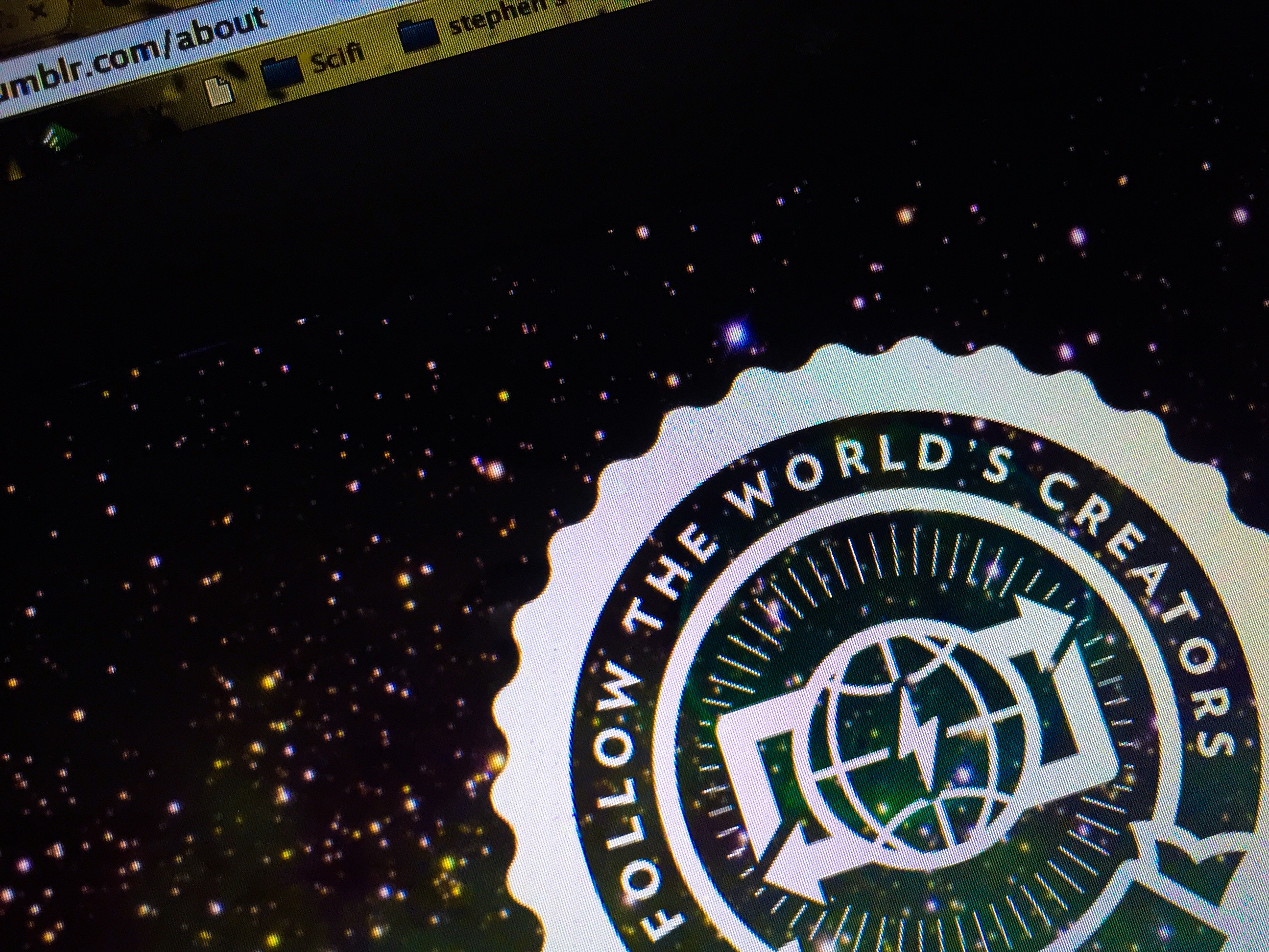
It’s kind of a big deal. Such a big deal, in fact, that even the White House has one, and the President of the United States has done a Q&A on one. What am I talking about? I’m talking about Tumblr, the microblogging platform that quite literally causes and feeds a frenzy of conversations––many of them controversial. And with over 81 million new posts going up every day, spread across more than 243 million individual blogs, the potential heft of any given piece of content is massive––particularly since Tumblr’s graphic-driven interface makes “reblogging” the posts of others so incredibly easy.
So how does Tumblr work? As with its distant cousins, Facebook and Twitter, Tumblr is a hybrid blogging and social networking platform. Its structure is fourfold in that it allows users to:
Post new content, which will then appear on both their blog and in the “feed” of any other user who “follows” that blog;
View the blogs and “reblogs” of others, in a single streamlined and constantly updated feed;
Share or “reblog” the posts of others, all of which will appear––with attribution––in their feeds; and
Discover new content by searching Tumblr’s general database, using hashtags, keyword searches, and a variety of other built-in exploratory features.
In many ways, Tumblr’s user interface feels a great deal like Twitter’s––which we discussed in detail last week––in large part because in both cases the interface places great structural emphasis on the content of each tweet or post. Facebook, which we’ll discuss more in weeks to come, is structured to emphasize the relationships between users themselves; this isn’t to say that Tumblr and Twitter don’t allow for personal connection, or that Facebook doesn’t allow for the production of content, but there is a subtle shift in the warp and weft of each platform which determines what gets seen and what slips under the radar.
On Tumblr, who you are is less important than what you post, and the “best” posts hit a sweet spot in respect to visual appeal, cultural relevance, timeliness, tone, and length. (Don’t worry, I’ll expand on these five points in a moment.) You can easily see which posts are successful; they’re the ones with the most “likes” or “reblogs,” both of which are tabulated as “notes.” For self-published and indie authors looking for a bit of exposure, there’s nothing so handy as a website that is, quite literally, designed to take content viral.
Debunking the Great Tumblr Myth: “Notes are the most important thing.”
I’m not going to lie––notes are important. But they’re not the only important indicator of success on Tumblr, and they’re not even an accurate indicator of a piece of content’s popularity. Because likes and reblogs are conflated together into the note count, it’s impossible to winnow out how many people flat out “liked” a given post, and how many are commenting on it. As you may know from other websites, comments on any given social media platform where anonymity is guaranteed (Tumblr users do not have to divulge their names or personal information to set up accounts) can range from fans going wild over their favorite things to people being downright mean. Most of Tumblr’s many millions of users prefer to reblog content they like rather than content they dislike, but some use the “reblog” feature to elaborate upon, rebut, or otherwise respond to the posts of others.This type of feedback can provide other benefits to you as an author, but it cannot be equated directly to “Yes! My stab at self-promotion is a raging success!” No, notes are not the most important thing. Engagement is.
So how do you get the average Tumblr user to stop scrolling through the hundreds or thousands of blog posts and reblogs in their feed to look at your excerpt, or your book cover, or your “behind-the-scenes” video?
Top 5 Best Practices:
1. Make sure it looks good. Visual appeal cannot be over-trumped as the leading reason why a pair of eyes will fasten onto your post. Many of Tumblr’s most canny users won’t even bother posting any text at all if it isn’t accompanied by a pleasing graphic or photograph of some kind. In fact, most Tumblr users will lead with the picture, rather than slipping it in as an afterthought. Since Tumblr is a medium of fast consumption leading to speedy sharing, the image should be something that is easily comprehended after just a quick glance, so as to keep the reader’s eye moving, roving further into the text that follows. It’s also a good thought to break up dense text posts with a .GIF file or two––the “reaction .GIF” is a Tumblr specialty, and not one to be underestimated. (There’s nothing like a perfectly on-point .GIF to inject a text post with a dose of humor and personality!)
2. Keep it relevant. This should go without saying, but a wise friend once pointed out to me that my own (private) blog was a confusing mish-mash of my interests (which are many) and my own material (which is quite specific in focus). As an indie author looking to create a cohesive, effective methodology in dealing with social media, it’s a good idea to specialize. That is to say, you should keep your posts––both of original content and any reblogged material that might catch your eye––focused on you, your book, and the authorial process. If you become enamored of all of the different features that Tumblr has to offer, and if you enjoy reading an eclectic mix of posts by others, that’s wonderful! … Just make sure that you create a separate blog for your author-related activities so that you don’t accidentally inundate your followers with Shia LaBeouf memes.
3. Timeliness is key. Tumblr is the home of revolutions. More than half of Tumblr’s active users report being under 25 years of age, and the platform’s format encourages the Millennials’ activist leanings. The Occupy Wall Street crowd? It may have found a second home on Twitter, but its native land is Tumblr. Ever heard of the #BlackLivesMatter hashtag? Or #WeNeedDiverseBooks? One of teenage designer and activist Kyemah McEntyre’s handmade creations walked the red carpet at the BET Awards because of Tumblr. Petitions have been signed, flags taken down, flags proudly shaken, politicians heckled, and, quite possibly, laws passed on the momentum generated by Tumblr’s dedicated, active, and socially-engaged user base. They’re politically and economically diverse, and as feverishly clannish as any other group of Millennials, and if you can make them care about your work, you’ll never want for support. All of this to say, it’s best to keep an ear to the ground. If you’re willing to use Tumblr as a tool, you should “follow” as many other users as you need to in order to stay in touch with current trends, topics, and ongoing conversations. If you know what’s spurring interest, you can reframe your own posts to touch on these hot-button issues, and generate more interest in your work.
4. Watch your tone. I’m kind of holding forth here in this post, which I’d stress can be either the most effective approach, ever to Tumblr, or the most annoying thing, ever. There are four main speeds when it comes to tone on Tumblr: ranting, reflecting, ridiculous self-posturing, and photo essaying.Rants are passionate (and sometimes, though rarely, lengthy) attacks on the various injustices of life, whether humorous or serious in nature. Reflective posts usually consist of brief narrative bursts, retelling past events or unwinding the implications of some thought experiment (Harry Potter and other fictional worlds inspire many of these, I find). A Tumblr user might dip a toe into ridiculous self-posturing when looking to inspire a good laugh or let off some steam, and often these posts are spoken in the coded language of memes. Some users eschew text altogether and simply post photo essays of their adventures; many hikers, climbers, boulderers, runners, and artists of all disciplines use Tumblr as a sort of interactive portfolio or photo album. One of the many quirky realities of Tumblr is that a post which uses only one of these tones is more likely to go viral than another post that tries to use more than one tone. Tumblr users are looking for easily digestible, bite-sized pieces of life.
5. Keep it readable by keeping it brief. As with my last point, length is best viewed through a lens of digestibility. The world of Tumblr moves fast, and sometimes sideways, and content has to be focused, brief, and either hilarious or achingly accurate in order to collect notes. The most successful Tumblr bloggers post nuggets that are quick to read or view, and they post regularly. I find that instead of encouraging simplicity and generalization, Tumblr users’ love of brevity actually encourages complexity and specialization. The more direct the statement, the more likely someone else is to respond––and for a single sentence to provoke a snowball effect of comments and reblogs.
Most Overlooked Feature:
Most Tumblr users either upload text or photographs, but Tumblr actually allows for several other types of posts: videos, quotes, links, and chats. As an author, you should most definitely take advantage of the “quotes” feature to introduce your followers to your voice, characters, and above all––your book!
I hope you’ll join me in building this Social Media Primer! If you have any questions, comments, suggestions, or contributions, please use the comment field below or drop us a line at selfpublishingadvice@gmail.com. And remember to check back each Wednesday for your weekly dose of social media know-how. ♠
ABOUT KELLY SCHUKNECHT: Kelly Schuknecht is the Executive Vice President of Outskirts Press. In addition to her contributions to the Outskirts Press blog at blog.outskirtspress.com, Kelly and a group of talented marketing experts offer book marketing services, support, and products to not only published Outskirts Press authors, but to all authors and professionals who are interested in marketing their books and/or careers. Learn more about Kelly on her blog, kellyschuknecht.com.
“There’s a lot more to using social media for book promotion,” I wrote last week, “than simply knowing the names of the most popular sites or even how to set up an account with and update each one.” Twitter is no exception. This social media platform is often described as a “microblogging” website, a descriptor which implies that Twitter users manage their feed and profile content the way they would a blogging website––only in smaller chunks. This is only partially true, in that some Twitter users who also have blogs may use the same parameters to manage both platforms, or in that some Twitter users treat the site as a tool for unspooling narrative.
If you spend any quality time on Twitter, however, you’ll rapidly discover that terms like “microbloggers” or “microblogs” only describe a small fraction of the feeds out there; some users compile data and statistics while others use their feeds to start conversations, and still others mostly neglect their own feeds while spending their time watching other peoples’. Back in 2013, Steve Faktor deconstructed and described ten types of Twitter users in a 2013 Forbes article that still, for the most part, holds up beautifully. For the indie, hybrid, or self-published author, Twitter can be a minefield––rife with potential rewards for the daring and discerning user, yes, but a minefield nonetheless. This is, in part, becausethe fundamental operating assumption out there about Twitter––that is actually preached by its own PR team––is that it is awash with activity, engagement, and avid disseminators of information. This is simply untrue.
Debunking the Great Twitter Myth: “If I tweet regularly, followers will appear.”
Twitter, like any other website, has its active users and its passive users. Many people set up Twitter accounts and then forget about them, or never really learn how to use them, or find that the website isn’t as cozy and endearing as it was made out to be. (Lady Gaga doesn’t respond to every tweet her followers tag her in? What?! And your most engaged followers turn out to be spambots? Uh-oh.) It’s actually rather difficult to “break into” the Twitter community, which largely relies on name-recognition and a blend of appealing content, interactivity, and incentives to keep people coming back and checking their feeds. As Faktor writes in his article, “Of the billions of tweets sent, 71% get no response, only 36% are worth reading, and a majority is generated by a tiny fraction of users.” This isn’t to say that it’s pointless to try and become “Twitter Famous,” but it is important not to tie your entire book-promotion strategy back to a mythical welcoming Twitterverse. “Twitter is a personal announcement system,” Faktor tells us, “that captures the collective pulse of a world screaming for attention––or revolution, or discounts, or Kanye.” There will always be an element of unpredictability, as well as social utility, to what “makes it big” on Twitter.
So, how do we ensure that our time on the site isn’t wasted in producing content no one will ever read?
Top 5 Best Practices:
1. Set it up––all of it––correctly. Most Twitter accounts are “dark,” which means they’re either in hibernation––that is, they’re only rarely updated, if ever––or were never set up properly and are therefore the amputated leavings of someone’s digital footprint. Your first task is to make yourself “findable,” which means that you use every detail of your profile––picture, avatar, short biography, and yes, even your Twitter name or “handle”––as a marketing opportunity. A polished photograph of you and/or your book, a tagline that includes keyword-rich phrases that will show up in search engine indexing, and a distinctive yet readable handle (I.E.: neither “jane-doe17” nor “sweetROMANCEauthor4u”) will go a long, long way toward rendering you findable.
2. Set yourself a daily and weekly Twitter task. In addition to being findable you have to be visible. If you are competing with other Twitter users who are selling similar products (READ: books) and therefore producing similar content, then you absolutely must differentiate yourself from these other users. Celebrities can get away with taking a haphazard approach to what material they post and when and how often, but you can’t. Set yourself a routine, and stick to it––and you’ll develop a dedicated group of followers who know they can rely on you to produce, week in and week out, something that they wish to read. Whether this means you post a link to a longer blog post every Monday, a revived “From the Archives” post every Tuesday, a “What I’m watching or reading or listening to now” post every Wednesday, or something else each day of the week is up to you. Make sure you respond to all (legitimate) direct messages and public tags (when someone else uses your Twitter handle to mention you) on a set schedule, also, and that way your followers will know you care!
3. Use a third-party website to schedule your tweets. There are plenty of options out there, these days, and it doesn’t matter which one you use so much as the fact that you are willing to use them. (I personally have used the very simple TwitterFeed website, but I recommend looking at a couple before you decide. Kristi Hines over at KissMetrics has reviewed quite a few of them, and several look like they show promise. But first: What does it mean to “schedule” your tweets? It means that you write them all at once, but spread out when they actually post to your feed so that other people can read and respond to them. You can go on vacation, for example, and rest easy knowing that your Twitter feed will run smoothly in your absence, without interruption. The best part of scheduling your tweets is that you can develop better personal time-management skills––you can write all of your tweets for the week on a Saturday night, and that frees you up to chase as many bunny trails and respond to as many questions and maybe even spend more time offline than you would otherwise.
4. Listen to your followers, and don’t overdo it. A lot of people, including myself, are tempted to give up Twitter because it can quickly devolve into a hot mess of confusing data, links, conversations, and other disconnected tidbits. There’s quite literally way too much to keep up with going on at any point in time on Twitter––we live in a restless world, and everyone wants to announce their place in it. Don’t be afraid to trumpet your own fine product (READ: book), but be aware that an effective tweet isn’t always a simple declaration of “here’s a thing you should buy.” An engaged and interested follower will be far more likely to plonk down the money for your book or ebook than someone who just sees that “here’s a thing” tweet without any context. Especially if that tweet is buried amidst a whole bunch of other content that isn’t interactive, and isn’t encouraging them to enter your world in a personal and fun way. Before you know what constitutes “too much” and “just right” for your followers, you have to listen to them. Don’t pile on tweet after tweet without pause, without taking a breath, and without waiting for followers to retweet, reply, or “favorite” your last tweet. Don’t waste your time; time is a precious commodity when it comes to shaping your digital identity. Save it for tweets that matter––and that speak to what your followers actually respond to.
5. Remember to incentivize. Incentives can be tangible (like a giveaway or a discount), or intangible (like special “insider” or “behind-the-scenes” content), but they perform at least two vital functions: they make your followers feel valued, and they keep your followers coming back for more. One of the greatest failings of the “here’s a thing” tweet I mentioned above is that there’s absolutely nothing to it that hooks a follower and reels him in. There’s no privilege or sense of inclusion or outright benefit to someone reading that tweet, much less deciding to follow through and buy your book. Twitter, at its best, is a conversation. At its worst, it is a one-sided conversation.
Most Overlooked Feature:
Twitter’s most overlooked feature is its hashtags. I’m not saying that people don’t use hashtags––believe me, they do, and they do and they do and they do and they do––but they rarely use them effectively. The best hashtags will group related tweets together so that when you click on one (like #weneeddiversebooks), all tweets with that particular hashtag will show up in a separate but continuous feed. If the hashtag is too common (like #love, for example), far too many tweets will show up and it will turn into a big bowl of nonsensical mishmash. If the hashtag is too specific (like #ramennoodlesareforqueens), then it’s unlikely that anyone else will ever tag their tweets with that same hashtag––and while that can definitely be useful, if you are up for the challenge of starting your own hashtag movement, it effectively excludes everyone else from the conversation. (And, well, there goes the “social” part of “social networking.)
The current trend is, of course, over-tagging. (There’s even a hashtag for that!) You can end up with a hilarious Jimmy Fallon & Justin Timberlake skit, but you can also end up with a whole lot of confused or disinterested followers. (In real life. The skit is hilarious.)
Build your own hashtag(s), absolutely. Build them wisely. And shape them, as you do all of your Twitter habits, to structured and intentional ends. I have every confidence you can use Twitter effectively to promote your book(s)––but it’s not the only way to do so, and we’ll be examining many other ways as the Wednesdays roll around!
I hope you’ll join me in building this Social Media Primer! If you have any questions, comments, suggestions, or contributions, please use the comment field below or drop us a line at selfpublishingadvice@gmail.com. And remember to check back each Wednesday for your weekly dose of social media know-how. ♠
ABOUT KELLY SCHUKNECHT: Kelly Schuknecht is the Executive Vice President of Outskirts Press. In addition to her contributions to the Outskirts Press blog at blog.outskirtspress.com, Kelly and a group of talented marketing experts offer book marketing services, support, and products to not only published Outskirts Press authors, but to all authors and professionals who are interested in marketing their books and/or careers. Learn more about Kelly on her blog, kellyschuknecht.com.


 ABOUT KELLY SCHUKNECHT: Kelly Schuknecht is the Executive Vice President of Outskirts Press. In addition to her contributions to the Outskirts Press blog at blog.outskirtspress.com, Kelly and a group of talented marketing experts offer book marketing services, support, and products to not only published Outskirts Press authors, but to all authors and professionals who are interested in marketing their books and/or careers. Learn more about Kelly on her blog, kellyschuknecht.com.



 Self Publishing Advisor