Conversations With A Self-Publishing Writer: 10/23/2015

THE NOAH WEBSTER LEGACY – PART IV

Following Webster’s legacy path, we discover that ESSAY and ARTICLE writing are a great way to exercise your creative muscles while dropping bread crumbs that will encourage Readers to discover the books you’ll write. Noah Webster wrote many such pieces which he says (in the preface of his Collected Essays) will naturally allow the writer to “give himself up to his feelings and his manner of writing will flow from his manner of thinking.” How might that translate into today’s world?

 copyright

  • Webster took a season of his life to edit periodicals—the American Magazine for one year (1788–1789) and the pro-federalist American Minerva (1793–1798). Is this a skill you have, a natural talent that could build your portfolio? Seek out both paper and Internet magazine formats that interest you and begin submitting articles (400-700 words in length) to them. Follow their guidelines to a “T” while maintaining your natural and unique manner of writing and thinking to flow.
  • Webster continued to write and publish (self-publish) pieces that he knew to be valuable to the general public. Between 1802 and 1806 he issued the first three volumes of Elements of Useful Knowledge, schoolbooks to enlighten and educate the growing population of the United States of America. What subject matter interests you to the level of being passionate about it? Have you accumulated a level of knowledge about it that you could be labeled an “expert?” Too many people shy away from writing on a topic because they cannot see or accept themselves as a knowledgeable person in that subject matter when, in fact, their unique perspective is needed to advance deeper understanding.

Also, Webster wholeheartedly believed that writers—and the ideas presented in their work—needed protection from “theft.” He had experienced firsthand, and witnessed the works of other writers become plagiarized, misrepresented, and “hacked to bits” too often. In the fledgling United States “national copyright protection” for Webster’s SPELLER was limited to a period of fourteen (14) years. Although that seems like a very short time, it worked out well for him because at the end of that interval he sold the entire rights to the American Spelling Book (for its third copyright period 1818 to 1832) to Hudson and Company of Hartford, Connecticut. Those finances allowed him to focus on his major work: An American Dictionary of the English Language, which was published in New York in 1828.

ALL AUTHORS need to keep themselves informed about current copyright law. Best source: www.copyright.gov. Copyrights DO expire after the death of the author (—plus 70, 95 or 120 years), so our heirs need to be aware that when that time comes, they may be able to sell that copyright as income to support our grandchildren and great-grandchildren.

Our friend, Noah Webster, Jr. continues to teach us about this challenging author/writer career. His persevering work ethic not only kept him and his family fed and housed, it has sent ripples into all future generations. Your work is just as valuable! Whether you’re creating textbooks or books of poetry—cookbooks or photography books—car manuals or political speeches—the words that you are placing together in concise structures of communication are necessary elements of life. Keep writing! Then…PUBLISH! ⚓︎

RoyaleneABOUT ROYALENE DOYLE: Royalene has been writing something since before kindergarten days and continues to love the process. Through her small business—DOYLE WRITING SERVICES—she brings more than 40 years of writing experience to authors who need “just a little assistance” with completing their projects. This is a nice fit as she develops these blogs for Outskirts Press (OP) a leading self-publisher, and occasionally accepts a ghostwriting project from one of their clients. Her recent book release (with OP) titled FIREPROOF PROVERBS, A Writer’s Study of Words, is already receiving excellent reviews including several professional writer’s endorsements given on the book’s back cover.  

Royalene’s writing experience grew through a wide variety of positions from Office Manager and Administrative Assistant to Teacher of Literature and Advanced Writing courses and editor/writer for an International Christian ministry. Her willingness to listen to struggling authors, learn their goals and expectations and discern their writing voice has brought many manuscripts into the published books arena.

From the Archives: “The Importance of Distribution in Self Publishing”

Welcome back to our new Tuesday segment, where we’ll be revisiting some of our most popular posts from the last few years.  What’s stayed the same?  And what’s changed?  We’ll be updating you on the facts, and taking a new (and hopefully refreshing) angle on a few timeless classics of Self Publishing Advisor.

∗∗∗∗∗

[ Originally posted: April 6th, 2010 ]

If a publisher focuses on discounts to an author who buys their own book in bulk, that often communicates two things. 1) That publisher is more concerned with selling to you than to other readers. 2)  The publisher is charging you too much for lower quantities. Do you really want to be forced to buy 100 books at a time just to get a fair price? “Bulk” discounts simply trick the author into buying more books than they need, which defeats the whole advantage of on-demand printing.

I’ve seen many authors go down that road, and then end up with lots of books sitting in their garage or basement that no one knows about, because the distribution piece is missing.  The power of the on-demand printing and EDI distribution offered in custom self-publishing take advantage of wholesale availability via multiple sales channels including Amazon, Barnes & Noble, Borders, Baker and Taylor, and Ingram—North America’s largest distributor.  Look also to see that your book is available through I-Page, the book ordering system available at over 25,000 bookstores and retail chains world-wide.

Do look also for a publisher that will sell your book to you at a special author discounted price as well.  It’s never a bad idea to have access to an inventory to compliment your virtually endless on-demand inventory.

The power of distribution when paired with flexible pricing creates an advantageous sales combination for the self-publishing author.

distribution

There’s no easy way to sell books, but as this post back in 2010 points out, there’s no point to purchasing in bulk if you can’t actually move the copies into the hands of your readers.  And as the original post expounds, an effective means of distribution remains absolutely essential in order to steer clear of stocking your basement and not those same readers’ bookshelves.

So how do you distribute books?  Word-of-mouth can work, certainly, as is illustrated by the extraordinary case of Christopher Paolini, although one might argue that his case is only extraordinary because it was eventually “discovered” by the traditional publishing industry and afterwards became a massive hit.  Paolini only relied on word-of-mouth and his own ardent self-marketing methods for a short while, when looking at the total “life cycle” of his Inheritance series.

It seems that selling through an online distributer is perhaps the way to go, especially when those distributers (namely, Amazon and Barnes & Noble) come with all of the might and power of a massive international company.  There are certainly some extraordinary benefits to taking advantage of their systems, toward which end many hybrid publishing companies (such as Outskirts Press) provide packages geared specifically to exploit.  And their digital distribution platforms, while perhaps too bulky to be truly “cutting edge,” do have all of the perquisite customer support and technical maintenance that you could wish for.  There’s always an upside to walking down a path that many others are also walking down.  (I’m thinking specifically of user how-to guides and FAQ forums, here––since I take advantage of those, and often.)

The ultimate point is, however, not to rely on making bulk purchases of your own book as an author, even with the possibility of an author discount.  You want readers to be connecting some of the dots themselves, and buying through these (socially networked and easily findable) ecommerce platforms instead of only through you.  If you are the only person who is selling your book, then that creates a kind of bottleneck for sales.  Diversifying who sells your book and where it can be found is a vital component of any effective self-marketing strategy.  ♠

KellyABOUT KELLY SCHUKNECHT: Kelly Schuknecht is the Executive Vice President of Outskirts Press. In addition to her contributions to the Outskirts Press blog at blog.outskirtspress.com, Kelly and a group of talented marketing experts offer book marketing services, support, and products to not only published Outskirts Press authors, but to all authors and professionals who are interested in marketing their books and/or careers. Learn more about Kelly on her blog, kellyschuknecht.com.

Conversations With A Self-Publishing Writer: 10/16/2015

THE NOAH WEBSTER LEGACY – PART III

WHEN we publish our books we are wisely advised to promote them in every venue we can access—to even pre-promote to the Readers we know will be interested in our topic and/or genre. When Noah Webster was writing his book A Collection of Essays and Fugitiv Writings on Moral, Historical, Political and Literary Subjects, he promoted it right into the office of President of the United States.

webster

  • First he talked to his friends and acquaintances about his soon-to-be-published book and enlisted them in “subscribing” to it. It is understood that many of these people financially supported (subscribed) the work.
  • Secondly, he published their names on the first several pages of the book—in alphabetical order. These scribers included: Vice President John Adams (indicating that he received two copies of the book), as well as many Senators, Representatives, Aldermen, Attorneys, Physicians, Merchants, Judges and ordinary folks from every location he’d visited.
  • Then, following the list of “subscribers,” Webster addressed this book as if he were writing a personal letter to: “The President, The Vice President, The Senators, and The Representatives of the United States of America, The following PUBLICATION, designed to Aid the Principles of the Revolution, to Suppress Political Discord and to Diffuse a Spirit of Enquiry, Favorable to Morals, to Science, and Truth, Is most humbly inscribed as a Tribute of Respect for their Characters, of Gratitude for their Public Services, and a Pledge of Attachment to the Present Constitution of the American Republic, by their most obedient and most humble servant, The Author.”

Now THAT is marketing—book promotion with flare! Certainly everyone was talking about this book and the boldness of the author. For Webster, the reality was that his often abrasive and know-it-all attitude kept him from being IN the “in-crowd.” However, it is widely accepted that Webster’s passionate nationalism was a major influence on the Founding Fathers. Reading his essays, newspaper articles, and dictionary word definitions gave them much food-for-thought in their daily lives and formation of our country.

So, where are you in pre-production planning for the book(s) you are writing? In today’s publishing world the group of supporters (subscribers) that Webster had would be called a Tribe. These are the folks who know you are writing—know a little about the story—and could be Tweeting about it or posting Facebook comments about how much they are anticipating the book’s arrival in their hands.

And, if you need financial support I know of several self-publishing presses who offer GIFT CARDS that family and friends can purchase to be applied to the publishing process and marketing of your book. The teams of marketing experts in these self-publishing houses can be a great help in connecting with Readers through the Internet and other media which takes the burden off your shoulders giving you the time to write your next book.

May the writing legacy left to us by authors such as Noah Webster give you encouragement and inspire you to accomplish great things with your writings. ⚓︎

RoyaleneABOUT ROYALENE DOYLE: Royalene has been writing something since before kindergarten days and continues to love the process. Through her small business—DOYLE WRITING SERVICES—she brings more than 40 years of writing experience to authors who need “just a little assistance” with completing their projects. This is a nice fit as she develops these blogs for Outskirts Press (OP) a leading self-publisher, and occasionally accepts a ghostwriting project from one of their clients. Her recent book release (with OP) titled FIREPROOF PROVERBS, A Writer’s Study of Words, is already receiving excellent reviews including several professional writer’s endorsements given on the book’s back cover.  

Royalene’s writing experience grew through a wide variety of positions from Office Manager and Administrative Assistant to Teacher of Literature and Advanced Writing courses and editor/writer for an International Christian ministry. Her willingness to listen to struggling authors, learn their goals and expectations and discern their writing voice has brought many manuscripts into the published books arena.

From the Archives: “SELF-PUBLISHING: THE NEW AMERICAN IDOL”

Welcome back to our new Tuesday segment, where we’ll be revisiting some of our most popular posts from the last few years.  What’s stayed the same?  And what’s changed?  We’ll be updating you on the facts, and taking a new (and hopefully refreshing) angle on a few timeless classics of Self Publishing Advisor.

∗∗∗∗∗

[ Originally posted: February 4th, 2009 ]

Seeing Jennifer Hudson sing the National Anthem at the Super Bowl reminded me of the recent article in the New York Times about the self-publishing industry, which received a lot of attention and has sparked ongoing controversy.

In spite of all evidence to the contrary, it appears conventionally published authors (and those striving to become such) still view self-publishing services with contempt because they feel authors are “cheating” somehow. After all, getting a book published traditionally is “hard work.”  Those who have done it (or long to) perhaps feel as if self-published authors haven’t paid their dues.

But are they really cheating, or are they simply taking advantage of wide-spread changes occurring  throughout the entertainment and business worlds?

Let’s examine other industries:  The same Do-it-Yourself (DIY) fever is sweeping through the music industry. Or, to be more accurate, has already swept through the music industry.  Talented musicians are no longer waiting for acceptance from the “establishment” and instead, are distributing their music through iTunes, finding their audiences through Myspace, and broadcasting their music videos via YouTube.   It is safe to say the music industry has irrevocably changed.  Musicians no longer give 95% of their royalties to the “industry” and customers no longer buy CDs from brick-and-mortar music stores.

Are these musicians cheating? No. They are still paying their dues, but now the invoice comes after their music has already become available. They still must market aggressively to obtain listeners, but at least they have something to market.   The audience determines which of those musicians succeed and which of them fail.

This is no different from the self-publishing book industry.

I think it is safe to say that “becoming a rock star” is a dream that almost everyone can acknowledge, if not personally identify with; although if the ratings for American Idol are any indication, it might actually be a dream nearly everyone can identify with, too.

Other common dreams are “becoming an actor,” “becoming a model,” “becoming a professional athlete,” and yes, even “becoming a published author.”

Can you imagine the uproar that would ensue if all that was required to start playing for the New York Knicks was writing a check for $1000 to some internet company? Can you imagine the fervor if all that was required to obtain a recording contract was standing in line at some reality show try-out?  Wait a minute!  That’s already happening. Reality television has altered the search for “talent” and now, in rare instances, getting “discovered” is no harder than filling out an application. Nowadays, instead of submitting audition tapes to countless producers, lyricists stand in line and face the possibility of public humiliation at the hands of Simon, Paula, and Randy.

This is no different from the self-publishing book industry.

Is this “cheating,” per se, or has the do-it-yourself mentality simply removed unnecessary hurdles that prevented talent from being discovered faster? You see, talent is the one common denominator and talent cannot be purchased. Cast members of Survivor have their fifteen minutes of fame and then disappear back into the abyss. The try-outs for American Idol feature thousands upon thousands of “hopefuls” standing in lines around city blocks and yet the main competition is comprised of just a handful.  Most had their opportunity to shine, and their audience rejected them. But at least they received a shot.

As the New York Times article states, self-publishing companies are thriving, and that is because we give writers their shot, their fifteen minutes, their chance.  We are American Idol for writers. We make it easy to publish a book. If “publishing a book” is your dream, you’re going to be happy with the result.  And if your dream is to be successful, famous, rich, or a combination of the three, you’re going to receive your chance, but just like everyone else who is successful, famous, or rich, you are going to need to bring something special to the table.

Most reasonable people recognize this. Those who don’t may become disillusioned, but listen – if it were easy to become a bestselling author, a multi-platinum recording artist, a player for the New York Knicks, or a highly-sought-after runway model, then everyone would do it.

Just because iTunes makes the distribution of music easy doesn’t mean every artist is going to become a success overnight. And just because standing in line for American Idol is easy doesn’t mean all those people are going to win an Oscar and sing the National Anthem for the Super Bowl.   Lord knows there is only one Jennifer Hudson.  American Idol didn’t make her a success; talent pours from her soul. She would have found success tripping through the dark blindfolded.  But American Idol shined a light on her, and she reflected back.

Self-publishing companies shine a light on writers.  It is the writer’s job to shine back. Some authors do, like Gang Chen, who earned over $39,000 in royalties from Outskirts Press in the 4th quarter of 2008. That’s $13,000 a month. Has his book sold a million copies? No. Is he making a lot of money as a self-published author?  Yes. By any reasonable benchmark, Gang Chen is a successful self-published author who has given specific permission to have his successes shared.

And this brings me to my last point.  All publishing companies are different, just like all writers are different, and just like all contestants on American Idol are different.  Success is never guaranteed. But if you are going to self-publish your book, you’re better off publishing with a company where your chances for success increase.  Above all, you have to believe in yourself and you have to work hard. Success rarely comes easily for anyone, but now, thanks to self-publishing companies, everyone has an equal chance. We’ll shine the light on you. What you do with that light is up to you.

football fan

Six years on, Brent’s words still hold true.  As with many other career fields and endeavors in life, indie and self-publishing authors often suffer from what psychologists call “Imposter Syndrome.”  In an excellent piece (“Imposter Syndrome, and What it Means to be an Adult”) for the journal Humanist back in 2014, Greta Christina defines imposter syndrome as “a condition where accomplished people see themselves as frauds, as not deserving of success or recognition, despite significant evidence to the contrary.  I think imposter syndrome can apply to more than just career accomplishments.  I think imposter syndrome can apply to every aspect of life, and our ability to navigate it as adults.”  She goes on to discuss the importance of rites of passage and rituals as signposts on our way to self-acceptance and self-realization.  Now, Greta Christina is approaching imposter syndrome as a humanist and not as someone specifically interested in self-publishing, but her words resonate.  Indie, hybrid, and self-publishing authors are often (still) perceived as or perceive themselves as newcomers, aliens, or interlopers in the grand publishing sphere.  And yet–and yet–the data shows that self-publishing is a fully respectable and increasingly respected niche.  It’s so pervasively utilized by authors and readers alike that I even struggle to call it a niche.

So how do we change perspectives on self-publishing?  How do we change the interior experience, the actual inhabited day-to-day emotions of being a self-publishing author?  Well, if we listen to experts like Greta Christina, we invent ourselves some rites and rituals.  Recognizing an unhealthy line of thought (such as, “I’m not a real author,” or “I’m only a self-published author”) and then combating it actively with positive (and true) rebuttals (“I am absolutely a real author!” or “I’m so excited to be a self-published author!”) is not just a ritual … it’s a necessity, like breaking any other bad habit.

So here, at the end of this archival revisitation, is my suggestion for a new daily ritual–

Repeat after me: I have to believe in myself and I have to work hard. 

Say it again and again, until you believe in it.  I believe in you. ♠

KellyABOUT KELLY SCHUKNECHT: Kelly Schuknecht is the Executive Vice President of Outskirts Press. In addition to her contributions to the Outskirts Press blog at blog.outskirtspress.com, Kelly and a group of talented marketing experts offer book marketing services, support, and products to not only published Outskirts Press authors, but to all authors and professionals who are interested in marketing their books and/or careers. Learn more about Kelly on her blog, kellyschuknecht.com.

Conversations With A Self-Publishing Writer: 10/09/2015

THE NOAH WEBSTER LEGACY – PART II

Noah Webster was (as the saying goes) a complicated man. After graduating from Yale with a B.A. degree in 1778 he couldn’t seem to hold a job. He was qualified to teach the basic liberal arts studies (back in a one-or-two-room school house) but wanted to study Law so he resigned. In order to go back to school—being instructed by Oliver Ellsworth (the future Supreme Court Chief Justice)—he needed financial income so again began teaching full-time. However, the load of teaching and law studies was too much to handle. History tells us that he fell into a depression when quitting both positions.

blue book speller

How many writers have experienced this emotional component of reaching for their dreams only to discover the heaviness of the challenge as they’ve balanced full-time jobs while developing their book or book series? This is rarely discussed, and yet Webster is an excellent example of fighting his way back—tapping into his educated, emotional and passionate self which he expressed in writing.

As the Revolutionary War continued, George Washington passed through the New Haven area and Webster (who played the flute) joined a group of supporters/students who serenaded Washington and his troops. Shortly thereafter, Webster, his brothers and father tried to join the Battle of Saratoga in New York but by the time they got there, the battle had been won by the American troops.

  • Thus it happened that Noah turned to writing as a way to channel his patriotic ambitions and he began writing a series of articles for a New England newspaper encouraging citizens and their American Revolution resolve.
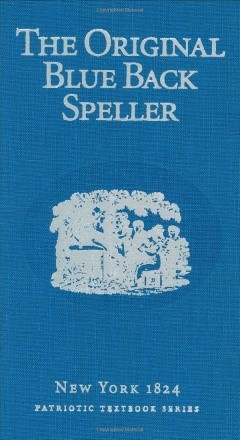
  • Between 1783-1785 he also wrote his “Blue-Backed Speller” spending most of his time getting it published and announced. (It was later published in 1824 as “The Original Blue Back Speller: A Patriotic Textbook Series.”)
  • At the same time he was writing these books, Webster was also working on copyright legislation to protect the works of all writers.
  • His relentless book promotion pioneered now common techniques like the author tour, the fabricated blurb and the aggressive stoking of manufactured controversy,” says New York Times book reviewer Jesse Sheidlower, the editor at large of the Oxford English Dictionary and the president-elect of the American Dialect Society.
  • Webster was known for writing constantly under various pseudonyms. Doing so he would often praise his own works and deconstruct the arguments of his critics. This is still being done today on the Internet under the label of “sock puppetry.”

So here is what I’ve learned from Noah Webster today: (1) write myself out of melancholy; (2) focus my writing efforts on subjects that tap into my passions, compassions, interests and ambitions; (3) don’t hesitate to self-publish; (4) use every avenue available to promote my books; and (5) if necessary, be willing to face critics with straightforward discussion.

Webster strongly promoted what he called American-English building an American linguistic style of spelling and pronunciation that lives and continues to grow to this very day. Without intentionally setting out to do so I believe he has given all writers permission to utilize our language in new ways; to create new words and combined words and related definitions; to write beyond our current skills, develop concepts for generations yet unborn, and publish in paper books, on the Internet and venues yet to be discovered. ⚓︎

RoyaleneABOUT ROYALENE DOYLE: Royalene has been writing something since before kindergarten days and continues to love the process. Through her small business—DOYLE WRITING SERVICES—she brings more than 40 years of writing experience to authors who need “just a little assistance” with completing their projects. This is a nice fit as she develops these blogs for Outskirts Press (OP) a leading self-publisher, and occasionally accepts a ghostwriting project from one of their clients. Her recent book release (with OP) titled FIREPROOF PROVERBS, A Writer’s Study of Words, is already receiving excellent reviews including several professional writer’s endorsements given on the book’s back cover.  

Royalene’s writing experience grew through a wide variety of positions from Office Manager and Administrative Assistant to Teacher of Literature and Advanced Writing courses and editor/writer for an International Christian ministry. Her willingness to listen to struggling authors, learn their goals and expectations and discern their writing voice has brought many manuscripts into the published books arena.