Self-Publishing News: 3.24.2020

Word MARCH. Vector decorative unusual object

And now for the news.

Highlights from this month in the world of self-publishing:

This thoughtful article from Joyce Jenje Makwenda, correspondent for The Herald of Zimbabwe, covers the life and passing of self-publishing pioneer Lillian (or “Lilly”) Masitera, “one of the few writers who had the self-confidence to challenge the monopoly of established publishers” back in the 1990s, and in so doing, “paved the way for self-publishing for many local writers.” Makwenda counts herself as one of Masitera’s beneficiaries, describing the evolution of this iconic African writer from childhood through years of writing creative “letters to friends and relatives before the era of e-mails and text messages.” From these letters, Masitera learned that she had a gift for communication that had the potential to touch many others beyond her letters’ reach, and the confidence to put her words out there. The US National Library of Poetry published several of her poems in a collection in 1995, and for this, writes Makwenda, “she was awarded the International Poet of Merit Award” courtesy of the International Society of Poets. While she faced the same challenges in marketing and distribution as all indie authors, Masitera managed to push through the difficulties and still find time to encourage other women authors to do the same. Her loss is felt throughout the global world of self-publishing.

This fascinating little profile from Grace Chang of the Daily Trojan covers the rise of Aaron Bergen, a freshman in college who started working on his first novel at age eleven and kept returning to that same story time and again until he finished it and brought it to publication this year. The book, titled 2049, “follows a young adult named Thomas, who discovers that his recently deceased father was working on a time machine and rebuilds the time machine to go back in time in an attempt to save his dad.” According to Chang, Bergen “considers himself a self-taught writer,” leaning on YouTube tutorials and gifted acquaintances to assist with beta reading and cover art design. He’s leaving the future open to a sequel, which means that this is one canny college freshman whose self-publishing story has just begun.


spa-news

As a self-publishing author, you may find it helpful to stay up-to-date on the trends and news related to the self-publishing industry.This will help you make informed decisions before, during and after the self-publishing process, which will lead to a greater self-publishing experience. To help you stay current on self-publishing topics, simply visit our blog each month to find out the hottest news. If you have other big news to share, please comment below.
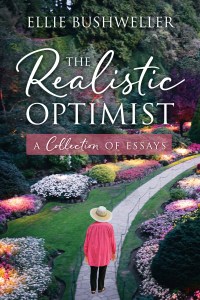


ORIGINAL BOOK REVIEW: The Realistic Optimist – A Collection of Essays by Ellie Bushweller

457827 Ellie Bushweller cover

OFFICIAL DESCRIPTION*:

This book was written by a person who has a full and active life as a wife, mother, grandmother, nurse, counselor and freelance writer. She has been a keen observer of many aspects of human interest.

It is a collection of essays that are concerned with a wide variety of topics. The essays are insightful, informative, humorous and hopeful.

This book should appeal to all those who are intrigued by all the joys and concerns that impact people’s daily lives.

REVIEW:

There are many essays out there in the world, and books like The Realistic Optimist are the best possible kind of persuasion I need to read more of them. Like many readers, my main exposure to the form came in college–first, as an undergraduate learning the basic definitions and structure, and then as a graduate student experimenting with genre expectations and strengthening my sentences. There were essays on supersonic planes, on oranges, on eclipses, on eating unprocessed foods, on shopping every store in the Mall of America, on sports, on hunting, and the list goes on. What there wasn’t, for the most part, was a collection of essays from a single author that captured my interest and felt like something more than a couple of really good works surrounded by filler.

Until now.

For most of a decade, Ellie Bushweller essayed for her local South Burlington’s The Other Paper. Her columns chronicled the daily lives of not just the people she met and the scenes she witnessed, but also the comings and goings of squirrels. Of seasons. Of one’s fellow bench-mates in the park. Of the tools and technologies that pass through our lives. Of time itself. Each of the roughly one hundred essays in this collection were written with conviction and heart, and while the occasional line indicates an essay’s origin in a newspaper column, the collection does not suffer from the change in delivery method.

It is fitting, I think, that The Other Paper would cover this collection of essays which it helped bring into the world with warmth and affection. There’s simply no reading of this book … and no encountering of Bushweller herself … without feeling touched by sunshine. One can easily see why and how she developed a loyal following among the newspaper subscribers of South Burlington.

Which isn’t to say that Bushweller hasn’t walked through some valleys and shadows and maybe even done dark alleys. After a childhood in Brooklyn, she grew into an adulthood as a nurse working to care for children and adults in a dilapidated city housing project. Still, despite life’s hardships witnessed and experienced daily, she clearly never closed her heart to the possibility of doing some good simply by being … a realistic optimist.

IN SUMMARY:

Come for the squirrel stories but stay for the bittersweet authenticity of a life lived with gusto and conviction, gentleness and generosity. The Realistic Optimist is rich with spirit and a balm in tough times. It is also a love letter to a decade of life in a specific time and place–South Burlington–that deserves witness.

WHERE TO BUY?

You can find The Realistic Optimist wherever good books are sold, including Amazon and Barnes and Noble. You can also find out more about Ellie Bushweller’s work on the book’s Outskirts Press author page.

WHAT NEXT?

I’ll be going back to one of my wheelhouses, which is to say novel-length works of memoir and nonfiction. (Although frankly, I can fall in love with any genre if the writing is strong.) I’m working on a memoir of combat in Vietnam: God, Me and the Blackhorse by Barry Beaven. I tend to be deeply affected by stories of war, so I’m taking it slow and checking in and out of some other, lighter works … but I think Beaven’s will be the next book to make it into my reviews. You can catch those thoughts on Beaven’s book in two weeks here on Self Publishing Advisor.


I received a copy of this book in exchange for an honest review. 

* Courtesy of Amazon book listing.


SONY DSC

ABOUT KENDRA M.: With nine years in library service, six years of working within the self-publishing world, as well as extensive experience in creative writing, freelance online content creation, and podcast editing, Kendra seeks to amplify the voices of those who need and deserve most to be heard.

Self-Publishing News: 3.17.2020

Word MARCH. Vector decorative unusual object

And now for the news.

Highlights from this month in the world of self-publishing:

We have a couple of really exciting success stories to share with you, our readers, this morning. First is this article from the digital megapowerhouse news-and-all-other-things website Mashable.  Contributor Sam Haysom opens his article by debunking the persistence of “self-publishing stigma,” an expression all of us here on the blog are familiar with from ages past. And “While questions over writers’ and publishers’ attitudes to this type of fiction may be up for discussion,” writes Haysom, “one thing seems pretty clear: A whole lot of people read self-published books. And a whole lot of writers are making money from selling them.” Three of those writers–LJ Ross, Rachel Abbott, and Adam Nevill–feature heavily in Haysom’s article, each contributing wisdom from lived experience following a unique path into self-publishing. We highly recommend you read Haysom’s whole piece in its entirety.

We have sung the praises of LibraryBub here on the blog before, but this month’s news is a serious highlight. The website, founded in 2015 to “mak[e] vibrant connections between indie and small-press authors and an extensive network of libraries,” is designed specifically to help libraries (and therefore their communities of readers) “identify acclaimed books from the independent publishing sector.” That’s you, folks. And while this particular press release mostly focuses on recent March releases that have gotten exactly that kind of acclaim, it’s worth noting that it provides links for both librarians and independent publishers (including self-published authors) to participate.


spa-news

As a self-publishing author, you may find it helpful to stay up-to-date on the trends and news related to the self-publishing industry.This will help you make informed decisions before, during and after the self-publishing process, which will lead to a greater self-publishing experience. To help you stay current on self-publishing topics, simply visit our blog each month to find out the hottest news. If you have other big news to share, please comment below.


In Your Corner: Finding a Home at Your Local Public Library

Books on shelf

Let’s face it, if there’s one place we go to find out information about books, it’s our local public library. Bookstores just feel like such a commitment sometimes, you know? But at a library, the art of browsing is elevated to an art form, and you can feel free to study the shelving arrangement, the genres, the popular nooks and crannies, the competition, and the various ways and means librarians use to “sell” their books to the public–all without feeling guilty for not buying something! In fact, if you’re “caught” browsing in a library and the librarians find our you’re a local author, you’re far more likely to get hooked into giving a book reading than you are to get shushed or to get side-eye from booksellers who really need to sell a certain number of books a day.

Libraries mean unlimited books and unlimited resources for free. And one of the best resources is the librarians themselves. Your local librarian can provide help with, yes, possibly setting up a book reading event to help you market your book, as well as finding answers to questions on how to have your book stocked in that library and much more. Librarians are an amazing source of help and information!

What are some other ways you can promote your book by using the library?

  • Donate a copy (or several copies) of your book to the library. Be sure to go through the proper donation channels.
  • If your book is geared towards children, give a school library presentation on your book’s subject. School libraries are always looking for new books! Just make sure to reach out through the proper channels (i.e. through the principal and administration, as well as the librarian).
  • Connect with librarians via social networks. Twitter, Facebook, and LinkedIn are powerful ways to network!
  • Stock promotional materials such as flyers and letters at local libraries. Be sure to include of the essential information about your book such as subject, genre, audience and purchasing information. It’s best to ask if they’d be willing to stock these supplies on their “freebies” counter or in their brochure pocket wall first, just in case they need to check their policies.
  • Ask a librarian to review your book in a local publication. This will bring positive attention to your book and encourage other locals to buy it! You might even be able to get a librarian to review it in your library’s state or regional newsletter, which would encourage other librarians to buy it.

Libraries are a powerful part of your book promotion strategy. Creative marketing tactics can increase your chances of a library stocking your book. They can also lead to great relationships with librarians and readers. The best way to find out what your local library wants is to talk to the librarians. Work on building an honest relationship, and you may just find one your book’s best promoters.

Not sure where to find your local library? Hop on www.publiclibraries.com and search by city, state, or zip code–or you can visit the American Library Association (ALA) at www.ala.org, where you’ll find loads of information on the current state of libraries and how you can get involved, both as a self-publishing author and a lover of books!

You are not alone. ♣︎

Do you have ideas to share? Please don’t hesitate to drop us a line in the comments section, below.

Elizabeth

ABOUT ELIZABETH JAVOR: With over 20 years of experience in sales and management, Elizabeth Javor works as the Director of Sales and Marketing for Outskirts Press. The Sales and Marketing departments are composed of knowledgeable publishing consultants, customer service reps and book marketing specialists; together, they all focus on educating authors on the self-publishing process to help them publish the book of their dreams. Whether you are a professional looking to take your career to the next level with platform-driven non-fiction or a novelist seeking fame, fortune, and/or personal fulfillment, Elizabeth Javor can put you on the right path.

Self-Publishing News: 3.10.2020

Word MARCH. Vector decorative unusual object

And now for the news.

Highlights from this month in the world of self-publishing:

Self-publishing is HUGE in the United States, and very accessible. But what about in other countries? This article from the Regina Leader-Post out of Saskatchewan, Canada, offers some interesting insights into just what the industry has done to instill change beyond our national borders. Lynn Giesbrecht chronicles the journey of one author whose work was published traditionally, only for the publishing house that released it to go bankrupt shortly after, taking her book down with it. The grim summary is that “the cost of producing a book in Canada has jumped by 40 per cent since the 1990s while retail book prices have remained virtually the same. This has caused profit margins for the publisher to drop from between 10 and 12 per cent per book to single digits.” But not all is looking so grim, writes Giesbrecht: one respected author of science fiction has recently gone indie, reporting that “Over the last few years, Willett has seen a steady rise in the number of Saskatchewan authors turning to self-publishing or using local publishers instead of submitting their manuscripts to the major companies.” While the loss of any small or indie publishing company is a hard blow to the province of Saskatchewan, the general attitude seems to remain one of upbeat ambition.

On the one hand, this review in the form of a forward is just that: a review of a book about academics who have successfully carved out a niche beyond traditional academia, making use of new platforms and new opportunities courtesy of this digital, connected, global age. But on the other hand, this review/forward by Joshua Kim to the website Inside Higher Ed gives us a critical insight into the ways in which self-publishing has become foundational to even general conversations about the state of supposedly “unrelated” fields. As we’ve noted in previous news summaries and other pieces here on the Self-Publishing Advisor blog, many professors are moving away from traditional textbooks and towards open resources that their students can access for free. In an age where the average textbook seems to cost more than a bout of gambling in a Vegas casino, it’s hard to justify paying for–or asking one’s students to pay for–a book that they’ll likely never look at again, save to perhaps (if they’re lucky) pass it off to another student at a fraction of the price. But Kim’s summary, while it is specifically referring to just the one book, also hints at whole new aspects of connection between academia and self-publishing. It builds a case for the 1974 self-published The Moosewood Cookbook helping launch a generation of “vegetarian academics,” academics who were more likely to question the status quo, and more likely to pursue “alt-academic” careers, and more likely to turn to open resource and self-published materials as resources–or create them themselves. Are we reading a little too much into this? We leave it to you to decide.


spa-news

As a self-publishing author, you may find it helpful to stay up-to-date on the trends and news related to the self-publishing industry.This will help you make informed decisions before, during and after the self-publishing process, which will lead to a greater self-publishing experience. To help you stay current on self-publishing topics, simply visit our blog each month to find out the hottest news. If you have other big news to share, please comment below.