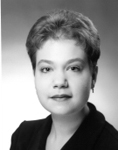
Guest Post – 5 Social Tools for Authors by John T. Meyer

You all know as readers of this blog the publishing industry has changed drastically. Whether you are an author or a publisher the game is different today: cost of production is down, marketing channels are everywhere, and you can even eliminate the middle man. Much of this change can be attributed to technology.

As a social technology consultant I spend everyday helping businesses, brands, and bloggers utilize today’s social technology. Today I thought I’d take a look at what specific tools and channels an author can take advantage of. I’m going to focus on authors, and I also want to point out that every single one of these tools is free.

  1. Name Chk – I’m sure the right way for authors to name a book is at the very end, but I just get excited about names. Use a tool like name chckr to scan across all social networks to see if your desired name is available. You still can name your book whatever you please, but you’re going to want to utilize social media to promote.
  2. Search.Twitter – This website is what takes Twitter to the next level. There are plenty of web apps that do similar things, but when it comes to listening on Twitter it doesn’t get any better. Run searches on keywords in your industry, topics related to your book, and influencers who can help promote. You can use Search.Twitter before writing as a research tool, or after publishing as a promotional tool.
  3. Facebook Ads – I know you’re thinking, I never click on a Facebook ad, but that isn’t the point. A successful author today has to target a specific audience of readers. The best-selling books are targeted at a niche that needs the content. Facebook Ads have an incredible ability to target to exactly who you’re looking for. With the ability to sort by age, gender, geography, education level, and interests you are bound to find your book’s audience. Facebook Ads can be affordable and build massive awareness.
  4. Square – When it is time to sell, you don’t need a POS system or the bookshelves of Barnes & Noble, just sell the book yourself – on the go! Square is that nifty sugar cube like credit card reader that plugs nicely into your iPhone, iPad, iPod Touch, or Android’s headphone jack. Just swipe a card and receive the payment. No monthly fees, no cost for the device, just a 2.75% transaction fee (which is quite competitive I might add).
  5. Google+ – Part of my job is jumping on and trying the latest and greatest in social technology, but usually I go into a new network with a lot of skepticism. Especially when Google (a search company first) attempts to do something social (e.g. Google Wave, Google Buzz). However, this time around I’m a bit more intrigued. I believe Google did something right this time with Google+ and I want to spend more time digging into it. As a brand new network, I think the opportunity is out there to build a strong brand on G+, and we all know a best-selling author needs a strong brand.

For questions on these tools or others hit me up on Twitter (@johntmeyer) or feel free to email me at john (at) 9clouds (dot) com. Also, learn more about social technology in our product Sandbox, an online community that makes social technology easy.


Book Stores, Book Signings, and Media Events for the Self-published Author

Successful book promotion involves both online and offline sales. There are a number of progressive online book marketing tools available for the self-publishing author today, but the tried and true book signing or media event remains quite viable and a lot of fun. Here we’ll take a look at a 3 part approach to promote your book through media events.

Media events and public appearances can fall into any number of categories and include any number of venues (bookstores, radio interviews, television interviews, writing group speeches, presentations, chat room interviews, public forums, and more).

First things first: identify possible venues. You may begin searching media events through your local bookstore. Local bookstores will often collect event calendars and maintain a list of contact people who provide those opportunities.

Media contacts often send announcements of upcoming events. Keep tabs on those listings and note if any relate in any way to your book content. It’s generally easy to develop correlations and tailor your approach to make your presentation applicable. When contact information is available take the first step and approach the organizer.

The art of selling—be prepared to promote yourself and your work. The true art of selling is bringing helpful and enriching information to people’s lives. In that light, sales takes on nobility. Be proud of promoting. You may not close the deal every time, but be sure to follow-up with every prospective media venue to confirm dates. Selling yourself and your book is a numbers game, and as any salesperson will tell you, the amount of contact is directly proportionate to the amount of sales. Be persistent without being annoying. If, after three or four unsuccessful attempts with a particular venue, move on to another prospect.

Finally, your self-publishing firm may offer assistance. Be sure to check with your representative.

Books a Million: Marketing in the Digital Age

It was nearly a year after Google was founded that they saw even their first mention in the New York Times, as a mere parenthetical. In fact, most major online companies—Twitter, YouTube, Facebook, even Amazon—began in relative obscurity.

In today’s instant gratification, online world that dynamic seems almost backward, especially when as publishers and authors we often conceptualize a big-launch book publication as a measure of success. The big launch is what we’re used to. Think Harry Potter.

It can be helpful to plan major marketing events around your book launch. But, in today’s marketplace and through the long-tail effect, it’s time to take a different approach. There are virtually millions of books published every year, a massive increase in volume from just a decade ago, thanks in large part to POD and full-service self-publishing. Book marketing has changed as well. Think long-haul. With a bit of work and support, you may be surprised what success you find not one day or even one year after publication.

Book Reviews and Editing

Q: Can you tell me if reviewers ever judge based on editing/style? So many authors/editors do things differently that I guess they just look for consistency. What I was not sure about was use (or overuse) of commas. Can you tell me if commas should be in these sentences?

“That’s what I thought,” Mark said with a smile. (comma before “with”) and “Yeah, such a storm we had..” Mark said sarcastically.

Is it just preference? If so, would it look bad if the author put commas for some, and not for others?

A: Most reviewers consider everything about the book, including the cover, content, editing, writing style, plot, characterization, flow, resolution, and more.

The volume of commas is not important; what is important is that the commas must be used correctly. How can you know where the commas go, when we were taught one style in school, newspapers use another style, and book publishers use yet another style? Book authors (or their editors) should follow Chicago Style, which book publishers follow, because it dictates punctuation, capitalization, abbreviation, when to spell out a number and when to use a numeral, etc. Once that style is followed, commas will be in the right places and the volume of them won’t matter.

As for your specific examples, the first example is fine, but the second one has two periods and no comma before the attribution. It should be written this way:
“Yeah, such a storm we had,” Mark said sarcastically.

If the attribution were a stand-alone sentence, the example would be punctuated this way:
“Yeah, such a storm we had.” Mark spoke sarcastically.

Self-publishing Advice Guest Post: Ask the Book Doctor

Bobbie Christmas, book editor, author of Write In Style (Union Square Publishing), and owner of Zebra Communications, will answer your questions, too. Send them to Bobbie@zebraeditor.com. Read more “Ask the Book Doctor” questions and answers at http://www.zebraeditor.com


Self-publishing Costs: POD vs Offset Printing

Publishing has traditionally operated on a model of offset book printing where the publishing house pre-prints a set number of books based on what they feel they can successfully sell. Authors would receive an advance (yes – get paid upfront) based on that projection, and receive a royalty percentage on sales, typically 10%, only if books sold beyond that initial number.

Self-publishing authors have the option to print offset as well, and receive royalty figures well beyond that 10% mark.

As you consider your self-publishing options, you may be wondering whether the right choice for your book is offset printing or the newer POD model.

Here are 5 details to consider…

5 – With offset printing you will pay in advance for a large number of books, regardless of whether you sell any.

4 – Your books begin, and often end, in your basement or garage not in reader’s hands.

3 – Even after you pay to print your book, you still have to find a way to distribute it, and then you have to track sales, invoice customers, and ship product.

2 – Your book will go out of print unless you pony up more dough for another print run.

1 – An off-set order requires “overages” of 5%-10% of the quoted print-run. That means if you order 2000 books, you may actually get (and be required to pay for) 2200.

If you are considering self-publishing through a printer, the price quotes you received may have scared you. No wonder. Newsweek Magazine recently noted that it generally takes an investment of $5,000 – $25,000 to self-publish a book through an offset printer.

Time to think POD?