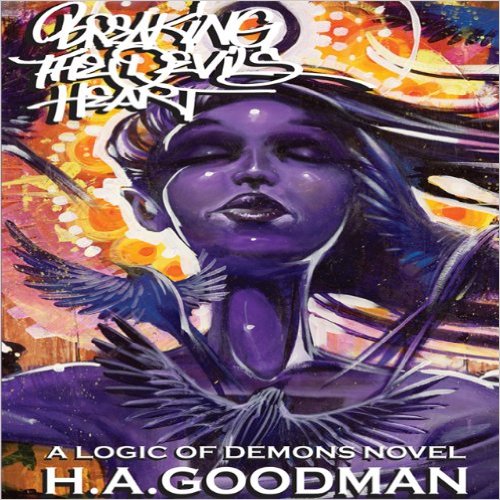
Weekly Self-Published Book Review:Breaking the Devil’s Heart

Book reviews are a great way for self-publishing authors to gain exposure. After all, how can someone buy your book if he or she doesn’t know it exists? Paired with other elements of your book promotion strategy, requesting reviews is a great way to get people talking about what you’ve written.

When we read good reviews, we definitely like to share them. It gives the author a few (permanent) moments of fame and allows us to let the community know about a great book. Here’s this week’s book review by Midwest Book Review:

breaking the devils heart

Breaking the Devil’s Heart

H. A. Goodman

Publisher: Outskirts Press

ISBN:9781432790790

Heaven and Hell aren’t as simple as Black and White. “Breaking the Devil’s Heart” starts off with the murder of Stewart Willoughby as he faces the afterlife, and finds it more complicated than angels and devils. Stewart finds his new purpose in his afterlife is a complex one to go against the bureaucracy of hell and end evil. A thoughtful spin of faith and the nature of good and evil, “Breaking the Devil’s Heart” is a strongly recommended pick for fantasy fiction collections.

Here’s what some other reviewers are saying:
Recommended for: those who question and seek, those with ideas rather than belief
Disclosure: I received a free copy from the author in exchange for an honest review.

Synopsis: When Stewart and Layla recruit a demon to spy on the Devil, their decision takes them on a whirlwind ride through the afterlife. Journey alongside this young couple in H. A. Goodman’s new novel, Breaking the Devil’s Heart, and join forces with a teenage Angel outcast to bankrupt Satan’s underground Company and save Heaven from civil war. H. A. Goodman’s Breaking the Devil’s Heart is a rollercoaster afterlife experience that tests a young couple’s love, their grasp on reality, and the essence of human nature. What happens when Stewart and Layla tour Hell’s Marketing Department and Stock Exchange? What happens when their relationship is tested by Satan? This book is unlike anything you’ve ever read, or ever thought the afterlife might be like. Breaking the Devil’s Heart is an enlightening look into an alternate world, a new afterlife, and a profound journey inside the human conscience

My Thoughts: This is actually the second book in the Logic of Demons series, after Logic of Demons, but the author recommends reading it first.

I have to admit that the idea of Hell being a bureaucracy appeals to me at a deep level. The low-level drudgery not only appeals to the absurdist in me, but actually makes more sense than hellfire and brimstone. I’m sure more office drones would agree that some hellfire and brimstone would be a relief compared to some of the long days at work. I also liked the idea of the Observers, or (as Stewart sometimes calls himself) naughty Angels.

The author really delves deeply into human behavior, often turning a quite unflattering spotlight upon our preconceptions. One demon says something that really sums up The Formula perfectly: “Think about it: it’s easier to shoot up a McDonalds (sic) than it is to feed starving people in some remote part of the globe. With one pull of a trigger or one too many glasses of cognac behind the wheel, unspeakable damage can occur. But tremendous goodness and altruism takes a great deal more work and far more effort. The system is skewed in one direction – ours.” Yet Stewart and Layla just can’t seem to get past their somewhat naïve idealism that humans are essentially good.

There are some great twists toward the end, but I don’t want to spoil those for you. This is a fairly quirky story, but very deep and delving into the darkest corners of the human psyche. With this book it is hard to say who will like it – I think I can pretty safely say that most agnostics will like it, most people who have questions about the afterlife, those people who have ideas instead of beliefs. There are some parts that are quite funny, especially to someone like me who finds the whole idea sort of absurd and amusing, but the overall book is fairly serious. I enjoyed it, and I recommend it.

Conversations With A Self-Publishing Writer: 08/21/2015

WHY SHOULD I PUBLISH? Part III

Now that some of the decision-making publishing stress triggers have been talked about, I will briefly mention one more stressor and then move forward with the FUN parts of publishing.

Publishing Contract

IF you’ve decided to test the traditional publishing waters the CONTRACT(S) you’ll be asked to sign can be intimidating.

  • Literary Agent contracts (or agreements)!
    • Most authors look at the Agent Commission percentage(s) first. Standard rates range from 15% (of you advances/royalties) up to 25%.
    • Higher rates could mean that they plan to “split” commissions with a co-agent, someone you may never meet or know—or want to work with.
    • Verbiage you’ll need to understand includes: domestic and/or foreign/overseas sales, dramatic sales, and other concepts such as “bargain rates for first time authors.” Beware of those bargains.
    • MOST important is what “authority” is being given to an agent with your signature on that contract. Are you agreeing to work with/pay this agent for the longevity of this ONE book or several? Is there a Retainer Fee? What Agent expenses will they want reimbursed?
    • HOW is their “termination clause” written? Can you (or they) terminate the contract at any time for any reason?
  • Publishers Contract…
    • Yes, your Agent is an excellent resource for explaining every paragraph of this publishing house agreement and a strong advocate for encouraging the best possible agreement between all parties. However, many authors I know want will still retain a Literary Lawyer to “review” it.
    • Traditional Publishing is a “for profit” business industry, and their contracts are specifically written for enhance their interest—not the author’s best interests.
    • Over many years, The Writer’s Digest has offered multiple articles about the ins-and-outs of publishing contracts. This is an excellent place to start your research into: Rights, Subsidiary Rights, Royalties, Advances and most importantly Copyright ownership.
    • There are still sad stories being told by authors who signed away overseas rights or movie/film/TV rights and lost their rightful income from those venues.

BOTTOM LINE about these Contract/Agreement stressors is BE PREPARED by reviewing multiple sample contracts (found online), and talking with Agents and Literary Attorneys at writing conferences and/or by phone if they are willing to offer a brief “free” consult.

IF you Self-Publish you’ll also sign an Agreement.  However, the language is usually very straightforward, clearly outlining the responsibilities of both parties—Author and Press.

NOW…about the FUN part of becoming a Published Author! Next week I’ll share with you the JOY I felt the moment I held my first book in my hands and the EXCITEMENT of signing that first autograph, reading the first online review…and more! ⚓︎

RoyaleneABOUT ROYALENE DOYLE: Royalene has been writing something since before kindergarten days and continues to love the process. Through her small business—DOYLE WRITING SERVICES—she brings more than 40 years of writing experience to authors who need “just a little assistance” with completing their projects. This is a nice fit as she develops these blogs for Outskirts Press (OP) a leading self-publisher, and occasionally accepts a ghostwriting project from one of their clients. Her recent book release (with OP) titled FIREPROOF PROVERBS, A Writer’s Study of Words, is already receiving excellent reviews including several professional writer’s endorsements given on the book’s back cover.  

Royalene’s writing experience grew through a wide variety of positions from Office Manager and Administrative Assistant to Teacher of Literature and Advanced Writing courses and editor/writer for an International Christian ministry. Her willingness to listen to struggling authors, learn their goals and expectations and discern their writing voice has brought many manuscripts into the published books arena.

An Indie Author’s Social Media Primer | Goodreads

In contrast to last week’s post, which looked at a social media platform that is less-used (might I even say underused?) by indie and self-published authors, this week we’ll be examining the other end of the spectrum–at a platform that has been mined so often and so thoroughly for its marketing potential that setting up a profile has almost become a requirement.  I’m talking about Goodreads, if you haven’t already guessed, a website we’ve looked at before on Self Publishing Advisor.  Fortunately for us and for you, however, it’s a website that keeps evolving, and keeps generating new possibilities.  I can definitively say that most authors know some of the buzz about Goodreads, but very few know all of the ways in which this platform can be of use.

Goodreads

For those of you who are new to Goodreads (and don’t be ashamed if you are, despite what I just said about authors definitively knowing things–there’s always going to be some new corner of the Internet to explore!), what is this website?  In short, it’s a cross between Facebook and Amazon for readers and writers and those involved in the dissemination of books.  All users can create profiles, log the books they’ve read or are reading or want to read, rating them out of five stars and posting book reviews as they go.  You can find your friends by interlinking your Goodreads account with Facebook or Twitter or Amazon, or by using their email addresses.  (Goodreads was purchased after its stratospheric rise by Amazon, so a lot of its features (like reviews and “buy from these retailers” links) are already well-integrated into that other behemoth of the book industry.)

Authors get even a little more love, in that they can create specialized “Author Pages” that list their books (including pictures of their book covers), link to blog posts, and allow authors to create and manage book giveaways.  Goodreads is so passionate about making promotion easy for authors that it has even put together a comprehensive web page describing how to best use their features–you can find that here–and have left me almost nothing to add except a little style and flourish.

No, that’s a lie.  I still have a lot to say about Goodreads!

Debunking the Great Goodreads Myth: “If I have Facebook and Amazon, I don’t really need another spot to store all my book recommendations, do I?”

Oh, but there’s something so incredibly satisfying about falling into a community that shares your passion for literature, isn’t there?  Amazon was created to sell things, and its “social” structures were integrated into that website after they were proven to be marketable.  Facebook was created to be social, and its “profitable” structures were integrated into that website after they were proven to have social elements.  Goodreads, on the other hand, was designed around the reading experience, to aid and abet readers and writers in sharing their love of literature.  Both social and marketable elements shaped the platform’s earliest concepts, and so the fusion of these two aspects is 100% seamless.  To be sure, it won’t replace your Facebook or your Amazon account, but it occupies a third space–and an equally compelling one, in my opinion.  It fills a niche and fills it perfectly.

Top 5 Best Practices:

1. Set up an author page.  Do it.  There’s no excuse not to, not when the resources are literally right there at your fingertips, delivered on a platinum platter by Goodreads’ own staff.  And if you’ve already published books, don’t worry–you can “capture” existing books in the system and take ownership of them, even if one of your readers has beaten you to entering the vital statistics into the system.  And if you run into trouble, the Goodreads staff are always quick to respond to both emails and posts in their help forums.  There’s a seemingly endless list of possible situations that the staff will troubleshoot for you.  Remember all of my past references to “findability”?  Setting up a Goodreads author page and filling in as many of the empty fields as possible will, without fail, make you more findable.  Have you googled a book recently?  More than half of the top search results for the average book link back to Goodreads–reviews, book pages, author pages, and forum posts.

2. Be a reader–an active reader.  Quite apart to the other benefits of being an avid reader (which I’m sure you are, already!), being an active reader on Goodreads has some serious benefits for your self-promotion methods.  The more books you review–actually review, not just leave a three- or five-star rating–the more people will see your name and follow the name back to your author page, and land on your books.  Even established authors with big followings will benefit from reading and from using Goodreads as the tool it was designed to be–a platform for sharing one’s passion for the printed (or digitized) word.  Other readers pick up on passion, enthusiasm, and authenticity.  I have been followed by a whole host of strangers on Goodreads who see my reviews, and you can bet they form a perfect nucleus of potential new readers.

3. Encourage your readers and followers to write reviews.  Elsewhere, even offline or apart from Goodreads, reviews are a wonderful–or even necessary–component of a sound marketing strategy.  Whenever you click on a book page in Goodreads, you’re delivered a whole sheaf of reviews, and the ones with the most “likes” are prioritized by the website to be displayed at the top of the sheaf.  Other readers and respond to reviews by liking, or by replying with their own comments.  However you incentivize the posting of reviews on your own books (see my next point), make sure that you do incentivize it!  At the very least, encourage your readers to check out your Goodreads author page.  The more people who interact there, the more links and metadata that is generated, and the more “findable” you are through indexing search engines like Google and Bing!

4. Host a giveaway!  I’ll admit it, I’m a giveaway addict.  (And I know I’m not alone–FREE BOOKS?!?!  Who wouldn’t be?!)  Goodreads makes hosting a giveaway so incredibly easy.  I will sit there for hours perusing the list of upcoming giveaways, signing myself up and crossing my fingers that I win this or that one.  New readers will find you simply by virtue of the fact you’re holding a giveaway … and this is before you even let your existing fans and social media followers know that they can enter!  (And again, don’t be afraid of the Goodreads forums.  There’s a lot of excellent information to mine there.)  You can only host a giveaway if you’re a book’s author or a bookseller, and there’s a heavy emphasis on giving away new books, upcoming releases, and new editions of previously published books.  By limiting giveaways in this way, Goodreads has cultivated a certain level of respectability and credibility that you won’t find in a lot of other places.

5. Join a group.  Goodreads is built around networking, so make sure to take full advantage of all of the networking options on the website–whether that’s creating a book list through Listopia, or posting reviews of books you’re reading, or posting blogs to your author page, or joining a group.  The groups are where a lot of the fun happens, and you can find a group to fit even the most specific interest.  There are book groups based on genres, on careers (librarians and booksellers are well-represented, as you might expect), on where you live or used to live (the LA Transplants book club group looks quite interesting), what you do in your leisure time, and, of course, a whole bunch of groups that cater specifically to you, the indie or self-published author (including this one!).  If you haven’t already found “your people,” you might just find them in a Goodreads Group.  You’ll find encouragement, information, instruction, and feedback.  The key to a good group experience is, as with all things social media, living as authentically online as you do offline.

Most Overlooked Feature:

In my mind, this one comes down to two possibilities: Goodreads Events, and Listopia.  In some ways, I feel as though Listopia is on its way out while Events is still quietly going strong and perhaps growing in its possible offerings.  In essence, you can use Events to organize real-life or digital meetups, including book readings and sales or online promotions.  You get to invite both current Goodreads users as well as non-users (by sharing the link), and you can manage each event to meet your personal preferences for a “public” versus “private” or “restricted” guest list.  Yes, Facebook also provides options for event invitations and meetups, but they’re less specific to the book industry–and, simultaneously, less likely to be stumbled-upon by new readers.  In any case, you can’t hurt your chances by trying it out!

I hope you’ll join me in building this Social Media Primer!  If you have any questions, comments, suggestions, or contributions, please use the comment field below or drop us a line at selfpublishingadvice@gmail.com.  And remember to check back each Wednesday for your weekly dose of social media know-how. ♠

KellyABOUT KELLY SCHUKNECHT: Kelly Schuknecht is the Executive Vice President of Outskirts Press. In addition to her contributions to the Outskirts Press blog at blog.outskirtspress.com, Kelly and a group of talented marketing experts offer book marketing services, support, and products to not only published Outskirts Press authors, but to all authors and professionals who are interested in marketing their books and/or careers. Learn more about Kelly on her blog, kellyschuknecht.com.

From the Archives: “How Much Do Self-Published Authors Make Per Year?”

Welcome to our new Tuesday segment, where we’ll be revisiting some of our most popular posts from the last few years.  What’s stayed the same?  And what’s changed?  We’ll be updating you on the facts, and taking a new (and hopefully refreshing) angle on a few timeless classics of Self Publishing Advisor.

∗∗∗∗∗

[ Originally posted: July 13th, 2011 ]

You want to become a self-published author, but you also have bills to pay and a lifestyle to maintain. So you pull up Google (or your search engine of choice), and search for “average income for book authors” or “average income for self-published authors”. You skim the results but can’t find any solid statistics. There’s a good reason why. Ready for it? Authors aren’t paid a salary. They earn royalties based on the sales of their book. These royalties are paid to them on a set schedule – usually provided that they meet the agreed upon “minimum earning threshold”.

So, will I be able to pay my bills if I become a self-published author? That’s an excellent question. Unfortunately, there is no “one size fits all” answer to it. When you publish a book, you are essentially taking a “gamble” on yourself. Many authors keep their day jobs until they are able to earn enough to support themselves on their book sales alone. One dedicated Outskirts Press author made $100,000 in only 180 days (6 months). However, there are some authors who don’t earn anywhere near this amount in a year. Furthermore, there are some authors who may not sell even one book over the course of a year.

How do you know where you fall? Self-publishing is all about investing in yourself. Given that successfully publishing a book involves 20% writing and 80% marketing, you should naturally spend most of your time/money on promoting the book after you write it. If you need help, you may consider enlisting the services of a book marketing consultant.

The income of a self-publishing author is 100% in their own hands. No one can “predict” how much you will earn as that is only a result of two things:  the quality of your book and substantial effort in marketing it to the right audience.

Moolah

 Four years (and a few weeks) have passed since Elise first posted this blog about potential profits in self-publishing, and everything she wrote about then still holds up today.  But if you were looking for some statistics or some hard data to back up her assertions, consider the following information mined from a 2013 Forbes article:

  • 20% of self-published authors reported making no income at all from their writing, with a median income of under $5,000.
  • traditionally published authors had a median income of between $5,000 and $9,999.
  • hybrid authors–those who self-publish through a company like Outskirts Press–had a median income of between $15,000 to $19,999.
  • of authors who self-published, 1.8% made over $100,000 from their writing (in 2012); of traditionally published authors, 8.8% made a comparable amount; outdistancing the pack, hybrid authors performed the best, with 13.2% making over $100,000 in the same year.

The Forbes article stressed that theirs was an “non-scientific” sampling, so as not to be construed as “nationally representative” or even wholly accurate.  Still, when you look at the data, you can’t help but be impressed by one thing: hybrid authors are making out like bandits, comparatively!  We shouldn’t be discouraged by the first point, as the numbers don’t look all that great for traditionally published authors when it comes to profit and loss.

Take a look at this article from Publishing Perspectives, which includes a beautiful little infographic breaking down earnings by price bracket.  Those authors who make no money at all are fairly similar between traditional and self-publishing groups, but drop dramatically in the hybrid bracket.  On the whole, hybrid publishing platforms tend to spread out the earnings, percentage-wise, whereas self-published and even traditionally-published markets clump authors together into the lower income brackets.  (All but the Lucky Few, that is.)

All this to say, there’s been a shift in the last five years away from “strictly” traditional and “strictly” self-published modes of authorship.  The advent of indie and hybrid publishing–the diversification of the entire publishing system–has created more opportunities and more middle ground for authors who want to remain in control of the creative process.  None of this impacts Elise’s sound recommendation to stick to the 20/80 ratio (20% writing, 80% marketing)–but it does provide food for thought when it comes to offloading some of that marketing to professionals.  It’s no longer a question of “Can I find a niche?” but rather “Who is going to market my book most effectively?”  The answer isn’t always what you might think. ♠

KellyABOUT KELLY SCHUKNECHT: Kelly Schuknecht is the Executive Vice President of Outskirts Press. In addition to her contributions to the Outskirts Press blog at blog.outskirtspress.com, Kelly and a group of talented marketing experts offer book marketing services, support, and products to not only published Outskirts Press authors, but to all authors and professionals who are interested in marketing their books and/or careers. Learn more about Kelly on her blog, kellyschuknecht.com.

News From the Self-Publishing World: 8/17/15

This week in the world of self-publishing:

Here’s What I Learned By Self-Publishing My YA Novel

In this MTV.com article, Brenna Ehrlich shares what she learned from self-publishing her YA novel. She discusses why she picked the self-publishing route over traditional publishing and tells other writers that, while it requires hard work, self-publishing is a possibility for them as well. She also gives useful advice such as hiring a professional editor, using beta readers, and more. Learning from successful self-published authors is a great way for you to improve your craft and self-publishing strategy.

BCALA, BiblioBoard Launch Self-Publishing Award

Librarians have long sought more guidance on self-published books as well as books by authors of color. Aiming to answer both needs is a new award offered by the Black Caucus of the American Library Association (BCALA) and BiblioBoard (the company that partners with LJ on SELF-e), called the SELF-e Literary Award. It will honor the top self-published fiction and poetry ebooks by African American authors who were born in the United States, with the winners receiving $500, formal recognition at the Black Caucus of the ALA Literary Awards, and a BCALA Literary Award Seal to use on their books. Not only is the lauding of self-published books a first for the BCALA, the new award will also be the group’s first to recognize digital content. Awards are a great way for authors to gain exposure and credibility. For submission details, be sure to check out the full article.

What I Learned When I Self-Published My Book

Writer, actress, and producer Lisa Marie Wilson shares what she learned when self-publishing her book. Her story includes why ebooks are more cost effective, how to apply for a copyright, the motivation behind her book, her regrets, and her plans for her next book. Her story is inspiring and informative. It is a must read for writers.

The Myth of The Lazy Writer

Successful authors work their butts off whether they self-publish or publish with a traditional publishing company. There is no such thing as a lazy successful author. In this Booklife.com article, self-publishing expert Hugh Howey debunks the myth of the lazy writer. He argues that regardless of the publishing route, writing and publishing is tough work. This is an interesting read for writers deciding which publishing route is best for them and for anyone who needs a reminder that they aren’t a lazy writer.

As a self-publishing author, you may find it helpful to stay up-to-date on the trends and news related to the self-publishing industry.This will help you make informed decisions before, during and after the self-publishing process, which will lead to a greater self-publishing experience. To help you stay current on self-publishing topics, simply visit our blog every Tuesday to find out the hottest news. If you have other big news to share, please comment below.

KellyABOUT KELLY SCHUKNECHT: Kelly Schuknecht is the Executive Vice President of Outskirts Press. In addition to her contributions to the Outskirts Press blog at blog.outskirtspress.com, Kelly and a group of talented marketing experts offer book marketing services, support, and products to not only published Outskirts Press authors, but to all authors and professionals who are interested in marketing their books and/or careers. Learn more about Kelly on her blog, kellyschuknecht.com.