Ezines: Promote your Self-published Book

The digital age brings us a virtually unlimited number of ezines straight to our computer screens and finger tips, each with a specific niche or category. With so many free and competing factions most are voraciously hungry for content. Ezines are a great way to generate content AND promote your book (either before it is published by building a “name” for yourself) or after it is published.

Rather than seeking them out individually, you can place your articles into databases that ezine editors frequent for content. They use your article free of charge, and in exchange, include your biographical byline, which includes information about you and your book.

Here are some to check out:

http://www.ezinearticles.com
http://www.ebooksnbytes.com
http://www.connectionteam.com
http://www.netterweb.com
http://www.ideamarketers.com
http://www.goarticles.com
http://www.knowledge-finder.com
http://www.articlecity.com

Don’t send them the same article you published last week. Instead, write another chapter of your book first (since finishing your book IS the main goal, after all.)

– Karl Schroeder


Share this Post

Have fun and keep writing

Self-publising top 10: Advantage 1

1 – Authors are required one-time only upfront investment…

Yes, quality self-publishing services will require a one-time upfront investment. While not as important as your book pricing structure, distribution, and royalties on the back-end. Upfront service prices deserve a quick look.

Here are a couple of red flags.

1. HUGE DISCOUNTS! PUBLISH NOW AND SAVE XX%!!!
There are more than enough self-publishers offering HUGE savings. Always. That usually indicates that the savings aren’t real. Instead, packages and/or services are artificially inflated. This is true in any business across every industry. You’ve worked hard. You deserve what you pay for. I was born in Vegas. Ever been? Be wary of the bright, flashing lights.

2. GET PUBLISHED FOR FREE!!! (the opposite end of the spectrum)

Business 101. Nothing is free. It’s worth taking a look at the contract and asking, what am I really getting here. Not a good time to fall to instant gratification. You’ve worked hard and deserve a publisher that works for you in return. Again, make sure your get what you pay for. Well worth it is the time researching a publisher that will partner with you to publish your book as successfully as possible.

A quality self-publisher will value you, and upfront prices will stand by that.

– Karl


Share this Post

have fun and keep writing…

Self-publishing’s Strongest According to Inc. Magazine

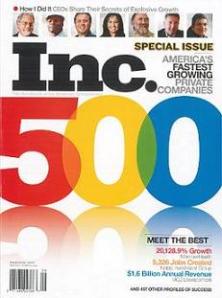
Inc500Cover2Inc. Magazine released its annual top 500 fastest growing US businesses yesterday. Outskirts Press, Inc ranked #268 on the list, and exclusive among full-service self publishing outfits. With on-demand publications up 132% over the previous year, Outskirts Press finds itself the fastest growing provider in the fastest growing segment of the book publishing industry. Congratulations Outskirts Press.

Author Solutions – the only other self-publishing related provider recognized, came in at 3266 among the top 5000 companies.

Congratulations self-publishing.

– Karl Schroeder

Self-Publishing: Give me six hours…

Give me six hours to chop down a tree and I will spend the first four sharpening the axe. – Abraham Lincoln

Let’s look at breaking down your self-publishing book project into the short, mid, and long range in terms of the process in goals. The actual time involved for each phase varies with each author and each project. Nevertheless, you’ve worked hard on writing, revising, and preparing your book for publication. Congratulations. The first step or phase is done or nearing complete, and it’s time to publish.

Many authors confuse this second step – actual publishing – with step 3. Let’s slow down and take a closer look. Phase 1 is the writing, or artistic phase. Step 2, the publishing or business step. Time to begin sharpening the axe. Upfront prices are important, but take the time to avoid the ever present instant gratification of free and quick publishing and research beyond. What kind of pricing control will you have? Professional production options? Will your book be situated to retail competitively on the market? What kind of marketing services and options are available after publication? These are critical questions to ask as you research full-service self-publishing options, customize your mid-range work, and begin to look at getting your published book into reader’s hands. Now your prepared to chop the tree.

Karl Schroeder
https://selfpublishingadvice.wordpress.com

Tips on Annotation for the Self-Publishing Author

Last week we discussed the book marketing value of professional cover scribing. Annotation provides an avenue to use that externally to enhance that marketing online.

ANNOTATION is used by Ingram during the distribution process. When the book is listed on Amazon or Barnes & Noble’s website, it’s the annotation that fills the PRODUCT DESCRIPTION/OVERVIEW section.   The ANNOTATION is also restricted in length, although very often can be substantially longer than the Back Cover Copy.  Ideally, the ANNOTATION should be as long and as detailed as possible, perhaps requiring multiple headings to separate elements of the ANNOTATION.  The total character count, including spaces, should be as close to 4000 as possible without exceeding it.   It’s okay to include the author biography again in the ANNOTATION, provided a separate heading (Like “About the Author”) separates the content. Both Amazon and Barnes & Noble have the capability of understanding basic HTML formatting tags, so judicious use of several tags can help an ANNOTATION really stand out.  Two specific tags that should be used are the <b>BOLD</b> tags and the <em>italics</em> tags, both of which can help draw a reader’s attention to specific words and phrases within the ANNOTATION. Bullet point and numbered lists are good here, too.

Whew. Have fun. Keep writing.

– Karl Schroeder