A closer look at ebook publishing

We recently discussed the addition of Borders “Get Published” addition to the mix of ebook publishing options available for self-publishing options.

The Borders—Get Published Powered by BookBrewer program offers two basic levels of service: an $89.99 basic package that gives the user an ISBN and makes the e-book available to all major e-book retailers, along with a $199.99 advance package. This package provides the author full e-Pub file access. Authors can set their own prices within the guidelines set by individual retailers, with royalty percentages paid out also according to those parameters, which are relatively similar.

Keeping in line with its hard-line stance on high distribution and retail cuts for self-publishing authors looking to place their physical books even in their virtual stores, one may wonder how Borders plans to compete with platforms like the free PubIt! program currently available through Barnes & Noble.

It turns out that a key factor in the upfront pricing comes in the blog-to-chapter feed publishing tool – targeting bloggers. According to Publishers Weekly, a spokesperson from Borders noted, “There are no royalties associated with this [advanced] package. You can sell via eBook retailers on your own or on your site if you are a blogger. So if you’re a more serious publisher and think you will sell thousands of copies, paying a higher fee up front in exchange for making thousands more will make sense to you.”

It’s true that using a blog to create and to promote your book is a strong marketing tactic, but a blogger is in essence already a publishing. Hold the horses – how are we going to sell thousands of copies of redundant content???

At this price point, take a small step forwawrd and publish comprehensively through a full-service self-publishing option. You’ll get access to publish through these digital platforms, plus full-design, distribution, and marketing assistance to sell bound and digital books both online and off.


Share this Post

Self-publishing – what about book sizes???

Self-publishing provides many advantages for authors. One of the greatest is complete control over not only the material but most aspects of your book’s production. Even in full-service self-publishing where you find a publishing consultant or representative who helps you every step along the way, you may arrive at certain decision you may not have anticipated.

Choosing book sizing and format is often one of them, especially with all of the options available with advancements in on-demand print technology.

Most books fall within a few major categories, and here are some suggestions to help you prepare for that production decision:

  • Novella, Short stories, Romance: 5.5 x 8.5 inches
  • Trade paperbacks, Non-fiction, How-to: 6 x 9 inches
  • Children’s, Photography, Manual, Textbook: 8.5 x 11 or 8.5 x 8.5

And some additional considerations:

Larger font and/or word count books often print and market better at a 6 x 9 size or larger
Conversely, shorter manuscripts print better at a smaller book size, resulting in a larger, more marketable page count
Larger book sizes will often offer paper types better suited for full-color and photography printing

Take a trip to your local bookstore and see what sizes similar books to yours are publishing at. It’s generally recommended to stick with what works. Or, be very, very different. Remember, your publishing professional will be available to run ideas by.


Share this Post

Self-publishing Guest Post: The Book Doctor

The Book Doctor sets it straight on apostrophe usage for writing on the road to publishing…

Q: When it comes to plurals for last names, which is correct? Hueys or Huey’s or Hueys’? The Robersons or Roberson’s or Robersons’? Microsoft Word always flags these as misspelled. I can never tell the difference.

A: Microsoft Word probably flags them because the words themselves, Hueys and Robersons, are not in the dictionary, plus the computer program cannot decipher whether the name is plural or possessive.

If it is strictly plural, it takes no apostrophe. Examples:
We ate dinner with Joe Huey and the rest of the Hueys.
Mike Roberson said all the Robersons are visiting next week.

If it is plural possessive, it needs an apostrophe. Examples:
We ate dinner at the Hueys’ house.
The Robersons’ dog is visiting, too.

Note that if the name ends in an s, the plural possessive for book style is to add an apostrophe and an s. Examples:
The Jones’s house is painted white.
I agree with all of the Samuels’s suggestions.


Share this Post

Bobbie Christmas, book editor, author of Write In Style (Union Square Publishing), and owner of Zebra Communications, will answer your questions, too. Send them to Bobbie@zebraeditor.com. Read more “Ask the Book Doctor” questions and answers at http://www.zebraeditor.com

Kindle versus iPad. Or, not really at all…

At the recent Self-publishing Book Expo in New York City, Amazon’s Jason Kuykendall admitted to owning both a Kindle and an iPad.

(Don’t tell Jeff Bezos!) He already knows, and should because this is a good thing for Amazon, and for self-publishing authors. As Jason pointed out, the Kindle is more than a device among the various available – it is a distribution channel. As a reader, you may have a preference, or as can be the case with Apple an open prejudice. We’ll let Bezos and Jobs worry about those manufacturing and marketing details.

As an author, these devices are much more than readers, they are distribution channels from the Espresso Book Machine all the way up to Ingram. Instead of being readers, the Kindle and iPad are for authors important distribution channels.

Be sure to check with your publisher about options distributing through as many as possible.


Share this Post

Bing(go) goes social networking: Self-publishing authors prepare

Whether your a social media wiz or, as many to some extent (including myself), have some level of apprehension with this “change,” there is no question that self-publishing authors who tackle things head on generally experience much greater book sales.

Social Media is here to stay, and regardless of your industry, creates a platform where businesses and consumers can relate on an increasingly flat field in what is becoming known as the “Attention Age.”

News flash: Social Media is here to stay.

More relevant news flash: Kleiner’s Bing Gordon is set to launch a $250 M “social media’ effort. Yep, 250 million, to include Facebook, Zynga, Amazon, Comcast, Liberty Media and Allen & Company. Here are some more details about what each partner company will be doing, from the press release.

  • Amazon Web Services (AWS) will provide AWS Getting-Started Support for one year, priority access to worldwide Startup Events, and dedicated business and technical support.
  • Facebook will contribute access to its platform teams, beta APIs, and new programs, like Facebook Credits.
  • Zynga will host periodic sessions with sFund companies to focus on management and technical development, including open source collaboration.
  • Comcast Interactive Capital, Comcast’s venture fund, will provide access to Comcast’s resources, teams, and relationships.

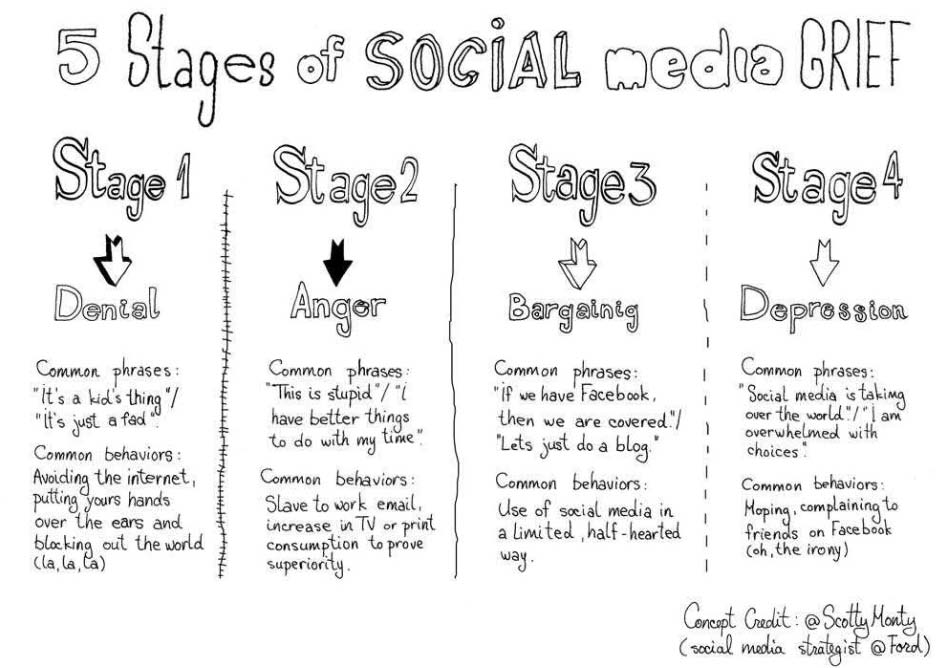
Here is some social media fun for you as you prepare your book marketing campaign…

@scottymonte, social media strategist @Ford


Share this Post