Saturday Book Review: “What Was I Thinking? Volume 1: My Brainy Best Friend”

Book reviews are a great way for self-publishing authors to gain exposure. After all, how can someone buy your book if he or she doesn’t know it exists? Paired with other elements of your book promotion strategy, requesting reviews is a great way to get people talking about what you’ve written.

When we read good reviews, we definitely like to share them. It gives the author a few (permanent) moments of fame and allows us to let the community know about a great book. Here’s this week’s book review, courtesy of The Fairview Review:
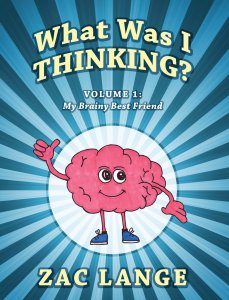
What Was I Thinking? Volume 1: My Brainy Best Friend

What Was I Thinking?

Volume 1: My Brainy Best Friend

by Zac Lange

Publisher: Outskirts Press

ISBN: 978-0996849005

Synopsis:

As everyone who has ever been a kid knows, mistakes and accidents are a part of growing up. “What Was I Thinking?” is a series that examines and finds solutions to an endless list of experiences that are universal to both children and families using the incredible tool of brainpower. It is told from the engaging, humorous, and relatable perspective of a young boy in the process of figuring out his place in the world, and whose creative mind, Brain, is his own best friend. “What Was I Thinking? Volume 1” encourages kids to celebrate their brains and their amazing potential. It also teaches the importance of using those powerful brains to think before acting, and to consider consequences both good and bad. Ultimately, the series wants to help kids be aware of their own thought processes, so they can make positive decisions for any given situation in their own lives. Hopefully, there will be fewer and fewer times when they have to ask themselves, “What was I thinking?”

Critique:

“As much as I love my brain, sometimes it seems like it takes a break for a while and forgets to tell me.” Who hasn’t had that feeling at one time or another? The narrator of the story imagines his brain snoozing in a hammock under some palm trees while taking a break. That is the reason he decides to kick a ball inside the house and winds up breaking his mother’s favorite vase. As soon as his mother sees the damage she asks, “What were you thinking?” Of course he didn’t think, he just did it. And then, when the damage is done, his brain decides to show up again. Kids and parents alike will recognize such a familiar situation and the results. Our narrator and his brain come up with a plan to avoid this trouble in the future; a plan which begins with STOP and THINK.

Readers will find plenty to laugh about in the story and the illustrations. The boy and his brain do everything together (except when Brain takes those unexpected breaks). A picture of the boy when he was a baby shows his brain nearby, also wearing a diaper. When the boy is at the playground, he is on one end of the see-saw and his brain is on the other. His mother is also shown in humorous ways. When she hears the vase break and runs into the room, she is shown dressed as a police officer and the boy is in a prison uniform. When he claims it was an accident, the picture shows his mother behind the desk at “Moms’ Olde Tyme Excuse Shoppe” pointing to ‘No Sale” because she does not buy his excuse. (That’s probably my favorite of the illustrations.)

Youngsters will enjoy the story line and see the similarities to their own experiences. Parents and teachers will appreciate the suggestion to stop and consider consequences before acting. Talking about what happens in the story can lead to a very helpful discussion on thinking things through instead of acting impulsively. It could also spark a class discussion where students might share their own memories of times when they should have taken a moment to consider their actions, but didn’t.

Recommended for children up through elementary school age, as well as the adults who care for them.

reviewed Suzanne Costner of The Fairview Review  ]

Here’s what another reviewer is saying:

Everyone has one and believe it or not you cannot function without one
You need to love it, admire it and use it wisely in order to succeed in life
It is always with you helping to guide you to make the right choices
It is your very best friend and you are never alone without this precious thing. Everyone loves friends, mom’s brownies or even just hanging out with friends. But, how any of us realize that our Brains share our feelings too and without it we would not be able to think!

Using your brain you can tell when something is sad, funny or just plain fun
Look at the pictures and see just how your brain helps you when you need to feel loved and wanted. Sometimes great things happen and it’s your brain that lets you know. Check out what happens when the bulb stays lit and you realize you have a great and fantastic idea. Great ideas come and guess where you get them? You experience things together so it is wise to take care of yourself and keep your best pal, your brain healthy!

You love to play with your friends and even have fun exploring outside and having adventures and my favorite things that helps keep my brain active, healthy and smart is reading lots of books just like this one and the ones the boy in the book is showing up that he is reading too. But, sometimes we are careless and mistakes happen when we forget to consult our brain and we accidentally kick something and our mother’s flower vase breaks and the flowers and water splatter all over the place. The author of this great book will now teach all children and parents some valuable lessons when this happens so that he understands that mistakes happen but it’s how we handle them in the present and hoping to avoid more in the future. You start by making a thinking chart and placing the words and heading it with Thought Process! Interesting as this is the first step to remembering what to do and not to do. Number one says: Do it when you admit to yourself that you forget to think before you did something and just did it! Excuses do not always work so sometimes we need to rethink our actions and create something to help us to remember. When you are not sure of what you do wrong check with you brain and find out! Ask “Where were you brain when I messed up? Hopefully the two of you will come to some sort of solution and figure out where you both went wrong!

After much deliberation and thinking and rethinking both our narrator, our little boy and of course our brain with the help of our creative author came up with what young children and even adults need to do before something else happens. Check out the Special List that gives you three steps that will help keep you out of trouble. If you stop and think decide if this could hurt and could doing this get you in trouble before you do it you might not do the wrong thing. If the answers to the last two questions happen to be YES: DON’T DO IT! The author continues with examples of how you can implement this great list to keep you out of trouble and not has to deal with mom’s consequences.

Each time you do something and if you are not sure stop and think, look at the chart, think again and figure out if you should do it or not. Check with your brain, remember no one is perfect, check out the checklist and see add who will be happy as a result of what you have learned and if you remember to Think before doing something. Learning is the best and soaking up as much knowledge and information will keep you and your brain healthy, smart, growing and having fun together now and forever. So, create your own checklist of who you want to make happy besides you and you can add things to your list like: Will I get a consequence if I do this? Will my parents be disappointed in me? Will I let myself down? Is there someone I can ask about what I am about to do before I do it and get into trouble? Stop: Look: Think and Listen. This is a great book for teachers to help children avoid getting consequences in school. This is great for parents to teach children how to understand the differences between doing the right thing and the wrong. Great for discussion groups and teachers and parents can even create lists of things that I do that are great and things that I know I should avoid and look at the lists to make sure you are not doing the ones that will get you in trouble. This is a great book for everyone. What Was I Thinking: I was thinking that I just read a great FIVE GOLDEN BRAIN BOOK! Your brain is what keeps you alert, alive, thinking and in the know: Keep reading, keep learning and keep out of trouble.

– Amazon Reviewer Amazon Customer

Book Trailer:

saturday self-published book review

Thanks for reading!  Keep up with the latest in the world of indie and self-published books by watching this space every Saturday!

Self Publishing Advisor

selfpubicon1

Saturday Book Review: “I Wonder: A Book for Children, Parents and Other Grownups”

Book reviews are a great way for self-publishing authors to gain exposure. After all, how can someone buy your book if he or she doesn’t know it exists? Paired with other elements of your book promotion strategy, requesting reviews is a great way to get people talking about what you’ve written.

When we read good reviews, we definitely like to share them. It gives the author a few (permanent) moments of fame and allows us to let the community know about a great book. Here’s this week’s book review, courtesy of The Fairview Review:

I Wonder: A Book for Children, Parents and Other Grownups

I Wonder: A Book for Children, Parents and Other Grownups

by Jane Altman

Publisher: Outskirts Press

ISBN: 978-1478765820

Synopsis:

This book is a treasure! It is unusual in its endearing and educational verses and illustrations for children and in its engaging and varied pieces for parents – and other grownups. The rhymes are appealing, the illustrations are wonderful and the writings range from heartfelt to very funny. All in all a must read.

Critique:

In “I Wonder,” Jane Altman has created a poem that children will feel is familiar from the start. It has a similar structure to that of “Twinkle, Twinkle, Little Star” that will help young readers easily catch on to the rhythm of the text. Each verse opens up the possibility for discussion about the various animals that are mentioned, elephants, mice, bats, etc. And the illustration for the final verse also allows the child to paste a photo of him/herself into the book and making it very personal. There is also a fantasy story titled “The Glow-Stones,” which portrays the ability of children to perceive the magical when adults only see the commonplace.

Within the second part of the book, Altman has a collection of poetry that is tailored for the adults in the family. Some are nostalgic in tone – pieces wondering over how children will grow up, how one would feel on the very last day of the one-hundredth year of life, or why youth fades away. Others reflect on more everyday occurrences such as admiring flowers or pondering why grass can be so much work to maintain. And then there is the comedic piece about an undergarment that t’aint fittin’ any longer. The whole book feels like a peek into someone’s journal and catching their changing moods from day to day.

This is a book meant to be read together and enjoyed together.

reviewed by Suzanne Costner  of The Fairview Review  ]

Here’s what another reviewer is saying:

The first section of part one contains a series of four line rhymes that generally have the same rhythm, one that reminded me of the song “Twinkle twinkle little star.” The structure is an image referencing the rhyme on the left side with the text on the right. There are fourteen such items, all but the last referring to animals. The last one is designed to reference the young reader.

The next section of part one is a short story about a small village near the ruins of a very old castle. No one ever goes into it and no one seems to care about it. When a young man decides to leave the village and go out in the world, a stone in the castle glows at him, so he stops to grab it and then takes it with him. Something similar happens when a young woman also starts her journey out of the village.

The two people then marry other people and have children, the story continues after their deaths when their children are going through their belongings and find what appear to be nondescript stones. They all return to the ancestral village and the children then see things in the castle that their parents cannot.

Part two is given the designation that it is for the parents and grownups and is a set of short segments of more complex verse. There are rhymes having various orders where the matches occur. For example, the section of verse called “What to Do?” has three line segments where the first two lines rhyme as well as the third lines of sequential sections. They are designed to be read to children, they will sound pretty good if the proper intonation is applied.

This is a good book for children, one that children will enjoy having read to them, for they have a natural affinity for rhyming verse.

– Goodreads Reviewer Charles


saturday self-published book review

Thanks for reading!  Keep up with the latest in the world of indie and self-published books by watching this space every Saturday!

Self Publishing Advisor

selfpubicon1

From the Archives: “Should You Pay for a Book Review?”

Welcome back to our Tuesday segment, where we’ll be revisiting some of our most popular posts from the last few years.  What’s stayed the same?  And what’s changed?  We’ll be updating you on the facts, and taking a new (and hopefully refreshing) angle on a few timeless classics of Self Publishing Advisor.

∗∗∗∗∗

[ Originally posted: April 15th, 2011 ]

As an author in the self-publishing industry, reviews for your book are very important.  A book published by an unknown author has little chance of gaining attention, while the same book (and the same “unknown” author) with a number of positive reviews can begin to gain momentum.  Those positive reviews can help persuade potential new readers to buy the book and the word-of-mouth continues.

You may have already received reviews from some of your friends or colleagues, so what next?  There are some free review services where you can send a copy of your book.  These services are a great resource; however, because they are free, the reviewers get inundated with books and can’t review every book they receive.  Their services can also take several months and the reviews are not guaranteed to be good.

In addition to free review services, there are some services available where you can pay to be guaranteed a review.  That said, the review is still not guaranteed to be good, but if you are confident in your book (which you should be, after all you wrote and published it!), you shouldn’t need to worry about that.

Here are three pay-for-review services you can start with:

BLUE INK REVIEW

Standard Review is $395 for the review to be completed in 7-9 weeks.

Fast Track Review is $495 for the review to be completed in 4-5 weeks.

BlueInk considers for review any book that has been published (self-published and indie published).  They review e-books, on-demand books, printed books in any format, English translations and English-language submissions from outside the United States, as well as galleys. They do not review manuscripts pre-publication.

FOREWORD CLARION REVIEW

The cost is $305 $499* and turnaround time is 6-8 4-6* weeks.

Open to all books and publishers, Clarion promises an objective 400 – 500 word review/critique with a quick six to eight week turnaround. The review will be posted on the ForeWord website (if the publisher desires), licensed to the three top wholesale databases, and made available to the book’s publisher. This service is ideal for books that haven’t received review attention elsewhere.

KIRKUS INDIE REVIEW


Standard review is completed in 7-9 weeks for $425.

Express review is completed in 3-4 weeks for $575.

The Kirkus Indie program gives independent authors a chance to obtain an unbiased, professional review of their work, written in the same format as a traditional Kirkus review. A book review can be an essential and powerful tool for promoting your book to literary agents, traditional publishing houses, booksellers, and, most importantly, potential readers.

by Kelly Schuknecht

When it comes to reviews, there’s so much to say that it’s almost inevitable that I would have to update and expand upon what I wrote back in 2011–after all, the world doesn’t hold still for anyone, and that’s certainly true of both the internet and the publishing industry, as well!  You will note that I have already made note of several changes in regards to pricing and timing for the ForeWords Clarion review options (marked with an * each time), but what about the larger picture?  Can we still mount a defense for paid reviews in a world where Amazon and Goodreads are king, where product pages provide ream after ream of short, easy-to-digest reviews from laypeople like you and me–and FREE reviews at that?

national review book reviews

If you suspected I might have a simple and short answer for you, I’m sorry to let you down.  Saying “yes” casts aside all of my many thoughts about the value of those unpaid product reviews on Amazon and Goodreads, and saying “no” discounts the ongoing benefits that longform paid reviews still offer.

Let’s start with Amazon and Goodreads.

I’ve written in detail about the virtues of garnering lots of good reviews on Amazon and Goodreads before, specifically in my series on Self-Publishing and Merchandising from May of 2015, where I broke down the distinctions between these kinds of reviews and blog-based reviews.  And the statistics speak with resounding and repeated certainty that readers use the metrics provided by Amazon and Goodreads as one of their first and most important decision-making tools.  If readers search for a title they’re fairly certain they’re going to like, only to find that it has lots of poor reviews on Goodreads or a low star rating on Amazon, they’re not likely to follow through and buy it, no matter what else they’ve read that’s positive.  And if readers stumble across a title by accident that they weren’t actually looking for, but it ends up having fabulous reviews, they’re actually fairly likely to pay money to purchase it!  Search engines like Google have tweaked their algorithms to push books that are rated highly on Goodreads and Amazon to the top of their index, so you should never, never discount the importance of asking friends, family members, and other members of the public to post a positive review to these sites.

And what about paid reviews?

While longform essay book reviews have largely become the province of periodicals with paid subscription models like the London Review of Books or the New York Review of Books, they are far from dying out in terms of popularity–they’ve merely found their niche readership, and a powerful one at that.  It’s hard to estimate the exact impact of one positive longform review, but collectively, consider: the discerning reader needs an evaluation of content, of structure, of tone, and of many other aspects of a book’s nature than what can be provided in a brief burst of opinion on Amazon.  The discerning reader wants to know: what do the experts think?  Not everyone is looking for the lowest common denominator of shared public opinion (or so one of my college professors once opined) … sometimes they want to hear from one learnéd voice, in detail, the full warp and weft of a book.  This is why paid reviews are still worth their money–they reach the discerning reader.  And guess what?  Discerning readers are very likely to be a go-to resource to their friends and families, access points for dozens upon dozens of other new readers.  Discerning readers are amplifiers, advocates, and arbiters of your book’s larger footprint.  So yes, we shouldn’t forget about the paid review.  It has a place in the larger scheme of things, the larger framework of reviews and marketing.

They do not determine or reflect the actual value of your book, but good reviews–both paid and unpaid–do determine who is likely to buy it next.


If you have any other ideas, I’d love to hear them.  Drop me a line in the comments section below and I’ll respond as quickly as I can.  ♠

KellyABOUT KELLY SCHUKNECHT: Kelly Schuknecht is the Executive Vice President of Outskirts Press. In addition to her contributions to the Outskirts Press blog at blog.outskirtspress.com, Kelly and a group of talented marketing experts offer book marketing services, support, and products to not only published Outskirts Press authors, but to all authors and professionals who are interested in marketing their books and/or careers. Learn more about Kelly on her blog, kellyschuknecht.com.

Saturday Book Review: “Ask More, Tell Less: A Practical Guide for Helping Children Achieve Self-Reliance”

Book reviews are a great way for self-publishing authors to gain exposure. After all, how can someone buy your book if he or she doesn’t know it exists? Paired with other elements of your book promotion strategy, requesting reviews is a great way to get people talking about what you’ve written.

When we read good reviews, we definitely like to share them. It gives the author a few (permanent) moments of fame and allows us to let the community know about a great book. Here’s this week’s book review, courtesy of Parenting Like Hannah:

Ask More, Tell Less: A Practical Guide for Helping Children Achieve Self-Reliance

Ask More, Tell Less: A Practical Guide for Helping Children Achieve Self-Reliance

by Greg Warburton

Publisher: Outskirts Press

ISBN: 978-1478708810

Synopsis:

When faced with a misbehaving child, do you find yourself resorting to lecturing, reminding, or even yelling? Do you sometimes feel helpless and panicky after you have tried everything you know to do and your child still seems “out of control” or withdrawn? Do you feel frustrated when nothing you are doing is moving your children to be responsible and achieve their unique potential? Ask More, Tell Less provides a new model of parenting that can help transform the growing-up years. Life will become fulfilling and enjoyable rather than an ongoing, painful collision of wills. Behavior troubles diminish or vanish when children discover that they have the power to make their lives run more smoothly. These methods are not a “cater to the children” approach. Instead, they take the pressure off parents and put the whole family on a positively different road, traveling together in a land of mutual dignity and respect, maturity, and lasting change. Greg Warburton brings time-tested, practical methods out from behind the counselor’s door to enable you to give your children the greatest gift of all: self-reliance. Through artful questioning, you can give them a clear and compelling road map for getting on with growing up in this rapidly changing world.

Critique:

Have you ever said “What in the world were you thinking” to a child? My guess is you didn’t get a very helpful response. Ask More, Tell Less: A Practical Guide for Helping Children Achieve Self-Reliance  by Greg Warburton suggests asking the right questions can move you and your children from their reliance on your help to make good choices to their self-reliance.

Parts of this book were excellent and even introduced a couple of new ideas to me. I loved the idea of teaching kids not just to be honest with others, but honest with themselves. He accurately pointed out that often we lie to ourselves about our bad behaviors. Those lies keep us and our kids from making necessary changes. That is a perspective I don’t believe I have ever heard before and I believe it could be life changing for many kids (and adults).

I also appreciated the amount of time he put into helping parents understand the importance of really listening to your kids and asking questions that will help them reveal their hearts (my words, not his). He gives lots of examples of questions a parent could ask about a wide range of choices, attitudes and behaviors. While I believe some of his questions are not quite as open ended as he believes, they are definitely an improvement over the questions many parents typically ask.

Where I think the book falls a little short is that the author doesn’t really address Bloom’s taxonomy as it would apply to a child’s improved understanding of his/her behavior. The entire book is an attempt to move children from knowing the rules (facts) to understanding why those are rules and why it is important for them to be obeyed. Because the author doesn’t address scaffolding, he just barely touches on the need at times to “tell and lecture” rather than merely ask questions.

The reality is this method is probably most effective with elementary and perhaps middle school aged children (as it is written). Children of preschool age and below aren’t ready for the type of introspection this method requires. They are also still learning what a rule is and which rules they are supposed to follow. Teens would find many of these questions too childish in the way they are expressed. (Ex: “Are you growing up or growing down?”) I think the concept would still work with them, the questions would just need to be reworded to keep from alienating a teen.

My other concern was the author’s continued insistence on self-reliance. While I understand and agree with him to a point, self-reliance gone too far leaves no room for God.* This method also does nothing to address the need for God’s help in breaking bad habits. In fact, the author makes this method for changing a child’s behavior seem a little too easy. Once or twice he alluded to the fact a child did some backsliding, but I would imagine with any deeply ingrained bad habits the backsliding would be more common than was shared.

I also have a few concerns about celebrating “growing up” behaviors. While I do agree children should be celebrated when they master something like breaking a bad habit, the idea of a certificate for every tiny little step in the right direction seems a bit much. Personally, I skew a little more to the “life will not constantly reward you for doing what you are supposed to be doing” end of the scale. I am definitely an encourager, but I am afraid children who have every tiny appropriate action celebrated will go through life disappointed their friends and co-workers aren’t constantly giving them awards for doing what is expected (much less going the extra mile).

Whether you use this exact method or not, the author is correct in his basic premise. Your kids need to move from depending upon you to help them make good decisions to where they can make those godly choices without your help. The author’s questions are a good way to begin helping them make that transition. Having to answer questions that force them to take control of their actions and attitudes is a good first step..

reviewed by Thereasa Winnett of Parenting Like Hannah  ]

* PLEASE NOTE: Self-Publishing Advisor does not endorse any specific faith ot religion.

Here’s what some other reviewers are saying:

I’ve been a child and adolescent psychologist for 30 years, but must admit I found Greg’s approach with young people and their families to be a breath of fresh air and a resource of fresh, doable ideas. It’s a great book for parents, but child-service professionals certainly would benefit from having it on their bookshelf.

In short, what Greg shares works, and it fosters deeper relationships. Greg understands the frustration of parents who struggle with a child’s behavior, and he shows Mom and Dad how to take a deeper look that, more often than not, reveals how an issue is not an attack against them at all. He shows them a perspective and skills that work to resolve REAL problems experienced by REAL parents.

It’s been long know that the best way to confront a youngster about his or her behavior is with a noncoercive approach, otherwise it’s possible to address one problem and end up with three more. (After all, who really LIKES confrontation?) Greg’s approach on HOW to approach that youngster with questions that don’t threaten but rather open up their ability to reflect on their behavior allows the child or teen to “fix” problems themselves. And that’s every parent’s dream.

– Amazon Reviewer James D. Sutton (5/5 stars)

We as parents have a way of telling our kids what they have done wrong instead of listening to why they did what they did. That ends up hurting the parents and the child and their relationship. Make the question as to why they forgot or why they didn’t do something, a positive thing. Sometimes questions that are asked in an angry tone only get you no where but more angry. It takes a lot of practice to learn when and what questions are right to ask. The more you practice this positive approach, the easier and more natural it becomes. When a child is constantly being yelled at because he hasn’t done what he should have, his self esteem goes lower and lowers. Without self esteem and confidence, a person becomes afraid to try new things. They would rather do nothing instead of try and fail. Failing causes people to yell at you. Communication is very important between people. Not just young people but everyone. When you communicate in a positive way, usually the response is positive. Positive thoughts help create self esteem and with self esteem comes confidence and self reliance. You begin to rely on yourself instead of letting everyone take care of what you should be taking care of. When a parent changes, they will find the child changing too. Parenting skills are not easy to acquire. But it is well worth the effort to keep trying. The family as a whole will become happier and healthier.

– Amazon Reviewer gayle pace (4/5 stars)

Book Trailer:


saturday self-published book review

Thanks for reading!  Keep up with the latest in the world of indie and self-published books by watching this space every Saturday!

Self Publishing Advisor

selfpubicon1

Saturday Book Review: “DANCING ON DEWDROPS”

Book reviews are a great way for self-publishing authors to gain exposure. After all, how can someone buy your book if he or she doesn’t know it exists? Paired with other elements of your book promotion strategy, requesting reviews is a great way to get people talking about what you’ve written.

When we read good reviews, we definitely like to share them. It gives the author a few (permanent) moments of fame and allows us to let the community know about a great book. Here’s this week’s book review, courtesy of Books, Reviews, Etc:

Dancing on Dewdrops

Dancing on Dewdrops:  Rustic Poems, Prayers and Elegant Short Stories

That Provide Inspiration and Strength

by Mark John Terranova

Publisher: Outskirts Press

ISBN: 978-1478747185

Synopsis:

Experience the Exuberant Journey of Dancing on Dewdrops Dancing on Dewdrops is an entrancing collection of poems, prayers, and short stories that capture the utter joy of youth, wrestle with the inherent elements of change, and offer strength and solace-all while celebrating life across several generations. The rustic poetry, prayers, humor and short stories for children that teach values will appeal to all ages. Dancing on Dewdrops provides inspiration and comfort, delivering lasting imagery and leaving an indelible imprint on the heart and human spirit.

Critique:

This is a lovely book of poetry, prayers and short stories. Some of the stories bring about the emotions of joy, sadness, hope and some are humorous. It’s not just for people that love poetry but anyone that needs a moment of peace. A moment to reflect. A moment to really think about the different poems and short stories. It is a heart warming book that you can read one poem at a time or read several in an evening. When you’re feeling a little down, take the book off the shelf and find a poem or short story to bring you some comfort and hope. This is also good for children. It has some life value lessons. Take the time to stop and think about each one as you read it. It’s a lot of food for thought. You may find yourself thinking of what you’ve read long after you’ve read it.

I would give this book 4 STARS.

reviewed by Gayle of Books, Reviews, Etc  ]

Here’s what another reviewer is saying:

There are two sections to this book, the first is a collection of short poems and the second a set of short stories. I found the poems nice and the short stories great, the poems cover many topics, but most refer to a boy growing up where there were open spaces to play in.

The short stories are in two categories, the first relate youthful experiences of the author when he and his brother went fishing with their father. His father worked six and seven days a week and spent nearly all his extra money indulging his hobby of saltwater fishing. The stories are not about bringing back a major catch, the topics are epic failures when what can go wrong did go wrong. Especially when inexperienced children are taken on fishing trips. The stories are amusing as often what goes wrong is far funnier than events that go right.

The second set of stories are two nature stories written for children. The first is about a community of panda bears in China and how they came together to select a new leader. In this selection process, the current leader Wise Bear is being challenged by Strong Bear. Their names indicate which characteristic is most dominant in each of the candidates. Each of them is issued a challenge and their solution strategies are a lesson in wisdom over strength.

The second story for children is about the community of butterflies in a time of drought. With very little water available one of the butterflies forms an alliance with a dragonfly in order to locate one of the few wells that has not dried up. Accessing the well is not easy, for it is in the middle of an open field surrounded by trees containing a large flock of birds that like to eat butterflies. Only through cooperative efforts between the swarms of butterflies and dragonflies can the problem be solved. This is a lesson in the value of cooperative behavior, not only between the members of a family but also between disparate groups that share a common purpose.

While the poems are good, the last two stories are excellent tales for children. Assigning human characteristics to animals always has a strong appeal to children and this book is worth purchasing just for that feature.

– Goodreads Reviewer Charles


saturday self-published book review

Thanks for reading!  Keep up with the latest in the world of indie and self-published books by watching this space every Saturday!

Self Publishing Advisor

selfpubicon1