Self-Published Book Review: “What She Feels”

Book reviews are a great way for self-publishing authors to gain exposure. After all, how can someone buy your book if he or she doesn’t know it exists? Paired with other elements of your book promotion strategy, requesting reviews is a great way to get people talking about what you’ve written.
When we read good reviews, we definitely like to share them. It gives the author a few (permanent) moments of fame and allows us to let the community know about a great book. Here’s this week’s book review:

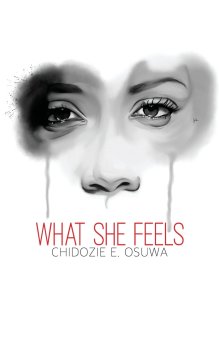
what she feels chidozie osuwa

What She Feels

by Chidozie E. Osuwa

ISBN: 9781478754459


Synopsis*:

This is not just another poetry book filled with cliché quotes. What this is is every emotion a woman has ever felt when dealing with love, but could never put into words. This is looking at yourself in the mirror. This is finally being able to look at your situation from the outside looking in. This is a look into the too often scarred hearts of our women. This is inspiration. This is hope.

 * courtesy of Amazon.com

Featured Review

This book, What She Feels, by Chidozie Osuwa is composed of a collection of poems. From the first couple of pages, I already immediately fell in love. Right off the bat, multiple poems were for the most part relateable; It was as if Osuwa was writing my thoughts onto paper and converting my feelings into words.

Each poem seemed to connect with the underlying topic of relationships—the dealing with difficulties and/or brokenness that comes during, or as a result of, being in a rather complicated relationship. The writer was consistent with this theme throughout the book.

Structurally, the book is split into about three parts. The first 95 pages are individual poems under the chapter, “SHE SAID-,” the following page covering a single poem, under, “HE SAID-,” and the rest of the pages are independent poems that aren’t technically categorized under any specific chapter.

In the first chapter, my personal favorite, “SHE SAID-“,” the pages are structured with a first-person point-of-view poem displayed on the top half of each page with a few lines of prose below, relating to the text above. I found this feature to be neat as one can get more context on the poem in addition to their own initial take on it.
On the other hand, the, “HE SAID,” section simply involved a single, two-lined poem. I honestly thought this section would feature content similar to, and as plentiful as its former.

Alternatively, the remaining set of poems was not placed under one classified section, but they do follow the same layouts. Each of these seems to display snippets of scenarios, in an omnipotent matter, and the last word or so of each line rhymed with the previous/following line. All of these poems were about a page and a half each, without a statement provided underneath for extra content.

For me, out of the whole collection, I thoroughly enjoyed the section, “SHE SAID-“—not that the other sections weren’t well written; Respectively, all of the poems had their own enjoyable qualities and stories behind them. Personally for me, however, I just related significantly more to the poems in the first half of the book.

As I mentioned earlier, I have thoroughly enjoyed the majority of this poetry book. Hypocritically, though, the only issue I had were typos I spotted on a couple of pages in the beginning. They don’t take away from the poem’s too much, but as I am very observant about small details like these, they were the slightest bit bothersome to me, as I would have expected someone to go over these before publishing the book—but then again, everyone makes mistakes, and it’s easy for small things like these to slip!

Despite the minor errors I found, I would recommend this to others (in fact, I actually already have done so to a friend, and she fell in love with it from just the first couple of pages, like I did) due to how relateable I found these poems to be, in addition to how nice each page and each chapter is structured.

Those I would recommend it to would be those who in the past have been, or even currently are, dealing with issues in their relationship, or especially even just those going through a breakup. Ideally, teens, young adults, and middle-age adults alike will find this to their forte.

– Courtesy of Haley on Goodreads

Other Reviews

SPEAKS TO MY SOUL !

– reviewed on Amazon by Tiny94

This book spoke to my soul. I went through and highlighted ones that spoke to my current situation and starred the ones that I’ve went through before. Makes me do a lot of thinking about what I want in the next man. And what I expect of him.

– reviewed on Amazon by Pooh


tuesday book review

Thanks for reading!  Keep up with the latest in the world of indie and self-published books by watching this space!

Self Publishing Advisor

selfpubicon1

Self-Publishing News: 4.2.2019

the word "april" from the wooden letters

And now for the news!

Some highlights from this month in the world of self-publishing!

This week, we have two big how-to articles from two big media sources that normally don’t spend a lot of time thinking or publishing content related to self-publishing. The first comes from Barbara Krasnoff of The Verge, who writes to cover the “new technologies [which have] appeared and revolutionized the industry”—that is, this new industry that you and I find ourselves a part of: self-publishing, also often referred to as indie publishing. Krasnoff begins by tracing the history of self-publishing—something we have probably often already read about, if not on The Verge—before touching base with a number of authors who have pursued self-publication and delving into the how-to section. Krasnoff concludes:

In short, the process of publishing your own book can be both very simple and very complex. The actual mechanics of publishing an ebook, or even a print book, has become relatively easy, especially if you give yourself to the Amazon ecosystem. However, doing it well — and gaining a following of readers who will enjoy and buy your books — is not as easy. It takes trial and error, patience, and work. But if you’re a writer, and you want people to read your books, it’s certainly worth it.

Overall, Krasnoff’s approach is both nuanced and richly complex, drawing as it does on the real and lived experiences of authors with experience in the field. A worthy read!

Equally as unexpected—and equally as delightful—is this article from Kelley O’Brien of Women, whose article proves to be exactly what its title implies: a getting-started guide for authors looking to break into romance, including by way of self-publication. She opens her section on self-publishing by writing:

Every romance fan knows that Amazon is filled with self-published romance authors, some of whom are as popular, if not more popular, than traditionally published authors. It’s necessary to preface that self-publishing isn’t for everyone. It’s a ton of work. You’ll have to handle everything an agent or publisher would normally take care of, such as book promotion. You also won’t have the support of an agent or publisher.

It can also be very rewarding. Self-publishing, by far, gives you the most control over your work. You always retain the rights to your books. You get to set your own deadlines and won’t have to wait months or longer for your book to start bringing in money.

While she also touches on traditional publishing methods, O’Brien makes sure that authors interested in going indie have a solid foundation and a good place to start the process.


spa-news

As a self-publishing author, you may find it helpful to stay up-to-date on the trends and news related to the self-publishing industry.This will help you make informed decisions before, during and after the self-publishing process, which will lead to a greater self-publishing experience. To help you stay current on self-publishing topics, simply visit our blog each month to find out the hottest news. If you have other big news to share, please comment below.

icon logo self publishing advisor

Guest Post: Submitting Your Own Manuscript? Here Are 5 Tips

Nowadays there are four main ways to get a book published.

A. Submitting it to a traditional publishing house. If they accept it, you’re golden. And while they’ll handle some of the marketing, you will still need to market it.

B. Independently publishing it yourself by working independently with editors, graphic designers, book formatters, wholesalers, distributors, and retailers. And of course, you still need to market it.

C. Submitting it to one of those free online places.  Which presumably means you’ve already worked with editors, graphic designers, and book formatters. Fortunately, those free places do take care of distribution and sales for you. And of course, you still need to market it.

D. Submitting it one of those full-service self-publishing websites. They can handle all of the above, and maybe they’ll throw in a little marketing, depending upon who you choose. But you’ll still want to market it.

Regardless of which path you choose, there is one consistent component: your manuscript.  And it is in your best interest to make it the best it can be BEFORE you consider sending it (or uploading it) anywhere else.

rewriting

So, with that in mind, here are 5 things to keep in mind when it comes time to finalize your manuscript for submission.

1. Don’t insert hard paragraph breaks after every line. You can see where hard returns are in your Microsoft Word document by holding down CTRL-SHIFT-8. That bold “paragraph symbol” shows you where the hard returns are. They should be only at the ends of paragraphs. Traditional publishers probably won’t care, but it’ll wreak havoc with the other three, since in all likelihood, your book will be a different size than your 8.5×11 manuscript, and those hard returns will end up in the middle of lines instead of at the end of them.

2. Don’t manually insert hyphens.  Same problem as above. Your word processor should hyphenate words automatically, unless you have that function turned off. But even turning off auto-hyphenation is preferable to manually inserting a hyphen yourself. A manually inserted hyphen will cause all sorts of problems during interior book formatting, so be sure to remove them from your manuscript before submitting it.

3. Don’t use ALL CAPS. You may be tempted to capitalize words for emphasis, or for book titles. In both instances, italics are preferred. This doesn’t cause technical formatting problems so much as perception ones.

4. Spell check your work. All word processors have built-in spell checking. Even if you plan on having your manuscript professionally edited before publication (the traditional publisher will handle this, but for the other three options you’re on the hook, at least for paying for it), it is a good idea to run your spell check program on your manuscript prior to submitting it, just to fix all the “easy” mistakes.

5. Check your grammar. Most word processors also have built-in grammar checking, although they are admittedly poor. There are better (and free) alternatives on the Internet. One favorite is Online-SpellCheck.com. Simply cut and paste your manuscript, a chapter at a time, into the online form and Online-SpellCheck will not only identify spelling errors your word processor probably missed, but it will also catch other common grammatical errors such as contextual misspellings, commonly switched words, typographical errors, and more.

Additionally, there is a popular Chrome extension to consider: Grammarly (at Grammarly.com). This browser extension runs in the background on the Chrome Internet browser and checks spelling and grammar “on the fly” as you enter words into online forms. This is very useful for completing a publishing process error-free and is handy for other marketing endeavors after-the-fact, like writing on blogs, for instance.

Obviously, there is no substitute for a professional human editor, but complementing professional editing with Online-SpellCheck and Grammarly is the perfect hat trick to almost guarantee an error-free book.


brent sampson

In 2002, Ernst & Young Entrepreneur of the Year Semi-Finalist Brent Sampson founded Outskirts Press, a custom book publishing solution that provides a cost-effective, fast, and powerful way to help authors publish, distribute, and market their books worldwide while leaving 100% of the rights and 100% of the profits with the author. Outskirts Press was incorporated in Colorado in October, 2003.
In his capacity as the President and Chief Marketing Officer, Brent is an expert in the field of book publishing and book marketing. He is also the author of several books on both subjects, including The Book Marketing COACH, Self-Publishing Questions Asked & Answered, and Sell Your Book on Amazon.

Self-Publishing News: 3.26.2019

Word MARCH. Vector decorative unusual object

And now for the news!

Some highlights from this month in the world of self-publishing!

The Good E-Reader is back with more excellence, this time with a piece by contributor Michael Kozlowski on exciting developments in the world of manga—a visual art form most often described as the print version of anime—and the opening of a new self-publishing platform for that genre. As with any other new development in indie and self-publishing—whether or not it relates to a genre or field we personally read—the mere fact that more options are opening up for creators and readers in a genre and field parallel to our own is exciting, indeed. We’re excited to see what comes from VIZ Originals latest project!

Speaking of fascinating developments in the vein of “modes/genres/fields I didn’t know could take part in self-publishing but definitely are“, the latest news from Michael Futter of Variety relates to developments in the videogame industry, one which has long been the subject of conversation around alternate, indie, and self-published games—and how difficult it can be for a new studio or development company to “break in” against the kind of competition that churns out all of the PS3 and XBox games you may already be familiar with. Crowdfunding, which involves requesting many small promises of financial support from thousands of supporters before distribution can happen, may just be the way of the future. Crowdfunding platforms like Kickstarter and GoFundMe have now been around for long enough that the mere act of crowdfunding has evolved since its early days—and Futter is here with the details in an engaging and delightfully voicy piece that updates us all on where things are now.

It’s something of an open secret that people are really, really good at policing each others’ definitions. Luckily, Dave Armstrong of Patheos manages to steer clear of many of the policing stumbling blocks one might fall over in attempting to understand the self-publishing experience in the context of its stigma—and comparisons to the traditional publishing model—by framing his piece through an interview with Karl Keating, another successful author. Speaking of “voicy” articles, Armstrong’s is a pleasure to read, rich with humor and also with the kind of spicy—and highly useful—details that may just provide a self-publishing author new to the market figure out some of the process, including how to price e-books and how to select a platform that works for you instead of restricting you from doing what you really want to do, and how to craft covers that you wouldn’t mind readers judging the book by. All in all, it’s a great little introduction to the act of self-publishing, and also includes details that may be of use to authors writing in the genre of religious and Christian literature. Be prepared to learn about Amazon sales rankings!


spa-news

As a self-publishing author, you may find it helpful to stay up-to-date on the trends and news related to the self-publishing industry.This will help you make informed decisions before, during and after the self-publishing process, which will lead to a greater self-publishing experience. To help you stay current on self-publishing topics, simply visit our blog each month to find out the hottest news. If you have other big news to share, please comment below.

icon logo self publishing advisor

Self-Publishing News: 3.19.2019

Word MARCH. Vector decorative unusual object

And now for the news!

Some highlights from this month in the world of self-publishing!

“As dramatic technology shifts continue, book publishers,” writes Barbara Pellow of Printing Impressions, “authors and printers need to adapt to benefit from new opportunities.” Reporting from a a recent Book Business Webinar, Pellow describes her experiences interviewing three key players in the indie book world: David Walter, Executive Director of Client Development at the NDP Group, Inc., Brian O’Leary, Executive Director for the Book Industry Study Group (BISG), and Angela Bole, CEO for the Independent Book Publishers Association (IBPA). They discussed current trends in books emerging in 2019, as well as some constructive decisions booksellers, authors, and industry experts can all make in order to take advantage—and thrive in an ever-more-complicated market. What’s the bottom line? Writes Pellow, “The challenge for the industry is to capitalize on new business models and to re-engineer processes and workflows for a digital business, even while supporting their traditional print business”: a lesson we can all learn from.

We haven’t, overall, spent much time on the Columbus Dispatch website, but this week that all changed with the paper’s coverage of Delana Jensen Close’s forays into self-publishing. With a byline by Kevin Stankiewicz, the Dispatch unpacked Close’s story, beginning with two compelling opening lines:

In 1955, Delana Jensen Close began to write a book.

It’s finished now; it just took 63 years.

Close was 95 last year when she finished her first book, The Rock House, and her family set about publishing the 806-page tome through Amazon. The book, writes Stankiewicz, covers a lot of ground:

Set in the early 20th century, “The Rock House” follows the life of Abigail Langley, who is maligned in her tiny religious town after having a baby out of wedlock with the son of a wealthy, well-connected man. The son, Adam Townsend, heads east for medical school before Abigail can tell him she is pregnant.

The rest, as they say, is historical fiction of high caliber. And while the book itself sounds fascinating, we’re above all fascinated by the story of its 63-year development, as well as with the woman behind the book: 96-year-old Delana Jensen Close, an inspiration to us all.


spa-news

As a self-publishing author, you may find it helpful to stay up-to-date on the trends and news related to the self-publishing industry.This will help you make informed decisions before, during and after the self-publishing process, which will lead to a greater self-publishing experience. To help you stay current on self-publishing topics, simply visit our blog each month to find out the hottest news. If you have other big news to share, please comment below.

icon logo self publishing advisor