It’s a Jungle Out There

There are many full-service self-publishing companies ready to assist you with publishing your book, and I don’t envy the author who has to navigate the vast array of publishing packages and optional services. As you are comparison shopping, one area you want to be certain you are comparing apples-to-apples and not apples-to-oranges is your per book author cost and your per book royalties. To make sure you understand what the different companies are offering, make sure your per book pricing and royalties comparisons use these same parameters:

  • Same Trim Size
  • Same Estimated Page Count
  • Same Distribution (i.e. Amazon only, all major online retailers, offline retailers etc.)
  • Same Quantity of Author Copies

These basic guidelines will help choose the company that is best for you.
ABOUT JODEE THAYER: With over 20 years of experience in   sales and management, Jodee Thayer works as the Manager of Author Services   for Outskirts Press. The Author Services Department   is composed of knowledgeable customer service reps and publishing consultants;   together, they all focus on educating authors on the self-publishing process in order to help them publish the   book of their dreams. Whether you are a professional looking to take your   career to the next level with platform-driven non-fiction or a novelist   seeking fame, fortune, and/or personal fulfillment, Jodee Thayer can put you   on the right path.

What is Narrative Nonfiction?

As a self-published author, you are asked to choose a genre for your book. The easy part is deciding whether your book is fiction or nonfiction. The more difficult part is determining what type of fiction or nonfiction to categorize your book.

Basically, there are two types of nonfiction books: narrative nonfiction and prescriptive nonfiction. All biographies and memoirs are considered narrative nonfiction, while how-to books are described as prescriptive nonfiction.

Remember, if you are writing a memoir, you must be able to attest to the accuracy of the details. In addition, the story must have the same elements as fiction stories: a beginning, middle, and end as well as conflict, interesting characters, setting, etc. If your memoir doesn’t meet these standards, you may want to write a fictional story loosely based on real life. This allows you to add information to create a better story and protects you from possible legal issues.

ABOUT WENDY STETINA: Wendy Stetina is a sales and marketing professional with over 30 years experience in the printing and publishing industry. Wendy works as the Director of Author Services for Outskirts Press. The Author Services Department is composed of knowledgeable customer service reps and publishing consultants; and together, they all focus on educating authors on the self-publishing process in order to help them publish the book of their dreams. Whether you are a professional looking to take your career to the next level with platform-driven non-fiction, or a novelist seeking fame, fortune, and/or personal fulfillment, Wendy Stetina can put you on the right path.

Scriptwriting 101: Show, Don’t Tell

Books are a wonderful thing. A writer can put us right inside a character’s head, simply by telling us flat-out what he’s thinking. Book authors have the luxury of being able to spell out in crystal-clear terms what a character is plotting, what she’s doing, why she’s doing it and what was on her mind at the moment.

Movies don’t speak the same language. Film is just as vivid, but in a much different way. As a book author, you know exactly how to tell your story – just spell it all right out. However, if you’re telling a tale for a movie audience, you have to get the feel for conveying many of your most important ideas visually.

So keep this mantra in your head as you rewrite for the silver screen: Show, don’t tell. Keep these rules in mind as you develop your screenplay.

  • Slow the chatter. Too much dialogue is a scene killer; it bogs down or interrupts the action. It’s usually dull, so please, don’t overdo it. In fact, don’t do it at all where you don’t absolutely have to.
  • Describe your action. Emphasis on action. Describe what your characters do as the story plays out. Omit descriptions of what motivates them to carry out these actions; unless your movie has a narrator, there’s no way to convey these to a viewing audience. Show motivation with solid, tangible actions or through the arrangement of scenes.
  • Allow for interpretation. This is a difficult concept for many to grasp, but it’s important to leave wiggle room for a set designer, producer, director and, ultimately, actors to interpret your script and bring it to life. It needs to be specific enough to convey a clear story, yet vague enough to allow these players to envision all the possibilities. After all, picturing the potential is what sells scripts in the first place. To that end, resist the urge to write instructions to your actors and director into your script. Instead of writing “Bill looks sad and places the manila envelope in the mailbox,” go with a looser “Bill places the envelope in the mailbox.” Let the ultimate owners of the script decide the character’s demeanor and other visuals that convey the action.

Frame of mind is half the battle. If you can keep these goals in view, your screenplay will quickly take shape.

Elise Connors ABOUT ELISE L. CONNORS:
Elise works as the Manager of Author Support of Outskirts Press.  She also contributes to the Outskirts Press blog at blog.outskirtspress.com.Elise and a group of talented book marketing experts assist self-publishing authors and professionals who are interested in getting the best possible exposure for their book.

Weekly Self-Published Book Review: Pajamas and the Days of the Week

Book reviews are a great way for self-publishing authors to gain exposure. After all, how can someone buy your book if he or she doesn’t know it exists? Paired with other elements of your book promotion strategy, requesting reviews is a great way to get people talking about what you’ve written.

When we read good reviews, we definitely like to share them. It gives the author a few (permanent) moments of fame and allows us to let the community know about a great book. Here’s this week’s book review by Midwest Book Review:

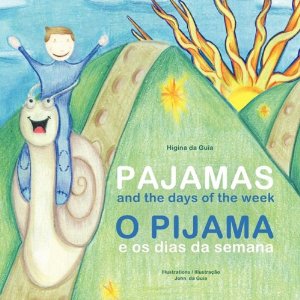
Pajamas and the Days of the Week

Higina Da Guia

Illustrated by John da Guia

Publisher: Outskirts Press

ISBN: 9781432720551

“Pajamas and the Days of the Week” is for all ages. The story is all about pajamas. I loved how the author compared snuggling under the covers to a snail. The author also tells a nice little joke at the end. What’s unique though is that the work is told in two languages: English and Portuguese. The bright happy colors of the artwork also convey the cheerful feel. “Pajamas and the Days of the Week” is a witty story about why we wear pajamas and is recommended for all.

Two Paths to Becoming a Children’s Book Author

Do you dream of publishing a children’s book? Well, your dream can come true easier than you may have thought.  Here are two ways you can become a children’s book author whether or not you have the ability to create your own illustrations:

1. Do-It-Yourself

If you are extremely talented, you may choose to write and illustrate your own children’s book. This DIY option allows you to fully engage your creativity and bring the story in your head to life. However, do not attempt this route if you do not have the skill or talent to illustrate your own book. With children’s books, the pictures are just as important as (if not more important than) the words you’ve written. You do not want your story corrupted by amateur illustrations.

2. Get Some Help

If you have a great story for children, but are not able to do your own illustrations, you can simply write your story and hire an illustrator. While there is a cost to this option, you are guaranteed quality illustrations which you would not otherwise be able to produce on your own. You may choose to hire an illustrator you find online or through a friend.  Be sure to consider whether this will be a one-time cost to you or if you will need to share a portion of the royalties with your illustrator.  If you prefer royalty-free illustrations, check with your self-publishing company for their illustration options.

ABOUT KELLY SCHUKNECHT: Kelly Schuknecht is the Vice President of Outskirts Press.  In addition to her contributions to the Outskirts Press blog at blog.outskirtspress.com, Kelly and a group of talented marketing experts offer book marketing services, support, and products to not only published Outskirts Press authors, but to all authors and professionals who are interested in marketing their books and/or careers. Learn more about Kelly on her blog at http://kellyschuknecht.com.