You Don’t Need a Degree to Publish a Book

During my years in the publishing industry, I’ve often been asked the same question: Do I need a college degree to publish a book? The answer is simple: No! There are many cases of excellent books that were written by people who didn’t have a college degree: how many times have you heard the success story of a school-aged kid publishing a book? Likewise, highly educated individuals with advanced degrees in writing often never publish a book. That is because traditional publishing is difficult. It has nothing to do with how educated you are and more to do with what books are selling and what books editors and agents are willing to promote.

But don’t let that news discourage. In today’s world, traditional publishing is not the only option. You don’t have to sit around waiting for someone to finally buy your manuscript. You can choose to self-publish and see your book in print within a few months. Don’t worry: as the self-publishing industry continues to grow, the authors are becoming more and more respected. If you believe in your book, don’t wait for someone else’s approval; share it with the world.
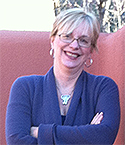
ABOUT WENDY STETINA: Wendy Stetina is a sales and marketing professional with over 30 years experience in the printing and publishing industry. Wendy works as the Director of Author Services for Outskirts Press. The Author Services Department is composed of knowledgeable customer service reps and publishing consultants; and together, they all focus on educating authors on the self-publishing process in order to help them publish the book of their dreams. Whether you are a professional looking to take your career to the next level with platform-driven non-fiction, or a novelist seeking fame, fortune, and/or personal fulfillment, Wendy Stetina can put you on the right path.

What is Narrative Nonfiction?

As a self-published author, you are asked to choose a genre for your book. The easy part is deciding whether your book is fiction or nonfiction. The more difficult part is determining what type of fiction or nonfiction to categorize your book.

Basically, there are two types of nonfiction books: narrative nonfiction and prescriptive nonfiction. All biographies and memoirs are considered narrative nonfiction, while how-to books are described as prescriptive nonfiction.

Remember, if you are writing a memoir, you must be able to attest to the accuracy of the details. In addition, the story must have the same elements as fiction stories: a beginning, middle, and end as well as conflict, interesting characters, setting, etc. If your memoir doesn’t meet these standards, you may want to write a fictional story loosely based on real life. This allows you to add information to create a better story and protects you from possible legal issues.

ABOUT WENDY STETINA: Wendy Stetina is a sales and marketing professional with over 30 years experience in the printing and publishing industry. Wendy works as the Director of Author Services for Outskirts Press. The Author Services Department is composed of knowledgeable customer service reps and publishing consultants; and together, they all focus on educating authors on the self-publishing process in order to help them publish the book of their dreams. Whether you are a professional looking to take your career to the next level with platform-driven non-fiction, or a novelist seeking fame, fortune, and/or personal fulfillment, Wendy Stetina can put you on the right path.

How Long Should Your Self-Published Manuscript Be?

Many new self-published authors ask my opinion on page count. They look at books in their genre, notice that many are similar in length, and try to figure out how many pages to write to make their book fit the mold. While it is great to look at books in your genre to determine what is considered the norm, there is another way to approach this issue of length.

First off, don’t think about page numbers; think about word counts. Page numbers are influenced by the size of the font and page as well as page breaks and illustrations. Therefore, this is not always an accurate way to compare books. Instead, publishers prefer to discuss books in terms of word count. (There is a Microsoft Word feature that easily tells you how many words are in your manuscript.)

Most publishers prefer first time novelist to have a manuscript between 50,000 and 100,000 words. (Yes, that is a wide range.) However, you don’t need to obsess over word counts. If your novel is 40,000 words and is already great, don’t (I repeat DON’T) keep adding information just to reach 50,000. Readers hate fluff, and you can ruin a great book by trying too hard to make it long enough.

Also note that there is no one size fits all when it comes to publishing. Some stories can be told in less than 50,000 words. Others may need more 100,000 to convey the story. Be knowledgeable of industry norms, but do not worry about trying to fit in. Often, the best books are the ones that stand out from the rest.

ABOUT WENDY STETINA: Wendy Stetina is a sales and marketing professional with over 30 years experience in the printing and publishing industry. Wendy works as the Director of Author Services for Outskirts Press. The Author Services Department is composed of knowledgeable customer service reps and publishing consultants; and together, they all focus on educating authors on the self-publishing process in order to help them publish the book of their dreams. Whether you are a professional looking to take your career to the next level with platform-driven non-fiction, or a novelist seeking fame, fortune, and/or personal fulfillment, Wendy Stetina can put you on the right path.

Self Publish a Book to Increase Credibility

Are you an industry expert who wants to increase your credibility and client base? One of the best ways to establish yourself as an expert and grow your business is to self publish a book. By writing and publishing a book, you prove you are knowledgable in your field and attract new customers.

In addition to showcasing your expertise, publishing a book increases you visibility. Plus, people respect “published authors.” Not only will this attract new clients, but the book can also serve as an additional revenue stream. Self publishing isn’t just for  creative writers; it is also perfect for industry experts.

If you aren’t a great writer, don’t worry. You can always hire a ghostwriter to help you bring your dream book to life.

I’d love to know, how has self publishing a book improved your business or career?

ABOUT WENDY STETINA: Wendy Stetina is a sales and marketing professional with over 30 years experience in the printing and publishing industry. Wendy works as the Director of Author Services for Outskirts Press. The Author Services Department is composed of knowledgeable customer service reps and publishing consultants; and together, they all focus on educating authors on the self-publishing process in order to help them publish the book of their dreams. Whether you are a professional looking to take your career to the next level with platform-driven non-fiction, or a novelist seeking fame, fortune, and/or personal fulfillment, Wendy Stetina can put you on the right path.

What Book Reviewers Look For

Book reviews are a great way to boost your credibility and market your self-published book. However, a bad review can ruin your reputation and potentially damage your book’s success. So what do book reviewers look for in a good self-published book? Here is the answer.

Book reviewers aren’t just considering your plot or characters. They look at EVERYTHING, including the content, cover, grammar, writing style, plot, characterization, flow, clarity, consistency, and more. This is just another reason that hiring a professional editor is so important. You may have a great story, but a poorly edited book can result in a poor book review.

It is also important to remember that most books should follow the Chicago Manual of Style rules. These may differ from the rules your learned in school or see in newspapers and magazines. Book reviewers are often aware of these style issues and look from them in your book. If your book is not consistent with this style, it may be perceived as unprofessional.

Don’t worry. You don’t need to be an expert in Chicago style, although you should be familiar with it. If you want your book to appear professional, hire a professional copyeditor who is trained in Chicago style. You can find an editor online, through references, or through your self-publishing company.


ABOUT WENDY STETINA: Wendy Stetina is a sales and marketing professional with over 30 years experience in the printing and publishing industry. Wendy works as the Director of Author Services for Outskirts Press. The Author Services Department is composed of knowledgeable customer service reps and publishing consultants; and together, they all focus on educating authors on the self-publishing process in order to help them publish the book of their dreams. Whether you are a professional looking to take your career to the next level with platform-driven non-fiction, or a novelist seeking fame, fortune, and/or personal fulfillment, Wendy Stetina can put you on the right path.