A true story rooted in real classrooms, real students, and real cultural change.
A rare look at the early foundations of electronic music in education.
A powerful portrait of perseverance in the face of institutional resistance.
Rich storytelling filled with humor, heart, and unforgettable moments.
A celebration of the lasting impact one educator can have on generations of students.
A Soundtrack for The Tobacco Field Kids and Mr. De
“How High the Moon” – Les Paul and Mary Ford (early electronic influence)
“Take Five” – Dave Brubeck (jazz innovation and rhythm)
“Sing, Sing, Sing” – Benny Goodman (big band energy)
“We Will Rock You” – Queen (the evolution of rhythm and mass appeal)
Classic Hartford Symphony broadcasts (reflecting the author’s early musical exposure)
Meet the Voice Behind the Story
Mr. De – A determined, unconventional educator fighting to bring music education to life.
The Students – A diverse group of hardworking, often overlooked kids whose lives are transformed through music.
The Community – Families shaped by post-Depression values, resilience, and a belief in opportunity.
The System – Institutions that both challenge and ultimately validate innovation.
Book Club Picks
If they like these books… they’ll also like The Tobacco Field Kids and Mr. De.
Dead Poets Society
Stand and Deliver
Freedom Writers Diary
Hillbilly Elegy
Educated
Bookish Fun Facts
The story is based entirely on real-life events and firsthand experiences.
The author helped pioneer one of the first secondary-level electronic music courses in North America.
The programs described in the book were eventually recognized at both state and federal levels.
The manuscript was written in part to preserve a piece of history that had been overlooked.
The author’s work has been verified and archived by a major Connecticut historical institution.
About Outskirts Press Since 2002, Outskirts Press has helped thousands of authors publish, distribute, and market their books while maintaining creative control and higher royalties. From editing and custom cover design to worldwide distribution and book marketing services, Outskirts Press provides the tools and support authors need to bring their publishing goals to life.
Ready to publish your book? Visit OutskirtsPress.com to explore publishing packages, author resources, and expert guidance for every stage of your publishing journey.
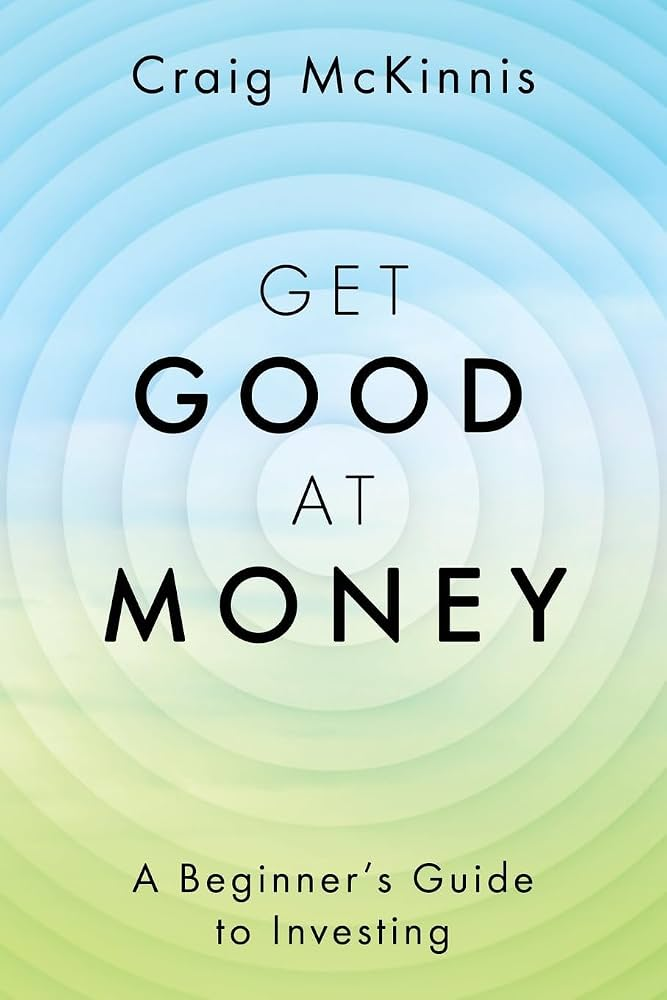
Get Good at Money: A Beginner’s Guide to Investing
By Craig McKinnis
Top 10 Reasons Readers Should Pick Up Get Good at Money
It breaks down investing concepts into clear, approachable language.
It helps readers overcome fear and anxiety surrounding money.
It emphasizes consistency over chasing quick financial wins.
It offers a practical introduction to long-term investing.
It focuses on sustainable habits rather than complicated strategies.
It encourages readers to build confidence one step at a time.
It explores the connection between mindset and financial success.
It presents financial stewardship in an accessible way.
It is ideal for readers who feel behind or overwhelmed financially.
It provides a calm, encouraging alternative to high-pressure money advice.
Meet the Book
Q: What makes this book different from many investing books?
A: It focuses on clarity, confidence, and sustainable habits instead of complicated strategies or quick fixes.
Q: Who is this book written for?
A: Anyone who wants to understand investing without feeling intimidated or overwhelmed.
Q: What is the book’s biggest message?
A: Long-term consistency and thoughtful decision-making often matter more than perfect timing.
Q: What emotion does the book hope readers leave with?
A: Confidence, peace of mind, and motivation to take the next financial step.
Book Club Picks
If they like these books… they’ll also like Get Good at Money: A Beginner’s Guide to Investing.
The Psychology of Money
The Simple Path to Wealth
I Will Teach You to Be Rich
Your Money or Your Life
The Millionaire Next Door
Rich Dad Poor Dad
Bookish Fun Facts
The book focuses on mindset and behavior as much as financial mechanics.
It was written specifically for readers who may feel nervous about investing.
The author is also the host of the Money Ministry podcast.
The book encourages stewardship, patience, and long-term thinking.
Complex financial concepts are translated into everyday language.
The book promotes progress over perfection when it comes to money management.
Why This Book Matters
Many people avoid investing because they feel confused or intimidated.
This book addresses those concerns directly and offers practical guidance.
Readers looking for a calmer and more balanced approach to money will find valuable insights.
The message is especially timely as more individuals seek financial confidence and stability.
It serves as both an introduction to investing and an encouragement toward long-term financial growth.
About Outskirts Press Since 2002, Outskirts Press has helped thousands of authors publish, distribute, and market their books while maintaining creative control and higher royalties. From editing and custom cover design to worldwide distribution and book marketing services, Outskirts Press provides the tools and support authors need to bring their publishing goals to life.
Ready to publish your book? Visit OutskirtsPress.com to explore publishing packages, author resources, and expert guidance for every stage of your publishing journey.
Last time I wrote, I sought to answer one very important question for self-publishing authors: What are online sales rankings, specifically Amazon sales rankings, and what do they mean for you, a self-publishing author? I spent some time tackling the definitions of and usefulness of sales rankings to the average indie author, and set out to debunk another question as well: What about the stuff that Amazon isn’t saying about its sales rankings? Which, as it turns out, is a lot. Pretty much everything, in fact!
In summary, Amazon is a business and its sales rankings, like its search algorithms and its “if you liked [x] you might also like [y]” algorithms, are both private and proprietary. Which means they don’t have to disclose what human and algorithmic assumptions are built into the process—what fundamental things Amazon believes about the way you, and all people, work. Quite apart from the potential for unconscious (or sometimes conscious) biases to perpetuate things like racism, sexism, and other -isms—especially if leadership and oversight isn’t constantly and thoughtfully looking out for such things—the fact remains that algorithms such as those used to determine sales rankings can be helpful, but require a significant human component in order to work in your favor.
This week, I’m going to ask (and hopefully answer) another important and related question:
What is the relationship between pre-orders and your sales ranking—and how can you make this relationship work for you?
Pre-orders can actually have a negative effect on your sales ranking—at least during the first week or so after your book launches. This is because pre-order sales are more spread out, and their dates of transaction will not be lumped together with the other books sold during your first week, even though the actual physical or digital books will be distributed at the same time as your first-week sales. And the more you sell in a short amount of time, the higher your sales ranking will be during that period. Others have written and spoken very eloquently on this first-week problem, so I won’t go into detail about it here, other than this quick summary.
There are other reasons why pre-orders are a good idea, and these deserve a little bit of your time and attention as well. Just to name a few, opening up your book for pre-orders provides you with a promotional opportunity that you wouldn’t otherwise have, and provides an actionable way for readers to purchase your book right away when they first hear about it, rather than requiring them to wait and plan to buy your book later—as we all know, instant gratification may not be a human ideal, but it is a very human reality. If readers can’t buy your book the first time they hear about it, many of them are liable to forget about it altogether. A pre-order option means that during your heaviest promotional period before your book launch, you can get your readers to commit to a purchase even though they’ll have to wait for delivery. You can then spread your pre-order link around all of your various social media platforms and digital presences, ensuring that it’s easy to find your book paired with your name everywhere it appears.
And yes, a pre-order period also allows you time to refine your promotional materials. It’s one thing to edit and edit away before your book launch, but a soft release like a pre-order allows you to test your language in the field and see how readers and potential buyers respond … and then make changes as you go to better appeal to them. This holds true for any advertising or website monetization you might run during the pre-order period, as well.
The biggest benefit to a self-publishing author of making pre-orders available is the reviews! Normally, a book can’t be reviewed on Amazon before it’s available for purchase, distribution, and arrival. (Goodreads allows reviews as soon as a book is listed.) But with pre-orders, a huge chunk of your readership will receive your book on the first day it’s out, and you’ll start getting reviews immediately. Reviews are the most powerful marketing tool of all!
So, while your pre-orders can negatively affect your Amazon sales ranking, it’s only for a few days, and it will only truly make a difference if you don’t make use of the pre-order period for the aforementioned optimization. Pre-orders can in many ways prove a useful training ground for promotion and marketing, meaning that your book launches to higher acclaim and attention than it would otherwise. It’s wise to see the larger relationship in context.
Next time, I’m going to look at what we know about Amazon’s other algorithms—so check back in two weeks for more on this fascinating and important subject!
You are not alone. ♣︎
ABOUT ELIZABETH JAVOR: With over 20 years of experience in sales and management, Elizabeth Javor works as the Director of Sales and Marketing for Outskirts Press. The Sales and Marketing departments are composed of knowledgeable publishing consultants, customer service reps and book marketing specialists; together, they all focus on educating authors on the self-publishing process to help them publish the book of their dreams. Whether you are a professional looking to take your career to the next level with platform-driven non-fiction or a novelist seeking fame, fortune, and/or personal fulfillment, Elizabeth Javor can put you on the right path.
Best Seller and Category Ranks are based on customer activity – sales and borrows – of your book relative to the activity of other books. A book ranking #1 in Mystery & Thrillers is the book with the most activity in Amazon’s Mystery & Thrillers category. Books can appear in up to three categories. The book’s rank in each category will show under the Product Details section. Activities that may not be an accurate reflection of customer demand, including promotional Amazon Giveaway sales and purchases that are later returned, are not counted towards sales rank.
Rankings are updated hourly but may take 24-48 hours to appear. Rankings reflect recent and historical activity, with recent activity weighted more heavily. Rankings are relative, so your sales rank can change even when your book’s level of activity stays the same. For example, even if your book’s level of activity stays the same, your rank may improve if other books see a decrease in activity, or your rank may drop if other books see an increase in activity.
When we calculate Best Sellers Rank, we consider the entire history of a book’s activity. Monitoring your book’s Amazon sales rank may be helpful in gaining general insight into the effectiveness of your marketing campaigns and other initiatives to drive book activity, but it is not an accurate way to track your book’s activity or compare its activity in relation to books in other categories.
The ranking for books with consistent activity histories that have been available on Amazon for a long time may fluctuate less than the ranking of new books, or books whose histories aren’t as stable. One sale of a very popular book may not influence its rank much at all, but one sale of a lower volume book may significantly improve that book’s rank.
Note: Each available format of your book (eBook, paperback) has its own independent Amazon Best Sellers Rank.
This is a lot to parse, but the main points to remember are these:
Your sales ranking is essentially an attempt to quantify your book’s popularity;
The release of new books, awards announcements, and book club recommendations (among many other factors) means that new books are always climbing the rankings, while others are dropping in the rankings at the same time—it’s a constant balancing act, and sales rankings are relative;
Even if you sell the same number of copies each month, your sales ranking will rise and fall dependent on factors outside of your control. As I mentioned in my last post, there are yearly rhythms to book sales that mean you need to sell more books at certain times just to maintain the same ranking relative to other months when book sales are lower for everyone;
Blockbuster books are constantly battling it out for the upper sales rankings in every category, and rankings mean less to popular books because they have other avenues to selling a lot of books. But for new books, indie publications, and self-published books? Sales rankings mean a lot more, because even one or two sales can boost an author’s sales ranking, and as a result, boost their visibility, which will itself boost sales. It’s a feedback loop that can work to your advantage.
Amazon also has a page dedicated to giving its sellers a larger-picture idea of what their sales figures represent, and that’s worth checking out as well if you sell on the website.
But what about the stuff that Amazon isn’t saying about its sales rankings?
Any number of websites out there at any point in time are happy to claim that they’ve “cracked the code” or “tamed the algorithm” or can help you “game the system,” but the fact of the matter is, most of them are offering something more along the lines of Search Engine Optimization (SEO) advice, which is totally well and good, but not quite the same thing as delivering on a promise to make Amazon’s system work for you.
At its core, Amazon is a business which is driven by its bottom line, which is to say, eking every possible profit out of both its customers and its third-party sellers. Their algorithm code is not fully public, and while we can speculate about ways to improve sales rankings, it’s entirely Amazon’s right to code their algorithm to ignore the little sales and boost the visibility of popular items, including those blockbuster book sales that I mentioned earlier. It’s not actually in their best profit-driven interest to be fair, even though it’s certainly in their profit-driven interest to discover new niche markets—which they often do by measuring how many readers access titles through their Kindle Unlimited offering—a service which rarely profits the authors themselves, as authors themselves often point out. All this is to say, we don’t actually know how sales rankings work, other than what Amazon itself has told us, and Amazon has more than one horse in the race to make money.
Next time, I’m going to look at what we know about preorders and how they affect sales rankings—so check back in two weeks for more on this fascinating and important subject!
You are not alone. ♣︎
ABOUT ELIZABETH JAVOR: With over 20 years of experience in sales and management, Elizabeth Javor works as the Director of Sales and Marketing for Outskirts Press. The Sales and Marketing departments are composed of knowledgeable publishing consultants, customer service reps and book marketing specialists; together, they all focus on educating authors on the self-publishing process to help them publish the book of their dreams. Whether you are a professional looking to take your career to the next level with platform-driven non-fiction or a novelist seeking fame, fortune, and/or personal fulfillment, Elizabeth Javor can put you on the right path.
We all have only one life to live. It is safe to assume that we all want to live a long and healthy life free from pain, disease and untimely death. A New Lease on Life helps us to do that based on research by various authorities mostly in holistic medicine. It shows you how the body works and what you can do to help it do its work of self-repair or healing. We learn that the body balances its alkalinity and acidity at 80/20% ratio. The foods we eat need to follow that ratio of 80% alkaline foods and 20% acid-forming foods. Because we are unable to follow this 4:1 ratio, the body has to break down healthy structures and tissues in a process called catabolism. This is needed to keep us within 7.4pH (slightly alkaline range), especially in our inner cavity to keep our vital organs from dying. Every fat mostly cellulose is pushed out and stored elsewhere in the body to keep us from dying prematurely.
Since health is dependent on detoxification and nourishment, we need to find the best means to detox and nourish our system. Detoxification is best achieved by ionized, alkaline, micro-structured hexagonal water, which is able to easily penetrate our cells to deliver oxygen and nutrients while cleansing our cells on its way out. Without good water, not just any water, the cells are unable to easily receive nutrients and keep them clean. This results in excess tissue acid waste which is the root cause of pain and numerous diseases. It also deprives our cells of needed nutrients that cause nutritional deficiency diseases leading to untimely death. Your longevity depends on how well you take care of your cells since the cells are not supposed to die and you could live to over 100 years, as is known in Japan and in many other cultures.
REVIEW:
Oh, boy, am I not drinking the right water.
This, my friends, is exactly what went through my head when I first picked up James Ocansey’s A New Lease on Life, which is blurbed entirely accurately in the description from Bookshop.org that I’ve included above, which is where I first found this book.
But first, to back up a minute: Those of you who have read my last review will remember that my response to that book was largely the product of my recent experiences in and out of area health facilities as my family battled its way through a long, strenuous, and even to some extents ongoing medical emergency of the most dramatic kind. As with many people, it took something of such medical gravity to force me to re-evaluate my own life choices, particularly in what I eat and drink. And while there are plenty of books out there on the former, the latter doesn’t seem to be talked about or researched to the same extent, outside of studies pertaining to known toxins and “please drink in moderation” sorts of drinks, such as those containing alcohol or caffeine. But if a person were to wonder, as I certainly have found myself wondering, whether there might be something more basic and elementary going on when it comes to “drinking well” in the same way that nutrition is basic and elemental to “eating well,” that person might find a compelling answer in James Ocansey’s A New Lease on Life.
This is a research-based take on water, the most basic of all molecules necessary to life barring only the Carbon atom, which enables complex life. Water is where we all started, the science seems to say, whether we’re talking literally or in a profound metaphorical sense. Our bodies are largely made up of water, after all, and I could drill down into the protean images of the womb and of creation narratives featuring a separation of land and sky from water–but I’ve only budgeted one on-the-nose metaphor for this review, and I don’t want to try your patience before even getting to the real, er, elemental components of this review.
I know, I’m the absolute worst when it comes to puns, irony, and dad jokes. If our bodies are made of 90% (or some large percentage) of water, my soul is made of 90% dad jokes. Terrible, awful, unbearable dad jokes.
Luckily, Ocansey is made of sterner, more academically reliable stuff than dad jokes, and I mean what I say. This book draws upon the results of a 12+ year study of pollution’s effects on the cellular level, a study involving scientists and researchers across multiple fields and disciplines. Dr. Joel Wallach, for example, conducted over 17,500 animal and 3,000 human autopsies (making for a total of 455 species, I think) in order to collate information on pathologies, and concluded that “every animal and every human who dies of natural causes dies of a nutritional deficiency disease”–and the culprit is not the food these creatures consumed but rather the water the
In an over 12 years Interdisciplinary study on Pollution in which Dr. Joel Wallach was the Chief Pathologist, he conducted autopsies on 17,500 animals of 454 species and 3.000 humans for comparison. His conclusion was that “it was apparent that every animal and every human who dies of natural causes dies of a nutritional deficiency disease,” and that this malnutrition is the result not of poor food quality or quantity but rather the water these unfortunate creatures consumed.
I mean, as we millennials like to say, this is mind-blowing stuff!
Water, as Ocansey puts it, is the “missing link” to good health, and the fundamental component missing in world devoid of strong water knowledge (much less good water quality and infrastructure). I am, of course, no water expert (or true scientist, much as I love to participate in citizen science research and to promote STEM learning for all), but the science in A New Lease on Life is well presented and easy enough to understand, particularly if a reader is already familiar with the scientific method.
“You’re not only thirsty but starving,” declares Ocansey in the subtitle to A New Lease on Life, and this is the basis of the book’s argument: Water detoxifies, and water also nourishes. It not only washes the body clean of toxins, but it also can contribute significantly to good nutrition if consumed in the right way and if made up of the right kind of water. I’m still parsing some of the finer points of Ocansey’s argument, but the research does seem clear on what it is indicating. There is such a thing as “hexagonal water,” a specific molecular arrangement of ordinary H2O which can make a potential difference in not only longevity but general quality of life.
A New Lease on Life also contains arguments for several other potential health-boosting supplements and aids, but it is largely concerned with the aforementioned H2O. It contains everything from doctor to patient to scientific testimony about the efficacy of all of the above, and is well worth a read if you are looking to delve into a brave new world of nutrition that is dramatically different from those diets, regimens, and other fads that come and go with the years. You may or not find yourself convinced–that is always a risk when it comes to an argument-based book–but you will most definitely find yourself asking important questions that need to be asked about the ways we have been doing things and where we want to go from here, health-wise.
WHERE TO BUY?
You can find A New Lease on Life by James Ocansey wherever good books are sold, including Bookshop.org, Barnes & Nobleand Amazon. You can also find out more about it on the book’s Outskirts Press listing.
WHAT NEXT?
Next week I will be posting my review for Cooper C Woodring’s book, Expert Design Witness 101. I have no idea what to expect!
I received a copy of this book in exchange for an honest review.
ABOUT KENDRA M.: With nine years in library service, six years of working within the self-publishing world, as well as extensive experience in creative writing, freelance online content creation, and podcast editing, Kendra seeks to amplify the voices of those who need and deserve most to be heard.