Top 5 Ways Self-Publishing Authors Can Take Advantage of Social Media Day

Today is Social Media Day. All around the world people are celebrating the birth of social media and its impact on society. Did you know that self-publishing authors can use this day to their advantage? Today is a perfect day to get involved in social media if you haven’t already.

Here are some of the top 5 ways that you can get involved on social media sites and take advantage of Social Media Day:

1. Create a social media account (Facebook, Twitter, LinkedIN, or any other account that may suit your fancy).

2. Re-activate your social media accounts so that you can reconnect with long lost friends.

3. Go to a local Social Media Day event and meet some new people.

4. Post helpful, non-promotional messages on your social media profiles. Vow not to promote your book for the entire day.

5. Start planning a social media party (Twitter parties are the most common) for your book or just for fun!

Keep in mind – the purpose of social media is to connect with others and have a good time. As long as you maintain a certain level of authenticity across your profiles, relationships and possibly new people who are interested in your book may result from your efforts.

So, get out there and enjoy Social Media Day 2011!

Authors Can Get Free Advertising Using Facebook

Facebook is a tool to connect and share with friends, family, and others in your various networks. It was started in 2004 and has since evolved from a site that was exclusively available to college to students to a worldwide social network with an audience where 50% are not college students and the fast growing demographic is the 35+ year olds. There are millions of current Facebook users and many more are signing up each day. You may have already known that, but did you know that it can also be used as a tool to get “free advertising”? Well, it can, and when used correctly, it will.

Facebook has become increasingly popular not only among individuals but also among businesses. The reason for this recent boom in Facebook and other forms of social media is because there are no time or space constraints and everything can be much more public for everyone to see. So, it helps businesses grow their network and ultimately “meet people and start conversations”. Many online consulting firms refer to this as the “online cocktail party”.

The first step in building such a network, though, is to create a business page. While you may already have a personal profile, you will want to create a business profile to support your business. The main reason for this is that Facebook has a lot of tools/options built into the business profiles that you will not be able to get with the personal profiles (such as analytics to see how much traffic you’re getting to your page and where that traffic is coming from). If you do have a personal profile, though, you will most likely want to tie that to your business profile.

Another big difference between business pages and personal profiles are how people add you to easily keep up with what you’re doing. Pages get “fans”, which only require the users to add themselves as a fan and involves no interaction on your part. This helps you build your network naturally and easily. Personal profiles, however, get “friends”. After someone adds you as a friend, you then need to accept them in order to allow them to view your profile and other information. If your business network is large (which hopefully it will be), you will not have time to go through and add all of the friends that request you.

Like many of the other social media / blogging type sites, your success is based on how well you take advantage of the give and take relationships that must be made. In the case of businesses, there will be quite a bit of giving in order to take away a new customer. However, the tools available on Facebook allow you to easily connect with your customers and engage them in your businesses and its doings. This will, of course, create a “community around your company”. That community will make it easy for you to obtain the ultimate goal – free advertising!

Once you have developed an online community of “followers”, it will be relatively easy to get the word out when things change in your business. For instance, if you introduce a new product/service offering and your Facebook “fans” catch wind of it, you can expect the majority of them to spread the word to their friends, family, etc. You may even find your fans are reposting your content within Facebook and further “advertising” what you announced. This form of advertising did not cost you anything. So, you have natural buzz about your product/service. Additionally, customers are more likely to trust natural buzz as opposed to marketing speak.

After creating your business page on Facebook, you want to remember to post interesting and informative content. Your job here is not to be a sales person. Your job is to post things to help people better understand your products or services, provide tips, or unravel a concern within your industry. In doing that, you will find yourself positioned as a natural resource and your network will begin to look to you as the go to person in your industry. In turn, you have built trust and those customers will more easily turn to you to utilize your products/services when needed (or wanted). That’s how Facebook (as well as other social networks) can be used to get free advertising.

5 Reasons Some Self-Publishing Authors have no Online “Street Cred”

You’re following the advice you’ve been given on self-publishing blogs such at this one. You’ve started a blog and are updating it regularly. You’ve got a small following on Twitter, Facebook, etc., but are you still feeling like no one’s really listening to you? Well, first off, it can take a while to get to the point where you have a “true following” because people are still feeling you out. They haven’t really gotten to know you, and they don’t know if you’ll be around for a day, week, month, year, etc. So, know that time can be your biggest enemy when you first get started. Once you’ve overcome the time barrier (usually after about 3 months or so), there may be another reason you aren’t getting noticed online.

Here are some of the top reasons that no one is listening to you online:

  1. Everything (or mostly everything) you post online is a request for people to buy stuff. People don’t like being sold, and that’s the quickest way to shut down interaction between you and your audience. Let them buy from you because they like you, not because that’s all you ever talk about online.
  2. You don’t provide anything of value. Have you ever heard of the acronym WIIFM? If not, it means “What’s in it for me?” By nature, humans are selfish, and if you aren’t giving them what they need/want, you’re useless and not worthy of their time — online or otherwise.
  3. You don’t play well with others. Could people feel put off by what you saying online? Are you being derogatory or insulting in any way? Make sure you are being sensitive to the issues of your audience and worse yet, don’t get into online arguments with others.
  4. You’re off when they’re on and vice versa. Are you posting at a time when your audience is actively online? Are you sleeping while they’re browsing? Unless you are scheduling your updates (which is highly recommended), you are missing your audience. You want to be most active when they are.
  5. You’re not connected with the right people. Are you missing the boat altogether? Make sure your audience knows that you’re out there. It’s fine to connect with others who may be outside of that demographic. However, you want to make sure you are reaching the people who could buy your book.

All of the above can be summed up into one simple sentence: Be where they are when they are, be nice, and give them what they’re looking for.

DISCUSSION: Have you ever missed the mark on connecting with your audience?


Weekly Recap:

Quick Question – What is Self-Publishing?

5 Things to Look For in a Self-Publishing Company

Bookstores Are In Trouble and What this Means to Your Self-Publishing Marketing Plan

Self-Publishing Book Review of the Week

Top 5 Tips for Blogging Success and Why Blogging and Self-Publishing Go Hand in Hand

Imagine being looked to as an expert in your field. Everyone will want a copy of your book when it’s published, right? If only it were that easy…well, now it can be! As a blogger, you can potentially gain an unbelievable online following of folks in your target market who will likely be interested in buying your book. Blogging is a no-brainer when it comes to marketing your self-published book. But way more than a handful of authors are missing the boat on this highly successful tactic.

Why? Many self-publishing authors are afraid of blogging. As a matter of fact, many don’t know what a blog is. However, if you intend to be successful at the whole “book publishing thing”, you have to learn this trick to gaining exposure — especially since blogging has been called “the most important thing an author should do to promote a book“.

Think of a blog as an online journal. In it, you can share your own thoughts while getting only as personal as you feel comfortable. As an author, though, you are able to write about topics related to your book. If you are a fiction author, a blog related to fiction books is a great idea. If you have written your own self-help book, share your expertise in mini-digests on your blog. Either way, be sure to post something interesting to get readers involved.

But, won’t I feel like I’m talking to myself? That is precisely how you will feel in the beginning. Many times it can takes months (or maybe even years) for your blog to be found and gain a steady readership. This won’t last forever. The best way to approach it is to think of when you’re planning on self-publishing a book. Are you 100% sure that people will read it? Of course not, but you keep writing because you have faith in your own success. Why should your blog be any different?

Wait a minute…so how do I even sign up for a blog? That’s a great question, and it’s one that someone else answers much more easily and efficiently than I do. So, here’s a video to help you learn more:

The above video walks you through the steps of signing up for a Blogger blog. There are several other platforms, but this is the least expensive and you can even completely personalize it by purchasing your own domain for it, which I highly recommend.

Once a self-publishing author gets started blogging, there are a few rules of thumb that must be following in order to be successful (skipping either of these is NOT recommended). I’ve listed the basics out for you below, but you may learn even more on a site like Blogging Tips:

  1. Define your niche early on and stick to it. The key here is to define yourself as an expert. That cannot be done if you’re talking about everything in your life all at once. Stay focused, and you will be surprised at the results.
  2. Come up with a posting schedule early on and stick to it. Post consistently, even if you’re only posting once per week. Try to schedule all of your posts around the same time.
  3. Use the “schedule post” feature that is available in your blogging software. You may not always be available at 8:15 am, but you want to remain consistent. So, instead of publishing your post right away, schedule it for sometime it for 8:15 am the next day so that you can be sure to have content up when your reader is looking for it.
  4. Purchase your own domain for the blog. This is SUPER important (I’m having a feeling of déjà vu here — didn’t I already say this?) You have to craft your own identity online if you want to be seen as an expert. The #1 ingredient for that identity is branding (aka – your own domain name).
  5. Participate in discussions on your blog. Make sure you post follow up comments to users who comment on your blog posts. This is crucial to networking and building strong relationships with your readers.

The above advice is just the tip of the iceberg. There is quite a bit to learn about successful blogging. However, you shouldn’t feel overwhelmed because you can learn as you go. There are so many resources out there to help you, so get to blogging!

DISCUSSION: Are you an author with a blog? How has this help you build your brand and sell more books?


Bing(go) goes social networking: Self-publishing authors prepare

Whether your a social media wiz or, as many to some extent (including myself), have some level of apprehension with this “change,” there is no question that self-publishing authors who tackle things head on generally experience much greater book sales.

Social Media is here to stay, and regardless of your industry, creates a platform where businesses and consumers can relate on an increasingly flat field in what is becoming known as the “Attention Age.”

News flash: Social Media is here to stay.

More relevant news flash: Kleiner’s Bing Gordon is set to launch a $250 M “social media’ effort. Yep, 250 million, to include Facebook, Zynga, Amazon, Comcast, Liberty Media and Allen & Company. Here are some more details about what each partner company will be doing, from the press release.

  • Amazon Web Services (AWS) will provide AWS Getting-Started Support for one year, priority access to worldwide Startup Events, and dedicated business and technical support.
  • Facebook will contribute access to its platform teams, beta APIs, and new programs, like Facebook Credits.
  • Zynga will host periodic sessions with sFund companies to focus on management and technical development, including open source collaboration.
  • Comcast Interactive Capital, Comcast’s venture fund, will provide access to Comcast’s resources, teams, and relationships.

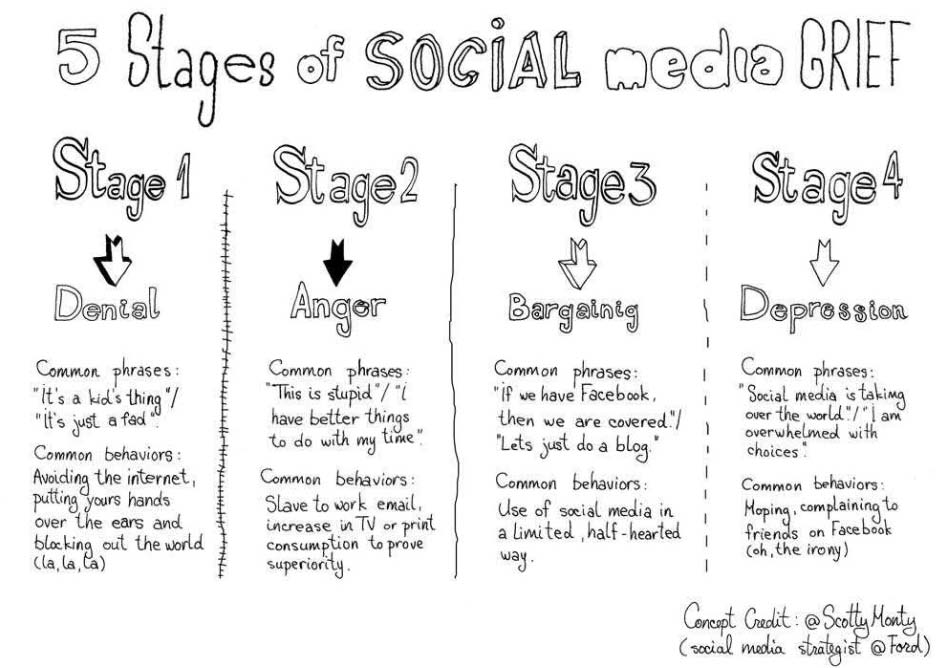
Here is some social media fun for you as you prepare your book marketing campaign…

@scottymonte, social media strategist @Ford


Share this Post