From the Archives: “Should You Pay for a Book Review?”

Welcome back to our Tuesday segment, where we’ll be revisiting some of our most popular posts from the last few years.  What’s stayed the same?  And what’s changed?  We’ll be updating you on the facts, and taking a new (and hopefully refreshing) angle on a few timeless classics of Self Publishing Advisor.

∗∗∗∗∗

[ Originally posted: April 15th, 2011 ]

As an author in the self-publishing industry, reviews for your book are very important.  A book published by an unknown author has little chance of gaining attention, while the same book (and the same “unknown” author) with a number of positive reviews can begin to gain momentum.  Those positive reviews can help persuade potential new readers to buy the book and the word-of-mouth continues.

You may have already received reviews from some of your friends or colleagues, so what next?  There are some free review services where you can send a copy of your book.  These services are a great resource; however, because they are free, the reviewers get inundated with books and can’t review every book they receive.  Their services can also take several months and the reviews are not guaranteed to be good.

In addition to free review services, there are some services available where you can pay to be guaranteed a review.  That said, the review is still not guaranteed to be good, but if you are confident in your book (which you should be, after all you wrote and published it!), you shouldn’t need to worry about that.

Here are three pay-for-review services you can start with:

BLUE INK REVIEW

Standard Review is $395 for the review to be completed in 7-9 weeks.

Fast Track Review is $495 for the review to be completed in 4-5 weeks.

BlueInk considers for review any book that has been published (self-published and indie published).  They review e-books, on-demand books, printed books in any format, English translations and English-language submissions from outside the United States, as well as galleys. They do not review manuscripts pre-publication.

FOREWORD CLARION REVIEW

The cost is $305 $499* and turnaround time is 6-8 4-6* weeks.

Open to all books and publishers, Clarion promises an objective 400 – 500 word review/critique with a quick six to eight week turnaround. The review will be posted on the ForeWord website (if the publisher desires), licensed to the three top wholesale databases, and made available to the book’s publisher. This service is ideal for books that haven’t received review attention elsewhere.

KIRKUS INDIE REVIEW


Standard review is completed in 7-9 weeks for $425.

Express review is completed in 3-4 weeks for $575.

The Kirkus Indie program gives independent authors a chance to obtain an unbiased, professional review of their work, written in the same format as a traditional Kirkus review. A book review can be an essential and powerful tool for promoting your book to literary agents, traditional publishing houses, booksellers, and, most importantly, potential readers.

by Kelly Schuknecht

When it comes to reviews, there’s so much to say that it’s almost inevitable that I would have to update and expand upon what I wrote back in 2011–after all, the world doesn’t hold still for anyone, and that’s certainly true of both the internet and the publishing industry, as well!  You will note that I have already made note of several changes in regards to pricing and timing for the ForeWords Clarion review options (marked with an * each time), but what about the larger picture?  Can we still mount a defense for paid reviews in a world where Amazon and Goodreads are king, where product pages provide ream after ream of short, easy-to-digest reviews from laypeople like you and me–and FREE reviews at that?
national review book reviews

If you suspected I might have a simple and short answer for you, I’m sorry to let you down.  Saying “yes” casts aside all of my many thoughts about the value of those unpaid product reviews on Amazon and Goodreads, and saying “no” discounts the ongoing benefits that longform paid reviews still offer.

Let’s start with Amazon and Goodreads.

I’ve written in detail about the virtues of garnering lots of good reviews on Amazon and Goodreads before, specifically in my series on Self-Publishing and Merchandising from May of 2015, where I broke down the distinctions between these kinds of reviews and blog-based reviews.  And the statistics speak with resounding and repeated certainty that readers use the metrics provided by Amazon and Goodreads as one of their first and most important decision-making tools.  If readers search for a title they’re fairly certain they’re going to like, only to find that it has lots of poor reviews on Goodreads or a low star rating on Amazon, they’re not likely to follow through and buy it, no matter what else they’ve read that’s positive.  And if readers stumble across a title by accident that they weren’t actually looking for, but it ends up having fabulous reviews, they’re actually fairly likely to pay money to purchase it!  Search engines like Google have tweaked their algorithms to push books that are rated highly on Goodreads and Amazon to the top of their index, so you should never, never discount the importance of asking friends, family members, and other members of the public to post a positive review to these sites.

And what about paid reviews?

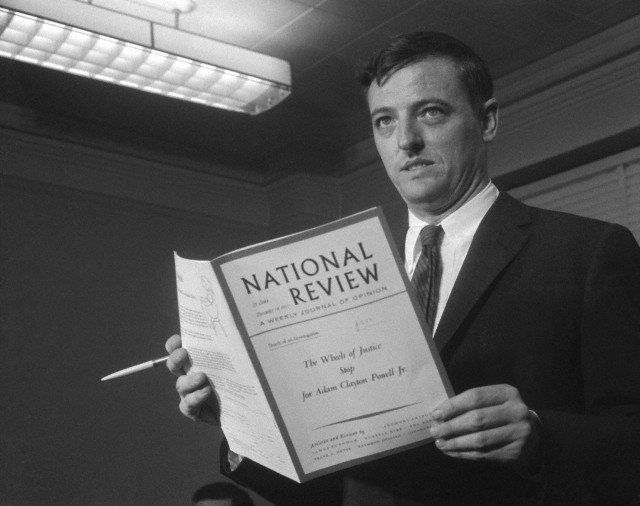
While longform essay book reviews have largely become the province of periodicals with paid subscription models like the London Review of Books or the New York Review of Books, they are far from dying out in terms of popularity–they’ve merely found their niche readership, and a powerful one at that.  It’s hard to estimate the exact impact of one positive longform review, but collectively, consider: the discerning reader needs an evaluation of content, of structure, of tone, and of many other aspects of a book’s nature than what can be provided in a brief burst of opinion on Amazon.  The discerning reader wants to know: what do the experts think?  Not everyone is looking for the lowest common denominator of shared public opinion (or so one of my college professors once opined) … sometimes they want to hear from one learnéd voice, in detail, the full warp and weft of a book.  This is why paid reviews are still worth their money–they reach the discerning reader.  And guess what?  Discerning readers are very likely to be a go-to resource to their friends and families, access points for dozens upon dozens of other new readers.  Discerning readers are amplifiers, advocates, and arbiters of your book’s larger footprint.  So yes, we shouldn’t forget about the paid review.  It has a place in the larger scheme of things, the larger framework of reviews and marketing.

They do not determine or reflect the actual value of your book, but good reviews–both paid and unpaid–do determine who is likely to buy it next.


If you have any other ideas, I’d love to hear them.  Drop me a line in the comments section below and I’ll respond as quickly as I can.  ♠

KellyABOUT KELLY SCHUKNECHT: Kelly Schuknecht is the Executive Vice President of Outskirts Press. In addition to her contributions to the Outskirts Press blog at blog.outskirtspress.com, Kelly and a group of talented marketing experts offer book marketing services, support, and products to not only published Outskirts Press authors, but to all authors and professionals who are interested in marketing their books and/or careers. Learn more about Kelly on her blog, kellyschuknecht.com.

Self-Publishing News: 03.21.2016

This week in the world of self-publishing:

In this March 18th article for Publisher’s Weekly, contributor Jennifer McCartney compiles a list of the titular “house and home” books published so far in 2016 in the tradition of Marie Kondo’s decluttering handbook, The Life-Changing Magic of Tidying Up––a book which became a massive bestseller after its release in 2014.  Of more specific interest to fans of self-publishing, however, is McCartney’s use of an indie favorite to provide context to her list: Francine Jay’s 2010 self-publishing phenomenon, “the minimalist lifestyle guide The Joy of Less,” which according to McCartney “has sold almost 25,000 copies in paperback.”  While Jay’s book has “found a home” with the traditional publishing label Chronicle, and will be releasing a hardcover edition under that same label in April featuring new material, it had its start in the world of self-publishing. “Like many decluttering proponents,” writes McCartney, “Jay is fond of acronyms and advocates the STREAMLINE approach: start over; trash/treasure/transfer; reason for each item; everything in its place; all surfaces clear; modules; limits; if one comes in, one goes out; narrow it down; and everyday maintenance.”  Fans of the original indie pick may be interested to know that the new edition includes a “five-step program” called “the clutter-free family,” which by all accounts “addresses readers at various stages of life, from a newly cohabitating couple to a household that includes teenagers.”  McCartney’s list does not, disappointingly, include any other self-published titles, but you can find out more about The Joy of Less at the book’s Amazon bookpage!

Becky Robertson, in this March 18th article for Quill and Quire, gives a much-needed update on the inaugural Whistler Independent Book Awards, “jointly produced by the Whistler Writing Society and publishing and editorial services company Vivalogue Publishing.” While Quill and Quire, which self-describes as “the magazine of the Canadian book trade,” remains a subscription-only magazine, the full details of the Whistler Independent Book Awards are available from the Tidewater Festival website.  Tidewater, “the first book festival exclusively for independent and self-published authors in western Canada,” now assists in organizing events for the indie publishing across the entire nation of Canada, including the aforementioned Whistler Independent Book Awards, which aim “to recognize excellence in Canadian independent publishing,” and will offer prizes in four categories: fiction, non-fiction, crime fiction and poetry. According to the website, there will be a “single winner in each category, with two additional finalists.”  The awards close for entries on June 3rd, with finalists announced on July 15th and winners announced at a “Literary Cabaret event held as part of the Whistler Writers Festival” in October. If you’re a self-published author of Canadian extraction and are thinking of applying, we’d love to follow your journey! For more information including eligibility requirements and prize details, follow the link.

Taking somewhat of a different tack in her view of self-publishing, Guardian contributor Marta Bausells takes on a specific brand of poet in this March 20th article focusing on Scottish poet Robert Montgomery, who has “consciously made an ‘awkward space’ for himself in between artistic categories.” As Bausells reports, his work “puts poetry in front of people in eye-catching visual formats: from advertising billboards he has covered with poems, to words he has set on fire or lit with recycled sunlight in public spaces––including the Sussex seafront and a Berlin airport.”  Of more recent interest, says Bausells, Montgomery has been working “on tomorrow’s World Poetry Day ‘Pay with a poem’ campaign, through which customers can get coffee in exchange for poetry in cafes across the globe. Montgomery will then collect the public’s poems to create an installation in a secret location.”

3881
From Bausell’s article: “The People You Love at the De La Warr Pavilion in Sussex, in 2010.”

Fascinating stuff, and definitely of an “indie” bent, but more relevant to us here on Self-Publishing Advisor is Montgomery’s words on self-publishing.  As Bausells puts it, he “celebrates the fact that self-publishing is becoming essential online, and that these peer-to-peer demographics mean poets garner audiences that ‘bring their work alive’ before they get a chance to get published.”  Public poetry, according to Montgomery, is at its best when the barriers between poet and public are finally broken down–and there’s no better manifestation of this trend than in self-publishing!  We encourage you to read Bausell’s full article on Montgomery’s rise in popularity here.

spa-news

As a self-publishing author, you may find it helpful to stay up-to-date on the trends and news related to the self-publishing industry.This will help you make informed decisions before, during and after the self-publishing process, which will lead to a greater self-publishing experience. To help you stay current on self-publishing topics, simply visit our blog every Monday to find out the hottest news. If you have other big news to share, please comment below.

KellyABOUT KELLY SCHUKNECHT: Kelly Schuknecht is the Executive Vice President of Outskirts Press. In addition to her contributions to the Outskirts Press blog at blog.outskirtspress.com, Kelly and a group of talented marketing experts offer book marketing services, support, and products to not only published Outskirts Press authors, but to all authors and professionals who are interested in marketing their books and/or careers. Learn more about Kelly on her blog, kellyschuknecht.com.

Marketing in the Hybrid Publishing World

Two weeks ago, after much consideration, we settled on a simple and straightforward definition for hybrid publishing:

Hybrid publishing is any publishing model that allows authors to enter into direct, flexible, contractual collaborations with industry professionals that in traditional publishing would be indirect (they would be paid by the publishing house, not the author) and are not traditionally available to self-publishing authors.  This includes companies like Outskirts Press, which offers a range of collaborative services, and excludes the so-called “hybrid author,” or someone who has moved from traditional publishing into self-publishing or vice versa.

And last week, in hopes of getting a glimpse into the actual experience, I dove into the stories of two self-publishing authors who have chosen the hybrid publishing track: Norman Smith  of Dog Ear Publishing, and Mirtha Michelle Castro Mármol of Outskirts Press fame.  Smith’s review spoke to what I consider the real strengths of the hybrid publishing experience: constant communication, flexibility, and a real willingness to put the author’s vision at the forefront of the publishing process.  Meanwhile, Mirtha Michelle’s interview highlighted the collaborative nature of hybrid publishing––from writing her book, to finding the company she wanted to go with, to finding a designer for her book’s cover, to connecting with her readers after the fact.

This week, I want to answer a different set of questions, and I want to take us back to marketing, our focus for our Wednesday posts here on Self-Publishing Advisor.  How does hybrid publishing assist an indie author in the realm of marketing a book, for example?  Does it offer tangible benefits?  How can an author know when the expense is paying off?


Value vs. Expense:

As hybrid self-publishing superstar CJ Lyons puts it, “If you are spending more time marketing than you writing a book, then you are probably doing a disservice to your readers by not writing the best book that you can. You can trust your readers and if you are writing a book they love then they will do the marketing for you.”  And it’s true: your readers are the greatest force for influence that you have!  When readers fall in love with a new world or a new book, as you are probably already well aware, they can’t help but want to share the thrill of discovery with their friends, families, and other social connections.

marketing hybrid publishing

Connecting with your readers is, of course, a matter requiring some delicacy in and of itself.  Marketing doesn’t happen by itself; your social media presence, whether you’re a solo act or working with a hybrid self-publishing company, will require work.  You have to balance your personal time and energy budget without falling behind on either sleep or sacrificing valuable time you might spend writing that next book (and that next book is a powerful marketing tool in and of itself, so you don’t want to sacrifice it).  The difference between being a “regular” self-publishing author–assuming, for the moment, that we set aside the massive range of experiences that fall into that category–and being a self-publishing author who chooses to work within the hybrid model boils down to resources.  A good hybrid publishing company will reduce the amount of time and energy and expertise required to keep up a vigorous social media campaign as well as a nationwide marketing plan to something more like light maintenance than heavy work.

marketing hybrid publishing

Within the hybrid model, you the self-publishing author don’t have to be the one running down to Kinkos to print out a massive pile of fliers that you spent weeks designing yourself, or staying up late squinting at a dim computer screen scrolling through tweets about your book.  You pay to let the professionals assist you with that.  Most companies offer a range of marketing products  (like this one from Outskirts Press) and bundles so that you can choose to pay for only the services you need or that you don’t know how to manage yourself, and which allows you to only spend money on truly necessary expenses.  An easy way to know if a product is worth spending money on is to hop on a web forum and ask around after authors of equal expertise in, say, book trailer creation–and see how long it took them to design one.  Multiply the hours they spent by the average going wage for freelance videographers (anywhere between $20 and $50 an hour in USD) and compare against the price for that product.  Run the numbers for each product you’re thinking about purchasing, and make your decisions accordingly.  These figures don’t allow for the expertise you’ll have access to by paying a professional to do them for you, but they do give you a starting point–and we all need one of those!


Thank you for reading!  If you have any questions, comments, suggestions, or contributions, please use the comment field below or drop us a line at selfpublishingadvice@gmail.com.  And remember to check back each Wednesday for your weekly dose of marketing musings from one indie, hybrid, and self-published author to another. ♠

KellyABOUT KELLY SCHUKNECHT: Kelly Schuknecht is the Executive Vice President of Outskirts Press. In addition to her contributions to the Outskirts Press blog at blog.outskirtspress.com, Kelly and a group of talented marketing experts offer book marketing services, support, and products to not only published Outskirts Press authors, but to all authors and professionals who are interested in marketing their books and/or careers. Learn more about Kelly on her blog, kellyschuknecht.com. 10:00 AM

From the Archives: “Statistics Suggest Good News for the Self-Publishing Author”

Welcome back to our Tuesday segment, where we’ll be revisiting some of our most popular posts from the last few years.  What’s stayed the same?  And what’s changed?  We’ll be updating you on the facts, and taking a new (and hopefully refreshing) angle on a few timeless classics of Self Publishing Advisor.

∗∗∗∗∗

[ Originally posted: December 17th, 2008 ]

Bowker, the global leader in bibliographic information management, recently released 2007 book publishing statistics compiled from its Books In Print database. Based on figures from U.S. publishers, Bowker is projecting that U.S. title output  last year increased slightly from 2006 to almost 300,000 books. That’s over a quarter of a million books published in one year alone.

Here’s another interesting statistic, while traditional book publishing was basically flat last year, there was a staggering rise in the reported number of on-demand and short-run books to 134,773, pushing the grand total for projected 2007 U.S. book output to 411,422 books. In fact, Bowker has planned to separate this particular output from its traditional reporting and has begun tracking the On Demand industry segment separately.

What does this mean for you? To begin, your book may not stock in every bookstore. Or any bookstore. And it’s entirely possible that you may not want it to.

As a self-publishing author, these statistics undoubtedly suggest your sales opportunities will continue to grow and become more profitable. Sales are shifting from offline to online. More and more people are becoming comfortable with (and even accustomed to) shopping online. Selling books online is more cost-effective than selling through a typical bookstore, and that means more money in your pocket. It’s no coincidence that Amazon’s book sales numbers mirror the same increases on an annual bases. That’s good news.

It’s been said before on this blog, make sure your self-publishing choice lets you set your own retail price, royalty, and discount to take maximum advantage of shifting consumer trends.

Something to keep in mind as you wrap up your writing and begin the publishing process.

Have fun and keep writing.

by Karl Schroeder

While in many ways the e-book and digital book industries have stabilized, reaching a kind of balance with print publishing in the wake of Hachette’s price-fixing settlement with Amazon, much has changed.  Nielson, for example, is reporting that “in 2014, US publishers sold almost 142.5 million adult fiction titles in the three major print formats (hardback, trade paperback and mass market paperback) and 132 million ebooks (across all platforms).”  To put that in the context of Karl’s original statistics, Publisher’s Weekly and Bowker both reported that earlier, in 2013, “the number of self-published titles rose [by] 16.5%, to 458,564. The increase was due entirely to the release of new print books which rose 28.8% to 302,622 offsetting a decline in self-published e-books which fell 1.6%, to 155,942.”  In less than a decade, then, the number of self-published books outpaced the total number of books of ALL kinds published in the United States in 2007.  Not only that, but there are now more self-published print books alone being published each yer than there were traditionally published books in 2007.
bowker

But what does this mean for you, the indie author, in 2016?

First of all, it means you’re not just on the cutting edge any more–you’re part of a phenomenon.  And because self-publishing is in some ways the new normal, that presents both some very good and some very hard news.  Good news first: there are loads more resources out there and available to you now than there were a decade ago.  You can probably find a “how-to” step-by-step guide for each and every aspect of self-publishing just by hopping on Google and typing in a few keywords.  Need to convert your book to a new format or launch a fresh marketing campaign?  There are entire companies out there that specialize in such things, now.

The hard news is this: self-publishing has more or less lost its novelty.  It’s a stable market niche that has gained a lot of attention and a fair bit of respect over the years, and it’s clearly not going anywhere.  Libraries have policies in place as to whether they can add self-published books to their collections, and bookstores like the Tattered Cover in Denver and the Amazon Bookstores now dedicate entire shelves to self-published titles.  Algorithms have been tweaked.  News has been made.  And all of this presents a bit of a challenge to you, the indie author.  How to stand out in such a crowded marketplace–and for the right reasons?

Luckily, I have one last bit of good news.  Well, I guess it’s more a statement that comes full circle.  If you take care with your book, and give it the time and energy and focused attention that it deserves–or rely upon the assistance and advice of paid professionals to do so–then your book will stand out.  It has always been the case that readers can recognize a well put-together title from across the bookstore, library, and even airport.  A beautiful cover, a polished jacket, a carefully managed marketing campaign: all of these things are within your reach, thanks to the hard work of many who have gone before.  And if you stick around on Self-Publishing Advisor, you just might stumble across the exact insight you need in my Wednesday marketing strategies posts, Elizabeth’s Thursday reflections as a longtime industry expert, Royalene’s Friday perspectives as a successful self-publishing author, and our other posts throughout the week.

If you have any other ideas, I’d love to hear them.  Drop me a line in the comments section below and I’ll respond as quickly as I can.  ♠

KellyABOUT KELLY SCHUKNECHT: Kelly Schuknecht is the Executive Vice President of Outskirts Press. In addition to her contributions to the Outskirts Press blog at blog.outskirtspress.com, Kelly and a group of talented marketing experts offer book marketing services, support, and products to not only published Outskirts Press authors, but to all authors and professionals who are interested in marketing their books and/or careers. Learn more about Kelly on her blog, kellyschuknecht.com.


Self-Publishing News: 3.14.2016

This week in the world of self-publishing:

It’s not often that self-publishing makes a mark on a major East Coast newspaper, especially one known for covering international politics and economic affairs, but this week self-publishing is the byword everywhere, including this March 10 article by Jeffrey Trachtenberg and Felicia Schwartz that appeared in the Wall Street Journal.  Why the big fuss?  Well: “Three major U.S. book publishers, several trade groups and others in the publishing industry have signed a petition urging the White House and Congress to end the Cuba trade embargo for books and educational materials.”  So far you might be forgiven for thinking that the Big Five were the driving force behind this petition, but bear with me for a minute.  “The petition,” write Trachtenberg and Schwartz, “argues that the embargo ‘runs counter to American ideals of free expression’ and lifting it would be ‘consistent with the will of the American people.'”  This, of course, is fully in line with the independent streak so fiercely guarded by the anti-gatekeeping indie publishing movement, and as it turns out, self-publishing authors have come out in force to support the petition.

While only WSJ subscribers can read the full article, the story has been picked up by a variety of other news outlets, including the Huffington Post, specifically this HuffPost Books article by Mark Coker, the founder of SmashWords––a distributer of independently published ebooks––and a driving force behind the petition.  As he earlier wrote on the SmashWords blog, Coker says the petition was inspired by a visit to Cuba, where he discovered that “it’s extraordinarily expensive and difficult for Cuban publishers to gain access to even the simplest raw materials of bookmaking, such as paper and ink. And for self-published authors, even if they had access to self-publishing services or book printers, the set-up fees of such print services would be prohibitively expensive.”  Says Coker, “Cuba has an adult literacy rate that is nearly 100%. Compare that to the the US where adult literacy is only about 80%. Cuba has a rich literary heritage. They value books.”  To deliberately quash literary entrepreneurship in Cuba is to suppress a priceless literary heritage––as well as future potential.  To read more about the petition, you can visit the WSJ article here, the HuffPost Books article herethe SmashWords blog here, and the corresponding public White House petition here.

“Independent publishing doesn’t mean what it used to,” writes Brooke Warner in this March 11 for Publisher’s Weekly.  She goes on to explain that today, “when people talk about ‘indie’ authors, they’re talking not about authors published on small presses but about a thriving movement of self-published authors who are green-lighting their own work and riding the wave of a movement that’s far from peaking.”  This movement is so distinct, she argues, that it well deserves the title of “revolution”!  “Self-published authors have been working for years to improve their own standards, and the results are impressive,” writes Warner, who publishes via She Writes Press and SparkPress, is president of Warner Coaching Inc., as well as an independently published author herself.  As such, she’s perfectly positioned to declare with authority: “If the past 16 years are any indicator of what’s to come, we better hold on. We’re in the middle of a sea change, and indie authors and publishers are not only forging new territory, they’re leading the way.”  For the rest of her piece, visit the original article here.

You might have heard the name “Data Guy” floating around during conversations about the digital book market, particularly in the context of Author Earnings, an annual report and nonprofit organization run by said Data Guy.  Well, in this March 13th article by Michael Kozlowski for the Good e-Reader, Kozlowski records the keynote presentation to the 2016 Digital Book World conference as given by the heretofore anonymous Data Guy, including screenshots of each slide.  (You can also view the original presentation on the Author Earnings webpage.)  Aside from some necessary boilerplate material and a couple of unabashed slides dedicated to justifying the work done by AE, Data Guy spent the vast majority of the presentation focusing on how the current market statistics on ebook sales as given by Amazon and other retailers skew indie authors’ expectations and, possibly, undercuts their ability to contextualize their experiences within the framework of a larger, more realistic, picture.  As it turns out, the shift from print to digital poses a significant challenge to data collection, given that sales have largely shifted from the Big Five traditional publishing houses to a new monopoly held by Amazon, Barnes & Noble, the Apple Store, and Kobo … or so they would have us think.  As it turns out, a large proportion of ebook sales and distribution is now happening independently of these sites, and these sites are famous for underreporting relevant information to begin with.  Data Guy demonstrated how greater transparency and advocacy can do a world of good for indie authors, and I highly recommend reading his full keynote at the link!

As a counterpoint to certain points made by Data Guy in his keynote presentation as reported above, Ángel González of the Seattle Times reports in this March 9th article that “Sales of e-books from major publishers have waned since 2014, the year in which many of them gained the right to price their digital titles sold through Amazon—and jacked up prices.”  Says González, “Those moves suddenly made books printed on dead trees a better deal. But that doesn’t mean the e-book market is stagnant. Far from it.”  As González goes on to say, many of the Big Five traditional publishers are publishing their quarterly sales figures along with announcements that they are seeing a drop in digital sales after Amazon and Hachette resolved their price-fixing dispute last year, and as a result print sales are up.  The general consensus seems to be that if you can buy a book in physical form off of a bookstore shelf for roughly the same price as purchasing an ebook online, why not cave to the superior attractions of a full bookshelf over a full iPad?  And while many indie authors do sell their books in multiple formats, including print, many focus their efforts on the digital market for obvious reasons of economy of launch funds and ease of distribution.  In short, these sales figures have great significance for many indie authors.  Somewhere between the Data Guy’s optimistic keynote and González’s report on the dire predictions out of the traditional sector, we must be able to find a balance.


spa-news

As a self-publishing author, you may find it helpful to stay up-to-date on the trends and news related to the self-publishing industry.This will help you make informed decisions before, during and after the self-publishing process, which will lead to a greater self-publishing experience. To help you stay current on self-publishing topics, simply visit our blog every Monday to find out the hottest news. If you have other big news to share, please comment below.

KellyABOUT KELLY SCHUKNECHT: Kelly Schuknecht is the Executive Vice President of Outskirts Press. In addition to her contributions to the Outskirts Press blog at blog.outskirtspress.com, Kelly and a group of talented marketing experts offer book marketing services, support, and products to not only published Outskirts Press authors, but to all authors and professionals who are interested in marketing their books and/or careers. Learn more about Kelly on her blog, kellyschuknecht.com.