From the Archives: Self-publishing vs. Independent Publishing

Welcome back to our Tuesday segment, where we’ll be revisiting some of our most popular posts from the last few years.  What’s stayed the same?  And what’s changed?  We’ll be updating you on the facts, and taking a new (and hopefully refreshing) angle on a few timeless classics of Self Publishing Advisor.

∗∗∗∗∗

[ Originally posted: July 28th, 2010 ]

Guest Post: The Book Doctor on Self-Publishing vs. Independent Publishing

Q: When you spoke at a conference recently, I heard you refer to self-publishing. Isn’t “independent publishing” the correct term now?

A: Yes and no. An independent publisher is a small publisher that may or may not publish the works of the owner, but it always publishes the works of other authors, as well. When you publish only your own books, you are self-publishing. I know the distinction is vague; in either case you have to set up a company and be a publisher, but an independent publishing house accepts the works of others, as well as the works of the owner.

Also, when you use a firm that helps you publish, so that you don’t have to set up your own company, you are a self-published author, as opposed to a traditionally published author.

In the end, we are simply talking semantics. If you spend any money at all toward the printing of your book, you are self-published. Being self-published used to carry a stigma, and perhaps that’s why some people don’t want to use the term, but the market has changed over the years, and people’s attitudes have changed with it. At a time when selling a book to a traditional publisher is almost impossible, yet printing your own book has become easier than ever, self-publishing has taken on a whole new character and lost much of its prior poor image. Nowadays the only stigma comes from a poorly written or unedited self-published book. If the book looks good, reads well, is thoroughly edited, and sells well, who cares who paid for the printing?

While the words of the Book Doctor remain as true in 2016 as they were in 2010, I’d like to play devil’s advocate for a moment and argue that no, we’re not just “talking semantics” when we talk about the distinction between “independent publishing” and “self-publishing”–and in part I’m inspired by yesterday’s news compendium, or more specifically, Alex Palmer’s “Indie Authors Business Guide” for Publisher’s Weekly.  A self-publishing author who does not run an indie press may or may not choose to pursue becoming a limited liability corporation (LLC), but an independent publisher has no choice in whether or not to run his or her work as a business.  (Besides, passions run hot when it comes to these distinctions, as Judith Briles of AuthorU explains at length.)

And there’s an additional wrench in the works: “independent publishing” is not the same thing as being an “indie author.”  As Joanna Penn of The Creative Penn writes, “The term ‘indie author’ has been increasingly claimed by authors who want a new label, one that does justice to the work involved.”  This isn’t a matter of semantics, but of self-identification and empowerment.

As Penn goes on to point out, the proliferation of publishing platforms and models means that there’s a lot more confusion between the clear-cut definitions that we have relied on in the past, as we did in our 2010 Book Doctor post.  “Indie” could mean someone who publishes online and cuts out the middleman entirely, someone who publishes through an indie press, someone who partners up with other self-publishing authors to create a micro-business, someone who publishes through unpaid digital platforms and relies on sponsorships and donations, and so on and so forth.

One of the things I like best about using the term “indie” is that it takes the heat out of the situation.  There’s a tendency to consider self-publishing the opposing binary or even “enemy” of traditional publishing, but the savvy author knows that it’s less about the inherent components of the model than it is about the people working within that model and how well they serve the author.  Self-publishing may be “friendlier” on the whole to its authors by design, but that does not mean every traditional publishing option is inherently evil or that every hybrid or self-publishing company treats its authors well.  Indie authors take control of their publishing experience by finding the right option and team of professionals for them, without pitching publishing models against each other in some kind of Game of Thrones death match.  Indie authors are entrepreneurs as well as consummate businessfolk, and I respect them so much!

Close up of innovate definition

Thanks for reading.  If you have any other ideas, I’d love to hear them.  Drop me a line in the comments section below and I’ll respond as quickly as I can.  ♠

KellyABOUT KELLY SCHUKNECHT: Kelly Schuknecht is the Executive Vice President of Outskirts Press. In addition to her contributions to the Outskirts Press blog at blog.outskirtspress.com, Kelly and a group of talented marketing experts offer book marketing services, support, and products to not only published Outskirts Press authors, but to all authors and professionals who are interested in marketing their books and/or careers. Learn more about Kelly on her blog, kellyschuknecht.com.

From the Archives: Self-publishing, Literature and Pop Culture

Welcome back to our Tuesday segment, where we’ll be revisiting some of our most popular posts from the last few years.  What’s stayed the same?  And what’s changed?  We’ll be updating you on the facts, and taking a new (and hopefully refreshing) angle on a few timeless classics of Self Publishing Advisor.

∗∗∗∗∗

[ Originally posted: August 19th, 2009 ]

I opened the Books section in yesterday’s New York Times “Urban Eye” to read the headline, “Why Literature Doesn’t Matter.” Really? How sad. It matters to me. It matters to my family, friends, and colleagues. It matters to the self-publishing authors I work with every day. Literature doesn’t matter… I wish someone would have told me.

According to “Urban Eye,” a recent Sunday Book Review article penned buy novelist Kurt Anderson was to fill me in. Anderson writes, “During the 1960s and ’70s…people who hadn’t read a word of a first-rate contemporary novel — no Cheever, no Bellow, no Salinger, Heller, Styron, Doctorow, Updike or Roth — nevertheless knew the novelists’ names… And then everything changed.”

But book sales in the US have remained strong, and are even growing over previous years in Europe. Despite the current recession effects, statistics show that readers are still buying books. Not matter? Anderson goes on to claim, “But irony of ironies, after literature was evicted from mass culture, pop culture itself began to fragment and lose its heretofore defining quality as the ubiqui­tous stuff that everybody consumed.”

Ah, I’m seeing to whom, or rather to what, Literature doesn’t matter to – pop culture. Wait, then this is a good thing for authors and readers. The fragmentation that Anderson talks about is the segmenting of consumers into smaller, more clearly defined profiles. What that means to self-publishing authors of fiction, non-fiction, etc., is not that your work doesn’t matter, that Literature doesn’t matter, but that it doesn’t matter to everyone. Perfect, now you can coordinate and focus your subject matter and marketing efforts to readers who will benefit from, and buy your books.

Talk to your self-publisher early on about your custom marketing plan.

– by Karl Schroeder

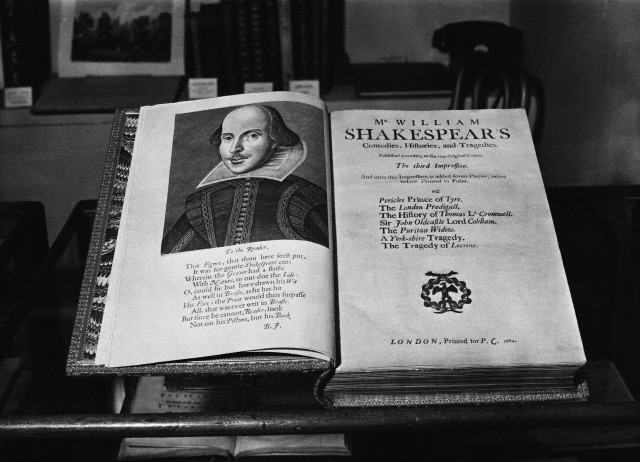
These days, when someone refers to “Literature,” most people think of only one thing:
third folio

But the Classics, I would argue, are not the sole proprietors of the word “Literature”–and they never have been.  And “Literature,” as defined by Merriam-Webster, can mean “written works (such as poems, plays, and novels) that are considered to be very good and to have lasting importance” or simply “books, articles, etc., about a particular subject.”  I know some of my professors in years past would argue that there’s a profound distinction between “literature” (with a lower-case “l”) and “Literature” (with an upper-case “L”)–but then we’re getting into that dreaded world of semantics, where words are bent to match whichever connotations the arguing parties need them to.

I think there are two primary reasons why books become classics:

  1. Someone in a position of power decides they’re worth preserving, and
  2. They continue to make a lasting impression on readers, across cultures and decades.

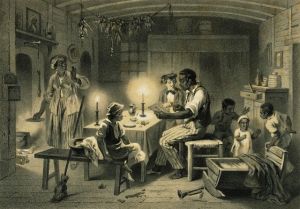
The first item explains why a great number of quality works (by women, or people of color, and so forth) have been excluded from what is considered “Canon Literature,” and which even today comprises a large part of every American schoolkid’s reading list.  And the second item explains the gaps in the first: many works that were not considered appropriate for lasting acclaim have survived through the centuries for seemingly no other reason than they still connect with people.  The first item is an exercise in the mind, and the second in the heart. I have a couple of examples in mind, but I don’t want to turn today’s post into an exercise in literary theory.  (As much as I love it!)

uncle tom's cabin

The fact of the matter is, books mean a lot to people.  Today.  In the here-and-now. The generation lauded as bringing about the “end of literature”–the generation that cut its teeth on supposedly un-literary books like Harry Potter and The Hunger Games–reads more than any generation prior.  And they not only read, they write.  That’s right–they have created a vast market for new stories, and they have stepped up to flood that market with material.  Best of all, they understand one simple and very important truth: a self-published book like The Martian or Wool or Eragon can move them in ways that “Canon Literature” sometimes can’t.  Stigma has lost its power over “kids these days,” and they’re proud to be voracious readers of books that mean something to them, not to the folks putting together SAT reading lists.

I can’t tell you the last time I cried over Vanity Fair or The Adventures of Tristram Shandy.  I appreciate a good dollop of Jane Austen and Charles Dickens and Shakespeare, but I haven’t wept over them recently.  I have wept over The Martian.  (I won’t even hint at my reaction to Harry Potter when I re-read the series this last winter.)  I don’t think there’s room to despair over the “Death of Literature,” or any more support for the argument that literature “doesn’t matter” today than there was when Karl wrote this post back in 2009.  Our definitions of literature have been too narrow, and our expectations of the current generations of readers have been wrong.  Literature is more diverse, more colorful, and more exciting than anyone ever gave it credit for–and it means more now than ever!

And … I’ve made this post run long.  Next week I’ll revisit it, because there’s one crucial component I’ve failed to address today: How literature’s continued “mattering” impacts you as an author, and how you can use it to your advantage!

Thanks for reading.  If you have any other ideas, I’d love to hear them.  Drop me a line in the comments section below and I’ll respond as quickly as I can.  ♠

KellyABOUT KELLY SCHUKNECHT: Kelly Schuknecht is the Executive Vice President of Outskirts Press. In addition to her contributions to the Outskirts Press blog at blog.outskirtspress.com, Kelly and a group of talented marketing experts offer book marketing services, support, and products to not only published Outskirts Press authors, but to all authors and professionals who are interested in marketing their books and/or careers. Learn more about Kelly on her blog, kellyschuknecht.com.

From the Archives: A Reader Views Book Awards Retrospective (#2)

Welcome back to our Tuesday segment, where we’ll be revisiting some of our most popular posts from the last few years.  What’s stayed the same?  And what’s changed?  We’ll be updating you on the facts, and taking a new (and hopefully refreshing) angle on a few timeless classics of Self Publishing Advisor.

∗∗∗∗∗

[ Originally posted: April 5th, 2016 ]

This week we will be leaping off of the platform we set last week, in which we took a look back in our archives at a number of posts related to the Reader Views Literary Awards.  As of last week, the Reader Views Awards committee had revealed its finalists, and this week they have released the winning titles for the 2015-2016 round to their website.  We will not rehash last week’s post, but we will build upon it:


readerviews

Last week, I wrote about how the Reader Views Literary Awards are not just for authors, but for readers, too–and this week, with the announcement of not just its finalists but its winners, I can’t help but think how right I was.  (I’m working on humility, too, I promise!)

The award categories are as follows:

  • Children, from toddlers through 5 years of age
  • Children, from 6 to 8 years of age
  • Children, from 8 to 12 years of age
  • Teens, from 12 to 16 years of age
  • Teens, from 16 to 18 years of age
  • Body, Mind, & Spirit
  • Business, Sales & Economics
  • Fantasy
  • Gay, Lesbian & Erotic Novels
  • General Fiction Novels
  • Graphic Novels & Short Stories
  • Health & Fitness
  • Historical Fiction
  • Humor
  • Ebooks
  • Memoir, Autobiography & Biography
  • Mystery, Thriller, Suspense & Horror
  • Poetry
  • Religion
  • Romance
  • Science Fiction
  • Self Help
  • Societal Issues & Spirituality
  • Travel
  • Classics
  • Regional
  • Global

And if that wasn’t enough reading for the awards committee to knock out, there are also fourteen (fourteen!) special individual awards.  If I had to pick five of the books that particularly pique my interest, they would be:

As Executive VP for Outskirts Press, I’m always excited to see so many of our books in the winner’s list.  This year, there are twelve.  (Twelve!)  But really, I’m mostly just honored that my company has attracted people of such talent, and I’m equally excited to pick up the other award winners to get a peek at what great company they keep.  The Reader Views Literary Awards just keep getting better and better, year by year.  Kudos to you, Reader Views!  (I promise to stop fangirling now.  Just for a minute or two.)10:00 AM

Thanks for reading.  If you have any other ideas, I’d love to hear them.  Drop me a line in the comments section below and I’ll respond as quickly as I can.  ♠

KellyABOUT KELLY SCHUKNECHT: Kelly Schuknecht is the Executive Vice President of Outskirts Press. In addition to her contributions to the Outskirts Press blog at blog.outskirtspress.com, Kelly and a group of talented marketing experts offer book marketing services, support, and products to not only published Outskirts Press authors, but to all authors and professionals who are interested in marketing their books and/or careers. Learn more about Kelly on her blog, kellyschuknecht.com.

From the Archives: A Reader Views Book Awards Retrospective

Welcome back to our Tuesday segment, where we’ll be revisiting some of our most popular posts from the last few years.  What’s stayed the same?  And what’s changed?  We’ll be updating you on the facts, and taking a new (and hopefully refreshing) angle on a few timeless classics of Self Publishing Advisor.

∗∗∗∗∗

[ Originally posted: March 16th, 2009 ]

Last week Reader Views announced the official winners of their 2008 Literary Awards and just in time for National Reading Month.

The Reader Views annual literary awards were established to honor writers whoself-published or had their books published by a subsidy publisher, small press, university press, or independent book publisher geared for the North American reading audience.

If you’re looking for something good to read this month, why not try one of these award winning books: Click here to view Reader Views winners.

AND

[ Originally posted: November 14th, 2012 ]

As a self-publishing author, it is important to constantly market your book and improve your credibility. One of the best ways to accomplish both of those tasks is entering your book into contests. Winning awards shows potential readers that your book is worthwhile and that you are a serious author, and it often results in great publicity as well. One of my favorite book award contests for self publishing authors is the Reader Views Literary Book Award. Here are all of the details.

What is the Reader Views Literary Book Award?

The annual literary awards were established to honor writers who self-publishedor who had their books published by a subsidy publisher, small press, university press, or independent book publisher.  POD books are accepted.

Who is eligible?

Reader Views Literary Awards are open to all authors  regardless of residency; however, the books must be published in the English language and targeted for the North American market. Works published by major book publishers are not eligible.  Books must  have a 2012 copyright date.  Submission for more than one category or more than one title is acceptable.  Books that have racist themes will be not be accepted.

Three finalists will be chosen in each fiction and non-fiction category. First and second place winners will be awarded in each category. Third place will receive an honorable mention. One finalist, the top score in each area, will be chosen in each regional and global category. Each winner will receive a certificate.

Finalists will be announced in Reader Views’ weekly e-mail newsletter on March 4, 2013 and the winners on March 25, 2013.

For more information, visit http://readerviews.com/Awards.html.

I’d love to know, have you entered your book into the Reader Views Literary Awards before or are you planning to do so this year? Tell us about it in the comments below.

Well, it’s that time of year: Reader Views have released their list of finalists for their 2015/16 Literary Book Awards, with winners and placements to be announced in upcoming weeks.

readerviews

We’ve been following Reader Views and the awards in question for some time, as you’ll see in the first post above, which ran on Self-Publishing Advisor back in 2009.  We’ve kept up with them, too, and in 2012 I took a moment to break down what, exactly, the awards are all about.  (Hint: You.)  And the good news is, in the interim Reader Views has kept up its good work, delivering year after year of high-quality indie finalists for their subscribers to discover and enjoy.  Books appearing in the final rounds of competition see, as a matter of course, spikes in popularity and sales–and this is exactly the kind of exposure that you should pursue as a part of your holistic marketing strategy!

It’s for Authors

Luckily, submitting your book for consideration remains as easy in 2016 as it was in 2009 and 2012, and all the information you might need to do so can be found at the Reader Views website, under the “Literary Awards” tab.  Submission dates change from year to year, of course, so it’s always worth double-checking what this year’s requirements are (particularly if you’re a time-traveler and stumble across this in some other year than 2016)!

It’s for Readers, Too

That’s right!  As I’ve already mentioned, the exposure finalists and winners alike receive throughout the submission and consideration process reaps all sorts of rewards for authors–but it has a wonderful side-effect of benefiting readers of indie and self-published works in equal share.  How?  First and foremost, the competition generates lists.  Several lists!  Lists of nominees, lists of finalists, and lists of winners and their placements.  Each list serves as a siren call to readers looking for something new to add to their to-read bookshelves and to their Amazon shopping carts. By raising awareness about such a carefully curated list of high-quality indie works, Reader Views broadens the discerning reader’s horizons.

It’s Worth a Look

A lot of book awards are the province of institutionalized hierarchies enforced and policed by the traditional publishing industry–but Reader Views is something else altogether.  In the spirit of discovering the undiscovered, recognizing the unrecognized, and treasuring the undervalued, the Reader Views Literary Book Awards filter through the noise of a crowded self-publishing market to find the very best of the best–and then they present their findings to the public, free of charge and free of any agenda other than celebrating the good work done by good authors.  That’s an agenda I can get behind–and I think you can, too!

Thanks for reading.  If you have any other ideas, I’d love to hear them.  Drop me a line in the comments section below and I’ll respond as quickly as I can.  ♠

KellyABOUT KELLY SCHUKNECHT: Kelly Schuknecht is the Executive Vice President of Outskirts Press. In addition to her contributions to the Outskirts Press blog at blog.outskirtspress.com, Kelly and a group of talented marketing experts offer book marketing services, support, and products to not only published Outskirts Press authors, but to all authors and professionals who are interested in marketing their books and/or careers. Learn more about Kelly on her blog, kellyschuknecht.com.

From the Archives: “Should You Pay for a Book Review?”

Welcome back to our Tuesday segment, where we’ll be revisiting some of our most popular posts from the last few years.  What’s stayed the same?  And what’s changed?  We’ll be updating you on the facts, and taking a new (and hopefully refreshing) angle on a few timeless classics of Self Publishing Advisor.

∗∗∗∗∗

[ Originally posted: April 15th, 2011 ]

As an author in the self-publishing industry, reviews for your book are very important.  A book published by an unknown author has little chance of gaining attention, while the same book (and the same “unknown” author) with a number of positive reviews can begin to gain momentum.  Those positive reviews can help persuade potential new readers to buy the book and the word-of-mouth continues.

You may have already received reviews from some of your friends or colleagues, so what next?  There are some free review services where you can send a copy of your book.  These services are a great resource; however, because they are free, the reviewers get inundated with books and can’t review every book they receive.  Their services can also take several months and the reviews are not guaranteed to be good.

In addition to free review services, there are some services available where you can pay to be guaranteed a review.  That said, the review is still not guaranteed to be good, but if you are confident in your book (which you should be, after all you wrote and published it!), you shouldn’t need to worry about that.

Here are three pay-for-review services you can start with:

BLUE INK REVIEW

Standard Review is $395 for the review to be completed in 7-9 weeks.

Fast Track Review is $495 for the review to be completed in 4-5 weeks.

BlueInk considers for review any book that has been published (self-published and indie published).  They review e-books, on-demand books, printed books in any format, English translations and English-language submissions from outside the United States, as well as galleys. They do not review manuscripts pre-publication.

FOREWORD CLARION REVIEW

The cost is $305 $499* and turnaround time is 6-8 4-6* weeks.

Open to all books and publishers, Clarion promises an objective 400 – 500 word review/critique with a quick six to eight week turnaround. The review will be posted on the ForeWord website (if the publisher desires), licensed to the three top wholesale databases, and made available to the book’s publisher. This service is ideal for books that haven’t received review attention elsewhere.

KIRKUS INDIE REVIEW


Standard review is completed in 7-9 weeks for $425.
Express review is completed in 3-4 weeks for $575.

The Kirkus Indie program gives independent authors a chance to obtain an unbiased, professional review of their work, written in the same format as a traditional Kirkus review. A book review can be an essential and powerful tool for promoting your book to literary agents, traditional publishing houses, booksellers, and, most importantly, potential readers.

by Kelly Schuknecht

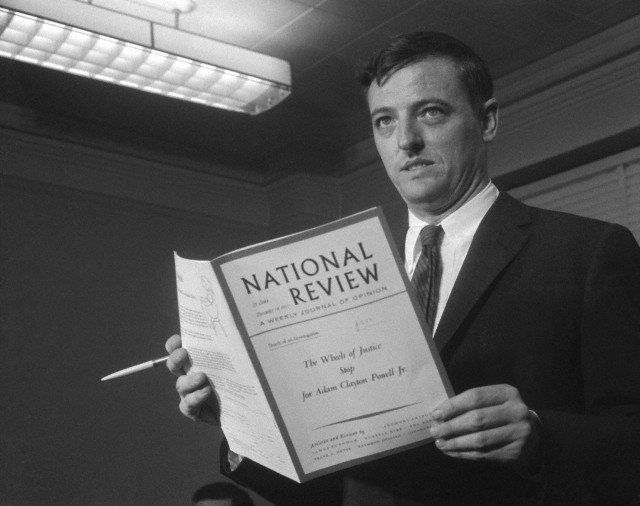
When it comes to reviews, there’s so much to say that it’s almost inevitable that I would have to update and expand upon what I wrote back in 2011–after all, the world doesn’t hold still for anyone, and that’s certainly true of both the internet and the publishing industry, as well!  You will note that I have already made note of several changes in regards to pricing and timing for the ForeWords Clarion review options (marked with an * each time), but what about the larger picture?  Can we still mount a defense for paid reviews in a world where Amazon and Goodreads are king, where product pages provide ream after ream of short, easy-to-digest reviews from laypeople like you and me–and FREE reviews at that?

national review book reviews

If you suspected I might have a simple and short answer for you, I’m sorry to let you down.  Saying “yes” casts aside all of my many thoughts about the value of those unpaid product reviews on Amazon and Goodreads, and saying “no” discounts the ongoing benefits that longform paid reviews still offer.

Let’s start with Amazon and Goodreads.

I’ve written in detail about the virtues of garnering lots of good reviews on Amazon and Goodreads before, specifically in my series on Self-Publishing and Merchandising from May of 2015, where I broke down the distinctions between these kinds of reviews and blog-based reviews.  And the statistics speak with resounding and repeated certainty that readers use the metrics provided by Amazon and Goodreads as one of their first and most important decision-making tools.  If readers search for a title they’re fairly certain they’re going to like, only to find that it has lots of poor reviews on Goodreads or a low star rating on Amazon, they’re not likely to follow through and buy it, no matter what else they’ve read that’s positive.  And if readers stumble across a title by accident that they weren’t actually looking for, but it ends up having fabulous reviews, they’re actually fairly likely to pay money to purchase it!  Search engines like Google have tweaked their algorithms to push books that are rated highly on Goodreads and Amazon to the top of their index, so you should never, never discount the importance of asking friends, family members, and other members of the public to post a positive review to these sites.

And what about paid reviews?

While longform essay book reviews have largely become the province of periodicals with paid subscription models like the London Review of Books or the New York Review of Books, they are far from dying out in terms of popularity–they’ve merely found their niche readership, and a powerful one at that.  It’s hard to estimate the exact impact of one positive longform review, but collectively, consider: the discerning reader needs an evaluation of content, of structure, of tone, and of many other aspects of a book’s nature than what can be provided in a brief burst of opinion on Amazon.  The discerning reader wants to know: what do the experts think?  Not everyone is looking for the lowest common denominator of shared public opinion (or so one of my college professors once opined) … sometimes they want to hear from one learnéd voice, in detail, the full warp and weft of a book.  This is why paid reviews are still worth their money–they reach the discerning reader.  And guess what?  Discerning readers are very likely to be a go-to resource to their friends and families, access points for dozens upon dozens of other new readers.  Discerning readers are amplifiers, advocates, and arbiters of your book’s larger footprint.  So yes, we shouldn’t forget about the paid review.  It has a place in the larger scheme of things, the larger framework of reviews and marketing.

They do not determine or reflect the actual value of your book, but good reviews–both paid and unpaid–do determine who is likely to buy it next.


If you have any other ideas, I’d love to hear them.  Drop me a line in the comments section below and I’ll respond as quickly as I can.  ♠

KellyABOUT KELLY SCHUKNECHT: Kelly Schuknecht is the Executive Vice President of Outskirts Press. In addition to her contributions to the Outskirts Press blog at blog.outskirtspress.com, Kelly and a group of talented marketing experts offer book marketing services, support, and products to not only published Outskirts Press authors, but to all authors and professionals who are interested in marketing their books and/or careers. Learn more about Kelly on her blog, kellyschuknecht.com.