Is Print & Online Advertising Worthwhile for Self-Publishing Authors?

print advertising printer head

Rumors of print’s “death” are greatly exaggerated.  Where else but with specific magazines can you find such a passionate and voracious audience in such a specific niche? How else but through advertising in such specific magazines can you reach every single reader/subscriber with such a passionate interest in that niche? You can’t!  In fact, one might argue that the “print is dead” argument is actually narrowing the focus of magazines, targeting its readership, and therefore helping advertisers successfully discover the specific people (customers) they seek.

If you’ve written a book about dogs, for example, do you think advertising in a dog lover’s magazine would be a better, more focused use of your marketing dollars than advertising on, say, Facebook?  Dog lovers read dog lover magazines cover to cover; they save them; they re-read them; they reference them. And best of all, they see your ad over and over! Compare that to an advertisement posted on Facebook that scrolls by faster than the NY subway they’re taking to work while on their mobile devices.

And once you combine those advantages with bundled/packaged deals nearly all magazines offer to also bring your advertisement to their online audience, print & online advertising really is a marketing and promotional opportunity worth considering.

But this kind of marketing is not without its challenges.  First you need to do your research…

    1. Conduct a Google search. Look for appropriate magazines based upon matching their target audience with the target audience of your book. Compile a list of the 5-10 best options.
    2. Determine the magazine’s subscribers/circulation/print-run.  These numbers are all different, so understand their differences.  Advertising managers will likely lean toward quoting “circulation” because they use a formula (typically created by their own marketing department) that multiplies the print-run total by a “passed-along” variable (which is often exaggerated and differs from magazine to magazine). But they cannot exaggerate a print-run number, and that allows you to compare apples to apples when looking at your 5-10 options.
    3. Determine the magazine’s website visitors.  Here you want to compare monthly unique visitors.  Time spent on the site is also a good parameter.
    4. Determine the magazine’s audience and its reach (demographics). In other words, how successfully is the magazine reaching its target market and is that audience a good match for your book?
    5. Determine print specifications.  This will affect your cost.  How big will your advertisement be (full-page, half-page, 1/3 column, etc.)? Will it be in black/white or 2-color or full-color? How frequently will it run (you typically receive cost incentives to contract for multiple impressions up-front).  These specifications are also important for when you (or your professional designer) create the ad. Some smaller magazines may offer to design the ad for you in order to “close the sale”, so be sure to ask. Don’t know how to design an ad? Your publisher may have a solution.
    6. Research the magazines editorial calendar.  All magazines have an editorial calendar and most of them share it with potential advertisers. The editorial calendar allows the advertiser to match their ad with the content destined to bring the largest and most appropriate audience to a specific issue. If your book is about a Black Labrador, not only do you want to advertise in the dog lover’s magazine, but you want to advertise in the issue featuring a Black Labrador on the front cover.
    7. Get the best deal possible. Print magazines may not be “dead” but many are struggling. Their niche audience is great for you, yes, but in many cases are not reaching the heights (in terms of circulation numbers) most magazines were used to last century.  That usually means you can get a great deal by packaging an advertising buy with some online impressions on the magazine’s website.


brent sampson
In 2002, Ernst & Young Entrepreneur of the Year Semi-Finalist Brent Sampson founded Outskirts Press, a custom book publishing solution that provides a cost-effective, fast, and powerful way to help authors publish, distribute, and market their books worldwide while leaving 100% of the rights and 100% of the profits with the author. Outskirts Press was incorporated in Colorado in October, 2003.
In his capacity as the Chief Executive Officer and Chief Marketing Officer, Brent is an expert in the field of book publishing and book marketing. He is also the author of several books on both subjects, including the bestseller Sell Your Book on Amazon, which debuted at #29 on Amazon’s bestseller list.

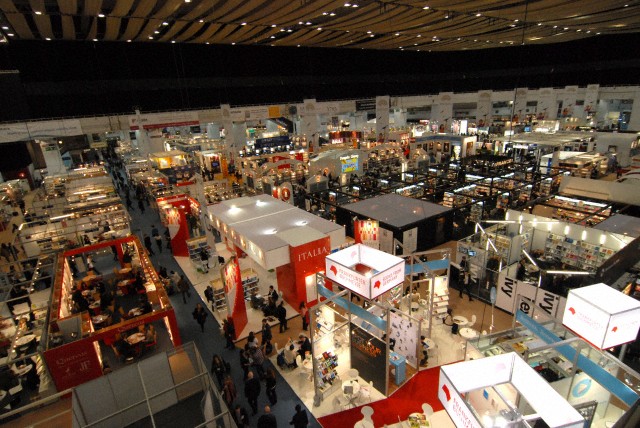
International Book Fairs as a Networking, Marketing, and Sales Tool

Networking is a powerful marketing tool – as a matter of fact, it is one of the most powerful tools in a self-published author’s marketing arsenal. An author who is skilled at communicating their ideas to others can very well write their own ticket, not only to increase book sales, but to garner speaking engagements and future publishing contracts. The challenge is that far too many authors don’t know how to “network” their way into more sales.

Attending book fairs and festivals is a good place to start.  Local events keep your start-up costs to a minimum and give you a “safe” forum in which to perfect your presentation skills. As you become more comfortable at local events, graduate to state, regional, and then national events.  Then start setting your sights on the major international book festivals everyone in the industry knows about, London, BEA, Beijing, and Frankfurt. Attending book fairs overseas can start to put a strain on even the largest marketing budgets, which is why most authors rely upon representation services provided by their publisher.

Let’s take a look at some major book fairs…

  1. The London Book Fair – This event is recognized as one of the first major publishing events of the year, and one of the most important. There are many opportunities here to capitalize on by attending in person or, alternatively, by exhibiting your book with representatives on your behalf. Key industry professionals (like acquisition directors, editors, agents, and foreign rights editors) are always in attendance.
  2. The Book Expo of America – The United States is home to the Book Expo of America, which traditionally takes place in New York (although there have been various times in the past it was held elsewhere). Every year the Book Expo welcomes over 100,000 international attendees, authors, publishers, agents, and buyers. While the attendance is international, the focus is distinctly American, with American books, publishers, and authors receiving the main interest. As such, all American authors would be doing their book and their writing careers a service by attending, or exhibiting their book with representation.
  3. The Beijing International Book Fair – China continues to “open its doors” to the Western world, and in doing so is becoming a major global economic force. The population alone represents a readership opportunity that no other book fair (or publishing event of any kind) can match. It’s literally a feeding frenzy to meet the demand, which presents an exciting opportunity for all publishers and authors.
  4. The Frankfurt Book Fair – Frankfurt Germany hosts the annual Frankfurt Book Fair which typically claims 50% more international representation than the Book Expo. If foreign rights are your priority, and the potential “culture shock” of Beijing is too daunting, Frankfurt is the book fair to attend, or where to exhibit your book.
  5. Bologna Children’s Book Fair – This Italian Book Fair caters specifically to children’s authors, illustrators, literary agents, booksellers, and librarians. Here you will find the very best of children’s publishing and multimedia production, make exciting new contacts, discover new opportunities, and learn the latest trends in children’s publishing. As a self-publishing children’s book author trying to launch a successful writing career, you simply cannot afford to miss the Bologna Book Fair, or miss the opportunity to exhibit your book there.
  6. American Library Association Exhibition – The ALA (American Library Association) annual book fair & conference attracts librarians from all levels of management, from all types of libraries, and from all across the United States. It serves as a meeting place for thought leaders and as a forum to exchange ideas on the multitude of issues affecting libraries. It’s also a great place to capture attention for your book.
  7. PEN World Voices Festival – More than 1,500 writers and artists from 118 countries have attended the PEN World Voices Festival in New York since its founding. This weeklong series of events traditionally focuses on human rights with the aim of broadening channels of dialogue between the United States and the rest of the world—a mission that, today, has never been more relevant.

London Book Fair


brent sampson
In 2002, Ernst & Young Entrepreneur of the Year Semi-Finalist Brent Sampson founded Outskirts Press, a custom book publishing solution that provides a cost-effective, fast, and powerful way to help authors publish, distribute, and market their books worldwide while leaving 100% of the rights and 100% of the profits with the author. Outskirts Press was incorporated in Colorado in October, 2003.
In his capacity as the Chief Executive Officer and Chief Marketing Officer, Brent is an expert in the field of book publishing and book marketing. He is also the author of several books on both subjects, including the bestseller Sell Your Book on Amazon, which debuted at #29 on Amazon’s bestseller list.

7 Tips to Highly-Successful Interviewing for Self-Publishing Book Promotion

share your story author interview

All self-publishing authors should be well-prepared to give interviews. Whether in writing (email/blog interviews), over the phone, or in-person in front of a microphone or camera, the ability to speak articulately about you and your book pays endless dividends. These tips will help.

  1. Anything you say during an interview can be recorded, so choose your words wisely. Off-color jokes may be entertaining in context, but taken out of context can shed a negative light on your image. Try to ensure nothing you say can be misinterpreted.
  2. There is no “off the record.” Even if the interviewer or journalist honors that particular disclaimer, things you say “off the record” still paint a particular “picture” for the interviewer, which will reveal itself within the slant of the piece or from other questions when the “record” is turned back on.
  3. Don’t use acronyms, confusing terminology, or jargon. Your book may be very complex or scientific, but that doesn’t mean you have to be. Demonstrate your intelligence and proficiency in your subject matter by “translating” those confusing terms and concepts so the lay-man can understand it, too.  If you absolutely must use a term that few people will understand, be sure to define/describe it.
  4. Identify three key points you want to convey during the course of the interview.  Prioritize them like this: The most important point falls at the end of the interview, the second most important point falls at the start of the interview, and the third most important point falls somewhere in the middle.
  5. A popular writing adage is “Show, don’t tell.”  Show the interviewer (and the subsequent audience) how your book will entertain/educate them through a personal story or analogy.  This is much more effective than telling them…
  6. Write down ten potential interview questions.  Make the questions a part of your media kit, your book club kit, your virtual book club kit.  Many interviewers may just ask your questions verbatim (less work for them), or may ask a slightly paraphrased version of them.  There’s nothing quite as comforting as answering an interview question you wrote yourself.
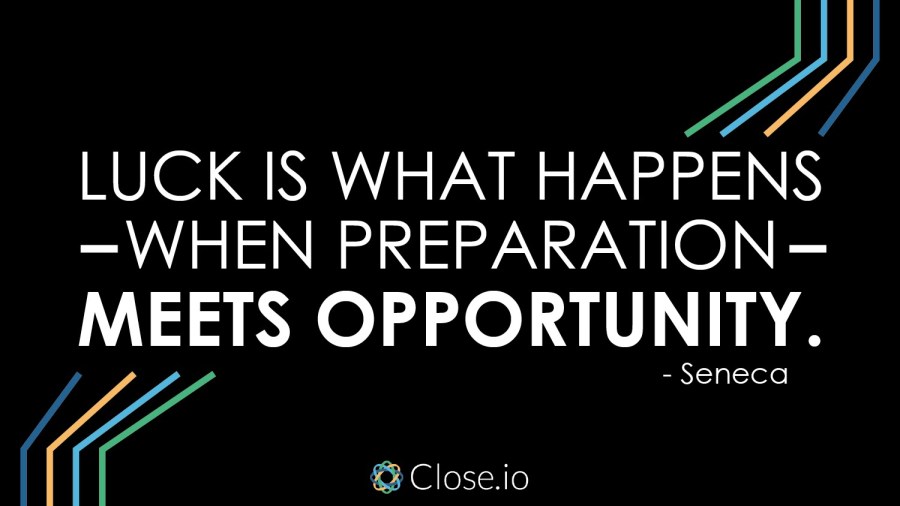
  7. Practice, practice, practice. Practice answering those ten questions in front of a mirror. And then practice answering those questions in front of a friend or family member. Try to avoid reading your answers. Have them memorized.  As Seneca said: “Luck is what happens when preparation meets opportunity.”

seneca luck quote


brent sampson
In 2002, Ernst & Young Entrepreneur of the Year Semi-Finalist Brent Sampson founded Outskirts Press, a custom book publishing solution that provides a cost-effective, fast, and powerful way to help authors publish, distribute, and market their books worldwide while leaving 100% of the rights and 100% of the profits with the author. Outskirts Press was incorporated in Colorado in October, 2003.
In his capacity as the Chief Executive Officer and Chief Marketing Officer, Brent is an expert in the field of book publishing and book marketing. He is also the author of several books on both subjects, including the bestseller Sell Your Book on Amazon, which debuted at #29 on Amazon’s bestseller list.

What is the difference between a Publishing Guide and a Publishing Kit?

Nearly all online self-publishing companies offer authors an “incentive” to join their newsletter or mailing list. In most cases, this is the company’s own “Publishing Guide.”  These guides vary from sleek sales brochures to informative books covering the process of self-publishing (typically with that particular self-publishing company).

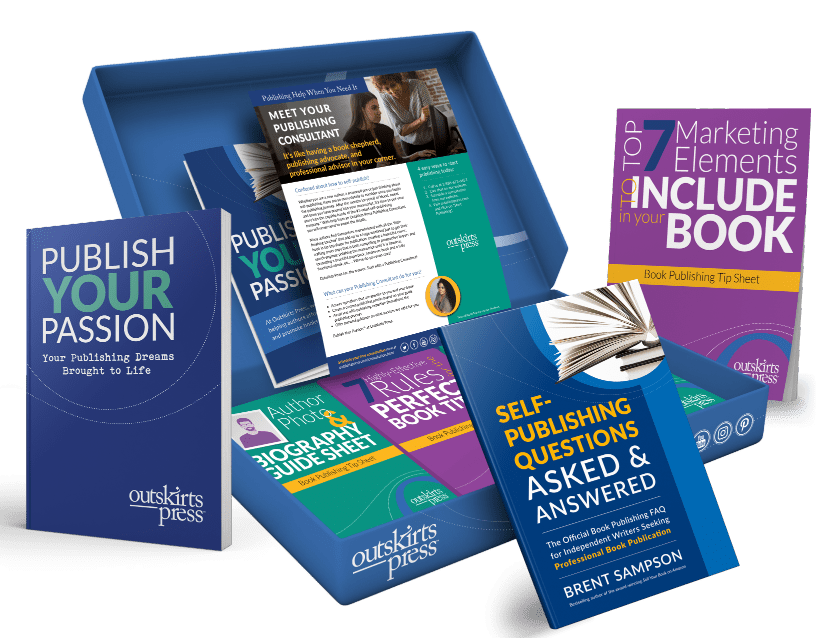
outskirts press publishing guide

Other self-publishers offer “white papers” or “tip sheets” or “advice columns” focusing on one or more specific topics or obstacles an author may face when publishing a book. While often more informative (at least about said topic or obstacle), these white papers are usually much shorter, and therefore of less perceived value, than a “Publishing Guide.”

An elite few combine their publishing guide with a robust collection of white papers and tip sheets to create a Publishing Kit for prospective clients. The guide typically markets the company and its offerings, perhaps sheds light on the self-publishing and book marketing processes, and shines a light on a successful author or two.  The white papers, advice columns, and tip sheets, on the other hand, identify core questions or issues facing many writers and offers suggestions or solutions to pave an author’s path toward publication.

Outskirts Press launched its brand new Publishing Kit this February, featuring their publishing guide, self-publishing white paper, brochure, and a collection of tip sheets covering everything from best practices for book pricing to book title considerations/recommendations.  Plus, my latest book, Self-Publishing Questions Asked & Answered is included as a bonus. New clients can get the Publishing Kit instantly at https://outskirtspress.com/book-publishing.html#ebooks


brent sampson
In 2002, Ernst & Young Entrepreneur of the Year Semi-Finalist Brent Sampson founded Outskirts Press, a custom book publishing solution that provides a cost-effective, fast, and powerful way to help authors publish, distribute, and market their books worldwide while leaving 100% of the rights and 100% of the profits with the author. Outskirts Press was incorporated in Colorado in October, 2003.
In his capacity as the Chief Executive Officer and Chief Marketing Officer, Brent is an expert in the field of book publishing and book marketing. He is also the author of several books on both subjects, including the bestseller Sell Your Book on Amazon, which debuted at #29 on Amazon’s bestseller list.

Self-Publishing Questions Asked & Answered

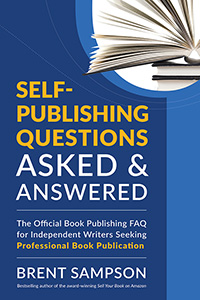
In January, Outskirts Press President Brent Sampson released his latest book involving the self-publishing industry, titled Self-Publishing Questions Asked & Answered: The Official Book Publishing FAQ for Independent Writers Seeking Professional Book Publication.

cover (19)

The book is comprised of three parts. Part one defines self-publishing and identifies the advantages of self-publishing today. It also describes the differences between independent self-publishing, full-service self-publishing, and so-called “free” self-publishing.

Part two breaks down the publishing process by answering basic questions involving BISAC codes, pricing, editing, ISBNs, copyright, and more.

Part three focuses on book marketing by identifying the important components of a book marketing plan, naming twenty effective marketing tactics, five steps toward getting Amazon book reviews, and a number of highly recommended and vetted book contests.

The book is available in paperback from Amazon and Barnes & Noble for $9.95, and will soon be available on the Kindle and Nook.

Visit the official webpage here: https://outskirtspress.com/SelfPublishingQuestions.


brent sampson
In 2002, Ernst & Young Entrepreneur of the Year Semi-Finalist Brent Sampson founded Outskirts Press, a custom book publishing solution that provides a cost-effective, fast, and powerful way to help authors publish, distribute, and market their books worldwide while leaving 100% of the rights and 100% of the profits with the author. Outskirts Press was incorporated in Colorado in October, 2003.
In his capacity as the Chief Executive Officer and Chief Marketing Officer, Brent is an expert in the field of book publishing and book marketing. He is also the author of several books on both subjects, including the bestseller Sell Your Book on Amazon, which debuted at #29 on Amazon’s bestseller list.