Friday Conversations With A Self-Publishing Writer 6/06/14

TRIGGER WORDS-3

HOPE

This little mini-series about trigger words will pause with this third word: hope.  On the surface, many writers might overlook this four letter word, considering the concept it embodies to be passive—an ingredient that leaves little (or no) flavor in an excellent piece of writing.  However, I ask you to take another look at the word; open your writer’s imagination and consider the following points.

For the writer who wants to dig deep into their characters and the situations they are being placed into, the depth of definition behind this word, HOPE, can take you millions of miles.  As found in our dictionaries, this noun can also be used as a verb.  I’m not suggesting that the word (hope) itself be overused; however, its multi-level meanings have the potential to build deeply impactful characters, scenes and scenarios.

Hope embodies all of the emotional spectrums; it can become the antonym to any negative emotion.

When something your character has dreamed about for their entire lives seems totally out of the realm of possibility—the feeling of hope can reside within allowing the author to dig a very deep hole of despair until just the right moment.  Then—success!

If a character is ill, or physically challenged, there resides within the human spirit a hope DNA (if you can imagine that), that many in the medical profession today have come to accept and actually rely on as part of treatment plans.  Raising expectations increases physical ability—as witnessed during extreme conditions when one character is trapped under a huge boulder and “the hero” is able to move it.  Knowing this is actually possible “in real life” gives authors lots of examples to draw from.

Are you developing one of your characters with a total lack of trust—in anything?  Again, that hope DNA can be a big factor is creating a surprise ending that will not only shock the reader, but that will also be very satisfying.

You’ve heard the idiom: We’re hoping-against-hope for a change in this situation.  THAT is where your readers live.  If you’ve done your job well, and created real people, then your readers will love and hate them—and “hope-against-hope” for the best outcome by the time they reach the last page of your book.

And—just in case you think I’m speaking only to fiction authors—I am not.  Non-fiction writers who tell the true stories of life must consider these aspects of hope so that the real people they’re writing about can touch the lives of every reader.  HOPE allows us all to look forward—with reasonable expectations and confidence—to a good (even better) outcome than what we’ve faced within any particular circumstance.

In my ghostwriting and editing efforts I can emphatically state that EVERY project I’ve helped develop carries a strong thread of hope.  My work with the self-publishing industry also demonstrates that hope is the backbone of the majority of books being published today.  From my perspective hope is the connecting rope that ties writer and reader together.  So it is that I hope more writers will look forward—move forward—and get their works published TODAY!

Royalene ABOUT ROYALENE DOYLE: Royalene Doyle is a Ghostwriter with Outskirts Press, bringing more than 35 years of writing experience to authors who need “just a little assistance” with completing their writing projects. She has worked with both experienced and fledgling writers helping complete projects in multiple genres. When a writer brings the passion they have for their work and combines it with Royalene’s passion to see the finished project in print, books are published and the writer’s legacy is passed forward.

Weekly Self-Published Book Review: Keep Dancing

Book reviews are a great way for self-publishing authors to gain exposure. After all, how can someone buy your book if he or she doesn’t know it exists? Paired with other elements of your book promotion strategy, requesting reviews is a great way to get people talking about what you’ve written.

When we read good reviews, we definitely like to share them. It gives the author a few (permanent) moments of fame and allows us to let the community know about a great book. Here’s this week’s book review by Midwest Book Review:

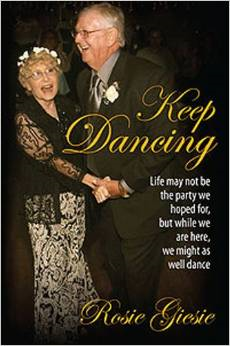
 keep dancing

Keep Dancing

Rosie Giesie

Publisher: Outskirts Press

ISBN: 9781432771799

Life’s too short to not enjoy it. “Keep Dancing: Life may not be the party we hoped for, but while we are here, we might as well dance” is an inspirational guide from Rosie Giesie as she shares her experiences of dealing with grief and daring to live life to its fullest. With plenty of thought and humor spread among it all, “Keep Dancing” is filled with practical wisdom and inspiration for seniors who may be coping with the loss of somewhere dear.


3 Ways to Maximize Your Book Sales Potential on Amazon

Amazon is the single largest book retailer. By taking advantage of all of the tools and services Amazon has to offer, self-publishing authors can enjoy higher sales, increased revenue, and more satisfied readers. Here are three easy ways you can maximize your book sales potential on Amazon.

1) Adding an Amazon Kindle edition

Kindles are a popular e-reader. Offering an Amazon Kindle edition of your book increases your potential buyer market and offers readers an easy, quick way to purchase your book. Be sure to market your Kindle edition as well as your print edition.

2) Adding the Amazon Search Inside the Book feature

This is the online equivalent to readers picking your book up off the shelf and flipping through the pages. The “Look Inside” option provides an icon over your book’s cover image and allows readers to browse through portions of your interior content. Amazon states that books utilizing this option see considerably higher sales over those that do not.

3) Maximizing your book description for search engine optimization

You need to make sure your book description is well-written for two reasons: one, readers don’t want to buy a book with a boring or unprofessional description. Two, readers won’t be able to find your book if you don’t use strong keywords in your description. In the world of the internet, keywords are essential. They help readers find books on the topics they are searching for. When writing your book’s description, spend time considering the appropriate keywords and be sure to proofread the final copy.

I’d love to know, what is your favorite Amazon feature?

ABOUT KELLY SCHUKNECHT: Kelly Schuknecht is the Vice President of Outskirts Press. In addition to her contributions to the Outskirts Press blog at blog.outskirtspress.com, Kelly and a group of talented marketing experts offer book marketing services, support, and products to not only published Outskirts Press authors, but to all authors and professionals who are interested in marketing their books and/or careers. Learn more about Kelly on her blog at http://kellyschuknecht.com.

Self-Publishing Week in Review: 6/03/14

As a self-publishing author, you may find it helpful to stay up-to-date on the trends and news related to the self-publishing industry. This will help you make informed decisions before, during and after the self-publishing process, which will lead to a greater self-publishing experience. To help you stay current on self-publishing topics, simply visit our blog every Tuesday to find out the hottest news.

A Beginner’s Guide to Self-Publishing and Marketing

This writer offers step by step instructions for making your self-published book successful. She covers everything from preparation to publication to marketing. This is an interesting read for anyone considering self-publishing.

Publishers Weekly to Integrate Self-Published Reviews in Book Reviews Section

Publishers Weekly doesn’t care if a book is published by a transitional publisher or is self-published. Both types of books will now be fully integrated into their magazine publisher’s regular review pages both in print and online.

‘Abducted’ Leads the Self-Published Bestsellers List

Abducted by T.R. Ragan leads Self-published Bestsellers List this past week. Reading successful self-published works and looking at the author’s marketing strategies is a great way to improve your own work.
If you have other big news to share, please comment below.

ABOUT KELLY SCHUKNECHT: Kelly Schuknecht is the Vice President of Outskirts Press. In addition to her contributions to the Outskirts Press blog at blog.outskirtspress.com, Kelly and a group of talented marketing experts offer book marketing services, support, and products to not only published Outskirts Press authors, but to all authors and professionals who are interested in marketing their books and/or careers. Learn more about Kelly on her blog at http://kellyschuknecht.com.

Friday Conversations With A Self-Publishing Writer 5/30/14

More TRIGGER WORDS

FIRE!

When that word is screamed into the night (or day), everyone pays attention!  I made it all the way into my mid-50s before I was awakened by it: FIRE!  GET OUT!  FIRE!  Four of our neighbors lost their homes and most of everything in them—but no lives lost!  In my writing years since then, I’ve done a little exploring about that specific trigger word, and a few of the emotional responses it brings to people, such as…

Panic—the adrenalin starts pumping, the heart races and the fight-or-flight instinct prepares muscles to RUN!

Fright—prior knowledge of experiences with fire come into play as a person moves into action.

Tears (and laughter)—high octane energy creates very different reactions in people; some will scream as tears build and flow; others will emit what sounds like laughter as they escape the flames and discover that their loved ones are safe.

Each emotion creates actions and re-actions that force a person—the character in your novel—to move across the pages of your story.  The equation I teach about in advanced writing classes looks like this: Trigger Event + Emotional Response = Identity connection between writer and reader.  When we use the powerful tool of emotion, we must take great care, especially as we select the trigger words that will tap into the reader/writer connection.

There is really no way to avoid tapping in to our own emotions when building our stories and developing our characters—which is a good thing.  However, it is also our job to slip into a character’s situation—a character who is very different than we are—and guess-ti-mate what they might be FEELING.  This will allow the characters to interact, creating reactions to specific actions (or non-actions).  If the emotion is REAL, then this tool is used appropriately and can be very effective.  If the emotion is overly sentimentalized or false, this tool is abused.

Of all the techniques of story writing, building the skill of using emotion appropriately is (in my opinion) the core element.  There are as many mixtures of emotion as there are people on this planet (not to mention all the other planets “out there”).  Emotion is the amazing characteristic of the human condition that will either make or break a novel—or movie.  Most of you have probably heard of the movie reviewer, Roger Ebert.  The following is a quote of his—a very astute observation of the use of emotions in character development:

“Your intellect may be confused, but your emotions will never lie to you.”

There it is—the element of truth in storytelling.  I’ll leave that topic for another day.  For today, I will add one more thought.  If you are in the midst of writing your book—whether fiction/novel or nonfiction—and have lost touch with one of your characters, maybe someone in my field of ghostwriting can help.  The self-publishing industry is an excellent resource for finding whatever assistance you need.  DON’T GIVE UP!  The story you’re writing needs to be told!

Royalene ABOUT ROYALENE DOYLE: Royalene Doyle is a Ghostwriter with Outskirts Press, bringing more than 35 years of writing experience to authors who need “just a little assistance” with completing their writing projects. She has worked with both experienced and fledgling writers helping complete projects in multiple genres. When a writer brings the passion they have for their work and combines it with Royalene’s passion to see the finished project in print, books are published and the writer’s legacy is passed forward.