Beyond the Tweet: Tips for Making the Most of Social Media

Facebook, Twitter, LinkedIn…

There’s a social media/networking site for just about everyone. While most people use them to keep up with friends and track down old contacts, businesses and individuals with goods and services to sell are hopping on the bandwagon to round up more traffic and more sales.

Not everyone’s riding that wagon in the right direction. At least, not the right direction for their destination. Social media can be a terrific tool for authors looking to pitch their latest books, but it requires a plan and the right frame of mind. With Social Media Day right around the corner (tomorrow), what better time to get involved in the digital wave of the century?

As you embark on your social media journey, here are some tips to help you along the way:

  • Content still is king. Use social media to create high-quality content – NOT marketing copy! Think of your blog as one big corporate white paper or newsletter that you post one piece at a time. These types of communications are, first and foremost, informational. People should turn to your blog, tweets and Facebook posts because they find them useful or enjoyable. A potential reader is not likely to “follow” or “like” your status because they just love reading marketing copy, and they usually don’t “digg” a sales pitch.
  • Remember it’s not all about you. Individuals tend to use social media to focus on themselves, usually to fulfill some need of their own. However, when you’re using social media for business purposes, the format works better when you focus on what you can do for those who read your updates. You’ve got to give to get. Write blogs and post updates with the mindset that you’re providing information to your contacts that will enrich them, not you. As hard a concept as that can be to master, always think about what you can give to your readers – not what your posts can get you – and the loyalty you build will be worth the effort.
  • Enjoy a lengthy engagement. Get your name and your book title out there every chance you get by engaging with others on social media. Comment on blogs and leave links to your homepage when it’s appropriate. Now, note the emphasis on “when it’s appropriate.” As already mentioned, your interactions should be selfless, not an excuse to market or plug your wares when it’s unrelated to the topic at hand. Posting a link to a romance novel on a political blog is not appropriate. Multiple posting your book title to bump it to the top of the comments is not appropriate. Spamming is never, ever appropriate.
  • Build links, build bonds. Linking is one of the most effective ways to drive traffic to your site and also help search engines find you more quickly and rank you higher. But be smart about your links. Network with other authors and swap links, even ones writing on the same topic. Your visitors may find them, but they’re visitors may also find you. Your goal is not to get as many visitors as possible, but to get the most appropriate visitors possible. A hundred site visitors who are a great fit for what you have to offer are better than a thousand who aren’t likely to connect with your message.

Be smart and be generous, but above all, enjoy the ride. This is the key to using social media to promote your book.

Elise Connors ABOUT ELISE L. CONNORS:
Elise works as the Manager of Author Support of Outskirts Press.  She also contributes to the Outskirts Press blog at blog.outskirtspress.com. Elise and a group of talented book marketing experts assist self-publishing authors and professionals who are interested in getting the best possible exposure for their book.

Authors Can Get Free Advertising Using Facebook

Facebook is a tool to connect and share with friends, family, and others in your various networks. It was started in 2004 and has since evolved from a site that was exclusively available to college to students to a worldwide social network with an audience where 50% are not college students and the fast growing demographic is the 35+ year olds. There are millions of current Facebook users and many more are signing up each day. You may have already known that, but did you know that it can also be used as a tool to get “free advertising”? Well, it can, and when used correctly, it will.

Facebook has become increasingly popular not only among individuals but also among businesses. The reason for this recent boom in Facebook and other forms of social media is because there are no time or space constraints and everything can be much more public for everyone to see. So, it helps businesses grow their network and ultimately “meet people and start conversations”. Many online consulting firms refer to this as the “online cocktail party”.

The first step in building such a network, though, is to create a business page. While you may already have a personal profile, you will want to create a business profile to support your business. The main reason for this is that Facebook has a lot of tools/options built into the business profiles that you will not be able to get with the personal profiles (such as analytics to see how much traffic you’re getting to your page and where that traffic is coming from). If you do have a personal profile, though, you will most likely want to tie that to your business profile.

Another big difference between business pages and personal profiles are how people add you to easily keep up with what you’re doing. Pages get “fans”, which only require the users to add themselves as a fan and involves no interaction on your part. This helps you build your network naturally and easily. Personal profiles, however, get “friends”. After someone adds you as a friend, you then need to accept them in order to allow them to view your profile and other information. If your business network is large (which hopefully it will be), you will not have time to go through and add all of the friends that request you.

Like many of the other social media / blogging type sites, your success is based on how well you take advantage of the give and take relationships that must be made. In the case of businesses, there will be quite a bit of giving in order to take away a new customer. However, the tools available on Facebook allow you to easily connect with your customers and engage them in your businesses and its doings. This will, of course, create a “community around your company”. That community will make it easy for you to obtain the ultimate goal – free advertising!

Once you have developed an online community of “followers”, it will be relatively easy to get the word out when things change in your business. For instance, if you introduce a new product/service offering and your Facebook “fans” catch wind of it, you can expect the majority of them to spread the word to their friends, family, etc. You may even find your fans are reposting your content within Facebook and further “advertising” what you announced. This form of advertising did not cost you anything. So, you have natural buzz about your product/service. Additionally, customers are more likely to trust natural buzz as opposed to marketing speak.

After creating your business page on Facebook, you want to remember to post interesting and informative content. Your job here is not to be a sales person. Your job is to post things to help people better understand your products or services, provide tips, or unravel a concern within your industry. In doing that, you will find yourself positioned as a natural resource and your network will begin to look to you as the go to person in your industry. In turn, you have built trust and those customers will more easily turn to you to utilize your products/services when needed (or wanted). That’s how Facebook (as well as other social networks) can be used to get free advertising.

5 Reasons Some Self-Publishing Authors have no Online “Street Cred”

You’re following the advice you’ve been given on self-publishing blogs such at this one. You’ve started a blog and are updating it regularly. You’ve got a small following on Twitter, Facebook, etc., but are you still feeling like no one’s really listening to you? Well, first off, it can take a while to get to the point where you have a “true following” because people are still feeling you out. They haven’t really gotten to know you, and they don’t know if you’ll be around for a day, week, month, year, etc. So, know that time can be your biggest enemy when you first get started. Once you’ve overcome the time barrier (usually after about 3 months or so), there may be another reason you aren’t getting noticed online.

Here are some of the top reasons that no one is listening to you online:

  1. Everything (or mostly everything) you post online is a request for people to buy stuff. People don’t like being sold, and that’s the quickest way to shut down interaction between you and your audience. Let them buy from you because they like you, not because that’s all you ever talk about online.
  2. You don’t provide anything of value. Have you ever heard of the acronym WIIFM? If not, it means “What’s in it for me?” By nature, humans are selfish, and if you aren’t giving them what they need/want, you’re useless and not worthy of their time — online or otherwise.
  3. You don’t play well with others. Could people feel put off by what you saying online? Are you being derogatory or insulting in any way? Make sure you are being sensitive to the issues of your audience and worse yet, don’t get into online arguments with others.
  4. You’re off when they’re on and vice versa. Are you posting at a time when your audience is actively online? Are you sleeping while they’re browsing? Unless you are scheduling your updates (which is highly recommended), you are missing your audience. You want to be most active when they are.
  5. You’re not connected with the right people. Are you missing the boat altogether? Make sure your audience knows that you’re out there. It’s fine to connect with others who may be outside of that demographic. However, you want to make sure you are reaching the people who could buy your book.

All of the above can be summed up into one simple sentence: Be where they are when they are, be nice, and give them what they’re looking for.

DISCUSSION: Have you ever missed the mark on connecting with your audience?


Weekly Recap:

Quick Question – What is Self-Publishing?

5 Things to Look For in a Self-Publishing Company

Bookstores Are In Trouble and What this Means to Your Self-Publishing Marketing Plan

Self-Publishing Book Review of the Week

Social Media Marketing for Self-publishing Authors

As of June 2010, about 65 million “tweets” are posted each day, equaling about 750 unique 140 character “micro-blogs” sent each second, according to Twitter. This massive communication stream has elevated Twitter into the Big 3 social networking sites according to ebizmba.com.

If Facebook were a country, it would be the 3rd most populated in the world right now with over 400,000,000 users.

Many will contend that LinkedIn is the most valuable social networking sites for gaining business connections, and Evernote just hit 5 million users in record time. And there are countless others – Myspace, Foursquare, your personal blog, Meetups – that you can and should be utilizing to network with others and active promote your self-published book.

Sure, if you’re not a current social media wizard, there will be some upfront work involved – gaining the learning curve and building connections. But here’s the kicker: social media is exploding, its completely FREE, and there are increasing ways to measure its ROI. With self-publishing POD services your book will also be available virtually everywhere books are sold, an additional digital advantage since you’ll never need to stock an inventory or personally ship pre-printed copies. It’s all connected for you.

Over the coming weeks, Self-publishing Advice will be sharing social media news, information, tips, and resources to help you gain the most oomph for using these dynamic and powerful venues for generating buzz for your books.

We’ll also be actively implementing them here on our blog and other social media sites. So stay tuned, and in meantime, check out these new icons below and visit us on Facebook and Twitter, or send a Digg. We are eager to connect.

Join us on Facebook!

<= You can also subscribe via email. Just drop it in the form over here!

Share this Post

Bing(go) goes social networking: Self-publishing authors prepare

Whether your a social media wiz or, as many to some extent (including myself), have some level of apprehension with this “change,” there is no question that self-publishing authors who tackle things head on generally experience much greater book sales.

Social Media is here to stay, and regardless of your industry, creates a platform where businesses and consumers can relate on an increasingly flat field in what is becoming known as the “Attention Age.”

News flash: Social Media is here to stay.

More relevant news flash: Kleiner’s Bing Gordon is set to launch a $250 M “social media’ effort. Yep, 250 million, to include Facebook, Zynga, Amazon, Comcast, Liberty Media and Allen & Company. Here are some more details about what each partner company will be doing, from the press release.

  • Amazon Web Services (AWS) will provide AWS Getting-Started Support for one year, priority access to worldwide Startup Events, and dedicated business and technical support.
  • Facebook will contribute access to its platform teams, beta APIs, and new programs, like Facebook Credits.
  • Zynga will host periodic sessions with sFund companies to focus on management and technical development, including open source collaboration.
  • Comcast Interactive Capital, Comcast’s venture fund, will provide access to Comcast’s resources, teams, and relationships.

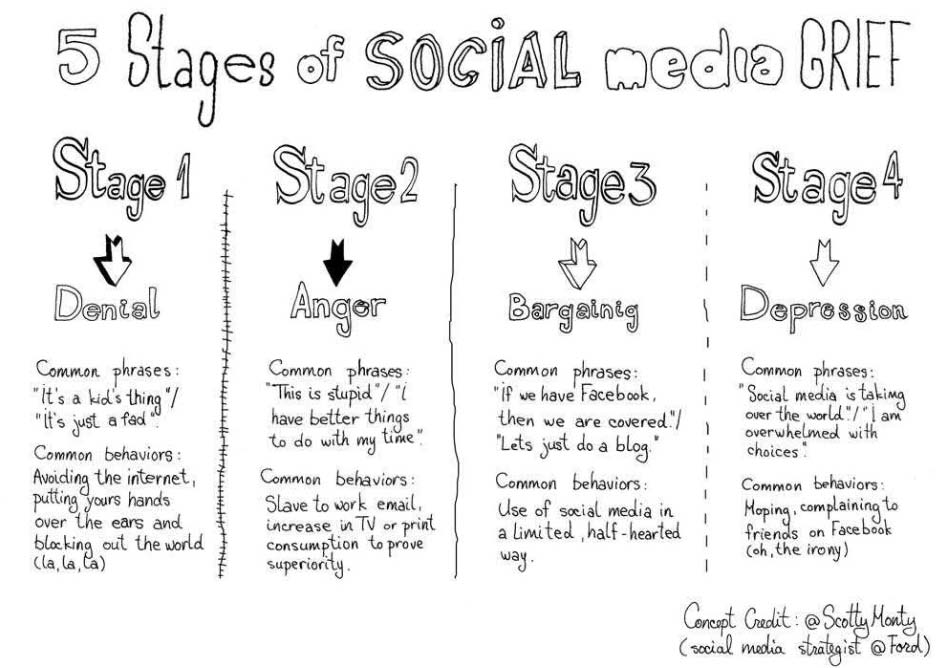
Here is some social media fun for you as you prepare your book marketing campaign…

@scottymonte, social media strategist @Ford


Share this Post