News From the Self-Publishing World: 9/14/15

This week in the world of self-publishing:

The Kindle Scout, one of Amazon’s publishing platforms, has long proven to be a handy option for United States-based indie or self-publishing authors looking to connect with new readers, and it has been shown to be just as handy for readers who use it as a discovery tool. As announced in an official September 9 press release, Kindle Scout is now available to readers and authors alike––around the world.  While the Scout will remain available to American authors, it will now be offered to authors in Europe, Canada, Australia, India, Brazil, and elsewhere as well.  These authors may submit their (novel-length, English-language, previously unpublished) manuscripts to be considered. The process is simple: readers read, then nominate which submissions should be published!

According to the press release, “Publishing contracts include 5-year renewable terms, a $1,500 advance, a 50% eBook royalty rate, easy rights reversions and featured Amazon marketing.”  It remains unknown whether Amazon plans to widen its permissions to allow the submission of manuscripts written in languages other than English––but it would make sense as a future step, as Gina Hill (the Scout’s general manager) says that “Expanding [the Scout] platform to authors and readers outside the U.S. has been one of the most frequent requests we’ve received since we launched.”  In the meantime, we’re looking forward to seeing what English-speakers around the globe come up with!

The Independent Publishers of New England (IPNE) will soon be holding their annual conference in Portsmouth, New Hampshire. The event, which takes place on the 25th and 26th of this month, will cost about $170 for members and $195 for non-members to attend (though this second amount includes a year-long membership).  The IPNE’s conference planners have arranged for keynote presentations geared towards indie and self-publishing authors, featuring representatives from Publishers Weekly, the Independent Book Publisher’s Association (IBPA), Shelf Awareness, and Ingram Content Group.  For more information, check out this online notice.  And on that note, don’t forget that the Association of Writers and Writing Programs (AWP) will be hosting its annual conference in July of 2016.  It’s never too early to block out your schedule!

Well, there is always bound to be some bad news mixed up with the good.  In this Publishers Weekly article, Rachel Deahl reports on the Authors Guild’s latest findings, which essentially boil down to one potentially bitter conclusion: “the majority of authors would be living below the Federal Poverty Level if they relied solely on income from their writing.”  (Emphasis mine!)  Contributing factors include the exponential rise of piracy when it comes to digital books, shrinking or frozen royalties in the face of a mounting cost of living, and pressure to keep e-book prices low.  Mary Rasenberger, the Guild’s executive director, does point out a silver lining for indie and self-published authors, however: according to the report, 33% of respondents “reported having self-published at least one book.” Rasenberger says that authors “are starting to see self-publishing as an outlet for projects that haven’t been supported by traditional publishing houses”––which of course happens to make perfect sense to the self-publishing community, but it’s nice to see more mainstream news outlets and institutions catching on!

Good things are happening in Maine!  The Sun Journal put out a press release on behalf of the Auburn and Lewiston libraries, which are now taking a bold plunge into the world of indie and self-publishing: they have joined many other libraries around the United States (and elsewhere) in subscribing to SELF-e, a self-publishing option that doubles as a “discovery platform for local authors.”  The way SELF-e works is simple: authors upload a digital copy of their book to the SELF-e website, then are presented with the option to submit it to their local libraries for access via their digital services.  They may also submit to Library Journal for an additional level of review, during which LJ staff decide whether or not a book may be of greater national interest (and distribution).  Suzanne Sullivan, head of collection development at Auburn Public Library, writes that “This is a great opportunity for writers to build an audience and for readers to discover authors who may be just starting out.”  SELF-e does not pay writers, but submission is free, and it can prove useful in getting the word out that a new indie book has been published!  For a complete list of which states are accepting submissions, visit the SELF-e “Where” page, here.


As a self-publishing author, you may find it helpful to stay up-to-date on the trends and news related to the self-publishing industry.This will help you make informed decisions before, during and after the self-publishing process, which will lead to a greater self-publishing experience. To help you stay current on self-publishing topics, simply visit our blog every Monday to find out the hottest news. If you have other big news to share, please comment below.

KellyABOUT KELLY SCHUKNECHT: Kelly Schuknecht is the Executive Vice President of Outskirts Press. In addition to her contributions to the Outskirts Press blog at blog.outskirtspress.com, Kelly and a group of talented marketing experts offer book marketing services, support, and products to not only published Outskirts Press authors, but to all authors and professionals who are interested in marketing their books and/or careers. Learn more about Kelly on her blog, kellyschuknecht.com.

Conversations With A Self-Publishing Writer: 09/11/2015

OUR RIGHT TO WRITE AND PUBLISH II

Most writers I know have some file or drawer or box FULL of ideas about where they might publish. This is good! Collecting the physical samples of publishing possibilities can be extremely valuable. HOWEVER they must NOT gather dust!

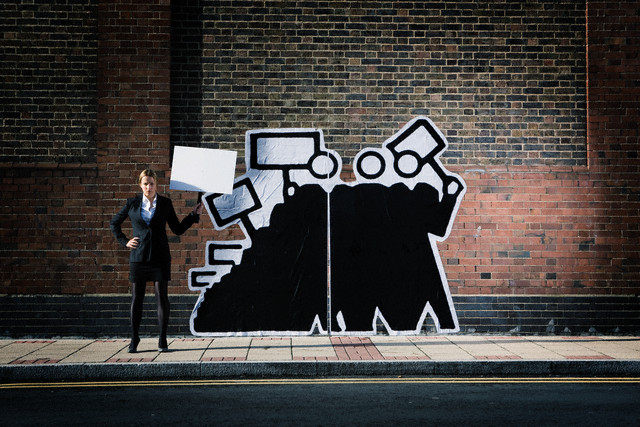
protesters

Much of my personal collection is now on my computer—in a file that I can update with a couple clicks as I reconsider my categories and the lists within them. Most recently, I’ve been looking at each one—magazine, journal, newspaper—traditional publisher, self-publisher, hybrid publisher, etc.—with the following thoughts.

  1. Have I listed one or more editors or directors for each entry on my list? Do I have a current phone number for them? Have I met them personally at a conference or seminar?
  2. Do I understand the vision and/or motivation behind their publication or publishing house? Do I know anything about their personal motivation for working there?
  3. IF I were to have an opportunity to sit down and talk with this person about my current writing dreams or manuscript, do I know what they need to hear—so that they have the best opportunity to accept my work?
  4. Am I prepared to pick up the phone and talk with these people? Have I created a written outline of the points I want them to hear and understand?

After years of attending writers’ conferences, seminars and workshops, I FINALLY accepted the fact that Editors and Publishing Directors are people and writers. The majority of these folks started walking the same path I did—finding joy in putting pen to paper and communicating their ideas. However, when two roads crossed, they found their passion along the publications and/or publishing path. Since that time I’ve decided to respect each one for the journey they’ve taken and seriously look for common ground. Then, after I’ve thoroughly researched the needs of their magazine or journal—or the contracts or packages of their publishing house—I’m ready to talk. Yup—pick up the phone and do whatever it takes to talk with that person.

“Hello Joe. Thank you for taking a minute to talk with me today. I have just finished a short story that fits right into your magazine’s target readership. The title is…, …”

Hello Ms. Andrews. Thank you for talking with me at the California Writer’s Conference. I’m calling today to talk about a new article idea for your Christmas 2016 issue.” (Yes, it is always the best plan to plan months ahead.)

The KEY is to talk with this person as if they are your best friend and totally pumped about the article, poetry, short story, or novel you’re ready to publish.

Today, I leave you with this thought, a quote from author Kurt Vonnegut. “We have to continually be jumping off cliffs and developing our wings on the way down.”  I can easily imagine this comparison because, like the eagle who pulls out every feather to allow new and stronger feathers to grow, writers must continually fly to new creative heights. We must never become petrified wood. ⚓︎

RoyaleneABOUT ROYALENE DOYLE: Royalene has been writing something since before kindergarten days and continues to love the process. Through her small business—DOYLE WRITING SERVICES—she brings more than 40 years of writing experience to authors who need “just a little assistance” with completing their projects. This is a nice fit as she develops these blogs for Outskirts Press (OP) a leading self-publisher, and occasionally accepts a ghostwriting project from one of their clients. Her recent book release (with OP) titled FIREPROOF PROVERBS, A Writer’s Study of Words, is already receiving excellent reviews including several professional writer’s endorsements given on the book’s back cover.  

Royalene’s writing experience grew through a wide variety of positions from Office Manager and Administrative Assistant to Teacher of Literature and Advanced Writing courses and editor/writer for an International Christian ministry. Her willingness to listen to struggling authors, learn their goals and expectations and discern their writing voice has brought many manuscripts into the published books arena.

From the Archives: “Promoting your Self-Published Book on Google”

Welcome back to our new Tuesday segment, where we’ll be revisiting some of our most popular posts from the last few years.  What’s stayed the same?  And what’s changed?  We’ll be updating you on the facts, and taking a new (and hopefully refreshing) angle on a few timeless classics of Self Publishing Advisor.

∗∗∗∗∗

[ Originally posted: August 7th, 2008 ]

When you are a self published author, sometimes book promotion is about who you know. Other times it is simply about having the time to devote.

Wouldn’t it be great if there was a fast way to find the people or places that were right for your book? Knowing how to conduct an advanced Internet search that yields applicable results is very important. Luckily, it’s also very easy, and in case you don’t know how, I’m going to show you. Go to the Google website at google.com but instead of simply entering a term, use the “Advanced Search” by clicking on the link that says “Advanced Search” in small type next to the “Search” button. You will find a page that enables you to fine-tune your search. By conducting smarter searches, you will find places to promote your book faster. 

You can promote your books on Google for free. You’d sell a lot more books if a lot more people knew about them. Google can help make that happen.

  • Help users discover your books: By matching the content in your books with user searches, Google Book Search connects your books with the users who are most interested in buying them.
  • Keep your content protected: Users are able to preview a limited number of pages to determine whether they’ve found what they’re looking for. 
  • Drive book sales: Links to bookstores, online retailers, and your website make it easy for users to go from browsing to buying — with new ways to buy and access your books coming soon.

Learn more at: books.google.com/partner/

google books

I should warn you right off the bat that a lot has changed since I first blogged about Google’s partnership program for authors, and one of the things that has changed is the link you’ll need to follow for more information.  (The one I provided back in 2008, preserved above, no longer works.)  Your new one-stop shop for know-how as an author interested in Google’s partnership program is:

www.google.com/googlebooks/partners/

The link address may seem only subtly different, but I promise you won’t regret taking the time to access the updated materials Google has compiled there, including recommendations for self-promotion, resources for authors and publishers, and a collection of success stories.  (And let’s face it, we love tapping into the glow of success, if only to learn how others are finding ways to make it work.)  And let’s not forget Google Play’s “Book Partners Center,” a separate (but linked) resource which provides step-by-step instructions on how to publish your book as an e-book in the Google Play store, and put your story on Android devices the world over.

What I wrote in 2008 about optimizing your online presence to help:

a) users discover and access your book,

b) you protect your rights and maintain creative control, and

c) drive book sales …

… remains 100% accurate.  Google can help you do these things, but the ways and means have evolved in the last seven years––dramatically.  I recommend glancing at Self Publishing Advisor’s primer on Search Engine Optimization (SEO); you can find the summary post and links to the individual posts here.  Why?  Because Google is a multi-platform tool now when it comes to self-publishing.  Not only can you use Google Play to host and sell your book as a self-publishing platform, but you can use Google Analytics to analyze engagement on your personal webpage (or webpages), and you can optimize all of your web content across all of your different social media accounts and blogs and so on to better feed into your promotional campaign.

Google is so much more than a search engine, now! ♠

KellyABOUT KELLY SCHUKNECHT: Kelly Schuknecht is the Executive Vice President of Outskirts Press. In addition to her contributions to the Outskirts Press blog at blog.outskirtspress.com, Kelly and a group of talented marketing experts offer book marketing services, support, and products to not only published Outskirts Press authors, but to all authors and professionals who are interested in marketing their books and/or careers. Learn more about Kelly on her blog, kellyschuknecht.com.

News From the Self-Publishing World: 9/7/15

Happy Labor Day to our readers in the United States!

This week in the world of self-publishing:

What is that line from Animal Farm: “All animals are equal, but some animals are more equal than others”?  The market being what it is for indie and self-published authors, the whole enterprise can often seem overwhelming.  But indie and self-published authors have always faced one seemingly insurmountable hurdle––one hurdle that is “more equal” than all the others––in the quest to sell their books: publicity.  Well, this year there’s good news at last!  In a September 4th article for LibraryJournal, James LaRue documents the ground-breaking efforts of librarian Jim Blanton to reshape libraries into a mutually-beneficial platform for self-published authors.

LaRue notes that libraries have often “turned a cold shoulder to local authors” in that “librarians didn’t return [authors’] phone calls, shied away from booking them in meeting rooms, and turned down their books for the ­collection.”  But Blanton knew that librarians––many of whom are self-published or are advocates for self-publishing themselves––could provide vital support to new or struggling authors.  And so, as the director of Daviess County Public Library (DCPL) in Owensboro, KY, Blanton partnered up with a neighboring library in Henderson to create ePublish or Bust.  This website allows indie and self-published authors to “book” appearances at local libraries (there are 24 in Kansas that participate, at present) and to access a variety of other resources.  While the website is currently in a beta stage as Blanton and others iron out the wrinkles with their system, it provides a glimpse of new possibilities as libraries and authors collectively look to prepare for a digitally-driven future.

In anticipation of the FutureBook conference in December 2015 (“the largest digital publishing conference in Europe,” according to its website), journalist and speaker Porter Anderson put out a call for “the FutureBook audience to reflect on five years of digital [publishing] … and to challenge the customs we have begun to adopt.”  The response, Anderson writes, has been “robust,” and the final deadline is today, September 7th.  Several manifestos are already published online at FutureBook, but we’re here to sing the praises of one specific contribution: that which has been put on the table by the founding director of the Alliance of Independent Authors (ALLi), Orna Ross.  In “A Manifesto for Self-Publishing Authors,” Ross strikes both a defiant and compassionate note, all at once.  Not sure how this is possible?  Read the full manifesto.  It’s short and sweet and beautiful.

We tip our hats this week to self-published children’s book author and Swedish behavioral scientist, Carl-Johan Forssén Ehrlin, whose phenomentally successful The Rabbit Who Wants to Fall Asleep was just acquired in a joint deal between Random House U.S. and Penguin Random House U.K.  In this article in Publisher’s Weekly, Rachel Deahl describes how Ehrlin went from selling 24 copies of his book one week in August to selling over 29,000 copies the following week.  And while it’s probably a sure thing that Random House will find new audiences for this delightful little book, there’s no shaking the fact that this book wouldn’t have gotten the attention of the traditional publishing houses if it hadn’t already been such a magnificent self-publishing success story.

Our last stop on the news train this week is this article on PRWeb.com, with the news that the Colorado-based hybrid self-publishing company Outskirts Press is hosting a noteworthy promotion for their “Diamond” and “Pearl” publishing packages.  The promotion, dubbed “Mad Money” by the company, allows customers to apply a promotional code at check-out and recoup some $300 in credit on their Outskirts Press accounts.  These packages cost about $999 and $1,199, so the $300 promotion represents an additional value of roughly one-third and one-quarter, respectively.  Nothing to sneeze at!

The company, described in the PRWeb release as the “fastest-growing full-service self-publishing and book marketing company” in the United States, typifies the possibilities offered by “hybrid” platforms––where authors pay to publish their book, instead of receiving an advance as they would from a traditional publisher, and receive the full benefit of professional editing, design, promotional, and marketing services while retaining full rights and creative control.


As a self-publishing author, you may find it helpful to stay up-to-date on the trends and news related to the self-publishing industry.This will help you make informed decisions before, during and after the self-publishing process, which will lead to a greater self-publishing experience. To help you stay current on self-publishing topics, simply visit our blog every Monday to find out the hottest news. If you have other big news to share, please comment below.

KellyABOUT KELLY SCHUKNECHT: Kelly Schuknecht is the Executive Vice President of Outskirts Press. In addition to her contributions to the Outskirts Press blog at blog.outskirtspress.com, Kelly and a group of talented marketing experts offer book marketing services, support, and products to not only published Outskirts Press authors, but to all authors and professionals who are interested in marketing their books and/or careers. Learn more about Kelly on her blog, kellyschuknecht.com.
Conversations With A Self-Publishing Writer: 09/04/2015

OUR RIGHT TO WRITE AND PUBLISH

This play on words is technically called a homonym, defined as words that sound the same but are spelled differently and have different meanings. Those of us who have a deep need to write down our ideas, our histories, our hopes and fears, and create great imaginative worlds, might understand this need as more of a compulsion that must be satisfied.  Those of us who are placed in an environment—in a country—that does not attempt to subdue our writing passions are, indeed, greatly blessed. However, because we have the right to write, we also have the responsibility to do it well. Some might even say that we have the responsibility to release each piece into the world—to publish. So it is that this month’s series of blogs will focus on a few avenues of becoming the published author you are meant to be.

picketing

FOR the non-techie writer, who barely touches the Internet, consider these options to begin your publishing career. Start by spending some time in your local library. Research information about:

  1. ANTHOLOGIES. For those authors who enjoy short-story writing, the “themed” anthologies can be a dream-come-true. You may hear that this is an extremely tough market to break into, however, it is well worth the effort. My first published piece was accepted into a Science Fiction Anthology (sadly no longer in existence), and that encouragement gave me the nudge I needed to keep writing. These themed anthologies can be found on just about any topic you can imagine from motherhood to military missions, fishing tales to poetry. And another upside to Anthologies—differing from single issue magazines—is that an anthology doesn’t become dated after three or six months. They remain on library shelves for years becoming sought-after collections.
  2. Weekly, Monthly, Quarterly CONSUMER MAGAZINES. There are hundreds to choose from, so be very selective.  Narrow these periodicals by the genre of your choice—your interest. If you love to read the Smithsonian and American Gardening and the Reader’s Digest, start there. Request their submission guidelines and begin formulating your pieces to fit their needs. Because you’re already familiar with the writing styles of authors who are published there, you’ve developed the writer’s “ear” for “hearing” those articles. Thus, producing you own will be easier.
  3. LITERARY JOURNALS. Some say these journals are fading away. However, I’m of the opinion that excellent writing will support these journals for generations to come. SO I encourage you to research these and find your niche. The smaller literary journals offer an array of opportunities. However, wherever you find a journal that impresses you, that is the place to start. Get their submission guidelines and follow them exactly! While the initial pay may not be great, just wait for your short story to be reprinted in such venues as The Best American Mysteries, or The Best American Short Stories. That is resume/portfolio success!

Bottom line here is NOT to put all your eggs in one basket. Also, think outside the box.  Sorry for the cliché usage. However, one of the most inspiring stories I’ve heard is how a group of writers started their own journal/magazine. They may not have become rich (or maybe they have, but I don’t way or the other), yet they published their work and encouraged other writers in the process. ⚓︎

RoyaleneABOUT ROYALENE DOYLE: Royalene has been writing something since before kindergarten days and continues to love the process. Through her small business—DOYLE WRITING SERVICES—she brings more than 40 years of writing experience to authors who need “just a little assistance” with completing their projects. This is a nice fit as she develops these blogs for Outskirts Press (OP) a leading self-publisher, and occasionally accepts a ghostwriting project from one of their clients. Her recent book release (with OP) titled FIREPROOF PROVERBS, A Writer’s Study of Words, is already receiving excellent reviews including several professional writer’s endorsements given on the book’s back cover.  

Royalene’s writing experience grew through a wide variety of positions from Office Manager and Administrative Assistant to Teacher of Literature and Advanced Writing courses and editor/writer for an International Christian ministry. Her willingness to listen to struggling authors, learn their goals and expectations and discern their writing voice has brought many manuscripts into the published books arena.