What is Narrative Nonfiction?

As a self-published author, you are asked to choose a genre for your book. The easy part is deciding whether your book is fiction or nonfiction. The more difficult part is determining what type of fiction or nonfiction to categorize your book.

Basically, there are two types of nonfiction books: narrative nonfiction and prescriptive nonfiction. All biographies and memoirs are considered narrative nonfiction, while how-to books are described as prescriptive nonfiction.

Remember, if you are writing a memoir, you must be able to attest to the accuracy of the details. In addition, the story must have the same elements as fiction stories: a beginning, middle, and end as well as conflict, interesting characters, setting, etc. If your memoir doesn’t meet these standards, you may want to write a fictional story loosely based on real life. This allows you to add information to create a better story and protects you from possible legal issues.
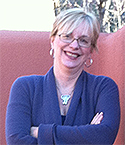
ABOUT WENDY STETINA: Wendy Stetina is a sales and marketing professional with over 30 years experience in the printing and publishing industry. Wendy works as the Director of Author Services for Outskirts Press. The Author Services Department is composed of knowledgeable customer service reps and publishing consultants; and together, they all focus on educating authors on the self-publishing process in order to help them publish the book of their dreams. Whether you are a professional looking to take your career to the next level with platform-driven non-fiction, or a novelist seeking fame, fortune, and/or personal fulfillment, Wendy Stetina can put you on the right path.

Two Paths to Becoming a Children’s Book Author

Do you dream of publishing a children’s book? Well, your dream can come true easier than you may have thought.  Here are two ways you can become a children’s book author whether or not you have the ability to create your own illustrations:

1. Do-It-Yourself

If you are extremely talented, you may choose to write and illustrate your own children’s book. This DIY option allows you to fully engage your creativity and bring the story in your head to life. However, do not attempt this route if you do not have the skill or talent to illustrate your own book. With children’s books, the pictures are just as important as (if not more important than) the words you’ve written. You do not want your story corrupted by amateur illustrations.

2. Get Some Help

If you have a great story for children, but are not able to do your own illustrations, you can simply write your story and hire an illustrator. While there is a cost to this option, you are guaranteed quality illustrations which you would not otherwise be able to produce on your own. You may choose to hire an illustrator you find online or through a friend.  Be sure to consider whether this will be a one-time cost to you or if you will need to share a portion of the royalties with your illustrator.  If you prefer royalty-free illustrations, check with your self-publishing company for their illustration options.

ABOUT KELLY SCHUKNECHT: Kelly Schuknecht is the Vice President of Outskirts Press.  In addition to her contributions to the Outskirts Press blog at blog.outskirtspress.com, Kelly and a group of talented marketing experts offer book marketing services, support, and products to not only published Outskirts Press authors, but to all authors and professionals who are interested in marketing their books and/or careers. Learn more about Kelly on her blog at http://kellyschuknecht.com.

Famous Self-Published Author: Henry M. Robert

Henry M. Robert is the author of the famous book, Robert’s Rules of Order. (The full length title of the original version was Pocket Manual of Rules of Order for Deliberative Assemblies.) To this day, the book remains the most widely used text by parliamentary authority in the United States!

A self-published author was able to write and publish a book that continues to strongly influence our government. That is powerful, and you can do the same thing. If you have ideas you need to share, speak up and self-publish your book!

ABOUT JODEE THAYER: With over 20 years of experience in   sales and management, Jodee Thayer works as the Manager of Author Services   for Outskirts Press. The Author Services Department   is composed of knowledgeable customer service reps and publishing consultants;   together, they all focus on educating authors on the self-publishing process in order to help them publish the   book of their dreams. Whether you are a professional looking to take your   career to the next level with platform-driven non-fiction or a novelist   seeking fame, fortune, and/or personal fulfillment, Jodee Thayer can put you   on the right path.

How Long Should Your Self-Published Manuscript Be?

Many new self-published authors ask my opinion on page count. They look at books in their genre, notice that many are similar in length, and try to figure out how many pages to write to make their book fit the mold. While it is great to look at books in your genre to determine what is considered the norm, there is another way to approach this issue of length.

First off, don’t think about page numbers; think about word counts. Page numbers are influenced by the size of the font and page as well as page breaks and illustrations. Therefore, this is not always an accurate way to compare books. Instead, publishers prefer to discuss books in terms of word count. (There is a Microsoft Word feature that easily tells you how many words are in your manuscript.)

Most publishers prefer first time novelist to have a manuscript between 50,000 and 100,000 words. (Yes, that is a wide range.) However, you don’t need to obsess over word counts. If your novel is 40,000 words and is already great, don’t (I repeat DON’T) keep adding information just to reach 50,000. Readers hate fluff, and you can ruin a great book by trying too hard to make it long enough.

Also note that there is no one size fits all when it comes to publishing. Some stories can be told in less than 50,000 words. Others may need more 100,000 to convey the story. Be knowledgeable of industry norms, but do not worry about trying to fit in. Often, the best books are the ones that stand out from the rest.

ABOUT WENDY STETINA: Wendy Stetina is a sales and marketing professional with over 30 years experience in the printing and publishing industry. Wendy works as the Director of Author Services for Outskirts Press. The Author Services Department is composed of knowledgeable customer service reps and publishing consultants; and together, they all focus on educating authors on the self-publishing process in order to help them publish the book of their dreams. Whether you are a professional looking to take your career to the next level with platform-driven non-fiction, or a novelist seeking fame, fortune, and/or personal fulfillment, Wendy Stetina can put you on the right path.

What is an ISBN?

ISBN stands for International Standard Book Number. Every book that is sold has a unique number known as an ISBN to help book purchasers identify it.  It is like a social security number for your book.

Books published as of January 1, 2007 have ISBNs that are 13 digits long. Prior to 2007, ISBNs were 10 digits long. While it is not necessary for all books to display an ISBN, most book stores only carry ISBN-bearing merchandise, so it is very important that your book has a printed ISBN.

While there is a method to how the ISBN is determined, it may not be necessary for every self-publishing author to understand this process. What is important to know is how to get an ISBN for your book. The exact steps vary depending on your publisher of choice, but sometimes the ISBN is simply included in your self publishing package. Check with your publishing company before you start publishing to make sure your book will have its own ISBN and that they will handle the details of this for you.  After all, that is a benefit of using a full-service self-publishing company!

ABOUT KELLY SCHUKNECHT: Kelly Schuknecht is the Vice President of Outskirts Press.  In addition to her contributions to the Outskirts Press blog at blog.outskirtspress.com, Kelly and a group of talented marketing experts offer book marketing services, support, and products to not only published Outskirts Press authors, but to all authors and professionals who are interested in marketing their books and/or careers. Learn more about Kelly on her blog at http://kellyschuknecht.com.