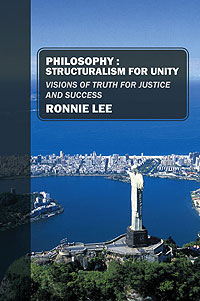
Weekly Self Published Book Review: Philosophy: Structuralism for Unity, Visions of Truth for Justice and Success

Book reviews are a great way for self-publishing authors to gain exposure. After all, how can someone buy your book if he or she doesn’t know it exists? Paired with other elements of your book promotion strategy, requesting reviews is a great way to get people talking about what you’ve written.

When we read good reviews, we definitely like to share them. It gives the author a few (permanent) moments of fame and allows us to let the community know about a great book. Here’s this week’s book review by Midwest Book Review:

philosophy

Philosophy: Structuralism for Unity, Visions of Truth for Justice and Success

Ronnie Lee

Publisher: Outskirts Press

ISBN: 9781432771836

Our wholeness and peace of mind come after need not panic about simply surviving. “Philosophy: Structuralism for Unity, Visions of Truth for Justice and Success” is a collection of philosophy from Ronnie Lee, who discusses the flood of information mankind has, as he calls for our search for unity in today’s world where quarrel seems to lurk around every corner. Using a medium of free verse poetry to grant his thoughts and opinions on our conflicts, “Philosophy: Structuralism for Unity, Visions of Truth for Justice and Success” is an excellent pick for anyone seeking politically and philosophically driven verse.

If You Self-Publish Your Memoir, Read This

Many self-publishing authors have questions about self-publishing a memoir and avoiding a libel suit. Libelous statements are published statements that are false and damaging. However, even if what you write is true, someone can still accuse you of libel. Here is what you need to know to protect yourself.

  • If you make negative statements about another person or entity that have not been proven in a court of law, you need written permission.
  • If you are unable to obtain written permission, take steps to protect yourself:
  • Change all names of people and places.
  • Use a pen name.
  • Do not include an author photo.
  • Do not include an author bio.
  • Consider listing the book under the “Fiction-Biography” genre rather than non-fiction.

I know these steps can sometimes be hard for memoir writers because they are so emotionally involved in their stories and they want the world to know their story. However, publishing a book without permissions can lead to legal, and possibly physical, danger. People such as abusers do not like the world knowing the truth, and they may retaliate against authors who share their stories.

Many publishers will reject the story for publication if the above  precautions are not taken.  Some authors think their “freedom of speech” allows them to say whatever they want.  Unfortunately, this is not the case!  If what they are saying infringes on someone else’s rights, they cannot publish without the other person’s permission.

However, it is possible to share your story by using the above precautions. There are plenty of people who use pen names and have very successful books. Don’t let fear of a libel suit prevent you from sharing your story, but do take the necessary steps to protect yourself.

You can learn about libel, by reading this previous post: Questions Self Publishing Authors Ask: Non-Fiction Book Considered Libelous.

ABOUT JODEE THAYER: With over 25 years of experience in sales and management, Jodee Thayer works as the Director of Author Services for Outskirts Press. The Author Services Department is composed of knowledgeable customer service reps, publishing consultants and marketing professionals; together, they all focus on educating authors on the self-publishing process in order to help them publish the book of their dreams and on assisting authors with marketing and promoting their book once published. Whether you are a professional looking to take your career to the next level with platform-driven non-fiction or a novelist seeking fame, fortune, and/or personal fulfillment, Jodee Thayer can put you on the right path.

Friday Conversations With A Self-Publishing Writer 10/18/13

I LOVE Historical Fiction! Not only do I find inspiration, hope, and encouragement when I read these books, but I often become acquainted with a new author (new to me, anyway) who took the leap into self-publishing.  When a writer dives into researching everything from footwear and clothing to politics and mores within a specific time period, readers become their beneficiaries—and learn life survival skills that are easily passed forward within this genre.

The most recent historical/biographical fiction I’ve worked with is set in the late 1800s, early 1900s.  The central character is a young woman who stepped way outside her comfort zone in the world of medicine to become one of only a handful of women physicians in her generation.  I can still picture the scene—during her medical school days—when a cloth screen was set up in the classroom to separate her from her male classmates.  The professor thought it “indelicate” to discuss the subject matter of his class in “mixed company,” and that was his solution.  This was a true occurrence and added to my understanding of how my grandparents thought about male/female relationships and why they often seemed confused—even embarrassed—by their grandchildren.

The huge success of recent TV series period pieces should also encourage the historical fiction writer.  More than other genres, the details that must accurately paint these stories are perfect for film development.  Plus, the characters from days-gone-by are easily portrayed as bigger-than-life, while retaining the elements of humanity with which we can all identify.

I’ve come to discover that good fiction tells a good story, excellent fiction introduces readers to a character they will never forget, and award winning fiction compels the reader to live the life of the characters as they walk through each and every event.  This happens—for me—most often within the pages of historical fiction.

Can any writer become an award winning historical fiction author?  Here is a little quiz that will help you answer that for yourself.

  1. Did you enjoy history classes in school?  Could you picture yourself living in log cabins, or animal-skin teepees, or caves?
  2. Do you like the smell of libraries?  Some current writers do most of their research on the Internet; however, discovering that one “key element” and/or fact among library archives is a real treat!
  3. Can you hear, see, smell, taste, and touch the environment of the time period you’re writing about?
  4. Do you share the same passions of your main character?  Rather than “walking a mile in his or her shoes,” could you walk a thousand miles beside them?
  5. Do you understand the motives behind your main character, his companions and the antagonist(s)?

I’ve known folks who have worked on (and off) on their historical fiction novel for years.  If you are one of those writers, I would like to nudge you (sharply) to GET IT DONE and GET IT PUBLISHED!  Other people may have written about your hero, but only you can tell it with the passion that you hold.

Royalene ABOUT ROYALENE DOYLE: Royalene Doyle is a Ghostwriter with Outskirts Press, bringing more than 35 years of writing experience to authors who need “just a little assistance” with completing their writing projects. She has worked with both experienced and fledgling writers helping complete projects in multiple genres. When a writer brings the passion they have for their work and combines it with Royalene’s passion to see the finished project in print, books are published and the writer’s legacy is passed forward.

Weekly Self Published Book Review: White Lies, Black Blood

Book reviews are a great way for self-publishing authors to gain exposure. After all, how can someone buy your book if he or she doesn’t know it exists? Paired with other elements of your book promotion strategy, requesting reviews is a great way to get people talking about what you’ve written.

When we read good reviews, we definitely like to share them. It gives the author a few (permanent) moments of fame and allows us to let the community know about a great book. Here’s this week’s book review by Midwest Book Review:

perf6.140x9.210.indd

White Lies, Black Blood

Trevor Ennis

Publisher: Outskirts Press

ISBN: 9781432770181

Reality can be all too cruel. “White Lies, Black Blood” tells the story of Angelica, a raised and bred bigot. When she learns of her heritage, she realizes her mistakes and tries to seek to understand and make up for her mistakes. She learns about our common heritage as human beings and under the eyes of God. “White Lies, Black Blood” is a novel that explores race and what brings us together on top of keeping us apart.

Friday Conversations With A Self-Publishing Writer 10/11/13

The Christian Inspirational genre is certainly one of the hottest markets for self-publishing authors.  When someone’s faith mixes with experience writers communicate with their readers in a unique and extremely uplifting way—a way that enriches mind and heart to see possibilities beyond their circumstances.

Although many of the books in this genre are written (or ghostwritten) by well-known people, many more are written by people like you.  Their “real life” topics cross over faith denominations into the “real world” with subject matter such as: liberation from life’s burdens; healing wounded hearts; the gift of beauty for ashes; and eternal security.  No one—literally no one—can tell these experiences better than the person who has lived through them.  However, there are a few unique methods to remember when developing the manuscripts, and they begin with preparing yourself to “tell the truth” to the best of your ability.

Whether you are creating your manuscript yourself, or you’re working with a self-publishing team (publishing consultant, author representative, production supervisor, designers, and production managers), and/or a ghostwriter, here are a few things to remember:

  1. Build the timeline.  Most inspiring stories come from finally seeing a positive—even miraculous—result from some not-so-pleasant experiences.  The timeline (for this one book) is most easily built backwards.  Starting with the conclusion of events will allow you to see all the pieces leading up to that more clearly.
  2. List the people.  Make a list of the people who were connected to this process.  There will be the quickly-remembered ones; there will also be the ones who are only recalled as you work on the next guideline—the “scenes.”  Depending on your decision whether or not to use their real names is not a concern at this beginning level.  What is important is that the roles they played are identified.
  3. Picture the scenes.  Use your wonderfully developed imagination to “see” the scenes (as in a movie).  Such as: When I tell the story of my Mother’s last days on this earth, I can see the CNA—a gentle giant of a gentleman—lifting her ever so carefully from a gurney to her bed.  Any movement—even her hand raising to motion for water—caused intense pain.  However, when he moved her, she experienced NO pain.

When inspirational writers begin their creative process with these three foundational exercises, it is remarkable how quickly their true story is developed.  Filling in the details becomes easy.  Then, once the first draft is complete, the other decisions—such as using the names of the real places and people—are also much simpler.  My suggestions for those choices are twofold:  If there are more than three people (other than you) in the story, consider using fictitious names.  Tracking people down to get permission to use their name can be time consuming and slows down the production of the book.  Also, if the place where the majority of the scenes are centered is too well-known—and would overshadow the impact of the story—then consider “setting” those scenes in a more generic place.

Final thought: NEVER hesitate to tell your story!  There are many hands and hearts out here in the self-publishing world to help you through the process.

Royalene ABOUT ROYALENE DOYLE: Royalene Doyle is a Ghostwriter with Outskirts Press, bringing more than 35 years of writing experience to authors who need “just a little assistance” with completing their writing projects. She has worked with both experienced and fledgling writers helping complete projects in multiple genres. When a writer brings the passion they have for their work and combines it with Royalene’s passion to see the finished project in print, books are published and the writer’s legacy is passed forward.