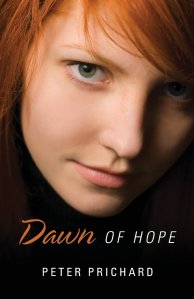
Saturday Book Review: “Dawn of Hope”

Book reviews are a great way for self-publishing authors to gain exposure. After all, how can someone buy your book if he or she doesn’t know it exists? Paired with other elements of your book promotion strategy, requesting reviews is a great way to get people talking about what you’ve written.

When we read good reviews, we definitely like to share them. It gives the author a few (permanent) moments of fame and allows us to let the community know about a great book. Here’s this week’s book review, courtesy of Fallen Over Book Reviews:
61LBTNg0FPL

Dawn of Hope

by Peter Prichard

Publisher: Outskirts Press

ISBN: 978-1478746942

Synopsis:

“Excuse me, young lady. We have the ambulance on their way, and they want to know what happened to Drew Winston.” “He said he was going to do me good,” Dawn replied purposefully to the administrative assistant in the high-school office. “I wanted to make sure that everyone in this school knew that would never ever happen.  I pushed him away and tripped him, and as he fell, he hit his head on the corner of a water fountain, which was not my intent. He’s bleeding from his head and is in convulsions.”

Within twenty-four hours of beginning her senior year at Fair Shore High School as a new student, Dawn Mortenson had chosen to fight the town’s acceptance of the bullying and sexual abuse of young women by confronting Drew Winston, the school’s All-American quarterback. Following that confrontation, she received multiple death threats, so her mother had to hire a security firm to protect herself and her daughter. That move did not work, as Dawn was kidnapped soon afterwards and ended up in the hospital.

When Dawn had been released from the hospital, she had already gained a national reputation, which attracted more people who wanted her dead. She survived the bombing of a building she was visiting, which prompted FBI involvement. She stunned the agent who interviewed her, when in answer to his question about people who would like her killed, she was able to provide evidence of over fifty individuals who had specifically threatened her-including a police officer from her hometown, who had told her that he hoped the next attempt on her life would succeed.

Dawn also clashed at times with those who even supported her efforts. A reporter in town had presented himself as someone who wanted to help. In describing why the culture of rape, bullying, and abuse has been tolerated in town, he ended with the statement, “Everybody is seen as winning, male and female alike. It is a great American success story. Fair Shore residents have paid top dollar to join the winning team and are disinclined to raise any questions about the unsavory practices that support its continuation. There is a feeling that ‘boys will be boys.'”

In response, Dawn exploded, “And you choose to support this? Goddamn you. Goddamn all of you. Let’s only hope, Mr. Bruschi, that the success of this ‘everybody-wins’ model spreads to towns all across America. Let’s only hope that, within a few years, tens of thousands of young women can be treated the Fair Shore way and be raped without comment, so that ‘boys can be boys.'” As she turned and headed toward the door, Joseph moved quickly to stop her. “Dawn, don’t leave.” “Go to hell. I thought there was hope with you because of some of the writing you’ve done. That series you did on the woman who overcame severe automobile injuries and resumed her career as an engineer after everybody said she would never work again was powerful.” “She is a remarkably brave young lady.” “And there are a lot of them out there, but your silence is ensuring that they will have to fight that much harder to create the stories they were born to tell.”

Dawn’s battle against the status quo lands a number of friends and enemies either in the hospital, in jail, or in an early grave. She uses rock-and-roll through befriending high-school band members who write their own lyrics that challenge the status quo, along with a combination of personal courage and mental toughness, to change the town forever, although at a huge personal cost.

Critique:

When I started this book I was really getting into and I found myself not putting it down but as I continue reading than I started slowing down. I am not sure why but it became not as interesting to me.  I think maybe because of so many situations that Dawn found herself in it was like really this is happening to her again?

Dawn moved into a new town where football is the big thing in that town. When she is confronted by the star of the football team this is what starts the roller coaster ride. There is more to this town than meets the eye it seems they don’t mind how their football players act because the football team is the best. Dawn doesn’t agree with this and brings their actions to the forefront of everything which in turn makes her a target. Now the way Dawn talked at times and handled situations she didn’t come across as a teenager more like an older adult, which I guess is what the author wanted to go for.

Some of the scenes were like wow and the way it was handled I felt was very grown up for Dawn.

Now Dawn and her mother have a wonderful relationship and I was very impressed with how her mother was behind every decision Dawn decided to make. Though there was one scene that I didn’t really understand why her mother acted that way. Just her anger towards Dawn for voicing her concern really bothered me. I did enjoy how Dawn built people up and voiced her opinions on things but did it in a way that made people look up to her and wanted change. When everything goes down Dawn sees who her true friends are and who are just there to make a name for themselves through her.

I plan on reading book two to see what else will Dawn be doing and how she will be changing towns and the maybe the world with her ideas and opinions.

reviewed by Autumn of Fallen Over Book Reviews ]

Here’s what other reviewers are saying:
Peter Prichard’s Dawn of Hope, is a compelling much needed political treatise masking as a debut novel. He is not so much a master storyteller as he is a veteran activist shouting from a platform. The drama in Dawn of Hope is the little bit of sugar sure indeed helps the medicine go down.

In the tradition of novels like Uncle Tom’s Cabin, Prichard addresses some of the major social injustice issues of our time. Dawn Mortenson, the novel’s heroine battles issues of sexual abuse and violence at in personal, social and political settings of early 21st century America. To do so Prichard’s narrative arc runs through a wealthy suburban Connecticut town, corporate America, NPR and the liberal activist community in its wake This project takes in a great, great deal in nearly 200 pages. Whew.

Part novel, part opera, Dawn of Hope leaves little to the imagination. Dawn, and the other actors in this drama, are clearly drawn with their talents and flaws on full display. The good ones are really good, and the bad ones are insufferably bad. While its hard to imagine any one person being just like Dawn, she is nonetheless a compelling compilation of other young women who have suffered the slings and arrows of outrageous sexism. Throughout the novel Dawn is often bloodied (literarily and figuratively) but she is never bowed. A relentless upward arc that pulls the reader along.

At the end, I was left with the sense we just might have the beginnings of a super heroine series on our hands. Dawn Mortenson can certainly take on other adversaries in the cause of social justice. Prichard now needs to find other settings for her immeasurable talents.

Those who care about gender bias, sexual abuse and social justice won’t be able to put Dawn of Hope down; those on other side of the aisle may have difficulty picking it up. No matter. The encouragement and the inspiration provided to those who do read it may just propel us to a better world.

– Amazon Reviewer Douglas Ferguson

Dawn of Hope is a solid read about an inspiring young woman who is extremely courageous and mature beyond her years. Her keen insight and self awareness enables Dawn to have a positive impact on society and those around her. Kudos to Dawn for embracing her power!

The first half of the book was a page turner and I felt very invested in Dawn’s story. The second half of the book was jam-packed with action and messages, but for me, there were too many fantastical turn of events, so it was hard to keep believing in the awesome idea of Dawn. Perhaps stretching Dawn’s story out over a longer period of time will recharge my early excitement about Dawn – I’m eager to read Prichard’s sequel for this very reason. Tackling many social issues and influences in one small book is an enormous task. Hopefully, by introducing Dawn of the Tobacco Wars and beyond, Prichard can build depth around his many brilliant ideas and continue to make Dawn a relatable heroine.

An excellent first book. I suspect Prichard’s books are going to get even better over time.

– Amazon Reviewer Ex-Hack
Virtual Book Tour

saturday self-published book review

Thanks for reading!  Keep up with the latest in the world of indie and self-published books by watching this space every Saturday!

Self Publishing Advisor

selfpubicon1

Saturday Book Review: “First Born : The Preevitt Chronicles”

Book reviews are a great way for self-publishing authors to gain exposure. After all, how can someone buy your book if he or she doesn’t know it exists? Paired with other elements of your book promotion strategy, requesting reviews is a great way to get people talking about what you’ve written.

When we read good reviews, we definitely like to share them. It gives the author a few (permanent) moments of fame and allows us to let the community know about a great book. Here’s this week’s book review, courtesy of Books, Reviews, Etc:

5109WOsl1lL

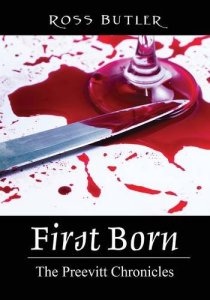
First Born : The Preevitt Chronicles

by Ross Butler

Publisher: Outskirts Press

ISBN: 978-1478771722

Synopsis:

She thought that life in a new town would be boring; boy, was she wrong! Fifteen-year-old Ruth Daniels has never had a lucky break due to being a lifelong orphan living in Michigan, but she ends ups going from a orphan to a family girl after she gets adopted by a widowed businessman and moves to New Jersey to live with him and his family, including a stereotypical teenage brother, a snobby sister and two twins. Yep, that’s all there is to it. Soon after her arrival, she starts school and almost instantly ends up with two new friends: Rachel Evans, a redheaded senior, and Justin Reynolds, a quiet, lonely and withdrawn sophomore. The latter of whom Rachel seems to hate with a vengeance. As Ruth and Justin’s friendship begin to evolve, Rachel starts to stalk and attack them almost constantly, and Justin knows why: He’s a human/animal hybrid called a Preevitt, he and Rachel are longtime mortal enemies, and Ruth is now part of their longtime war that also includes Justin’s twin siblings, Jaz and Wheeler.

Critique:

Ruth Daniels from Michigan evolves from an orphan to an adopted daughter of a widowed Businessman. Him and his family are in New Jersey.  Ruth moves to New Jersey with her new family. What a family.  We have twins,  a typical brother who is a teenager and a real uppity sister.  That’s the family.  Quite a change for Ruth.  She has always been an orphan.  After she moves to New Jersey she starts high school and immediately makes two new friends. Justin Reynolds is an introvert, and a sophomore.  Ruth then makes friends with a senior, redheaded Rachel Evans.   Rachel isn’t happy with the friendship that Ruth and Justin are developing.  Right off she detests Justin. Rachel goes on the attack, especially against Justin.  What is it about Justin?  Why are Rachel and Justin at odds with each other?  Is there a secret between them? Will this war between Justin and Rachel affect Ruth? The author takes you into another world.  One minute the world is as you live in.  The next, you’re facing another world. The book is fast paced as the author takes you into some well developed characters’ lives.  As you turn the pages, you’re not quite sure what you will find next.  This isn’t your typical high school friendship. This isn’t a jealousy issue.  This is way more.  The author starts out with a quiet story about Ruth and it slowly gains momentum until you’re in another world.  What does Preevitt mean?  Read and find out. Good book for teens and adults.

I would give this book 4 STARS.

reviewed by Gayle Pace of Books, Reviews, Etc ]

Here’s what other reviewers are saying:

In this Urban Fantasy, we read the story from the perspective of a moody, disgruntled and contrary fifteen year old. She was orphaned at an early age, and when the orphanages closed down, she lived with her elderly social worker. She is adopted by a family in New Jersey, far away from Michigan. She doesn’t want to go, but has no choice. Once she is there and meets her family, she settles down slightly. Starting a new school, she meets new friends and starts her new life.

With a very fast-pace and a severe case of insta-love, this book tells the story of Preevits and Mugglers. Now Preevits may sound bad, but they have nothing on the Mugglers. And then, of course, you have bad Preevits thrown into the mix too.

Finishing on a high, with a possible link to a further book, this is a book for readers of YOUNG adult, with a paranormal twist.

– Amazon Reviewer Merissa (Archaeolibrarian)

And last but not least, an excerpt from the author’s Smashwords interview:
What is the greatest joy of writing for you?
The greatest joy of writing for me is putting down what I want to see on paper and throw it to the world for all to see. It’s basically me being myself and not worrying about being called for it. I can as funny, biting and sarcastic as I want to be and no one can take that from me. That’s one of the greatest joys of being a writer.
What are you working on next?
My next book is now being written. It’s A Satirical Western called “How The West went South”. It’s about an 18-year old guy who, after saving the life of the U.S. Senator is rewarded with a job as a U.S. Marshall and the hijinks that ensure afterwards. It’s already in the works and I’ll release more info when I’m ready to.
Who are your favorite authors?
Eoin Colfer, (The Artemis Fowl Series, “The Wish List” and “The Supernaturalist”) Rick Riordan, (Percy Jackson and the Olympians) Cassandra Clare, (The Shadowhunter Chronicles) and James Patterson, (The Maximum Ride Series)
What is your writing process?
My writing process involves me writing one book, I get it published and distributed, then I start work on my next one while still attending promotion events to market it. Many authors try to write several books at once. I prefer to keep it simple.

saturday self-published book review

Thanks for reading!  Keep up with the latest in the world of indie and self-published books by watching this space every Saturday!

Self Publishing Advisor
selfpubicon1

Saturday Book Review: “When Pain Has Stained a Peaceful Heart”

Book reviews are a great way for self-publishing authors to gain exposure. After all, how can someone buy your book if he or she doesn’t know it exists? Paired with other elements of your book promotion strategy, requesting reviews is a great way to get people talking about what you’ve written.

When we read good reviews, we definitely like to share them. It gives the author a few (permanent) moments of fame and allows us to let the community know about a great book. Here’s this week’s book review, courtesy of Literary Litter:

When Pain Has Stained a Peaceful Heart: A woman's poetic voice tells of heartbreaking mistreatment in our mental health system

When Pain Has Stained a Peaceful Heart: A woman’s poetic voice tells of heartbreaking mistreatment in our mental health system

by Ann Henry

Publisher: Outskirts Press

ISBN: 978-1478766957

Synopsis:

Ann Henry had a close-knit family, a normal childhood, and a strong sense of identity. Although she had been healthy for most of her life, at the age of 27, she was stunned to be diagnosed with bipolar disorder. And so began a fifteen-year journey regaining her mental health, despite the many pitfalls of our mental healthcare system. When Pain Has Stained a Peaceful Heart is based on the true story of Ann’s devastating loss-the loss of her sanity, her voice, and her dignity-and how she fought to regain control over her life with courage and faith. In poetic form, Ann shares the trauma of her experiences in the mental health system through the rhythm of her words and the depth of her emotion. This is an important book not only for those in the mental health profession but also for those who suffer from mental illness and their families by providing an insider’s view of the often chilling reality of treatment facilities. When Pain Has Stained a Peaceful Heart is honest, hard-hitting, and beautifully expressed.

“Ann Henry leaves me questioning our mental health system and the further damage done to individuals in an attempt to ‘help’ them and their families.”

-Cynthia Barrios-Woodward, Licensed Marriage and Family Therapist

Ann Henry wrote When Pain Has Stained a Peaceful Heart in an effort to help shine some light on the realities of the mental health system. As an artist, writer, and now author and poet, Ann opens up and shares some of her deepest wounds in an effort to help educate the general public about atrocities within a system meant for care.

Critique:

This is a first-person accounting of what it’s like to be a mentally ill person that has been put into ‘they system.’

Ann gave nearly a year of her life in an attempt to regain her sanity, though most of that time wasn’t freely given. Ann was institutionalized. As her confusion and fear grew, she began to lash out, causing her to be moved from place to place.

Having seen the caregiver side of this equation, it was fascinating and heart-wrenching to see Ann’s side. When someone with mental issues is in your care, your number one priority is their physical safety. Your second priority is their mental safety. I’ve gone through the stages of having to force unwanted medication and restrain. However, Ann’s perspective doesn’t see the necessity. Not only is she battling her mind and hallucinations, but she’s also having to battle against a horde of people that she just doesn’t understand. They cause her mental distress and physical pain, all in the name of trying to keep her safe.

This short book has been written in the form of poetry, because that’s the easiest way for Ann to talk about the trauma she endured as a mental patient. Talking about trauma and attempting to get past it is incredibly difficult and I applaud Ann in her efforts.

What she has accomplished here is the necessity for empathy in the caregiver system. I’ve seen several nurses and doctors that have it in spades, but I’ve also seen the opposite. In a career where you’re dealing with violent and loud, confused people on a day to day basis, it’s important that you find healthy ways of coping. Too often it leads to an immunity and we no longer see what we’re doing from the other person’s point of view.

This is a quick and important read. If mental illness has touched your or anyone you know, or if you deal in any way with the care of someone with mental illness, you’ll find a fresh new look at things that can be integral in your relationships.

Keep in mind, because this is a first-person accounting, we only see one side of the story, Ann’s. This is not an attempt to discredit mental institutions or cast blame, but rather an attempt to get people to take a closer look at what’s going on. It’s also Ann’s way to try to make sense of this period in her life and heal and grow.

reviewed by Shawn Remfrey of Literary Litter ]

Here’s what other reviewers are saying:

Ann Henry is indeed a talented writer and poet. Her words will capture readers’ attention from the first page. The words envelope around the readers and drag them through the journey that Ann Henry has brilliantly written. The emotional experiences, from reading When Pain Has Stained A Peaceful Heart, is phenomenal. Inside this beautiful read, readers will find one woman’s voice using poetry to tell her heartbreaking story. One that involves mistreatment within our mental health system.

This book is not a fictional piece but a real woman’s journey through a difficult time in her life. Ann Henry’s poetry flows in a way that lures readers further into her tale. Can you image having your normal life suddenly taken from you at the age of 27? Well, Ann Henry did. Her mental health took a nose dive and the treatment she received only plunged her down further. Fifteen years of working on regaining her life again…is a sad, yet remarkable read. Ann Henry suffered but made her way through the hardships life dealt her. A strong independent woman who serves as a reminder and inspiration to readers everywhere. I can’t remember a time when a piece of poetry grabbed my attention the way this book has…When Pain Has Stained A Peaceful Heart is definitely a must read for all. I highly recommend reading this woman’s story.

– Amazon Reviewer Danielle Urban

I have relatives that have been in mental institutions as patients and one that was a nurse and worked for a time in a mental hospital. When I was full-time at a local college with a nursing program I was friends with one of the nursing instructors whose specialty was psychiatric nursing. She used to discuss some of her experiences in dealing with mental patients and how difficult it can be. A major concern is their unpredictability, some can become violent in an instant and be a danger, most often to themselves rather than others.

Therefore, given this background, I must confess that I read this book with a skeptical mind. The author uses prose to describe her experiences in a mental hospital and how she was forcibly held down while she received injections of her medications. Henry also mentions that she refused to take her meds and that she punched one of the hospital staff.

I certainly understand that all is not sweet and light in mental hospitals and that abuse of the patients occurs. Her account of the events may be true and the staff was rougher with her than they should have been. Yet, it is also very possible that she was a problem patient and the amount of force that was used was not out of bounds. This book must be read with both of these ideas firmly in mind.

The text has a solid rhythm and tells a sad story of triumph, from the sudden descent into a loss of sanity (her words) to a slow recovery over the course of fifteen years. Her experiences of being forcibly restrained and drugged and her battles to regain control are both wrenching and revealing. Fortunately, it seems clear that Henry has recovered, as there is an order and structure to her writings about her experiences. Many people that suffer from such illnesses never recover to the point where they can write about their experiences in a quality manner.

– Goodreads Reviewer Charles


saturday self-published book review

Thanks for reading!  Keep up with the latest in the world of indie and self-published books by watching this space every Saturday!

Self Publishing Advisor

selfpubicon1

Saturday Book Review: “The Reluctant Soldier”

Book reviews are a great way for self-publishing authors to gain exposure. After all, how can someone buy your book if he or she doesn’t know it exists? Paired with other elements of your book promotion strategy, requesting reviews is a great way to get people talking about what you’ve written.

When we read good reviews, we definitely like to share them. It gives the author a few (permanent) moments of fame and allows us to let the community know about a great book. Here’s this week’s book review, courtesy of Books, Reviews, etc:

The Reluctant Soldier by Marnie Mellblom

The Reluctant Soldier

by Marnie Mellblom

Publisher: Outskirts Press

ISBN: 978-1478757405

Synopsis:

The Reluctant Soldier spotlights the “forgotten war” – Korea, in hundreds of letters written by Neil Mellblom, an Army combat reporter with the Pacific Stars & Stripes and the Third Division’s Public Information Office, the United Nations sanctioned police action comes to life. Neil received the Bronze Star for “aggressive reporting” which made the division one of the best known of the Korean war. It may be the definitive book on a soldier’s life in wartime. Funny, yet deeply moving, it records Neil’s growth from a cocky Montanan to a seasoned adult.

Critique:

If you are intrigued by historical books that this one will interest you. A soldier, Neil Mellblom, is a combat reporter for the Pacific Stars and Stripes. A collection of over one  hundred letters written by Neil Mellblom of the wartime experience. This is a non-fiction book mainly about his letters to his  Marnie. Will romance bloom during this time of fear? War at some time or another, is inevitable.  There will always be a group of people who can’t or won’t get along with another group. The war in this book, World War II, has forever remained in the hearts and minds of those left behind.  Whether you were part of the war, part of a family in the war or born later, World War II will never be forgotten.  War brings fear, and that fear is from, what is going to happen to me, to us?  War is a loss on all sides, loved ones are lost and souls are scarred for life.  Neil received the Bronze Star for “aggressive reporting”. He wrote of a soldier’s life, the funny, the sad and the transformation of a  cocky Montanan into a mature adult. Any man or woman who goes into the military field, whether it be war or not, should be treated with respect. Some lay down their lives for those at home, those who are friends, family and those who are unknown. The book is well written and has a pace that keeps your attention and yet, doesn’t bore you. Grab a copy of  THE RELUCTANT SOLDIER and journey through the world, seeing it through the eyes of Neil.

reviewed by Gayle Pace of Books, Reviews, Etc  ]

Here’s what another reviewer is saying:

The Reluctant Soldier by Marnie Mellblom is an interesting compilation of letters that her husband, Neil Mellblom, wrote her almost every day between September 1, 1950 as he was waiting to be shipped to Japan, and September 3, 1951, when he is home in Havre, Montana.

Marnie was an Army brat and her father was stationed at Carlisle Barracks. Neil had apparently joined the Army to become a journalist, had been trained as a reporter, working for six months on the Jackson, MI, Clarion-Ledger. Assigned to Carlisle, he met 20-year-old Marnie and they became close. When North Korea invaded South Korea in June 1950, Army shipped Neil to Japan where he first worked on the Pacific Stars and Stripes, an independent newspaper within the Army that covers military news. The paper sent him to Korea where he was ultimately assigned to the 3rd Infantry Division’s Public Information Office.

He assures Marnie repeatedly that he is staying out of danger. “Combat reporter” does not mean being shot at. In fact, it is not clear from the book exactly what he was doing as a reporter. Other than interviewing a Turkish general and having one of his stories picked up by UPI (without credit), he says very little about the stories he was writing.

Instead, his virtually daily letters to Marnie describe—more or less—his daily life first as a PFC then as a corporal during the war. “I got a shower today . . . a real accomplishment . . . they don’t have a fancy shower here—a tin-and-canvas-enclosed area a lard bucket with holes overhead—and a little Korean boy-san pours hot water in it as long as you stay under the bucket. . . . ”

“We adopted a boy today. No kidding, the three of us here found a little guy on the streets and moved him in with us. We checked on him, found his mother is dead, his father is sick, and one ten-year-old brother is roaming the streets somewhere . . . We washed him up, got his hair cut, and outfitted him with clothes. . . ” Six months later, the kid is the group’s houseboy and working as an interpreter.

“We’ve been writing stories on combat awards and decorations. I picked up a file on a lieutenant and a corporal who had been together on the same mission. Except for their names, the citations were identical to the word—they stayed under fire and evacuated about forty casualties. There was only one difference. The lieutenant was awarded the Silver Star and the corporal got the lesser Bronze Star . . .”

Now a personal note: Because I was in Korea for sixteen months, I was particularly interested in reading Mellblom’s book. The Army assigned me to the 7th Infantry Division just south of the DMZ in August 1955. What struck me was how closely my experiences two years after the cease-fire resembled his. He comments on the dust, the cold, the stink of the rice paddies, the Army SNAFUs, the drinking, the heat, the rainy season (Marnie’s letters to Neil were destroyed when his tent flooded), the importance of mail, the food (we said the combat rations we got in the field were better than the powdered eggs, dehydrated potatoes, and reconstituted milk the mess hall served).

Although The Reluctant Soldier contains pictures of Neil in Korea and some shots of Marnie’s family, the average reader would have been helped with a sketch map of Korea showing where, exactly, Neil was writing from. Also, a little more context would help. Neil either does not know what is going on with the war as a whole or he assumes Marnie knows by reading a newspaper and doesn’t bother. But few readers will know about the Pusan perimeter, the Inchon landing, the race to the Yalu, Chosin Reservoir (Neil participated in the evacuation from Hungnam Harbor), and the stalemate after January 1951—all of which would help Neil’s story.

The book contains an epilogue that adds immeasurably to the story. And for me, the book stirred up hundreds of memories. An interesting picture of the kind of war that most GIs experience.

– Amazon Reviewer Wally Wood

Book Trailer:

Saturday Book Review: “The Frog That Lost His Croak”

Book reviews are a great way for self-publishing authors to gain exposure. After all, how can someone buy your book if he or she doesn’t know it exists? Paired with other elements of your book promotion strategy, requesting reviews is a great way to get people talking about what you’ve written.

When we read good reviews, we definitely like to share them. It gives the author a few (permanent) moments of fame and allows us to let the community know about a great book. Here’s this week’s book review, courtesy of Literary Litter:

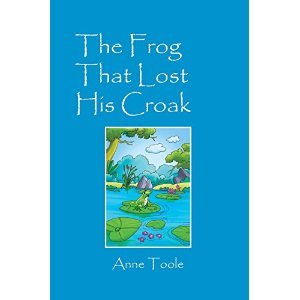
the frog that lost his croak

The Frog That Lost His Croak

by Anne Toole

Publisher: Outskirts Press

ISBN: 978-1478764137

Synopsis:

A little frog who loved to croak night and day, was very sad when his croak suddenly went away. While waiting and hoping for his croak to return, what valuable lessons did the little frog learn?

Critique:

A little frog who loved to croak night and day,
Was very sad when his croak suddenly went away.
While waiting and hoping for his croak to return,
What valuable lessons did the little frog learn?

(taken from the back of the book)

I like the pictures because it helps you understand what they’re saying in the text. I like that it rhymes because it’s easier to read. Then again, it’s also more fun to read.

There aren’t too many words per page, but there are some pages that have a little bit more than others. This book didn’t take very long to read.

I think kids about five or older would enjoy this book. Possibly younger children, if their parents read it to them.

You can predict what’s going to happen in the story from the title. I liked it because it gave you a heads up on what the book was going to be about.

How the little frog lost his croak, well he was croaking too much but he was also croaking in the rain. So the rain could have been how he lost his croak. I think the frog learned that he was noisy because he was croaking all the time and I think he was upset because he learned that he wasn’t listening to the other animals.

In my opinion, you can learn from books that have life lessons. This book was good because it had a life lesson in it.

reviewed Ashlee  of Literary Litter ]

Here’s what other reviewers are saying:

We’ve all known people who couldn’t stop showing off or bragging about themselves, and it happens with characters in stories, too. In this instance, it is a little frog who has a loud croak that he uses all day long. All the other animals are very tired of listening to him, but he is oblivious to their feelings and indulges himself all the time. When he loses his voice, he is forced to listen to the world around him and notice things like the beauty of birdsong or the sound of the wind whispering through the trees. By the time his croak is restored, he has learned to appreciate the sounds around him, to croak less and listen more.

This is similar to Marcus Pfister’s Rainbow Fish with the proud character so taken with himself and his abilities (or appearance), that he has no time to make friends or listen to anyone else. And just like the Rainbow Fish, the little frog has to learn his lesson before his situation can change. The story is told in rhyme and supported with brightly colored illustrations. Some of the wording may seem a bit awkward to adult readers, but the target audience of beginning readers will probably not notice.

Author Anne Toole was a first grade teacher and ESOL instructor before she began writing children’s books. She understands the issues that children deal with on a daily basis – making friends, what makes them special, fitting in, etc. This is the type of story that parents, teachers, and guidance counselors can read with a child (or a group), and then discuss the moral of the story.

– Amazon Reviewer Suzanne R. Costner

There was very little about the book on Amazon. It would be nice if a little more was entered about the book and author. The little paperback has 26 pages (unnumbered). It would be suitable to those learning to read or the little ones you read to. It has a lesson to be learned about boasting. The illustrator made some colorful and bright pictures to go with the story. The story, like most of Ms. Toole’s is in rhyme. This is nice, since it keeps the little one’s attention. The little frog that had a lesson to learn finds out that no one likes him since he has bragged too much. He learns to listen instead of croaking and discovers a valuable lesson. This is a easy to read book that will help teach the little ones that not everything is always about them but to think of others too.This is a great little book for your child’s bookshelf to be read and re-read.

– Amazon reviewer gayle pace


saturday self-published book review

Thanks for reading!  Keep up with the latest in the world of indie and self-published books by watching this space every Saturday!

Self Publishing Advisor

selfpubicon1