Treat Yourself to Self-Publishing This Mother’s Day

Mother’s Day is not only the time to celebrate your own mom(s), but it also a great time for mother’s to splurge on themselves. Most of the time, mother’s give their all to their children. While that’s great, it’s also nice for them to occasionally do something for themselves.

Too often, mother’s feel overworked, overtired, and underappreciated. This year, why don’t you stretch that Mother’s Day bliss into the rest of the year… by allowing yourself to work on your writing project and finally reaching your dream of publishing a book. Here are three reasons why you should give yourself the gift of self-publishing.

1. You deserve a break.

Many moms give all their time and energy to their families and work. You struggle to find time to do the things you love, but you deserve a break. Let the dishes sit in the sink for the night, and spend some time writing.

2. It’s good for your family.

Moms who make time for their passions feel more fulfilled and are able to be happier, more patient parents. Giving yourself permission to work on your own project isn’t denying your children your time; it is giving them the gift of a happy, successful mom. They will be proud of you.

3. It’s also a gift to your family.

Self-publishing a book can be a great way to create a special, unique gift that your children can have forever. Whether you write a novel and dedicate it to them or pen a book filled with life lessons you want to teach them or publish a memoir sharing your life story or create a children’s books of the stories you tell them before bed, they will cherish your work forever.

Happy Mother’s Day!

Friday Conversations With A Self-Publishing Writer 05/01/15

GIANT TREES…tree

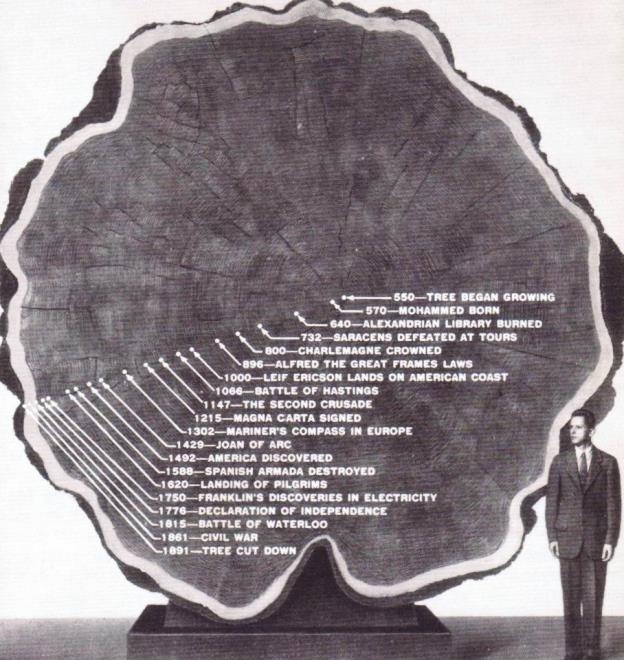
…BEGIN WITH A SEED. Okay, I’m a tree lover (hugger) who especially appreciates the giant trees that look down upon us with such authority.  As I begin my own process of developing a novel (that has been simmering in my thoughts for what seems like decades), I’ve started using the traditional 3×5 cards to plot the story—from seedling concept to full epic ending.  However, being a very visual learner, I’ve also decided to demonstrate the growth and connections of my plot-points by using the basic elements of the Tree-Form (with root system) as well. Here’s how it works (for me)…

  1. Create a file called The Plot TREE (or something like that). Pull in an illustration of a tree with roots, similar to what is shown here.
  2. At the ground-level base of the tree trunk add a 3-5 word statement about the event that starts the whole story.  (This event may—or may not—be the beginning of your novel; however, writers must keep themselves aware of the MAIN event.)  Use a Text-Box so the statement is set in place ON the Tree.
  3. BUILD your PLOT-LINES. Is the Main event connected to a “root” from the past?  If so, create a Text-Box that holds a 1-3 word identifying “clue” and place it in the ROOT section.
    1. If this is a generational event, there may be deeper root text-boxes.
    2. Because there are usually several semi-main events that form the foundation of a good novel, there may be several clue-text-boxes nailed to the tree trunk—in ascending order.
  4. Plot BRANCHES—storyline twists and turns—seem to develop easier using this visual aid.  Don’t hesitate to place several ideas ON the Tree and then let them simmer for a day or two. Then, go back and…
    1. Visualize those event-impacts on all your characters.
    2. Consider if one of the Branch Events fits another character better.
    3. THEN…move to the LIMBS…which will include actions and events in the lives of ALL the characters: Main Characters, Main Supporting Characters and Peripheral supporting characters.

Depending on the length of your novel, this process can be used for the work as a whole, or for individual chapters—all the way to “full foliage” tiny limbs and leaves.  A good exercise before starting your own novel is to select one of your favorite books (a short one) and “work” this process with its plotline. This will give you the feel for selecting your own plot-points and demonstrate where they grow on the Tree.

Of course, this developmental process is just one of many.  However, for my personal taste, I enjoy this method much more that other, more technical ones.  Bottom line, I hope that whatever system you select in building your novel, will work well for you so that your story flows upon the pages and you come to The End ready and excited to publish!

RoyaleneABOUT ROYALENE DOYLE: Royalene Doyle is a Ghostwriter with Outskirts Press, bringing more than 35 years of writing experience to authors who need “just a little assistance” with completing their writing projects. She has worked with both experienced and fledgling writers helping complete projects in multiple genres. When a writer brings the passion they have for their work and combines it with Royalene’s passion to see the finished project in print, books are published and the writer’s legacy is passed forward.

Self-Publishing & Merchandising : On The All-Important Blurb

Let me introduce you to some blurbs.  These are selected randomly from my to-read bookshelf (yes, I have a whole bookshelf dedicated to my to-reads), and are therefore subject to my intensive pre-read evaluation, which consists entirely of three questions:

1. “Is it shiny?” “

2. “Does it sound interesting?” and

3. “Does it fit in my purse?”

That last question is why Barbara Kingsolver’s The Lacuna remains on my to-read shelf, two years after I lay hands on it.  More importantly, however, you will have picked up on the fact that the second question is tied directly to the blurb, that abbreviated section on the book’s back cover that summarizes important plot points.  I say I selected the following books randomly, but the selection has proved somewhat fitting, as there are many genres represented—fiction, science fiction, nonfiction, junior fiction, self-published and traditionally published—as well as many flaws and triumphs in blurb-writing.  I shall address each individually, if briefly.


“What would you do if the world outside was deadly, and the air you breathed could kill? 

     And you lived in a place where every birth required a death, and the choices you made could save lives—or destroy them? 

     This is Jules’s story. 

     This is the world of Wool.”

— Hugh Howey’s Wool

And so we begin, with one of my favorite blurbs of yore, for the erstwhile poster child for self-publishing success stories, Hugh Howey’s science-fiction thriller, Wool.  You’ll note that the blurb begins with two questions, neither of which is answered in the blurb itself, and these questions are followed by two very short––to-the-point short––declarations.  We as readers receive the exact number of details we need in order to make a decision about whether to read the book or not: the protagonist’s name and agency in the story, the nature of his environment, and at least three potential challenges the protagonist must overcome (the physical problem of toxic air, the social problem of regulated lives, and the psychological problem of making big decisions that will impact others).

If you’re looking for a blurb that does its job and does it well, you need look no farther than that on the back cover of Wool.  As one of my writing professors would say, “Trim the fat, dear.”  Trim the fat, and what’s left will do some great work.


“‘Are you a gifted child looking for special opportunities?’ 

“When this peculiar ad appears in the newspaper, dozens of children enroll to take a series of mysterious, mind-bending tests.  (And you, dear reader, can test your wits right alongside them.)  But in the end just four very special children will succeed.  Their challenge: to go on a secret mission that only the most intelligent and resourceful children could complete.  With their newfound friendship at stake, will they be able to pass the most important test of all? 

“Welcome to the Mysterious Benedict Society.”

—Trenton Lee Stewart’s The Mysterious Benedict Society

This blurb does some very interesting things.  It employs both third and second person, including a parenthetical aside that serves as a direct address to the readers––a challenge designed to instigate their participation and emotional engagement with the book.  It employs an excerpt of a fictional primary document––another rhetorical question!––as its opening hook, and it leaves more room for exposition than Howey’s, clocking in at almost double the word count.  The effect is subtle, yet straightforward, placing the emphasis on the mission to be embarked upon by the book’s four insofar-unnamed protagonists.  This blurb is the sort to appeal to readers of adventure tales, mysteries, and other tension-driven readers.


“Nearing thirty and trapped in a dead-end secretarial job, Julie Powell resolved to reclaim her life by cooking, in the span of a single year, every one of the 524 recipes in Julia Child’s legendary Mastering the Art of French Cooking.  Her unexpected reward: not just a newfound respect for calves’ livers and aspic, but a new life—lived with gusto.”

—Julie Powell, Julie & Julia

Maybe you’re like me and you’ve already seen the movie, starring Amy Adams and Meryl Streep as Julie and Julia (respectively).  Given that the book’s cover is a still shot from the film, it’s fair to say that the publishers are relying on their audience’s familiarity with the story to boost interest in the book.  This assumption explains, in part, the brevity of the blurb––unusual in nonfiction, by and by, a genre given to longer blurbs in general––as it serves more as a reminder of what readers loved in the movie than it serves to deliver new information.  The blurb is matter-of-fact, wasting no space, and wraps up with a dash of humor, referring to two of the more challenging recipes Julie will faces as she wends her way along through the books.  That humor is vital, I think, in drumming up interest for nonfiction books, which in general have more specific, less across-the-spectrum mainstream appeal.


“In their youth, Florentino Ariza and Fermina Daza fall passionately in love.  When Fermina eventually chooses to marry a wealthy, well-born doctor, Florentino is devastated, but he is a romantic.  As he rises in his business career he whiles away the years in 622 affairs, yet he reserves his heart for Fermina.  Her husband dies at last, and Florentino purposefully attends the funeral.  Fifty-one years, nine months, and four days after he first declared his love for Fermina, he will do so again. 

     With humorous sagacity and consummate craft, García Márquez traces an exceptional half-century story of unrequited love.  Though it seems never to be conveniently contained, love flows through the novel in so many wonderful guises—joyful, melancholy, enriching, ever surprising.”

—Gabriel García Márquez, Love in the Time of Cholera

Márquez’s book is not one of the thicker volumes in my collection, but its blurb weighs in at a whopping two paragraphs, dense with detail and information.  Not only do we get a blueprint to the entire plot, including insight into several of the protagonist’s major decisions, but we also get a final sentence that goes out of its way to flatter the book with purple prose, talking up the book’s appeal on an emotional level.  These kinds of appeal achieve varying degrees of success, and while this one is nicely written, it tends towards the overblown side.  The whole blurb runs a bit long on talk and fairly short on impact, as it carries none of the punch of the actual book’s prose––or at least, so we hope.  If I had not been exposed to Márquez elsewhere and come to appreciate his artistry, I might not choose to give the book a try based on its blurb.  (But that, of course, comes down to personal taste.)


“CLAUDIA: This is the officially true history of the War Between the Tapper Twins.  As documented by me, Claudia Trapper—the mature, responsible, and totally innocent half of the Tapper twins.

REESE: What?  That’s crazy!  This whole thing was your fault!

CLAUDIA: Not according to this book.

REESE: Then this book is a big, skronking lie!

CLAUDIA: (A) Skronking is not a word.  And (B) did you even read it?

REESE: I meant to.  Is it just your side of the story?

CLAUDIA: It’s everybody’s side of the story.  Yours, mine, Sophie’s, Akash’s, your evil friend Xander’s…. You seriously have to read this book ASAP.”

—Geoff Rodkey, The Tapper Twins Go to War

And here we have our representative for junior fiction, the colorfully designed and written cover for Rodkey’s The Tapper Twins Go to War.  This blurb looks radically different from any of the others, as it is formatted as an exchange between the two primary characters, transcribed as dialogue.  This is part and parcel with how the book itself is written, and therefore provides a useful reference point for new readers, but it could easily confuse them just as much.  Why dialogue?  What does writing it this way do for the reader that a straightforward prose description wouldn’t?  It definitely generates an ‘interest factor.’  It also sets the reader’s expectations for certain plot details, including secondary characters and relationship dynamics.  It’s light, it’s energetic, it’s fun, it’s different––and it reads like an inside joke, one that will make an increasing amount of sense as the book progresses.  That’s an interesting sort of unspoken challenge to the reader, I think, and one that hooks me in––just a little.


New Yorker writer Rebecca Mead was a young woman in an English coastal town when she first read George Eliot’s Middlemarch, regarded by many as the greatest English novel.  After gaining admission to Oxford and moving to the United States to become a journalist, through several love affairs, then marriage and family, Mead read and reread Middlemarch.  In this wise and revealing work of biography, reporting, and memoir, she leads us into the life that the book made for her, as well as the many lives the novel has led since it was written.

     My Life in Middlemarch takes the themes of Eliot’s masterpiece—the complexity of love, the meaning of marriage, the foundations of morality, and the drama of aspiration and failure—and brings them into our world.  Offering both an involving reading of Eliot’s biography and an exploration of the way aspects of Mead’s life uncannily echo that of the author herself, My Life in Middlemarch is for every ardent lover of literature who cares about why we read books, and how they read us.”

—Rebecca Mead, My Life in Middlemarch

This blurb is interesting in part because it is such a perfect summation of everything we understand nonfiction books to be––long, dense, intricately researched, philosophically unwound.  Generally speaking, readers of nonfiction expect their books to be a bit of ‘work’ to follow, and based on the highly complex relationship between biography, reporting, and memoir––which we are told are this book’s underpinnings––we can expect this book to fall neatly in with its genre fellows on that score.

Another feature which distinguishes this blurb from others is its emphasis on the author.  In our other blurbs in this blog post, the authors sometimes merit a mention, but they remain just that––mentions.  Here, in the blurb to Mead’s tome of literary nonfiction, Mead herself is made vitally important, and transfigured into a major plot element.  I won’t say that this is uncommon, per sé, but it is only made possible by the blurb’s detail and length.  The jacket copy writer goes to great lengths to assure us, Mead’s readers, that this book is both important to Mead and important for us to read.  I find the blurb a touch long-winded, but then I know a fair amount about Middlemarch, and so my interest was determined more by my relationship to that book than by my exposure to this book’s description.


I’m not trying to be coy by writing this blog as a series, held together by little more than pulp and wood glue.  But by presenting you with a number of blurbs––all of which do some things right, occasionally while also doing something not quite so right––I hope that you’ll see first and foremost just how much diversity there is to the world of blurbs.  There’s no one way to write one, and no one way to ruin one.  Plenty of other blog sites will give you detailed how-to lists of what to do and what to avoid doing when writing (or requesting) a blurb, but I find that the standard rules of good clean writing tend to apply here, as elsewhere.  These rules are perhaps best summed up in the KISS principle (Keep it Simple, Stupid).  Which is not to say you are stupid––that’s simply the mnemonic my college professors used to teach me, and I most definitely was a touch stupid then.  KISS is easy to remember, in part because it both is and advocates simplicity.

 Finding ways to describe and compliment your own work––without coming off as a foppish and overblown self-flatterer––is incredibly difficult.   But worth it, in the end, I think.  Many other blogs have compiled lists––lists which only rarely lead to sound blurbs, as modulating your voice can feel awkward and generate awkward blurbs.  Take a look at books in your genre, and at your own favorite blurbs.  What are they doing well?  And how might they serve as touchstones for your own blurb?

[ NOTE: If you’re looking for the first blog in this post, a general overview of merchandising for self-published authors, you’ll want to look here.  If you’re interested in reading up on extras and special editions, take a look at my second post in this series.  For the third post, on book cover and jacket design, follow this link.  And last but not least, if you missed last week’s post, on shaping a book’s interior design, fall into this looking glass. ]

I’m realistic, or I like to think I am.  This topic is bigger than just me and my own thoughts.  I’d like to open the floor to you, dear reader.  If you have any thoughts to share on the topic of merchandising, or questions you’d like answered, send them my way via the comments box below!  I want to hear from you, and I love nothing more than a good excuse to do a little research if I don’t know something off of the top of my head.  Jump on in!

KellyABOUT KELLY SCHUKNECHT: Kelly Schuknecht is the Executive Vice President of Outskirts Press. In addition to her contributions to the Outskirts Press blog at blog.outskirtspress.com, Kelly and a group of talented marketing experts offer book marketing services, support, and products to not only published Outskirts Press authors, but to all authors and professionals who are interested in marketing their books and/or careers. Learn more about Kelly on her blog, kellyschuknecht.com.

Weekly Self-Published Book Review:The Realms of Animar

Book reviews are a great way for self-publishing authors to gain exposure. After all, how can someone buy your book if he or she doesn’t know it exists? Paired with other elements of your book promotion strategy, requesting reviews is a great way to get people talking about what you’ve written.

When we read good reviews, we definitely like to share them. It gives the author a few (permanent) moments of fame and allows us to let the community know about a great book. Here’s this week’s book review by Midwest Book Review:

 realms

The Realms of Animar

Owen Black

Publisher: Outskirts Press

ISBN:9781432786595

There is a hidden nature to us all, and in Animar, it is simply realized. “The Realms of Animar” is a fantasy set in a world where every human has two forms, one of humanity and one of animal. Thane holds his alternate form as something truly unique and will allow the salvation of the hunted and those who seek to dominate the world under their methods. “The Realms of Animar” is a fantasy worth considering, much recommended.

Self-Publishing Week in Review: 4/28/15

As a self-publishing author, you may find it helpful to stay up-to-date on the trends and news related to the self-publishing industry. This will help you make informed decisions before, during and after the self-publishing process, which will lead to a greater self-publishing experience. To help you stay current on self-publishing topics, simply visit our blog every Tuesday to find out the hottest news.

How Self-Publishing Can Establish You as an Expert

One of the classic ways to get recognized for your ideas is to write a book. In the past, the only societally acceptable way to do it was with a mainstream publishing house; self-publishing was only for the desperate. But that’s changed entirely in the past several years, as successful authors have decided to self-publish and self-publishing stars like Hugh Howey have been courted by New York houses. Check out the full article to learn how self-publishing can establish you as an expert.

First Bookstore Dedicated to Self-Published Authors Opens in Florida

Frustrated by a lack of opportunity to display and sell their work, self-published children’s author and illustrator Patti Brassard Jefferson and history author Timothy Jacobs decided to create a bookstore of their own, Gulf Coast Bookstore, and to only sell books by indie authors. This is a must read for self-publishing authors.

If you have other big news to share, please comment below.

KellyABOUT KELLY SCHUKNECHT: Kelly Schuknecht is the Executive Vice President of Outskirts Press. In addition to her contributions to the Outskirts Press blog at blog.outskirtspress.com, Kelly and a group of talented marketing experts offer book marketing services, support, and products to not only published Outskirts Press authors, but to all authors and professionals who are interested in marketing their books and/or careers. Learn more about Kelly on her blog, kellyschuknecht.com.