Self-Publishing News: 10.9.2019

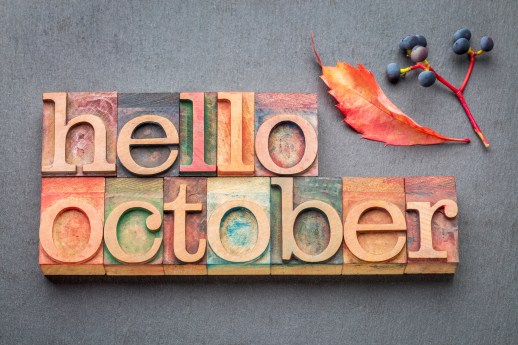
hello October word abstrtact in wood type

And now for the news!

Some highlights from this month in the world of self-publishing!

We don’t often see self-publishing referenced on Book Riot, one of the foremost book recommendation services out there on the Internet, but this week Enobong Essien really stepped up in this article on the pros, cons, and functions of a book coach. We’ve written about book coaches here on the blog before, but Essien brings a unique approach and voice to the subject. Writes Essien, “If you’re pursuing the self-publishing route, then a book coach could be the difference between a book that never makes it off the shelves to a breakaway Amazon bestseller.” ‘Book Coach’ is in itself an umbrella term of a title for a number of support positions to both traditional and self-published books, including our favorite, the publishing consultant. Essian goes on to answer the all-important question: Do *I* need a book coach? when she writes:

Self-publishing sounds like a great idea. You have full control over your vision, you don’t have to face piles of rejection letters (or more likely emails) and you can get your book out there in a matter of hours if you so wish but more likely months instead of the minimum year and a half of traditional publishing. But it can also be a very lonely road and at the end of it you’re going to want some sales to back up all your efforts, right?

A book coach is a shepherd that will guide you through the ins and outs of the whole process, highlighting both the strengths and weaknesses of your writing and keeping you on track. A good book coach will have some industry experience, even if it’s not necessarily in book coaching, and will therefore have the contacts to refer you to for book cover design, Kindle formatting, and marketing strategies. But, most importantly, they will ensure that what you put out there is a well thought out, well-written, quality book.

Concluding her article with some expert advice on how to become a book coach if being the helper rather than the helped seems more your speed, Essian’s article is an absolute must-read.

One group of authors who might make good use of a book coach or two is the academic community—or so we might assume from reading Rose Ernst’s article for The Good Men Project. While money, writes Ernst, “isn’t the reason academics should consider self-publishing, […] it’s a fantastic side benefit.” But there are more important reasons to consider going indie, Ernst notes, including the fact that academic presses really fail to reach the general audiences that a self-published work can. Self-publishing is also timely, with a much more rapid turnover from manuscript submission to distribution of the finished product, an important facet of the publishing experience for those writing in fast-moving fields where getting ahead of the curve is important to guiding the conversation. Ernst gives academics a template for getting started in publishing, with suggestions for those well-established in the academic sphere but looking to extend and widen their audience.


spa-news

As a self-publishing author, you may find it helpful to stay up-to-date on the trends and news related to the self-publishing industry.This will help you make informed decisions before, during and after the self-publishing process, which will lead to a greater self-publishing experience. To help you stay current on self-publishing topics, simply visit our blog each month to find out the hottest news. If you have other big news to share, please comment below.

icon logo self publishing advisor


Self-Publishing News: 10.1.2019

hello October word abstrtact in wood type

And now for the news!

Some highlights from this month in the world of self-publishing!

Adam Rowe of Forbes is back with yet more excellent coverage of self-publishing-adjacent news, this time with an article on the evolution of ghostwriting. For those who aren’t already read in on what ghostwriting is, the Lexico definition of a ghost writer is:

ghostwriting definition

That’s it. And loads of recognizable names in the publishing world employ ghostwriters, if only because the demand for books under their name is so high (and ghostwriters are a common occurrence in other industries, including music). Robert Ludlum, James Patterson, and even Alexandre Dumas all used ghostwriters. Many authors don’t actually exist or have never existed, and publishers will hire rotating casts of ghostwriters to assume the one continuous name; examples of this second kind of ghostwriting include Carolyn Keene (of the Nancy Drew series), Franklin Dixon (of the Hardy Boys series), and a number of other famous junior fiction “authors.” There are ethical guidelines to ghostwriting, of course (we don’t want to open the door to identity theft or libel), but ghostwriting has also become a common occurrence in self-publishing. Rowe’s article touches on this relationship. Rowe quotes Dan Gerstein:

Second, the explosion of self-publishing options and the rise of disruptive platforms like Wattpad has largely decimated the barriers to entry for a class of authors who could never get published before. These folks look at the amazing success stories of Fifty Grey Shades of Grey and The Martian — both of them self-published — and they understandably say, ‘why not me?’

Why not, indeed? Check out Rowe’s full article for more on ghostwriting.

While less flashy in title than Rowe’s article, it’s worth reminding readers near and far that Publishers Weekly is in the habit of posting monthly lists of recommended self-published books that hit shelves in the month prior. Each article also includes instructions on how self-published authors can submit their own publications for inclusion. The list of September publications includes some 97 titles, ranging from children’s books to adult nonfiction and beyond. Well worth a glance if you’re looking for reading material, and well worth a glance if you’re looking to get your own name out there, too!


spa-news

As a self-publishing author, you may find it helpful to stay up-to-date on the trends and news related to the self-publishing industry.This will help you make informed decisions before, during and after the self-publishing process, which will lead to a greater self-publishing experience. To help you stay current on self-publishing topics, simply visit our blog each month to find out the hottest news. If you have other big news to share, please comment below.

icon logo self publishing advisor

Self-Publishing News: 9.24.2019

Blue september paper banner with colorful brush strokes.

And now for the news!

Some highlights from this month in the world of self-publishing!

While the whole notion of a “side”  hustle is up for debate when it comes to self-publishing (we’ve spent quite a lot of page-space talking about the work that’s necessary to make a real success out of it here on the blog), we find ourselves smiling while reading Abdullahi Muhammed’s suggestions on Forbes this last week. Muhammed himself writes that “you may need to experiment with different eBook niches, pricing and promotion strategies before you’ll start seeing tangible profits,” after all. It may be a bit of a surprise to find self-publishing ranked equal with housesitting, renting “stuff” out (such as your parking spot or car), and crafting an online course to showcase your specific skills, but as Muhammed reminds us, we live in a gig economy now. And that means … it’s a tough world out there, and diversifying your income sources is always a good plan.

“Libraries are changing,” writes NPR affiliate Mountain West News Bureau’s Rae Ellen Bichell, and one of the ways they’re changing is in the services they’re offering to their users. They’re also helping offset the problems sparked by what Bichell calls “news deserts”:

More than 170 counties across the country have no local newspaper, and half of all counties only have one — according to a recent report from the University of North Carolina School of Media and Journalism. Other studies suggest these growing “news deserts” contribute to low voter turnout, increasing partisanship and even makes local government more expensive to taxpayers.

How do libraries play into this? At least in one town, the local library has helped support a group of local residents in starting their own news publication, one that has faced the usual challenges of a community-run endeavor: funding problems and volunteer scheduling. They hit on a solution that looks an awful lot like how many libraries secure steady funding: a special district. “And what are libraries […] if not nonpartisan, nonprofit sources of trusted information chock full of some of the nation’s best information ninjas?” One of Bichell’s interviewees “dreams of the library housing not just a staff of local journalists, but also tools for citizen journalists to cover their community, like a makerspace for news.”

How does self-publishing fit in? Bichell writes that:

In the most literal sense of content creation, a growing number of libraries host equipment for physically producing new material, like 3-D printers and machinery for self-publishing actual books. In a broader sense, Kerr adds, they’re already starting to share more characteristics with news organizations — like the libraries that have podcasting equipment and green screens available, or even the ones with plans to house a public TV channel in the same building.

The future is wild, but we can’t imagine a better future than one where libraries are looked to by all as centers for boosting information access and countering misinformation—whether we’re talking about traditionally published books, self-published books, sort-of-self-published news resources, or any number of other possibilities. We’re here for it.


spa-news

As a self-publishing author, you may find it helpful to stay up-to-date on the trends and news related to the self-publishing industry.This will help you make informed decisions before, during and after the self-publishing process, which will lead to a greater self-publishing experience. To help you stay current on self-publishing topics, simply visit our blog each month to find out the hottest news. If you have other big news to share, please comment below.

icon logo self publishing advisor

Self-Publishing News: 9.17.2019

Blue september paper banner with colorful brush strokes.

And now for the news!

Some highlights from this month in the world of self-publishing!

Justin O’Connell of Forbes brings us this fun article about the publication of viral sensation B is for Bitcoin, a picture book about cryptocurrency that’s as much for the adults who actually buy the books on behalf of their children as it is for the children themselves. This notion, that adults hold the purse-strings, was one that author Graeme Moore came to early on in the book’s formation:

“I was thinking, what would I want to read to [my niece]? I don’t want to talk about apples and boats and all of that kind of stuff. I want to talk about Bitcoin to my 2-year-old niece who is about to learn how to talk. And that’s how she’s going to learn the alphabet: A is for Altcoin, B is for Bitcoin, C is for Consensus, and D is for Decentralize.”

According to O’Connell, Moore is also an advocate for self-publishing. Writes O’Connell, “This new realm of self-publishing has made it so easy for anybody to create a book, Moore told me. So easy he says, ‘you don’t really realize how easy it is until you actually do it.'” Moore describes and O’Connell relates the process through which the book came into being, including the illustrations and upload for distribution. Moore also notes that “‘Having that excitement, realizing I could be a part of something very special, and then figuring out in what way I could contribute—this was the best way that I knew how.'” That speaks well of both him and the process, don’t you think?

This article, from Santa Barbara’s Noozhawk, serves as a timely reminder of where self-publishing came from and where it is now, with columnist Susan Miles Gulbransen guiding Noozhawk readers through the facts. She also asks an important question: “Three experienced local authors have recently written good books but skipped finding traditional publishers. Why?” She then covers her interviews with self-publishing authors Barbara Greenleaf, Hendrika DeVries and Jeanine Kitchel, each of whom was drawn to self-publishing for different reasons and through unique pathways. Together, the three authors represent a rich range of genres, styles, and approaches, with Gulbransen’s article providing a coherent and useful entry point for those looking for anecdotal evidence that they’re doing the right thing or working in a field that will welcome them.


spa-news

As a self-publishing author, you may find it helpful to stay up-to-date on the trends and news related to the self-publishing industry.This will help you make informed decisions before, during and after the self-publishing process, which will lead to a greater self-publishing experience. To help you stay current on self-publishing topics, simply visit our blog each month to find out the hottest news. If you have other big news to share, please comment below.

icon logo self publishing advisor

Self-Publishing News: 9.10.2019

Blue september paper banner with colorful brush strokes.

And now for the news!

Some highlights from this month in the world of self-publishing!

This article from Keith Pearson of MinuteHack is exactly what we needed this morning: a useful list of reminders of how best to market our self-published book during the busiest season in publishing (September to December), when sales and therefore the competition is at its peak. Pearson’s recommendations, which include lots of bits and bobs related to editing, refining one’s attempts to reach a specific audience, and advertising on various digital platforms (BookBub, Amazon, and Facebook). One particularly useful insight is that these advertisements are themselves most effective once an author has released multiple books. Writes Pearson,

Experiences will differ for every author, but I didn’t generate enough income to consider writing full-time until I released my fourth novel. If you want to make a career out of writing, it’s highly unlikely you’ll do that with just one book to your name. Therefore, the most effective way to sell more books is to write more books.

As a bestselling self-published author himself, Pearson has both the experience and the platform to know exactly what he’s talking about.

Now here’s a fascinating piece on the rise of LJ Ross, the indie author whose self-published books recently surpassed JK Rowling as the most widely read author on Amazon. Put out by Deborah Arthurs of Metro.co.uk, the article covers both Ross’s backstory as well as her recommendations for aspiring authors, which include thoughts on finding inspiration as well as one’s story in a world full of noise and distractions, as well as recommendations to keep reading, take breaks, and trust one’s instincts. On self-publishing, Ross notes that:

I chose to self-publish my first book, rejecting a traditional publishing deal because I wanted to be in control and protect the originality of my work – while a traditional publisher would have the right to change almost anything about it. […] Now that traditional barriers have come down, you can give yourself permission to be creative and put your work out there, letting readers be the judge.

As with Pearson, Ross knows what she’s talking about. And not only is Arthurs’ article interesting to read, it’s also packed full of useful points for authors to make use of as they pursue publication.


spa-news

As a self-publishing author, you may find it helpful to stay up-to-date on the trends and news related to the self-publishing industry.This will help you make informed decisions before, during and after the self-publishing process, which will lead to a greater self-publishing experience. To help you stay current on self-publishing topics, simply visit our blog each month to find out the hottest news. If you have other big news to share, please comment below.

icon logo self publishing advisor