Self-publishing has never been easier—or more competitive. Advances in technology have empowered writers to bypass traditional gatekeepers, design professional-looking covers, and upload manuscripts with a few clicks. But with that power comes a hidden challenge many authors underestimate: discoverability.
Every day, thousands of new books are added to digital storefronts. That means your masterpiece isn’t just competing with traditionally published bestsellers, but also with a tidal wave of self-published books across every genre imaginable. The question becomes: how will readers find yours?
Strong writing is a good start, but only the foundation. Self-published authors now wear multiple hats—marketer, co-designer (because presumably you’re also using the expert assistance of an actual designer, right?), strategist—all rolled into one!
Understanding how metadata works (title, subtitle, keywords), leveraging categories, building an author platform, and gathering reviews are all crucial to standing out. Every detail matters, even ones you may not initially consider—like your book’s description or cover thumbnail—can impact your visibility and conversions.
Social media, email newsletters, podcast interviews, and Amazon advertising all play a role. But none of them guarantee sales. Discoverability isn’t solved with a single post or promotion; it’s a sustained effort, requiring time, patience, and a willingness to treat your book like a long-term product—not just a launch event.
That’s why the term “self-published author” has evolved—from the lone wolf handling every task solo to the savvy creative who partners with seasoned self-publishing professionals. These experts bring decades of experience to help ensure the book you’ve poured your heart and soul into actually reaches the readers who deserve to read it.
This content was enhanced through collaboration with AI-powered creativity applications.
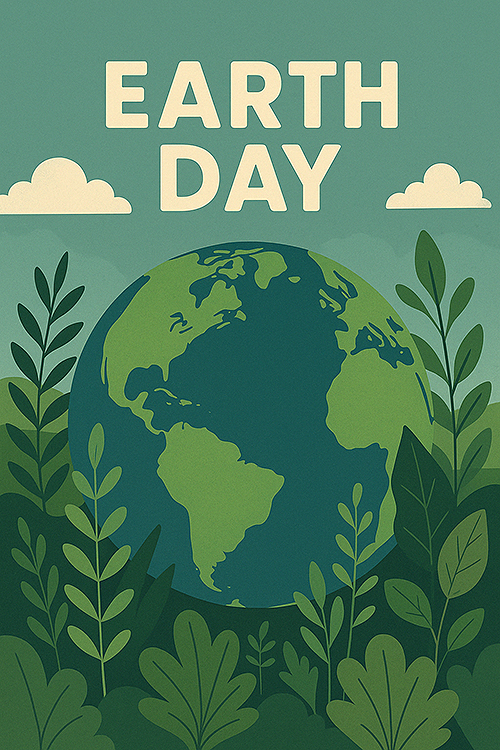
Since its inception in 1970, Earth Day, occurring each April 22, has stood as a global symbol of environmental awareness and action. What began as a response to a devastating oil spill in Santa Barbara has evolved into a worldwide movement, observed by over a billion people every year. It’s a day to reflect on the state of our planet, and more importantly, what we can each do to protect it.
While environmental advocacy has traditionally focused on large-scale industries and policies, publishing—and particularly self-publishing—has an increasingly important role to play. The tools and technologies that enable authors to bring their books to life are not just empowering from a creative standpoint—they can also be more sustainable.
Enter print-on-demand (POD) self-publishing.
Unlike traditional offset printing, which often relies on large print runs, warehousing, and mass distribution (with the inevitable waste of unsold copies), POD publishing prints books only when they’re ordered. This seemingly simple shift has a significant environmental impact. It dramatically reduces paper waste, minimizes the energy used in storage and transportation, and cuts down on the overproduction that has long defined the publishing industry.
In a world where sustainability is more than just a buzzword, POD offers a practical, effective alternative for authors and publishers who want to reduce their ecological footprint without compromising on quality or access. Fewer warehouses, fewer trucks, fewer trees lost to overstocked shelves and pulped inventory. More intention. More efficiency. More responsibility.
This year’s Earth Day arrives in a moment of both innovation and uncertainty. As climate policies evolve, government support shrinks, and industries reevaluate their impact, self-publishers have a unique opportunity to lead by example. Every decision an author makes—from the platform they choose to the way their book is produced—ripples outward. Choosing POD is one small but meaningful way to align personal storytelling with global sustainability.
So as we celebrate Earth Day, let’s also acknowledge the power of publishing—specifically, self-publishing done thoughtfully. When your story finds its audience without leaving a wake of unnecessary waste behind, that’s more than just a creative victory. It’s a conscious one.
This content was enhanced through collaboration with AI-powered creativity applications.
Even with technological advances, I still love the feel of a physical book.
Whether paperback or hardcover, I love to cozy up on the couch with paper and ink in my hands. But even with my preferences, I’d still advise that it’s a wise business decision for self-publishing authors to sell books in multiple formats.
Despite apocalyptic predictions that digital will kill paper, the physical book isn’t going away. On the contrary, paperback books remain the most popular format. That said, it’s unwise to self-publish your book in only one format.
Readers love choice more than ever, and that love of choice includes book formats: physical books, eBooks, and audiobooks.
Here are several reasons why you should publish your book in multiple formats.
Some formats work better than others for specific markets.
If you’re a romance novelist and self-publish your book only in paperback, you’re more likely to fail. Why? Many romance readers prefer eBooks over paperback, so you’re leaving sales on the table if you’re not getting your stories digital.
Conversely, children’s books fare better in paper formats, so a children’s book in only eBook form may not be enough. Format preferences vary wildly on genre and category, so you’ll glean a wealth of market research by investigating the format most of your potential readers are buying.
But even when one format is more popular than another, it’s wise to publish in multiple formats. Related to the above, many romance readers still prefer paper to electronic—airport stands for romance novels still exist! So, multiple options are crucial to reaching your potential audience.
You increase the number of platforms you can sell your book on.
Not every bookseller sells books in every format. If you self-publish your book only in the .mobi eBook format, you’re practically limited to selling through Amazon’s Kindle section.
While Amazon is the most prominent storefront for self-publishing authors, you can do better.
If you take your manuscript’s file and export it to .epub, you open up most of the rest of the eBook market. You make it possible to sell your book on Barnes & Noble, Apple Books, Kobo, Google Play, and more. Some retailers even sell books in .pdf form.
If you record your book as an audiobook, you can play it in audiobook storefronts, such as Audible, iTunes, Google Audiobooks, Nook Audiobooks, or Kobo Audiobooks.
And if you release your book in physical form? You can sell on most of the above retailers, like Amazon, and even keep open the chance to see your book at a physical bookstore. Sounds exciting, right?
You can get the best of both worlds with exclusivity and availability.
Some retailers offer the option to sell your book exclusively on their storefront. In exchange, you’ll often get better royalties and priority in promotions and algorithmic placement. The downside is that exclusivity commits you to only one storefront. So, if you sign up for Amazon’s KDP Select, you can’t also sell your eBook with Barnes & Noble.
However, exclusivity deals usually only apply to one format. So, you could decide to give KDP Select eBook exclusivity but then sell your book in physical and audiobook format elsewhere. You can mix and match exclusivity deals and benefit from the perks of exclusivity and the availability of multiple formats.
You increase your book’s accessibility.
Not all book readers can read a physical book. For example, some readers are visually impaired. Other accessibility considerations include learning disabilities such as dyslexia, limits in motor skills, and language ability.
Fortunately, a self-publishing author has all the tools to make an accessible book. Audiobooks are an excellent alternative for accessibility. Of course, eBooks are also beneficial in their adaptability. With an e-reader, a reader can increase the text size, change the font, look up dictionary definitions, or even enable text-to-speech.
But when formatting eBooks, you must follow accessibility guidelines. E-readers need a properly formatted file to parse text for the user. When you format your book with accessibility, your product looks more professional, and more readers can enjoy your work.
Bonus Reason: For another kind of accessibility, you can get your self-published books into libraries. This is especially easy with digital formats, and you can use book distribution services to list your book on digital lending services like OverDrive and Hoopla. In addition, the libraries that you license your book to will financially compensate you without the reader having to pay.
You can even sell readers the same book more than once in different formats
A number of retailers make it enticing to buy in two or more formats. For some Kindle eBooks, Amazon offers the option to “add Audible narration,” often at a discount. Through Whispersync technology, readers can switch between visual reading and audiobook reading without losing their place.
You can even set it up so that if a reader buys the physical version, the reader can also buy the eBook version for cheaper or even get it for free. This bundling technique significantly increases goodwill with your readers and entices them to buy your next book.
Closing
The case is strong: Multiple book formats are great for your self-publishing businessand the culture of reading. Prepare your manuscript with different formats, and you’ll be a step closer to success!
I’ll turn it over to you: What book formats do you prefer? What factors influence the format you get your books in?
Like many physical locations, public libraries were massively affected by the COVID-19 pandemic. In the pandemic’s first year alone (2020), the American Library Association (ALA) reported significant impacts on libraries by the coronavirus.
While the ALA has yet to release a report on year 2 (2021), they’re likely to report many continuations of trends started by the pandemic’s beginning: a mass pivot from in-person services to virtual, a significant increase in library use because of those virtual services, lots of concerns about reopening and reclosing between virus waves, and the turmoil of book banning.
In the face of much strife, supporting libraries is more important than ever. On top of book lending, libraries assist communities by providing education, tech access, literacy, meals for kids, community building, and even vaccine clinics.
If you’re a self-publishing author, you may wonder how you can help libraries. Here are several ways you can do so, whether as an author or a patron of your local library.
Offer copies of your book to libraries, both physical and electronic.
Libraries have varying policies for acquiring books, so do your research to maximize your chances of getting your book into collections. Greenhorn authors will have the best luck reaching out to local libraries due to being regional writers.
If you do submit your physical editions for consideration, make sure your titles are available by a wholesaler. Libraries usually acquire their copies through wholesalers rather than retailers, so they can expand their collections with the least amount of money while still supporting authors and publishers.
Even if you have no luck with a physical copy, digital lending is another trend influenced by the pandemic. If you use an eBook distributor to publish your book to multiple sites, then you likely have the capability to submit your book to eBook lending services such as Overdrive. In addition, with digital books, libraries don’t have to worry about shelf space, so they’re more likely to agree to acquire.
By making your book available to libraries, you can reach more readers who may otherwise not be able to read your book, all while expanding your library’s collection.
Offer to host book events. Libraries love featuring local authors. By offering to do an event, you give the library’s patrons another reason to visit. This is especially doable if you can demonstrate that you can bring in your readers.
A book signing is the most obvious event, but other options exist. For example, if you’re a children’s author, you can host a story time for the library’s youngest patrons. If your book is nonfiction, you can host a class based on your book’s subject. Your novel could become a candidate for a book club. And if you collaborate with other local authors, you could cohost a panel together.
And because of increased tech services, it doesn’t have to be an in-person event: libraries may be willing to host you for a virtual seminar, which allows the possibility to reach even more people.
Support public libraries politically.
Public libraries rely primarily on funding from their local and county governments. Vote in municipal elections to support propositions and referendums that raise library revenue.
Pay attention to your local government’s budgetary proposals and give your feedback so that they opt for funding increases, not budget cuts on libraries. If your local libraries are underfunded, consider even campaigning for increased funding.
Also, stand up for libraries when they’re threatened with book bans and censorship.
Visit libraries and use their services.
Librarians want you to use the library! So, borrow books, attend on-site and online events, take classes, volunteer your time and efforts, buy old copies from book drives, and more.
Libraries are made to be pillars of their communities. By benefiting from a library’s services, you’re fulfilling its purpose. You also demonstrate the library’s benefits in the process, which only contribute to libraries as a lasting institution.
Remember, no matter your status as a writer, the best way to support libraries is through your role as a member of its community.
The COVID-19 pandemic greatly affected the workplace culture of book publishers, as discussed at the U.S. Book Show and one of their panels, “The Pandemic and Publishing: How Has COVID Changed the Industry for Good?”
In “Pandemic and Publishing,” the panelists discussed how social distancing measures forced publishers to work fully remote and reconfigure workplaces for a virtual setting, such as flocking to online chat applications. They also touched upon how publishing companies have strived to preserve mentorship and workplace collaboration while sharing more profits with employees.
Hosted last May, the panel featured the conversations of four industry professionals: literary agent Monica Odom and founder of Odom Media Management, publisher Julia Sommerfeld (Amazon), company president Jennifer Enderlin (St. Martin’s Publishing Group), and literary agent Anjali Singh (Ayesha Pande Literary). Paul Bogaards of Bogaards Public Relations moderated the panel.
This panel was held at the 2nd annual U.S. Book Show. Launched by Publishers Weekly in 2021, this conference’s virtual setting self-demonstrates the impact of the pandemic on the publishing industry.
What this means for self-publishing authors
It’s tempting to dismiss the viewpoints of traditional publishing professionals. Yet, their worries and insights still relate to writers striving to make a career out of self-publishing books.
In a sense, the move to work at home is validation for self-publishers. For many large publishers, 2020 was the first time these companies worked fully remote, even though they’ve existed for decades—if not for more than a century. Meanwhile, full remote has been the reality for self-publishers for years, not to mention many smaller presses.
Even with the rough transition, traditional publishing could operate remotely and take advantage of a high-tide year for book sales. This showcases how there’s nothing special about the traditional publishing model that a self-published author cannot follow. Singh recognized this as such, stating, “one of the good things to come out of the pandemic was this recognition that people can be at home and actually be very productive.”
Singh also commented on how prepandemic corporations were stigmatizing certain groups of employees, especially parents who wanted the flexibility of working at home while caring for their children.
The equalizing potential of remote work is another issue the pandemic has thrown in relief. Beside from meeting parental needs, work from home also makes publishing accessible across geography, ability, and social and economic classes. This is especially relevant to widening the publishing field beyond New York City, the central hub for the top trade book publishers.
Remote work also opens more opportunities for collaboration. Self-publishers and other remote workers are more empowered to work with others worldwide. For example, you could hire an editor on the East Coast, a proofreader on the West Coast, and even a book cover designer overseas.
It’s also noteworthy how Enderlin’s St. Martin’s gave out bonuses to employees at all levels of the company without even posting a press release. Publishers are more generous to their workers in light of more employees leaving their jobs in “the Great Resignation,” in tandem with months of new hires.
The pandemic has energized workers in all industries to be bolder about taking on new jobs, but it’s an especially salient call to action for self-publishers. If publishing books is your dream, you can feel more emboldened to change careers and spend more time writing and self-publishing, all while feeling assured that you can reacquire a full-time job if necessary.
However, the panelists pointed out the artifice of remote work. On online communication, Sommerfeld remarked that “the team is always pinging each other and trying to capture that casual conversation. We’re missing the kind of osmosis that happens when we’re all together.”
Self-publishers aren’t immune to this want for “osmosis.” Even for authors, editors, and other professionals who’ve never worked in the office, it’s normal to desire more in-person connections.
To compensate for the distancing effects of online relationships, look for opportunities to meet fellow writers and publishers in real life. Look up local author and publisher groups in your area, and make space on your calendar to attend events.
If necessary, coordinate these meetups and events yourself. Take advantage of the summer by prioritizing outdoor locations, such as parks and plazas, so you can enjoy the weather while reducing the risks of coronavirus’s volatility.
And above all, publishers in all parts of the industry should keep reminding themselves that the only constant is change. It may well be that the pandemic will be a uniquely seismic event for publishing, yet publishers will remain nimble by practicing how to adapt to future industry changes.





 Self Publishing Advisor