Conversations: 7/21/2017

IT’S JULY!

TIME TO CELEBRATE OUR FREEDOM TO WRITE! III

Long ago I figured out that I needed examples of whatever I was attempting to learn. Of course, my algebra 101 teacher was thrilled to give me all the examples I could fit into my folder. With her help, I quickly concluded that “higher math” was not the path that would lead me into a satisfying career. However, the reading assignments (examples of excellent writing) given to me by English and History professors definitely opened new horizons for me. Each book gave me the FREEDOM to safely explore eras of war, famine, faith and pioneer courage—and imagine what my life might have been like had I lived in those times.  So, today, I offer you examples of excellent writing in the genres of Memoir and Fiction (action). These books are from self-published authors who took advantage of their FREEDOM to publish when, where and how they wanted—giving us fresh perspectives that can enhance our own book projects.

Larry Clayton tells us that his book My Memories Are My Testimony is “the true tale omy memories are my testimony larry claytonf a working man from a working-class family who never forgot from where he came,” including his “youthful misadventures that involved drugs, shoplifting, and a little bit of hustle.”  However, at some point in his young life he realized he had the FREEDOM to choose his next steps which took him into an Air Force career followed by his adventures in the corporate world. This inspirational and compelling memoir is proof that a man’s life need not be defined by his beginnings. Proof that the freedoms we enjoy—written into the Declaration of Independence—are alive and well today.
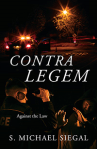
contra legem s michael siegalS. Michale Siegal is another amazing self-published author who has now produced his second fiction novel: Contra Legem. After retiring from nearly thirty-six years in law enforcement, Siegal has dedicated this novel to all of the men and women behind the badge who daily serve and protect our communities.

His main character, Officer Harold Cohen, has become a police officer, a very nontraditional occupation for Jewish men and women. So even though the scenarios of the story are fiction, Siegal’s personal life experiences and education bring significance and value to each chapter. This is especially true as Officer Cohen deals with the concerns of a mother who does not believe Jewish boys should become policemen, but would rather he find success as a minister, doctor, lawyer or entrepreneur. This highly accurate portrayal of the day-to-day life of a police officer demonstrates the balance they must find between a person’s heart desires, family and career—a career that literally has criminals aiming guns in his direction.

These two authors are, indeed, excellent examples of writers who have the purpose and desire to publish. They are following in the footsteps of highly successful “independent authors” such as Irma Rombauer who printed her book, The Joy of Cooking, in 1931 with A.C. Clayton, a company that had never printed a book before. Both the author and those company owners were practicing their FREEDOM to print want they wanted published; and such independent thinking remains “alive and well” with authors and self-publishing houses this very day. I am blessed to be a part of this Freedom Legacy, and I hope you are—or will be—too. ⚓︎


Royalene

ABOUT ROYALENE DOYLE: Royalene has been writing something since before kindergarten days and continues to love the process. Through her small business—DOYLE WRITING SERVICES—she brings more than 40 years of writing experience to authors who need “just a little assistance” with completing their projects. This is a nice fit as she develops these blogs for Outskirts Press (OP) a leading self-publisher, and occasionally accepts a ghostwriting project from one of their clients. Her recent book release (with OP) titled FIREPROOF PROVERBS, A Writer’s Study of Words, is already receiving excellent reviews including several professional writer’s endorsements given on the book’s back cover.
Royalene’s writing experience grew through a wide variety of positions from Office Manager and Administrative Assistant to Teacher of Literature and Advanced Writing courses and editor/writer for an International Christian ministry. Her willingness to listen to struggling authors, learn their goals and expectations and discern their writing voice has brought many manuscripts into the published books arena.

Conversations: 7/14/2017

IT’S JULY!

TIME TO CELEBRATE OUR FREEDOM TO WRITE! II

Once upon a time there was a teacher. Her “student-teaching experience” sent her to a high school where she was assigned to a class of “low-performing students.” Walking into that classroom was a moment mixed with fear, courage and hope. She already knew that one student had allegedly threatened a previous teacher with a gun; and didn’t know what to expect from the others. Yet, from that very first day, she saw potential in each and every student. Her dream to “be a teacher” became her hope to help them find a FREEDOM they never dreamed possible—through writing!

The next school year—now a full teacher—she was assigned a sophomore class. That was the year of student “walk-out” protests because of political unrest. She listened to her students, and asked them to keep journals and write about the similarities of the “family feuds” they experienced at home or knew of in gangs to the families of Romeo and Juliet. She also gave reading assignments of books written by other teenagers in times of war: Diary of a Young Girl by Ann Frank, Zkata’s Diary by Zlata Filipović and Night by Elie Wiesel. Writing these journals helped many of the students as they anonymously passed copies of pages around the classroom and shared their thoughts. Slowly, these students, who once refused to even speak to someone who looked different, became like a family.

You may have heard of this woman—teacher, encourager, speaker, writer. Her name is Erin Gurwell, and she and her students created the book, The Freedom Writers Diary: How a Teacher and 150 Teens Used Writing to Change Themselves and the World Around Them. The book was published in 1999 and remains a “go to” assignment for many teachers, today. I must admit that when I read book, some of the words made me feel uncomfortable; yet, I learned much about the circumstances of these wonderful young people. The movie Freedom Writers was released in 2007. And, there is now the Freedom Writers Foundation that encourages the Freedom Writers method of writing around the world.

freedom writers erin gruwell

OUR COUNTRY, and that Declaration of Independence document, set the stage for Erin Gurwell to dream of and become an amazing teacher more than 200 years later. Her education was filled with the writings of professors, poets, novelists and memoir authors. And she—like the American Revolution patriots—became an unforgettable example of how hard work, courage and the spirit of determination can change lives, and writing was the main tool she used.

Are you an out of the box thinker and writer like Erin Gurwell and the authors of the Declaration of Independence? If you answered, “No, not really,” please consider the following:

  • Do you enjoy brainstorming plot ideas? I have a neighbor who loves to read mysteries. So when my plot runs into a wall, I sit with her a while, and ask what she likes best about the plot of the book she’s reading. Those 30-60 minutes kick my brain into gear and my own plot comes to life again.
  • Do you like to re-write the endings of your favorite TV shows or movies? My husband (who has done some acting) and I really enjoy discussing “how we’d write that story.” Almost without exception those ideas find their way into my notes for an article, short story or novel.
  • Are you learning new things? Each and every time we research background information for our stories we are stepping out of the box of our genre and into the realm of new ideas.

Without exception, every writer I’ve ever met and/or worked with has enhanced my own abilities and given me new ideas—enriching my personal freedom to write new and better works. May we all appreciate and grow in our FREEDOM WRITING, and FREEDOM PUBLISHING, too! ⚓︎


Royalene

ABOUT ROYALENE DOYLE: Royalene has been writing something since before kindergarten days and continues to love the process. Through her small business—DOYLE WRITING SERVICES—she brings more than 40 years of writing experience to authors who need “just a little assistance” with completing their projects. This is a nice fit as she develops these blogs for Outskirts Press (OP) a leading self-publisher, and occasionally accepts a ghostwriting project from one of their clients. Her recent book release (with OP) titled FIREPROOF PROVERBS, A Writer’s Study of Words, is already receiving excellent reviews including several professional writer’s endorsements given on the book’s back cover.
Royalene’s writing experience grew through a wide variety of positions from Office Manager and Administrative Assistant to Teacher of Literature and Advanced Writing courses and editor/writer for an International Christian ministry. Her willingness to listen to struggling authors, learn their goals and expectations and discern their writing voice has brought many manuscripts into the published books arena.

Conversations: 7/7/2017

IT’S JULY!

TIME TO CELEBRATE OUR FREEDOM TO WRITE!

WOULD YOU give up your freedom—your physical freedom—if you were threatened with imprisonment or death if you kept writing and continued to publish your work? I’ve often wondered if I have the stamina and courage it takes to make such a commitment. I’ve also wondered about the writers of our own Declaration of Independence who risked not only their lives (and the lives of their families and friends) in penning of those words.

In November of 1775, when the Continental Congress was attempting to negotiate “fair terms” with “the Homeland,” Thomas Jefferson wrote this statement: Believe me, dear Sir: there is not in the British empire a man who more cordially loves a union with Great Britain than I do. But, by the God that made me, I will cease to exist before I yield to a connection on such terms as the British Parliament proposes; and in this, I think I speak the sentiments of America.

Did he know those were “fightin’ words?” Probably. There had already been fighting in the city streets and countryside (Boston Tea Party, 1773), and there would be more because British Commanders were ordered to make it plain that Parliament was the “supreme authority” and anything that Parliament did was constitutional. However our colony ancestors had developed different ideas—that citizens had “fundamental rights” that no government could violate, not even Parliament.

So it was that by 1774, writers, such as Samuel Adams, James Wilson and Thomas Jefferson produced documents stating that the colonies, with their own legislatures, were connected to the rest of the “empire” ONLY through their allegiance to the Crown.

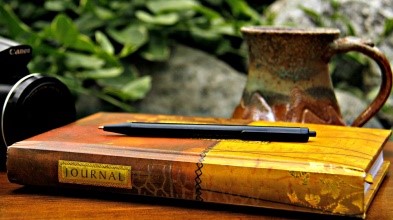
What would have happened if WRITERS—men and women whose skills and abilities allowed them to “wordsmith” the thoughts of a nation—had not accepted their role? What would have happened if these writers refused to listen to the hopes of Freedom that drove their families across the ocean? Only about half the women colonists were able to write, however, they spoke loudly through Abigail Adams (wife of John Adams) who sent him a letter while he attended the Second Continental Congress. “Remember the ladies” while you’re shaping this new nation, she wrote. If you don’t “we are determined to foment a rebellion and will not hold ourselves bound by any laws in which we have no voice or representation.”journal mug coffee

Thomas Paine agreed with her about having a voice and published his Common Sense pamphlet (50-pages) that urged Americans to fight not only against taxation but for their independence. It sold more than half-a-million copies within a few months’ time.

The legacy we writers hold in our hands and hearts, as we develop the genres we’re drawn to, is as close to home as our living rooms and the pages we read to our children and as far-reaching as future generations will carry it—whatever format that might look like. With all my heart, I encourage you to write, and publish! You are the only person on this planet who can produce the works that are spinning in your thoughts.

The world is waiting. ⚓︎


Royalene

ABOUT ROYALENE DOYLE: Royalene has been writing something since before kindergarten days and continues to love the process. Through her small business—DOYLE WRITING SERVICES—she brings more than 40 years of writing experience to authors who need “just a little assistance” with completing their projects. This is a nice fit as she develops these blogs for Outskirts Press (OP) a leading self-publisher, and occasionally accepts a ghostwriting project from one of their clients. Her recent book release (with OP) titled FIREPROOF PROVERBS, A Writer’s Study of Words, is already receiving excellent reviews including several professional writer’s endorsements given on the book’s back cover.
Royalene’s writing experience grew through a wide variety of positions from Office Manager and Administrative Assistant to Teacher of Literature and Advanced Writing courses and editor/writer for an International Christian ministry. Her willingness to listen to struggling authors, learn their goals and expectations and discern their writing voice has brought many manuscripts into the published books arena.

Conversations: 6/30/2017

DON’T FORGET AUTOBIOGRAPHIES AND MEMOIRS!

Just yesterday, a neighbor asked me a few questions about the “easy way” to pull the time-frames together as he writes his Memoir. Then he wondered: “Is a memoir the same as an autobiography?”

There was a time in my early writing career when these two categories were quite different, the memoir focusing on one brief period of time in someone’s life and the autobiography creating as complete a picture (from birth to present time) of a living person’s whole life. However, today, all the major bookstores I visit combine these two genres in one area: Autobiographies. So does Amazon, even to the point of blurring the lines between all three classifications (biographies, autobiographies and memoirs).

However, as I did my research for this month’s blogs, I came across an interesting quote from the famous writer Gore Vidal who wrote two personal memoirs: “A memoir is how one remembers one’s own life, while an autobiography is history, requiring research, dates, facts double-checked.” I like the clarity of that definition, and plan to use it when talking with future clients. So it is that I’ve given myself a brief bullet point outline and will share it with you today.

The Memoir:

  • Written in 1st person—the “I did this” perspective.
  • Uses less formal language/word choices.
  • Focuses on one (or two) main events/times in a person’s life, but can include birth date and short paragraphs of early memories.
  • Speaks from the more emotional perspective—how they felt when events occurred.
  • Dates/places may not be exact, such as: I was about 33 when I began this career.

The Autobiography:

  • Although “written by” the individual person(s), it often requires the assistance of a “collaborative writer.” Superb example: Having Our Say by Sarah and Elizabeth Delany with Amy Hill Hearth (Amazon lists this as a biography when it is clearly an autobiography. Grrr)
  • Offers their life history from birth to present day.
  • Written with detailed chronology facts of personal, political and/or world events, places, and the people they met and interacted with along the way.
  • Authors must also consider who they are writing this book for—their audience—and what aspect of their life is most useful to those Readers.

When I was teaching in a school setting (versus my workshops today), I loved to lunch with the teachers of World History and American History. These inspired people were always telling me about the latest autobiography (or biography) they’d discovered. Of course, the first autobiography they assign to students is Ann Frank, The Diary of a Young Girl. “These books not only reveal historic events,” one teacher told me, “they demonstrate the strength people have to survive great tribulations in life which shows our students that they, too, can survive life’s challenges.”

the diary of anne frank

SO…have you added a bunch of books to your resources bookshelves this month? I hope you’ve selected a few. The individuals you’ll be reading about will, indeed, enlighten you and the author’s writing techniques will be instructive, too. Take time to talk with your local librarian about these genres and the people (subjects) who might be most interesting to you—who have lived in a time period you’re intrigued by or succeeded in a career that is appealing to you.

Then…once you’re comfortable with the flow of these books, look around for potential clients. I’ve worked with a ninety-year-old who could tell me his life stories all day long and barely need a break for lunch. And, I’ve worked with a gentleman who gave me several pages he started writing “years ago,” then gave me additional outline points, but passed away before we could meet again. Yes, being the “writing assistant” to people seeking help with these genre categories of writing can be an emotional rollercoaster. Yet, I wouldn’t trade those days/months for anything. My writing skills and abilities have been sharpened by the experiences and so will yours. ⚓︎


Royalene

ABOUT ROYALENE DOYLE: Royalene has been writing something since before kindergarten days and continues to love the process. Through her small business—DOYLE WRITING SERVICES—she brings more than 40 years of writing experience to authors who need “just a little assistance” with completing their projects. This is a nice fit as she develops these blogs for Outskirts Press (OP) a leading self-publisher, and occasionally accepts a ghostwriting project from one of their clients. Her recent book release (with OP) titled FIREPROOF PROVERBS, A Writer’s Study of Words, is already receiving excellent reviews including several professional writer’s endorsements given on the book’s back cover.
Royalene’s writing experience grew through a wide variety of positions from Office Manager and Administrative Assistant to Teacher of Literature and Advanced Writing courses and editor/writer for an International Christian ministry. Her willingness to listen to struggling authors, learn their goals and expectations and discern their writing voice has brought many manuscripts into the published books arena.

Conversations: 6/23/2017

WRITE THEIR STORIES:

Developing the Biography, Part IV

STUDY your favorite biographies! These authors have walked this path before us and have much to teach us. Plus, their works are useful illustrations of both the art of biography and adjusted techniques of storytelling. Just a few days ago I received a marvelous little book on the life of Jules Verne. It is a library hardcover edition for “young readers” age eight to twelve. It is, for me, a very concise outline of how to write a biography—one that is quickly accessible and understandable for any age or writing community interested in writing biographies. The title is: Who Was Jules Verne? by James Buckley Jr. (There is a whole series that start with WHO WAS. I’m certain you’ll find one or more to enjoy.)

However, don’t forget the biography classics. Included in my collection is author Jean Fagan Yellin’s narrative biography of Harriet Jacobs: Incidents in the Life of a Slave Girl. For writers who wish to develop realism in their novels about the early history of America, or any biography attached to this time period, this book is essential reading. Yellin is admired for her “groundbreaking scholarship” in the writing of this book because it “restores a life whose sorrows and triumphs reflect the history of the nineteenth century.” Can you even imagine hearing your words acclaimed as bringing someone’s life back to life?

Although the majority of the biographies/memoirs that I may write will, most likely, never reach the acclaim that this book has, I approach the writing of it as if it will—as if this person is the most important person on the planet.

One of my all-time favorite writers is C. S. Lewis and until recently there has been only one highly acclaimed biography of his life: JACK: A life of C. S. Lewis by George Sayer. Within these pages are found instructive information nuggets about writing on many levels. However, recently, a new book has arrived on the scene titled: C. S. Lewis and the Art of Writing by Corey Latta. It is already being heralded as “…a treasure trove of eminently practical advice for the aspiring writer, and fills readers with a poignant sense of the nobility of the writing vocation.” It is also shorter than any of the others I’ve seen about Lewis! I can hardly wait to get my hands on a copy!

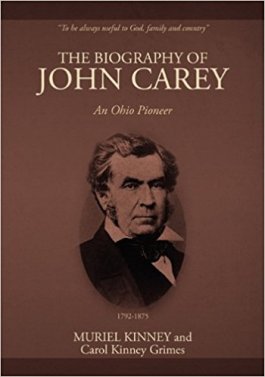
biography of john carey muriel kinney and carol kinney grimes

Each of the four books mentioned above will offer writers unique insights to build our own biography writing skills. And yet, I offer you one more to bring into your resources collection. The title is: The Biography of John Carey by Muriel Kinney and Carol Kinney Grimes. These ladies became passionate about their family ancestry—the heritage they are carrying forward. Because they wanted to honor their grandfather, they’ve written the story of one of America’s pioneers and, in doing so, offer readers detailed history lessons we’d never find in a textbook.

This is what I love about well written biographies—the blend of storytelling and well-researched historic facts. This is how a whole lot of other Readers also learn history—as they take our books home!

What I hope you’ll take away with you today is that Biography writing IS FUN! Writing within this one genre we can enjoy the writing techniques of other genres such as: children/young adult books, American (or any country’s) ancient to current history, books on “the writing life,” and personal genealogy. Who is the person who has captured your interests? What questions would you ask them if you stepped into a Starbucks and saw them sitting there? Make a list of people and questions today! Contact your local librarian to find out what has already been written about that person. Your approach to their story will be distinctive. It needs to be written and published! ⚓︎


Royalene

ABOUT ROYALENE DOYLE: Royalene has been writing something since before kindergarten days and continues to love the process. Through her small business—DOYLE WRITING SERVICES—she brings more than 40 years of writing experience to authors who need “just a little assistance” with completing their projects. This is a nice fit as she develops these blogs for Outskirts Press (OP) a leading self-publisher, and occasionally accepts a ghostwriting project from one of their clients. Her recent book release (with OP) titled FIREPROOF PROVERBS, A Writer’s Study of Words, is already receiving excellent reviews including several professional writer’s endorsements given on the book’s back cover.
Royalene’s writing experience grew through a wide variety of positions from Office Manager and Administrative Assistant to Teacher of Literature and Advanced Writing courses and editor/writer for an International Christian ministry. Her willingness to listen to struggling authors, learn their goals and expectations and discern their writing voice has brought many manuscripts into the published books arena.