Tim Ferriss, The 4-hour Work Week, Self-publishing & the importance of your book title

How did Tim Ferriss come upon the title for his recent bestselling book, The 4-Hour Body? Not at all by chance of creativity. He began in reverse, by asking. He ended up surveying online some 4,000 readers through three separate waves in the effort to discover what combination of words readers found compelling. And then he tested the title through online search engine performance – what we call SEO.

You may also be familiar with his epic bestseller, The 4-Hour Workweek. With this book he tested a number of titles directly through Google Adwords, playing with the performance of various keywords related to the book (such as “world travel” and “401K”). The ads displayed the title of the book as the headline and the subtitle as the ad text. Then he checked the clickthroughs to see which combination generated the most interest based on what Google users provided in actual searches.

In today’s book marketing environment, the importance of your book title goes a beyond simple abstract creativity. Not an internet or SEO expert? No sweat, that is what full-service self-publishing is here to help with.

Join us on Facebook!

Publish-L.com for Self Published Authors

Publish-L is an active online publishing email discussion taking place now at http://www.publish-l.com. It caters to published and self-publishing authors.

The purpose of Publish-L is to provide a forum for the exchange of ideas and information about publishing and marketing books and related materials.

The good news is, as a self-published author and reader of this blog, you have some very valuable stuff to share with the people on that list. You might even say you are a marketing expert. The other folks on that list will be drawn to you because of the advice and tactics you can share. Social Media is great, free publicity.

Just be sure to sign every email you write and discussion you post with information about your book, including a link to your webpage. After all, helping others is fun, but so is selling some books.

See you there.


Share this Post


Using an Ebook Edition to Promote Your Self-published Book

Ebooks are bigger than ever, with recent news of Borders jumping into the mix this month. Aside from actually selling your ebook, did you know that an ebook edition of your self-published book can actually work into the promotion of your hard copy book.

Its no secret that the distribution of an ebook is quicker and more affordable. With your electronic ebook file, you can literally sell the same “thing” over and over again. By giving people a choice between your ebook and your paperback, you offer them two different price points. You can even publish portions of your ebook as a ‘teaser’ to promote your hardcopy book, selling one to literally sell the other.

If you don’t have an ebook edition, there is no better time than now to get one. If you have an ebook edition of your book, perhaps you are already using it to promote your hard copy version on places like Amazon’s Kindle Store, iPad, or any number of other new distribution options.


Share this Post

Self-publishing Book Pricing and Trade Discount

Like many you’re probably considering the upfront costs advertised by the various self-publishing options available. Pricing is a critical step in self-publishing, and goes much deeper that how much it costs to simply have your book published. Just as writers consider the cost to value of publishers, so will readers when deciding whether (and where) to buy your book. “Trade Discount” plays in important role in your book’s pricing. What is it and what should you know about it?

Trade discount is the percentage of your retail price that you offer to the publishing trade for distributing your book to retailers. The “publishing trade” consists of wholesalers, distributors, and retailers. Instead, everyone involved with your book after the publisher all the way to the reader falls into the “publishing trade” circle, and they all take a piece of the trade discount.

Obviously, the larger the trade discount, the more money there is to split up among the parties involved. Standard trade discounts have ranged from 50% – 70%.

Most publishing companies do not offer any information about their trade discounting policies up-front, nor do they give the author any say in the matter. Ask your publisher. And make sure you to keep 100% of your profits.

Depending on your distribution goals, look for the flexibility to establish a trade discount from 0% – 55%. A 55% trade discount will generally result in an industry standard 40% retail margin, which is what a typical book retailer seeks when considering whether or not to order a book. So in addition to availability on Amazon.com and Barnes & Noble’s websites among other online sales channels, your book can be published at the retail margin that bookstores and chains are looking for.


Share this Post


More on Book Titles for self-publishing authors

How effective is your title? Did you know that a professional, optimized book title can, in some cases, mean literally thousands of extra dollars in book sales? We recently covered book title news and the importance of your cover in your book marketing efforts.

You may still be considering among a number of book titles, even if your manuscript is near complete or even complete. Or, maybe you’ve had the title of your book in your mind for a long time, even before you began writing. In either case, let’s take a closer look at the importance of book titles.

People do judge books by the cover, and that includes the book title. Effective book titles can sometimes mean the difference between lackluster sales and a very successful self-published book, especially in today’s marketplace.

Amazon is by far the largest book marketplace, and as we know, it an exclusively online retailer. The fact is more and more readers are finding products online, and books are no exception. With that dynamic it is increasingly important that your book title be rich with keywords and key phrases – search terms that potential customers might type into Amazon & Google when looking for information on the topic of your book.

This is particularly true for non-fiction books, but fiction and even poetry can benefit from a well chosen title and subtitle. You may be thinking wait a minute, I don’t want to dilute the artistic value of my book with an optimized book title. The good news is that you don’t really have to. Online sales don’t require that your subtitle be included in your actual cover design. However, it is valuable for them to be included in the distribution information for your book in places like online databases and the copyright registration. This helps with search engine optimization.

Here is what we suggest you consider in selecting your book title and subtitle:

  • Consider its originality and/or uniqueness
  • Review your title suggestion and synopsis to compile a list of keywords and/or phrases for your book
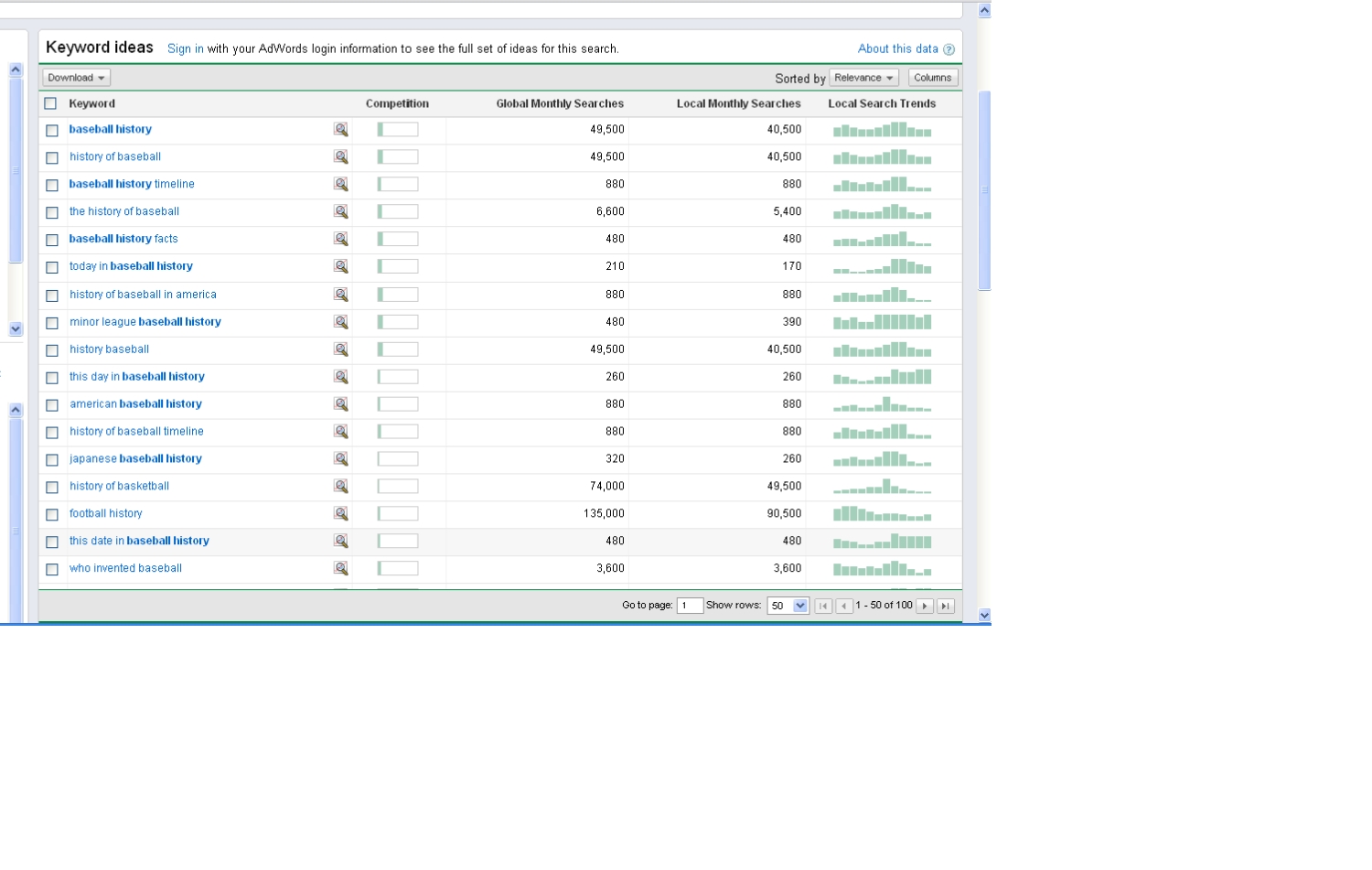
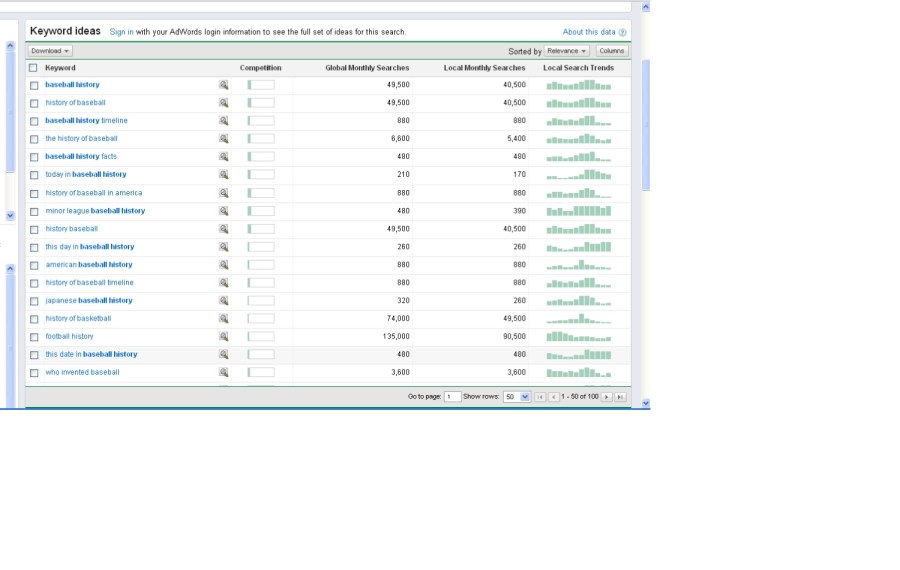
  • Search and Google databases for other previously published books with titles similar to yours. Here is a screen shot of a simple Google search result on “Baseball History” for example (click image to view regular format in your browser:

    Share this Post