Bestselling Author and the BIG Move to Self-Publishing

Ten years after the success of his debut novel, bestselling author of “Kidnapped,” AJ Davidson, has made the switch to independent self-publishing. With the availability of full-service publishing options on the rise and the high profile moves of established authors to independent publishing, AJ discusses the increasing appeal of this new model for traditionally published authors.

Q: What was the deciding factor for moving to independent publishing?

A: Initially I wasn’t entirely sure if Indie publishing was right for me. The deciding factor was how traditional publishers seem to be narrowing the range of their lists with each passing year. I recently compared 1970s best sellers with the 2010 best sellers and was staggered to realize how many of the chart-topping writers of yesteryear are still there four decades later. Kudos to the authors for consistency, but the dearth of new names is a sad indictment for the publishing world. The smaller presses are more adventurous, but more often than not the marketing will be left to the author, and if that’s the case, then Indie publishing is the way to go.

Q: Now that you manage the marketing independently as well as the publishing, do you find it difficult to switch back and forth between writing and marketing?

A: I have found the change in my writing to be a dramatic one. In the past I was the only one I had to please with a piece of prose. Now I’m much more aware of the readers’ attitudes. As I write I find that I ask myself constantly how the readers would react. This transformation is due largely to the immediacy of Indie publishing. With a traditionally published book there can be years between writing and publication. Your agent might suggest minor changes. It may then take time for the manuscript to be accepted. The publishers will nominate a slot, often a year or more in the future. Libel lawyers may have to cast an eye over it. Copy and proof editors will refine the work. Artwork will be done. By the time the book hit the shops, the writer will have moved on, often immersed in another project. I often felt a sense of detachment from a book by the time it was published.

Q: The list of well-known authors that are moving toward Independent publishing structures continues to grow. Do you think this is opening up possibilities for less established authors or monopolizing what was formerly their only option?

A: I’m optimistic about the future of Indie publishing and would buy shares in Smashwords faster than in Barnes & Noble. The fate of the traditional bookstore will be down to specialization. I doubt if they can continue being all things to all people. We already see some very successful stores concentrating in one or two genres. This genre specialization will develop, and no doubt the giants of the retail industry have a trick or two yet. I expect some form of stratification will enter Indie book publishing.

Perhaps a division between the one book author and the multiple author. Certainly we have seen a rise in the popularity of book series in the last decade and readers do enjoy embarking on journeys with writers they admire. It is anyone’s guess where will this leave the authors of a single text. Bad news for the Harper Lees and Margaret Mitchells.

Q: You give your work away for free. Can you explain your strategy on this?

A: Giving away the occasional free book is an established marketing tool. The first Walter Mosley book I read was a magazine freebie, and I became a huge fan. It’s a great way of increasing consumer awareness. I have had readers read my free e-books, then go buy the paperback. I still have the Mosley book, but I also bought another edition of it.

Q: How relevant is your success with traditional publishing to your reputation as an independent author?

A: Being a traditionally published author who switched to Indie does lend a degree of credibility. But reputations do not sell books. Positive word of mouth is the magic key to high number book sales and the only thing that will generate that is a damned good story. Admittedly the snowball rolling down a hill effect will be faster for a moderately well known author. It would be nice to be still amongst the best sellers in forty years time.

From the Huffington Post, October 29th 2010


Share this Post

Show me a book review that’s NOT a paid review

History has proven that reviews can add a powerful contribution, even a cornerstone contribution, to book marketing campaigns – even bad reviews. Some specific titles come to mind. The opposite of love isn’t hate, after all. Be wary of apathy.

But with the astronomical flood of new books on the market in print and digital form, the book review process has been forced to adapt, and the most pronounced – at least talked about – form emerged as what we know as paid review services.

Paid review services have taken on criticism, even labeled unethical. But aren’t all reviews paid reviews? The last time I checked the New York Times wasn’t a 501c3. Someone is getting paid to tell us what we should be reading – a trusted source we’ve looked to for cultural and media role-modeling.

Esquire’s Stephen Marche may be a bit bold in his claim that, “written criticism — literary, music, and movie reviews by trained professionals — has never been less relevant.” But there is something to be said about here. Technology in our new “Attention Age” has changed the way we gain access to valuable information and will never go back.

Regardless of our opinions, it’s unlikely that paid reviews will be going anywhere anytime soon. And like traditional book reviews, the longer they are around the more credible they’ll become as the collective acceptance develops, especially among emerging micro-niche online social networks.

For the publishing author, ask your self-publishing service provider about review submission services for your book – they can often offer prices lower than going directly through the service provider, and handle the leg-work for you.


Share this Post

Scheduling Book Signings in your Area

Scheduling book readings and signings for your book is a great platform upon which to launch your marketing campaign. As with many things “self”, self-published book authors will need to do a bit of leg-work upfront organizing those efforts. The same is true for all authors, regardless of when or how you published.

It’s never too early to start. (Marketing for late American novelist’s new book, Pale King, has already begun, even though the release date isn’t scheduled until April 2011.)

Tip: Start Local and start independent. Check www.indiebound.org to locate stores in your area. Talk to store buyers about their general qualifications for stocking and scheduling, and then with your self-publishing service provider about lining those up during the pre-production phase of your book.

Here is a list of independent bookstores from http://www.indiebound.com in my neighborhood.

Indie Bound Store Locator Tool

Share this Post

Guest post: Ask the Book Doctor

We’ve discussed how creating a blog can help organize your writing schedule, generate actual book content, and assist in ultimately marketing your published book by building platform and establishing yourself as an expert.

Guest blogger, Bobby Christmas, the Book Doctor, talks about generating blog traffic for self-publishing authors.

BLOG

Q: I have started a blog, which started out slowly, but I now get about fifteen hits a day. How can I increase that number?

A: First, for those not familiar with blogs (Web logs), they are online journals. One provider of Web log space is http://www.blogspot.com. Many authors have found that maintaining a blog builds a fan base for their books and keeps fans up to date when a new book is going to be released.

I’m not the expert on blogs or driving traffic to blogs, but I will give these tips:

What are you doing to make those people go to your blog and read it now? Do more of the same.

Register your blog wherever possible, and be sure your blog offers good content that people will want to read.

To drive traffic to your blog, write articles or a column regarding your subject matter and include a link to your blog. Send those articles to any site that may post them.

Embed key words in your blog, words that readers might use to search for the type of information you provide in your blog.

In addition to my very basic advice, buy and read a book on how to increase visibility and drive readers to a blog. I noted 164 books about blogs on Amazon.com.


Share this Post

Bobbie Christmas, book doctor, author of Write In Style (Union Square Publishing), and owner of Zebra Communications, will answer your questions, too. Send them to Bobbie@zebraeditor.com. Visit Bobbie’s blog at http://bobbiechristmas.blogspot.com/. Read more “Ask the Book Doctor” questions and answers at http://www.zebraeditor.com.

More on Book Titles for self-publishing authors

How effective is your title? Did you know that a professional, optimized book title can, in some cases, mean literally thousands of extra dollars in book sales? We recently covered book title news and the importance of your cover in your book marketing efforts.

You may still be considering among a number of book titles, even if your manuscript is near complete or even complete. Or, maybe you’ve had the title of your book in your mind for a long time, even before you began writing. In either case, let’s take a closer look at the importance of book titles.

People do judge books by the cover, and that includes the book title. Effective book titles can sometimes mean the difference between lackluster sales and a very successful self-published book, especially in today’s marketplace.

Amazon is by far the largest book marketplace, and as we know, it an exclusively online retailer. The fact is more and more readers are finding products online, and books are no exception. With that dynamic it is increasingly important that your book title be rich with keywords and key phrases – search terms that potential customers might type into Amazon & Google when looking for information on the topic of your book.

This is particularly true for non-fiction books, but fiction and even poetry can benefit from a well chosen title and subtitle. You may be thinking wait a minute, I don’t want to dilute the artistic value of my book with an optimized book title. The good news is that you don’t really have to. Online sales don’t require that your subtitle be included in your actual cover design. However, it is valuable for them to be included in the distribution information for your book in places like online databases and the copyright registration. This helps with search engine optimization.

Here is what we suggest you consider in selecting your book title and subtitle:

  • Consider its originality and/or uniqueness
  • Review your title suggestion and synopsis to compile a list of keywords and/or phrases for your book
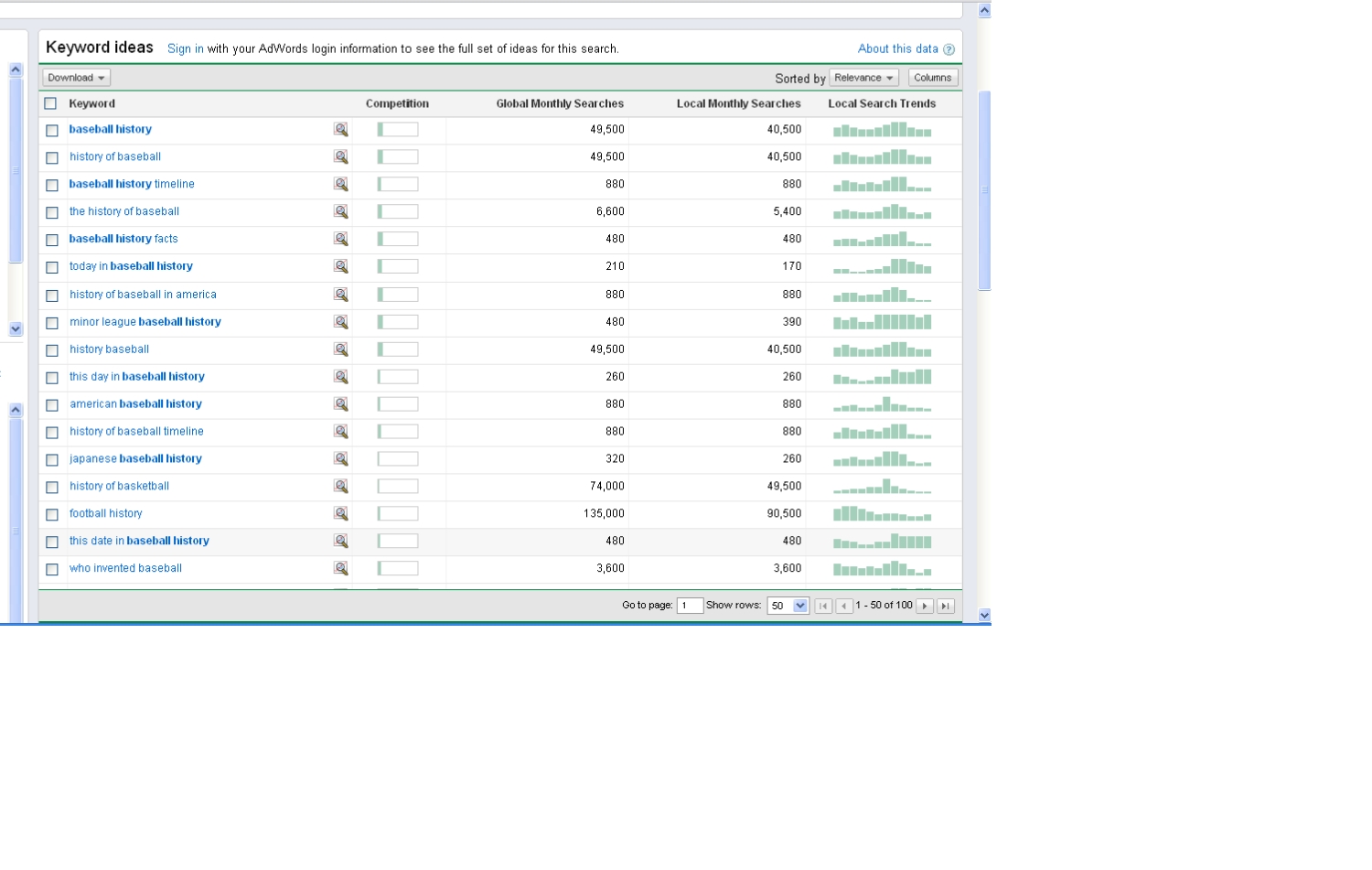
  • Search and Google databases for other previously published books with titles similar to yours. Here is a screen shot of a simple Google search result on “Baseball History” for example (click image to view regular format in your browser:


    Share this Post