Back to Writing: Poetry Challenge

August is here and as summer is winding down, it’s time to get back to your writing and publishing goals.  Each week this month I will present you with a writing challenge for the week.  Come back every Wednesday to join the challenge and get back into the habit of writing on a regular basis. As Desiderius Erasmus once said, “The desire to write grows with writing.”

Last week I wrote about the short story challenge and asked you to write a 500 word story inspired by your summer. Hopefully, the challenge got you back in the routine of writing, and you are ready to take the next challenge. (If you missed last week’s post, check it by clicking here.)

This week, your challenge is to write a poem about summer.  Start by brainstorming: Do you have memories from the summers of your youth?  Does something about summer have a special meaning to you or inspire you in some way?

Feel free to play with different formats and poetry techniques. Perhaps, you could take the same topic and write about it in several different formats such as haiku, free verse, epic poem, and sonnet.

The key is to let your creative juices flow. Poetry is not about perfection; it is about expression. You never know, these poems may spark an idea for a larger project such as a poetry book, or you may decide poetry isn’t your thing but you’d love to turn the piece into a short story or novel. Just relax and be creative.

After you complete the challenge, feel free to comment below. I’d love to hear about the poem(s) you wrote this week.

ABOUT KELLY SCHUKNECHT: Kelly Schuknecht is the Vice President of Outskirts Press. In addition to her contributions to the Outskirts Press blog at blog.outskirtspress.com, Kelly and a group of talented marketing experts offer book marketing services, support, and products to not only published Outskirts Press authors, but to all authors and professionals who are interested in marketing their books and/or careers. Learn more about Kelly on her blog at http://kellyschuknecht.com.

Friday Conversations With A Self-Publishing Writer 8/9/13

I love working with Memoir writers!

Just this morning, I spoke with a gentleman who is “just about ready” to begin the process of telling his Granddad’s life story and wants to be prepared to self-publish it “because the New York Library folks are waiting.” WOW! That is the first time I’ve heard about a library historian contacting someone and requesting a detailed manuscript.

“I don’t want a bunch of pages that have no life to them,” he continued. “There will be personal photos and historical references; even illustrations of tools that only exist in museums now.” Needless to say, I’m very excited to begin this project. I gave him my short outline of topics hoping that he will follow my suggestion and sort his “box full” of materials into category-specific file folders.

When I created my own mother’s Memoir book, I jumped into the project with little organization and no thought of self-publishing. Since then I’ve learned many lessons and realize that even if a person has no living blood-relatives, the historians of our world crave detailed stories of “real lives.” My local history librarian reminds me often: “Every person has unique experiences and life-lessons to share and the people walking the earth today need to know them.”

So to those who are considering writing a Memoir—your own or that of a family member—here is my short list of File Topics to get you started.

  •  Start with photos; a favorite picture of the main “character.” Then add all the photos you can find—even photos you don’t think you’ll actually use—as often a part of picture can be cropped to enhance the story.
  • Collect copies of documents. Birth certificates, marriage licenses, graduation certificates, baptism announcements, ID cards from military service and/or companies worked for, award certificates, driver’s licenses, etc.
  •  Print out the Family Tree. Just looking over the growth of this tree is exciting and gives valuable information.
  •  People in My Life. This file is really fun to build. I’ve seen a bit of everything in here including a photo torn in half with a note attached that said, “Missing piece is a reminder of my best boy-friend who moved away when I was 11 and we never saw each other again. I kept this half—the picture of him—and he has the other half, the picture of me.”
  •  States lived in. This can later be expanded to the trail taken by parents, grandparents…etc.
  • Education and Extra-curricular activities…
  • Marriage and Children…
  •  Faith and Beliefs…
  • Career(s) and Stewardship of Finances
  • My favorite…books, TV shows, movies, radio stations, etc.…and why.
  • Maturity (at any age)
  • Tough Times and Victories
  • The Legacy I hope to pass forward

These topics are then extended into numerous categories which become specific to your story as it is developed. This is where a ghostwriter can be of assistance. The old cliché quote, “No man is an island,” (John Donne, 1624) remains especially true in this genre of writing. The Memoir writer is so close to the events and emotional connections that often valuable pieces are lost. Building your Memoir with an unrelated writer who has experience in this field can create magic in the memories.

Royalene ABOUT ROYALENE DOYLE: Royalene Doyle is a Ghostwriter with Outskirts Press, bringing more than 35 years of writing experience to authors who need “just a little assistance” with completing their writing projects. She has worked with both experienced and fledgling writers helping complete projects in multiple genres. When a writer brings the passion they have for their work and combines it with Royalene’s passion to see the finished project in print, books are published and the writer’s legacy is passed forward.

Weekly Self Published Book Review: Parallel Lives

Book reviews are a great way for self-publishing authors to gain exposure. After all, how can someone buy your book if he or she doesn’t know it exists? Paired with other elements of your book promotion strategy, requesting reviews is a great way to get people talking about what you’ve written.

When we read good reviews, we definitely like to share them. It gives the author a few (permanent) moments of fame and allows us to let the community know about a great book. Here’s this week’s book review by Midwest Book Review:

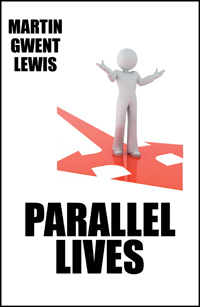
Parallel Lives

Parallel Lives

Martin Gwent Lewis

Publisher: Outskirts Press

So many choices that send life in completely different directions. “Parallel Lives” is the story of Richard, depressed with where his life went, seeks to end it all. He finds that it could have been different and may yet find new hope from the most unlikely of sources – himself. “Parallel Lives” is an insightful and much recommended read for general fiction readers.

Self-Publishing Week in Review: 8/06/13

As a self-publishing author, you may find it helpful to stay up-to-date on the trends and news related to the self-publishing industry. This will help you make informed decisions before, during and after the self-publishing process, which will lead to a greater self-publishing experience. To help you stay current on self-publishing topics, simply visit our blog every Tuesday to find out the hottest news in self-publishing this week.

Six Self-Publishing Surprises

This writer shares six noteworthy self-published books with the goal of dispelling the myth that finding great self-published work is difficult to impossible. The review includes books in a variety of genres, including poetry, art, YA, and flash fiction. Interestingly, the writer discovered many of the featured authors on Twitter. It shows that social media truly is a powerful way to market your self-published book and to connect with others in the industry.

How Print-On-Demand Is Transforming Self-Publishing

This article talks about print-on-demand and the many benefits it offers as well as the impact it has on the publishing industry. The key points include more books and author control.

Bella Andre, Romance Author, Talks Self Publishing And Writing (VIDEO)

In this video, a self-publishing author shares parts of her new book, and she shares her self-publishing success story. One of the highlights is her comment that she now makes more per month than she did from an entire traditional publishing advance.

If you have other big news to share, please comment below.

ABOUT KELLY SCHUKNECHT: Kelly Schuknecht is the Vice President of Outskirts Press. In addition to her contributions to the Outskirts Press blog at blog.outskirtspress.com, Kelly and a group of talented marketing experts offer book marketing services, support, and products to not only published Outskirts Press authors, but to all authors and professionals who are interested in marketing their books and/or careers. Learn more about Kelly on her blog at http://kellyschuknecht.com.

Friday Conversations With A Self-Publishing Writer 8/2/13

A short time ago I walked into my favorite bookstore just to see if my self-publishing client’s book was on their shelves—and there it was—the bright, eye-catching cover facing forward for the world to see!  I immediately texted her.  Her response was immediate, and with great excitement, of course.  There is nothing like that feeling of knowing that real readers will be hearing your voice speak from those pages.

With that smile still on my face I wandered through the aisles breathing in the book-paper-print scent that was flavored by a hint of coffee—definitely a perfect day.  I had walked myself right into the aisle of support books for writers.  All the shelves, top to bottom, held books containing facts and strategies “every writer needs to know.”  Really?  Does a writer need all this information?  That felt intimidating to me.

I’d been in my own little writing-world for so long—surrounded by my writing workshop friends and working with self-publishing clients—that I’d lost the perspective of the new writer.  If I was just beginning, just wondering how I would go about writing the book that was gnawing at me in my dreams, what would I do?  Would I be fenced-in by all these advice books, unable to move past the “Start Here” chapter?

When I began my writing career, there were very few “how to” books for writers.  Of course, there were the textbooks of academia, but even reading their Table of Contents disillusioned me.  However, one excellent piece of advice I received came from a professor of Latin American Literature Studies.  We were seated—talking—in the Writing Room of the University Library.  “It’s all in the Introduction of a book for me,” he said.  “If I connect with the writer’s topic and voice, or writing style, as revealed there then I buy the book.”

So it is that I now pass forward that recommendation; embellished a little, of course.

  1. Write your Introduction first.  Not only does this create a natural outline for the writing process, it is also the place where the Reader meets the Writer.
  2. Let your passion speak loudly in these few paragraphs.
  3. Tell the Reader how useful this book will be to them—now and in the future.
  4. Tell them that they will learn something valuable.
  5. Let them know that they will be INSPIRED.
  6. If you have a keyword or phrase that speaks to the essence of what you’re writing be sure to place it in the first and last paragraphs—and in at least one or two central paragraphs in the body of the Introduction.  But be careful—do not beat the Reader with it.
  7. Then, as you write the book, return to the Introduction several times and enhance it to match what you’re writing.  The process of creating your book involves your personal inspiration, so the Introduction will need refreshing.

Write ON, Writers

Royalene ABOUT ROYALENE DOYLE: Royalene Doyle is a Ghostwriter with Outskirts Press, bringing more than 35 years of writing experience to authors who need “just a little assistance” with completing their writing projects. She has worked with both experienced and fledgling writers helping complete projects in multiple genres. When a writer brings the passion they have for their work and combines it with Royalene’s passion to see the finished project in print, books are published and the writer’s legacy is passed forward.