The Importance of Copyrights and Trademarks for Self-Publishing Authors

Mashable.com recently featured a funny story about a trademark dispute between Jack Daniel’s and a author. The article headline is what captured my interest – “Jack Daniel’s Sends the Most Polite Cease-and-Desist Letter Ever” – but the situation itself is a very important lesson for all self-publishing authors, so I wanted to share it with you.

Because the cover of the book was so similar to the classic Jack Daniel’s whiskey label, Jack Daniel’s Properties (which owns the Jack Daniel’s trademarks) contacted the author and kindly asked him to create a new book cover.  They even offered to help with the costs involved.  You can view the cover in question and read a portion of the letter here.

While the Jack Daniel’s company was very kind to this author, this is not always the case with trademark and copyright issues. In fact, a trademark or copyright lawsuit can mean big trouble, and big bucks, for authors who don’t follow the rules.

When publishing your book, it is essential that you consider trademarks and copyrights for both the content and images inside your book as well as those on the cover. You MUST get permission to use work if it is not your own. If you don’t, you could find yourself in court, and no author wants to spend his hard-earned royalties that way!

Do you have questions about copyright or trademark issues?

ABOUT KELLY SCHUKNECHT: Kelly Schuknecht is the Vice President of Outskirts Press.  In addition to her contributions to the Outskirts Press blog at blog.outskirtspress.com, Kelly and a group of talented marketing experts offer book marketing services, support, and products to not only published Outskirts Press authors, but to all authors and professionals who are interested in marketing their books and/or careers. Learn more about Kelly on her blog at http://kellyschuknecht.com.

Strike While the Skillet is Hot and Publish Your Cookbook

Do you love to cook? Now is a great time to publish a cookbook. Viewers and readers are loving food-related shows and books. You can take advantage of this booming market and share your recipes with the world.

If you decide to publish a cookbook, you need to understand that there are very specific formatting methods for this genre. You will need to decide how to layout all of the elements including lists, instructions, photos, and more. This is essential as you want the book to be appealing with consistent formatting and easy to follow.

If this all sounds confusing, don’t worry. Simply speak to someone at your self-publishing company to find out if they offer assistance with this task. For instance, Outskirts Press recently introduced the Cookbook Formatting Kit, which provides a simple process to help you design your cookbook. This low-cost kit can make your dreams of becoming a cookbook author come true.

ABOUT JODEE THAYER: With over 20 years of experience in   sales and management, Jodee Thayer works as the Manager of Author Services   for Outskirts Press. The Author Services Department   is composed of knowledgeable customer service reps and publishing consultants;   together, they all focus on educating authors on the self-publishing process in order to help them publish the   book of their dreams. Whether you are a professional looking to take your   career to the next level with platform-driven non-fiction or a novelist   seeking fame, fortune, and/or personal fulfillment, Jodee Thayer can put you   on the right path.

You Don’t Need a Degree to Publish a Book

During my years in the publishing industry, I’ve often been asked the same question: Do I need a college degree to publish a book? The answer is simple: No! There are many cases of excellent books that were written by people who didn’t have a college degree: how many times have you heard the success story of a school-aged kid publishing a book? Likewise, highly educated individuals with advanced degrees in writing often never publish a book. That is because traditional publishing is difficult. It has nothing to do with how educated you are and more to do with what books are selling and what books editors and agents are willing to promote.

But don’t let that news discourage. In today’s world, traditional publishing is not the only option. You don’t have to sit around waiting for someone to finally buy your manuscript. You can choose to self-publish and see your book in print within a few months. Don’t worry: as the self-publishing industry continues to grow, the authors are becoming more and more respected. If you believe in your book, don’t wait for someone else’s approval; share it with the world.

ABOUT WENDY STETINA: Wendy Stetina is a sales and marketing professional with over 30 years experience in the printing and publishing industry. Wendy works as the Director of Author Services for Outskirts Press. The Author Services Department is composed of knowledgeable customer service reps and publishing consultants; and together, they all focus on educating authors on the self-publishing process in order to help them publish the book of their dreams. Whether you are a professional looking to take your career to the next level with platform-driven non-fiction, or a novelist seeking fame, fortune, and/or personal fulfillment, Wendy Stetina can put you on the right path.

Screenplays: The Essential Three Acts

A professor I once knew used to boil down good storytelling into a very simple mantra: “Every story has to have a beginning, a middle and an end.”

Well, duh! I know, I know … It seems like a no-brainer – and it sort of is – but when it comes to movie scripts that work the way they’re supposed to, these elements, the three “acts” of a story, are crucial. Not only that, but these stages of storytelling require very specific ingredients that, when combined properly and precisely, make for a compelling script.

Act One: Story Set-up
The first act of your script must immediately and clearly set the tone and establish a theme for the film. Is your story a light-hearted comedy, or a quirky superhero caper? This beginning not only must introduce your main characters, but should define their weakness, tensions, conflicts, objectives and what’s at stake for them. Near the end of the first act, the inciting incident occurs. It’s the moment in the story when you lay out the important conflict that defines your tale.

Act Two: Obstacles
The second act revolves around the main character’s attempts to resolve the conflict introduced in Act One. The character is confronted with an obstacle or a series of obstacles. The script must describe in visual terms the character’s attempts to overcome. It is in Act Two that the screenwriter can introduce a subplot that runs parallel to the primary conflict. Throughout this act, the main characters should be further developed; it should be clear in this act how the efforts to deal with the conflict are leading to change in the characters.

Act Three: Story Resolution
New tensions and conflicts are introduced in Act Three, but this time changes in protagonist’s outlook lead him to confront this tension in a different way. The final act is where plot twists provide unsuspected but welcomed surprises, as well as the “obligatory scene” during which the script delivers some sort of anticipated payoff to the audience. Lastly, the final conflict is resolved and the audience gets a glimpse into the characters’ new realities.

Elise Connors ABOUT ELISE L. CONNORS:
Elise works as the Manager of Author Support of Outskirts Press.  She also contributes to the Outskirts Press blog at blog.outskirtspress.com.Elise and a group of talented book marketing experts assist self-publishing authors and professionals who are interested in getting the best possible exposure for their book.

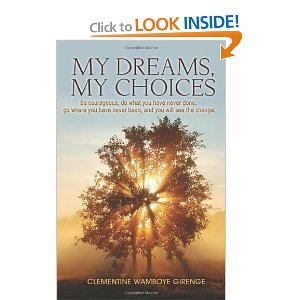
Weekly Self-Published Book Review: My Dreams, My Choices

Book reviews are a great way for self-publishing authors to gain exposure. After all, how can someone buy your book if he or she doesn’t know it exists? Paired with other elements of your book promotion strategy, requesting reviews is a great way to get people talking about what you’ve written.

When we read good reviews, we definitely like to share them. It gives the author a few (permanent) moments of fame and allows us to let the community know about a great book. Here’s this week’s book review by Midwest Book Review:

My Dreams, My Choices

Clementine Wamboye Girenge

Publisher: Outskirts Press

ISBN: 9781432771768

Felly lived with her extended family in rural Kenya. Given the area they lived in, sometimes many obstacles came her family’s way, yet she learned to look at the positives and pursue her goal of getting a good education.

Felly’s grandmother is a bitter old woman and doesn’t really care about what is happening to anyone else, including her husband who is sick. Her grandmother has lost several of her children to the famines of Africa, and she doesn’t really want anyone else to be happy.

When Felly goes to Nairobi to attend school, she is dismayed at the treatment she gets because she can’t afford the same things as everyone else and the staff at the school are very mean, beating the children on a daily basis.

When the staff at the school are replaced due to poor performance, many of the students are dismayed. But in her heart, Felly knows she can finish her education regardless of what happens.

Through her own strength and the strength of others, she is able to accomplish what she wants.

“My Dreams, My Choices” is a very inspiring book written by Clementine Wamboye Girenge. There are times in one’s life when things don’t always look bright, but, as the author says, you have to look at the bright side in all that you do.