How Far is Too Far? — Extreme Book Marketing Efforts by Joan Rivers

Did you ever think about chaining yourself to a Costco shopping cart to promote your book?  No?  Well, if you had, I’m sorry to tell you Joan Rivers beat you to it.

According to Rivers, Costco refuses to stock her book, “I Hate Everyone … Starting with Me,” which has made the New York Times bestseller list. The store reportedly banned the book because it has “naughty” words on the back cover. Fighting back, Rivers chained herself to a shopping cart in the store and shouted through a bullhorn, protesting the ban and (simultaneously) promoting her book. Police were called to the scene, but no citations were issued.

Many believe the protest was a staged publicity stunt to help promote the book. Rivers had her own film crew present as she protested, and she willingly talked to the media after the event. Whether the intention was to protest or promote, the story is creating a lot of buzz about the author and her new book. Some might say the old cliché “there is no such thing as bad publicity” is true.

Rivers shows the extremes to which some authors are willing to go in order to market their books, but she also teaches self-publishing authors an important lesson: not every retailer will be willing to stock your book, even if you think they should. Retailers do have guidelines they follow when it comes to which books they stock in their stores.  If a celebrity such as Joan Rivers can’t get her book (which, I remind you, is a New York Times bestseller) onto the shelves at Costco, self-publishing authors will most likely experience similar hurdles.

If one of your book marketing goals is to get your book onto the shelves of a major retailer, think about the marketing efforts you are currently making and learn from your experiences (and rejections, if you have had any). I don’t encourage you to chain yourself to a shopping cart in a bookstore parking lot, but if a bookstore tells you no, consider what other avenues you might take in order to accomplish your goal.

I’d love to know, what do you think of the Joan Rivers protest?

ABOUT KELLY SCHUKNECHT: Kelly Schuknecht is the Vice President of Outskirts Press.  In addition to her contributions to the Outskirts Press blog at blog.outskirtspress.com, Kelly and a group of talented marketing experts offer book marketing services, support, and products to not only published Outskirts Press authors, but to all authors and professionals who are interested in marketing their books and/or careers. Learn more about Kelly on her blog at http://kellyschuknecht.com.

Top 5 Reasons to Self-Publish in August

Summer is coming to an end and the holidays and a new year are right around the corner. If you’ve been considering self-publishing, August is the perfect time to take the leap! Here are the top five reasons why.

1. Have Your Book by Christmas

Everyone should treat themselves to a great Christmas gift, and what could be a better gift than seeing your book in print? If you self-publish now, your book could be ready by Christmas. (Books also make great Christmas gifts for family members and friends.)

2. Celebrate Book Lovers Day

Book Lovers Day was August 9th. While the holiday is already over, you can still celebrate by finally becoming a self-published author. And by this time next year, you can celebrate the day by promoting your own self-published book!

3. Beach Time is Ending

As summer comes to an end, you will be bombarded with holiday to-do lists. Take advantage of the final, relaxing days of summer and finish your manuscript before the busy holiday season begins. Proofreading your manuscript on the beach is a perfect way to end the summer.

4. Back to School Time

If your book is geared towards an educational market, now is the perfect time to self-publish your book. With school back in session, teachers, students, and parents will all be purchasing books for the new school year. You may want to contact schools to find out their requirements for using your book so you can plan accordingly.

5. Promotions

Every month self-publishing companies such as Outskirts Press offer great promotions. This month, Outskirts Press is offering $300 in free upgrades. For details, visit their website by clicking here.

I’d love to know, why do you plan to self-publish in August?

ABOUT JODEE THAYER: With over 20 years of experience in   sales and management, Jodee Thayer works as the Manager of Author Services   for Outskirts Press. The Author Services Department   is composed of knowledgeable customer service reps and publishing consultants;   together, they all focus on educating authors on the self-publishing process in order to help them publish the   book of their dreams. Whether you are a professional looking to take your   career to the next level with platform-driven non-fiction or a novelist   seeking fame, fortune, and/or personal fulfillment, Jodee Thayer can put you   on the right path.

How to Use the Copyright Symbol When Self-Publishing Your Book

One of the most confusing topics for self-publishing authors is copyright laws. Many authors want to know if they need to place the copyright symbol( © ) into their manuscripts and if so, where. Here is how it works.

Your manuscript is protected by copyright laws as soon as you write it. It does not have to have a symbol to be protected. Most authors trust the people they send their manuscripts to and therefore do need to have the copyright symbol displayed . Also, professionals in the industry, such as publishers or agents, may see you as an amateur since it is not necessary to register your copyright until publication.

However, if you feel more comfortable displaying the symbol on your manuscript, you can. The correct method is to insert the symbol followed by the year and your first and last name. It should appear on the title page only! Do not insert it elsewhere in the manuscript. If you want your manuscript to be treated professionally, it needs to follow the industry format.

It is also important to point out that you do not need to go through the trouble of registering the copyright with the government until the book is published. Most likely, you will make changes to the content of your book before it is published, so you want to wait until everything is finalized before you pay for a copyright.

You can learn more about copyrights at www.copyright.gov.

Also, check out these other posts on the topic.

The Importance of Copyrights and Trademarks for Self-Published Authors

Are Titles Copyrighted?

Six Frequently Asked Copyright Questions


ABOUT WENDY STETINA: Wendy Stetina is a sales and marketing professional with over 30 years experience in the printing and publishing industry. Wendy works as the Director of Author Services for Outskirts Press. The Author Services Department is composed of knowledgeable customer service reps and publishing consultants; and together, they all focus on educating authors on the self-publishing process in order to help them publish the book of their dreams. Whether you are a professional looking to take your career to the next level with platform-driven non-fiction, or a novelist seeking fame, fortune, and/or personal fulfillment, Wendy Stetina can put you on the right path.

Screenplays: Five Key Moments

Last week we covered the three acts essential to every story, and every screenplay. Within those three acts are five specific moments, called “key moments,” that move the plot along and strengthen the power of the main characters.

1.) Inciting Incident/Point of Attack
Every movie – without exception – has an inciting incident, a moment when the story first hints at the conflict to come. Most often, the inciting incident occurs near the end of the first act, but many films plunge into the main action right from the beginning.

2.) Lock In
This is the point at which the protagonist is locked into the conflict around which the story revolves. This plot point, usually at the end of the first act, launches the character into his quest to solve the problem that defines the film.

3.) First Culmination.
The first culmination is the point at which the protagonist solves a problem that is important to the story but not the main conflict, usually midway through Act Two.

4.) Main Culmination
The conclusion of the second act sees the resolution of the main tension or conflict …

5.) Third Act Twist
… but our protagonist is tested once again in Act Three. While a script can certainly resolve without a final monkey wrench, this plot device is useful for revealing or further illuminating the changes that have taken place in the characters’ lives.

While this is an exceedingly simplified overview of the elements of a screenplay, mastering these concepts is an important first step to understanding how a “formula” can help a writer produce a well-organized screenplay.

Elise Connors ABOUT ELISE L. CONNORS:
Elise works as the Manager of Author Support of Outskirts Press.  She also contributes to the Outskirts Press blog at blog.outskirtspress.com.Elise and a group of talented book marketing experts assist self-publishing authors and professionals who are interested in getting the best possible exposure for their book.

Weekly Self-Published Book Review: My Bittersweet Charlie:

Book reviews are a great way for self-publishing authors to gain exposure. After all, how can someone buy your book if he or she doesn’t know it exists? Paired with other elements of your book promotion strategy, requesting reviews is a great way to get people talking about what you’ve written.

When we read good reviews, we definitely like to share them. It gives the author a few (permanent) moments of fame and allows us to let the community know about a great book. Here’s this week’s book review by Midwest Book Review:

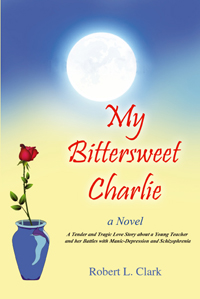
My Bittersweet Charlie: A Novel: A Tender and Tragic Love Story about a Young Teacher and her Battles with Manic-Depression and Schizophrenia

Robert L. Clark

Publisher: Outskirts Press

ISBN: 9781432774264

Reviewer: Olivera Baumgartner-Jackson

“My Bittersweet Charlie” opens with a prologue, which sets a great framework for the story to come. University professor Dr. Doug Larson has finally decided to call it quits with his lover of nearly three years, Charlie Johnston. Charlie, a beautiful, smart, and ambitious school teacher, has broken his heart one too many times. Dr. Larson decided to break up with her by writing her a letter, which at last he delivered in person. A bitter beginning to a bitter, heartbreaking story of love and betrayal, destruction and quest for balance, as well as all too many ugly moments and actions.

While the subtitle calls this book “A Tender and Tragic Love Story about a Young Teacher and her Battles with manic-Depression and Schizophrenia,” I was unable to develop any particular tender feelings about the story or its protagonists. I can certainly see how mental illness could and does wreak havoc upon the lives of people close to the person who suffers from it, but I found both Charlie and Doug extremely difficult to relate to. The entire story felt like watching a train wreck about to happen – one knows it is going to be ugly and gory, but for some strange reason one keeps watching until the tragic end, hoping that at least the hero will jump out of the wreck-to-happen and save himself, but knowing all too well that such an outcome is extremely unlikely. Seeing how love does not always overcome adversity is quite painful, and watching Charlie’s steady destruction of Doug’s feelings with her manipulative and promiscuous ways was downright excruciating. The end, as tragic as it was, in a certain way, came as a relief.

While I truly appreciate the author’s courage in attempting to bring some exposure and clarity to the controversial subject of mental illness, I had to struggle a fair bit to finish this book due to fragmented storyline and stilted writing. The unlikable characters and the tragic story did not help either, and I would be hard pressed to say that I’ve enjoyed any aspect of this book. In spite of all of those issues, I would recommend “My Bittersweet Charlie” to those readers who would like to see an unvarnished view of what not adequately treated mental illness can do both to those who suffer from it and those who care for them and are involved with them. This is a story that will certainly break your heart.