Conversations With A Self-Publishing Writer: 11/20/2015

SEASONS Part III


Whether our writing environment provides us with the blessing of looking out upon nature’s changing seasons or we have set up a laptop on the laundry basket next to the basement washer and dryer, we can always imagine the seasons of setting, plot, and the lives of each individual character.

I must confess that my writing space looks nothing like this beautiful illustration. It is often cluttered beyond my ability to deal with the stacks and I am forced to take-a-day and reorganize it, much to my husband’s delight. You see, he shares one side of the narrow desk in our 10×10 office and tries to demonstrate organization by keeping his side “neat” with everything in its place. However, until I discover a way to keep each of my on-going projects within easy reach (not in closet filing cabinet), my stacking system will remain. I’m one of “those” writers who allows my imagination free reign giving me the opportunity to jump from one project to another at any time of the day. When something I’m researching and/or critiquing triggers a thought relating to another project, I immediately place that piece (concept, website source, person-to-contact) with the appropriate stack.

royalene3

THERE ARE, however, as many writing space concepts as there are writers.  Following are a few that I’ve discovered are helpful to my author friends.

  • BABY BOTTLE READINESS. This space is nestled next to the rocking chair and the crib in the new baby’s corner of the family room. Whether the author is Mom or Dad, when it is their time for baby-watch, they have acknowledged that their creative ideas rarely pause during those specific hours. The “desk” can be an actual writing desk or a TV tray just as long as it provides space for pen, paper, laptop and/or tape recorder.
  • DINING ROOM/KITCHEN TABLE. One of my best friends wrote her plays while seated at her long, rustic-style family table. This space was actually added to the kitchen and designed with windows on three sides. Her view—throughout each season of the year—was of a mountain meadow, aspen and fir trees and the occasional white-tail deer family. She kept her developing projects in a box (emptied of paper reams) and cleared the table every day.
  • PET PARTNERS. Sometime soon, I suggest you do a Google search of Authors and their pets. It will make you smile! There are stories told about John Steinbeck and his standard poodle, Charley. Ernest Hemingway was a great fan of cats and “owned” several—or, rather, they owned And then there is my cat, Sadie, a tabby lady who has shared my writing days from her cushion these past eighteen years. The presence of these critters in our lives can bring about just the right amount of pause and reflection we writers need in order to grab hold of the next complete sentence and/or thought.
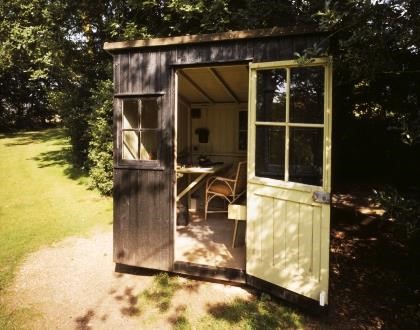
  • THE RETREAT or HAVEN. George Bernard Shaw built is own very private retreat, converting a tool shed into his writing space. It worked for him. However there are other get-away locations that might serve your needs. Again, do a Google search of “writing retreats.” You’ll find luxurious places in castle towers or tack-rooms in big red barns converted for the writer who enjoys the scent of horse and cattle for their inspiration.
royalene4

Bottom line…don’t hesitate to move about while developing your writing project. Becoming TOO settled, TOO comfortable in one chair or at one desk could stifle your imagination and lock you into one season of writing. ⚓︎

RoyaleneABOUT ROYALENE DOYLE: Royalene has been writing something since before kindergarten days and continues to love the process. Through her small business—DOYLE WRITING SERVICES—she brings more than 40 years of writing experience to authors who need “just a little assistance” with completing their projects. This is a nice fit as she develops these blogs for Outskirts Press (OP) a leading self-publisher, and occasionally accepts a ghostwriting project from one of their clients. Her recent book release (with OP) titled FIREPROOF PROVERBS, A Writer’s Study of Words, is already receiving excellent reviews including several professional writer’s endorsements given on the book’s back cover.  

Royalene’s writing experience grew through a wide variety of positions from Office Manager and Administrative Assistant to Teacher of Literature and Advanced Writing courses and editor/writer for an International Christian ministry. Her willingness to listen to struggling authors, learn their goals and expectations and discern their writing voice has brought many manuscripts into the published books arena.

Conversations With A Self-Publishing Writer: 11/13/2015

SEASONS Part II


Distractions plague every writer. I’ve heard authors bemoan the frustration of an unintentional interruption that threw their story-thoughts into chaos. When I attended the Estes Park writers’ conference this past May, I learned an excellent solution to resolve this problem. Here are a few tips to keep our imaginations focused INSIDE the story.

royalene2

Research immersion:

  • Are you writing a memoir? THIS IS AN ADVENTURE that you’ll never regret! Whether looking through a box full of old photographs or reading an ancestor’s diary, researching the lives of family members who have walked this earth before us IS FUN and FACINATING. You become the investigative reporter of the people, places and events that occurred years before your birth, so when you see a photo of Great Uncle George dressed as if meeting royalty, research into his clothing (top-hat to spats) will fill in many of the details that imagination alone cannot. Follow the clues!
  • Have you become so intrigued by time period in that memoir that your imagination is flying with conjecture and answers to your “What if?” questions? There is a NOVEL brewing within.
  • Now the research will go deeper. START a new file and throw in all the data you can find about the lifestyle of each stratum of economics in that time period and place. Clip images—artist pieces and/or historical photos—and begin a visual imaginings
  • Look to other authors who have written about this period of history—and READ their books—whether they are fiction authors or historians.
  • Build your story as if you are living the life of your main character.
  • Wear his/her cloths (figuratively speaking—or literally, if you can find them in a costume shop).
  • Work IN their daily life career path.

From my high school and college days until I became serious about writing, even hearing the word “research” would send me in the opposite direction. However, being an only child, I loved to read and journey beyond my back yard to places I’d could only imagine.  My favorite novels were historical fiction and science fiction. Both are steeped in research in order to provide the authenticity and the feeling of living in that time and place. Now, what I’d learned and appreciated in my youth became a vital part of my writing life.

So, DON’T FEAR THE “R” WORD. Embrace it! Research is a friend that will support your imagination and let it fly! It will build a solid foundation for any genre of writing you choose. Plus, research in extremely valuable in choosing the publishing process for your work—whether you attempt of find a mainstream publisher or make the decision to self-publish. ⚓︎

RoyaleneABOUT ROYALENE DOYLE: Royalene has been writing something since before kindergarten days and continues to love the process. Through her small business—DOYLE WRITING SERVICES—she brings more than 40 years of writing experience to authors who need “just a little assistance” with completing their projects. This is a nice fit as she develops these blogs for Outskirts Press (OP) a leading self-publisher, and occasionally accepts a ghostwriting project from one of their clients. Her recent book release (with OP) titled FIREPROOF PROVERBS, A Writer’s Study of Words, is already receiving excellent reviews including several professional writer’s endorsements given on the book’s back cover.  

Royalene’s writing experience grew through a wide variety of positions from Office Manager and Administrative Assistant to Teacher of Literature and Advanced Writing courses and editor/writer for an International Christian ministry. Her willingness to listen to struggling authors, learn their goals and expectations and discern their writing voice has brought many manuscripts into the published books arena.

Conversations With A Self-Publishing Writer: 11/06/2015

SEASONS

November brings our attention to how quickly this year will come to a close and we’ll meet the New Year whether we’re prepared for it or not. The self-examination questions begin. Have you finished the last chapter of that novel yet? Have you outlined the sequel? Have you written your weekly blog to tweak readers’ interest in the characters and plot? Did you do enough research so that characters and their environment (setting-s) are believable? Did you select the right independent publisher? Is your best friend really the right person to do your marketing?


OR…are you sitting on your front porch watching neighbors collect the remaining Fall leaves and wondering if you should even begin that novel—that novella—that book of poetry—that collection of family recipes—that family legacy memoir?

royalene1 

NO MATTER what day of calendar year the decision is made to begin writing one or more of those projects, the seasons of creative development are the same.

  • SPRING. The ideas are fresh, flowing and fun. Your imagination holds every detail in high-definition clarity and the words begin rolling onto the pages.
  • SUMMER. Mornings bring bright new ideas, fresh-scented environments and intriguing dialogue for characters. The plot weaves together like intricate palm-leaf shade-hats casting shadows of intrigue and mystery or building your unique style of word-play.
  • WINTER. With snow falling and windows redesigned with ice-crystal art, the first draft is completed. The weather may hold us inside, yet now the manuscript reading Edits and additions, enhancements and deletions are made and the writer’s personal satisfaction grows.
  • FALL. As the leaves color themselves with reds and purples, gold, yellows and rusty crimson, that process of release is mirrored in the pages that fall to the floor and await a new story to be developed around them—the ideas held there already rooted and rich for nurturing—tomorrow.

DO you remember the quote: “Never put off till tomorrow what you can do today?” There seems to be some controversy about the source of these wise words—Aaron Burr or Benjamin Franklin. However, Franklin added another sentence that strengthens his point. “You may delay, but time will not.”

The illustration (by artsoni) that I selected for today’s blog on this topic suggests that the root of our ideas is available in all seasons of our lives. So the encouragement I’d like to leave with you today is: START NOW and DON’T QUIT until you’ve completed the writing project that is resting in your heart and mind. ⚓︎

RoyaleneABOUT ROYALENE DOYLE: Royalene has been writing something since before kindergarten days and continues to love the process. Through her small business—DOYLE WRITING SERVICES—she brings more than 40 years of writing experience to authors who need “just a little assistance” with completing their projects. This is a nice fit as she develops these blogs for Outskirts Press (OP) a leading self-publisher, and occasionally accepts a ghostwriting project from one of their clients. Her recent book release (with OP) titled FIREPROOF PROVERBS, A Writer’s Study of Words, is already receiving excellent reviews including several professional writer’s endorsements given on the book’s back cover.  

Royalene’s writing experience grew through a wide variety of positions from Office Manager and Administrative Assistant to Teacher of Literature and Advanced Writing courses and editor/writer for an International Christian ministry. Her willingness to listen to struggling authors, learn their goals and expectations and discern their writing voice has brought many manuscripts into the published books arena.

Friday Conversations With A Self-Publishing Writer 04/03/15

SETTING THE STAGE

OH the history of it all! Are there any readers out there who will agree with me that the TV series, Downton Abbey, is possibly the best they’ve ever seen produced? The research must seem daunting, yet it is obvious that their team of writers loves what they are doing and dig deep into history providing authenticity and reality.  The lives of the characters of Downton are greatly affected by actual events such as the sinking of the Titanic (etched in my memory because of Molly Brown, resident of Leadville and Denver, Colorado) and  World War I.  They’ve also lived through the Spanish flu pandemic, the formation of the Irish Free State, the Teapot Dome scandal, and the UK’s general election of 1923. POINT being made: Setting requires historical research on multiple levels.

Below are research tips you might want to consider:

  1. Think about ancestry.  The geographical and cultural influences within that geography will give you excellent foundation for the current setting your characters live in.  For example, if they (or their parents) came to the U.S. from Ireland or Italy the setting/stage of their growing up years (or their current environment) would be in distinctive neighborhoods within “The Bronx.” Several Chinese and Japanese migrations created “China and Japanese Towns” in nations, states and cities around the world. It is the ancestral influences of values, attitudes, food preparations, etc. that develops unique settings—distinctive differences in home interiors, office spaces, restaurants, etc.
  2. Importance of Cultural, Social and Political environment. This aspect also plays into the development of your characters and their perspectives.  However, in relation to setting the stage for them, look to the images available online about the time period of your novel. For example: The political stage of Abraham Lincoln’s first nomination for President of the United States is dramatically different from the political stage we see today. Lincoln had only about 18 months of formal schooling, yet practiced law and was accepted as “highly qualified” to be President. He promoted women having “the vote” in 1836. He was the first President to use the telegraph. Yes, indeed, in that Lincoln Era the political stage was a unique place.
  3. Eras of Historical Significance. Throughout known history those who have a passion for such studies have divided the years into several geographic and national categories.  They include Ancient History, The Postclassical Era, and Modern History, which are further delineated with such categories as Ancient Rome or the Six Dynasties (of China), etc. Events (important to a specific setting) that have happened during the Era you’ve selected will give your novel the same authenticity and reality that is mentioned here about Downton Abbey. One other point to consider when researching your specific era is to learn about the population of the city, town or village where your characters came from and are IN currently. This element will help you fine-tune the “feelings” of characters as well as place your readers with them.

AS you’ve probably deciphered by now, research is a big part of novel writing. It is absolutely necessary that you—the writer—are able to “walk the streets” with you characters, cook in their kitchens, sleep in their beds and read the headline stories in their newspapers.  If you are able to “set the stage” to such a detailed degree, you’ll most certainly have a BEST SELLER.

Royalene ABOUT ROYALENE DOYLE: Royalene Doyle is a Ghostwriter with Outskirts Press, bringing more than 35 years of writing experience to authors who need “just a little assistance” with completing their writing projects. She has worked with both experienced and fledgling writers helping complete projects in multiple genres. When a writer brings the passion they have for their work and combines it with Royalene’s passion to see the finished project in print, books are published and the writer’s legacy is passed forward.

Friday Conversations With A Self-Publishing Writer 03/27/15

CREATING THE MOMENTS OF EXPERIENCE

In the study of Philosophy, the term “empirical knowledge” refers to knowledge based on experience. As professors and students dig further, they discover that experience is also the processed and unprocessed thoughts perceived after an event occurs.  From those thoughts, wisdom is gained as people/characters reflect and/or interpret the actions and events of their lives.  German Philosopher, Friedrich Nietzsche once said: “To live is to suffer; to survive is to find some meaning in the suffering.”

What I’ve just described is the heart of and the “act” of writing and reading fiction. In the course of our lives, we will never be able to experience what it is like to live in all the societies/cultures around the world—or all the times/eras. However, through fiction novels we can imagine it. Some might argue that non-fiction facts provide a clearer picture and understanding. I politely disagree because it is in the EMOTION of the moments of life that we are able to truly grasp the essence of what has happened.

Back when I was teaching, we did a week-long exercise in Emotion, Mood and Motivation. My question was, “Which comes first?” Does the mood of the moment create the emotion that motivates the action?  OR…does a character’s deep-seeded motives create the mood that then creates the emotion and action? OR…(well, you get the idea).  Here comes the really fun part of writing fiction. Writers get to jump into those motives, moods and emotions of each of their characters and discover new experiences for their readers to experience.  Here are some ideas to help you in developing your skills and abilities in this area.

  1. Fiction author, Orson Scott Card suggests focusing on motivation: “Instead of writing about feelings, write about WHY your characters are doing the things they’re doing.”
  2. If your readers need to know that the main character is “full of fear,” stay away from telling that fact—show the emotion. Example: the house is quiet and peaceful…the cat knocks over her water dish…the main character JUMPS into the corner of the room behind the couch and bursts into tears.
  3. Mood music. The world of movie-making uses this element to the max and we’ve all experienced it. This can be—and must be—accomplished in fiction writing, too. Much like an artist paints a masterpiece, the use of description (yes, adjectives) is an art to itself. READ the master-authors who utilize this gift and you will develop it, too.

Folding these elements of Mood, Motivation and Emotion into your characters will greatly enhance your ability to give readers exactly what they are looking for in Fiction Novels—their subconscious (and often conscious) need to experience life from another perspective. No two characters (or people) will react to events and circumstances in the same manner. And, as the character experiences more of life, they may not react as they did previously.

The excellent Fiction Author will grasp these elements of writing and never let them go, but continue to develop them throughout their writing lifetime.  That is my hope for every reader of this blog, that you will write and publish the very best quality of Fiction Novels and reap all the rewards!

Royalene ABOUT ROYALENE DOYLE: Royalene Doyle is a Ghostwriter with Outskirts Press, bringing more than 35 years of writing experience to authors who need “just a little assistance” with completing their writing projects. She has worked with both experienced and fledgling writers helping complete projects in multiple genres. When a writer brings the passion they have for their work and combines it with Royalene’s passion to see the finished project in print, books are published and the writer’s legacy is passed forward.