Friday Conversations With A Self-Publishing Writer 3/28/14

MENTOR! MENTOR!

From the first cave carvings, to the invention of paper, the printing press, computers, blogs, tweets and twitters, people have been simply driven to communicate. However, what we communicate and how well we do so can be “a horse of a different color” altogether. When the desire is there and ink is flying, sometimes clarity (or focus) is lost. That is why I applaud all writers who read as passionately as they write and who seek the mentorship of authors they admire. If you read my blog last week you know of my mentor and friend Lois Beebe Hayna, who has definitely made a big difference in my life! (Google her name and you’ll be inspired.)

One of the genres I love to read (and write when time allows) is Science Fiction. Two of the big names in that field are Isaac Asimov (biochemistry professor and science fiction author) and Gene Roddenberry (screenwriter and creator of the Star Trek phenomenon). I have read—and watched—the creations of both these gentleman, appreciating their differences while thankfully enjoying their individual expertise. Then I discovered that they had become fast friends and actually considered each other “mentors,” as science inspired imagination and imagination pushed science. However, that didn’t happen immediately. Mr. Azimov wrote a challenging letter to “show” where Mr. Roddenberry was wrong in the scientific portrayal of scenes in Star Trek. It was Mr. Roddenberry’s passionate defense of his TV series that caused Azimov to re-think his position. Eventually Azimov agreed that Roddenberry’s writing was “intellectually stimulating,” and through their close friendship, he served as an advisor on Star Trek: The Motion Picture. Yes, writers who seem to be at an impasse can (and do) mentor each other.

So, how do you find the best writing mentor? Here are a few tips:

  • Look for an author of your preferred genre, one whose books you sincerely appreciate.
  • Research that person, website, Facebook, Twitter, publisher, etc, and decide which avenue they have opened for “contact.” It is important to be respectful of that; it is also valuable to discover whether or not they’ve mentored other writers.
  • Write to them. You are a writer seeking writing help and the way you construct your request will speak beyond the words on the page. Be brief, be polite (not overly solicitous), and be ready to thank them for any reply even if it is “No.” This can be an email message; however, I highly recommend mailing a letter.
  • Mentors can also be found through genre-specific conferences and writing groups, such as Rocky Mountain Fiction Writers, Mystery Writers of America, Society of Children’s Book Writers & Illustrators, Science Fiction Writers of America and the Colorado (or Philadelphia) Christian Writers Conference.

One exceptional group of people who can and DO mentor fledgling authors are the self-publishing teams who are totally focused on helping authors see their books in print. If you are too shy to contact a “famous” author, research the self-publishing industry and select one or two businesses to contact. You will be quickly impressed by the benefits!

Royalene ABOUT ROYALENE DOYLE: Royalene Doyle is a Ghostwriter with Outskirts Press, bringing more than 35 years of writing experience to authors who need “just a little assistance” with completing their writing projects. She has worked with both experienced and fledgling writers helping complete projects in multiple genres. When a writer brings the passion they have for their work and combines it with Royalene’s passion to see the finished project in print, books are published and the writer’s legacy is passed forward.

Friday Conversations With A Self-Publishing Writer 3/21/14

THE WRITER’S TOOLBOX

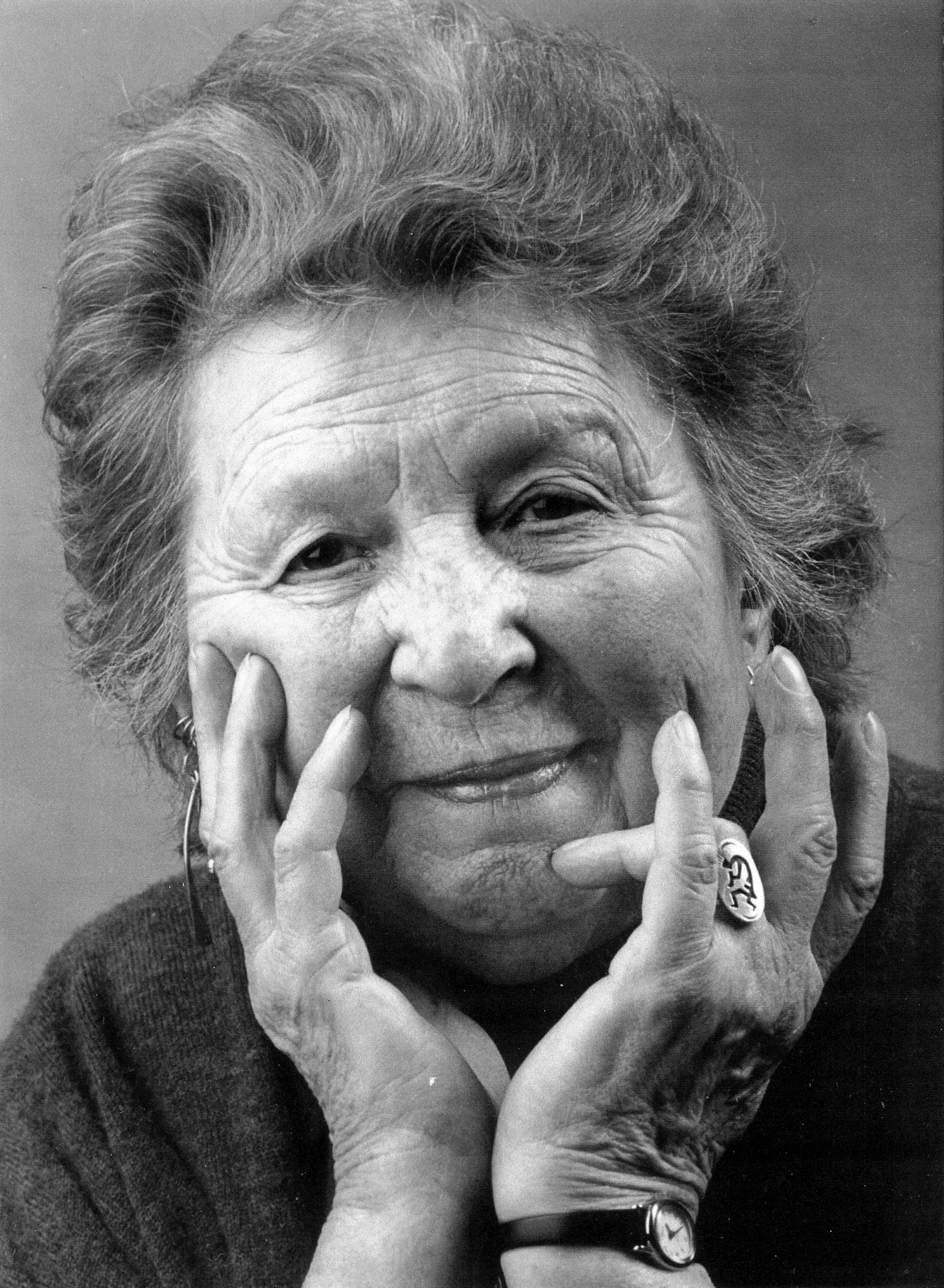
This past weekend I received the most marvelous news!  My very dear friend and mentor (now in her 101st year of advanced youth) will be receiving a prestigious award from the Colorado Author’s League this coming May.  Her name is Lois BeeBe Hayna.  She is a self-published author of delightful and thought-provoking poetry (and I’m still trying to pry her fingers loose from the novel she’s written that should already be published for her readers).  A few of her titles are: A Book of Charms (1983), View from Behind the Mirror (1998), and The Praying Mantis (2012).

Lois Beebe Hayna - circl 1975

There really are no words that allow me to fully express my appreciation of her wisdom, insights and expertise.  So, in honor of Lois and all that she has sown into my life I am sharing just a few of the essential writing “tools” she’s given me.

š “You must have a good sense about words and their definitions, in order to be a good writer,” Lois instructed during one of her early Creative Writing Classes.  “But you must be in love with words in order to be an excellent writer.”  Truer words were never spoken!  If I’ve learned nothing else from her it is this: know the definitions of the words!  Of course, there is the dictionary definitions, the slang definitions and the social/cultural definitions.  That is where true creativity comes in play—knowing which definition fits best in the specific spot you’re placing it, or the “play” of multiple definitions that allow the reader a variety of ways to interpret what is on the page.

š Write about the things that interest you: what you care about, what you know about and/or what you might be considered an expert in.  There is no substitute for being passionate about your subject matter.  If you are bored with the topic, your readers will also be bored.

š Don’t be afraid to research!  Even though you are comfortable with what you know about a subject, there is always more to learn.  In this day of instant information, what was accepted as fact yesterday may be totally inaccurate today.  Readers will catch authors in misstatements very quickly and that is not the desired reputation to build.

THERE IS a Library Room at Regis University (Denver, Colorado) named for this marvelous lady: The Lois Beebe Hayna Creative Writing Center.  In it you will find several binders of her published and unpublished writings and, of course, copies of her books.  Her “bio” is also there encouraging every person who dreams of “being a writer” to step out and DO IT!  “I grew up in a village in central Wisconsin,” Lois tells us.  People there “regarded my attention to writing as a waste of time.”  She had a few pieces of poetry “published” when in college, but when family came along her focus changed.  She thought her writing dreams were in the past.  Then, when Lois was in her early sixties a remark from a college classmate sent her back to writing.  “I had to see if I still had anything to say, or any skill in saying it.  I was that close to never writing anything,” again.

WHAT A LOSS that would have been!  These last forty years have given us a priceless legacy, indeed, and we are expecting more from Lois.  So, if you are a writer who is holding back because of life’s circumstances—it is time to “let go” and find out what has been hiding within.  As Lois did, take the plunge to write what is on your heart and get it published!  Awards are waiting!

Royalene ABOUT ROYALENE DOYLE: Royalene Doyle is a Ghostwriter with Outskirts Press, bringing more than 35 years of writing experience to authors who need “just a little assistance” with completing their writing projects. She has worked with both experienced and fledgling writers helping complete projects in multiple genres. When a writer brings the passion they have for their work and combines it with Royalene’s passion to see the finished project in print, books are published and the writer’s legacy is passed forward.

Friday Conversations With A Self-Publishing Writer 3/14/14

SHOULD I REALLY TRY TO BE A WRITER?

When a dear friend (who shall remain nameless) found the old Ernest Hemingway quote, “There is nothing to writing. All you do is sit down at a typewriter and bleed,” she told me that she was done bleeding.  “I’ll never be a Hemingway,” she groaned into the telephone.  “I’ll never be anybody.”  WOW…such drama!

Of course, I had to throw two of my favorite quotes back at her.  The first is, “You must stay drunk on writing so reality cannot destroy you.” This wisdom came from author Ray Bradbury (Zen in the Art of Writing).  The second is from poet Robert Frost who certainly understood where my friend was at the moment: “No tears in the writer, no tears in the reader. No surprise in the writer, no surprise in the reader.”  THEN my friend and I began our almost-yearly litany of WHY she is not really trying to be a writer—she IS one!

Here are some of the main points of that conversation.  I hope it will encourage you.

  • Writing is not a boring occupation!  It is exciting!  When you’re sitting at that computer, you’re involved (personally) in an adventure that nobody else is experiencing!
  • Writing stretches your imagination and creativity.  Placing those words together—no matter what genre you’re writing in or what the topic might be—writing is possibly the best brain exercise on earth!
  • Writing is PLAYTIME!  It lets you don the costumes of many characters and walk in their boots—in the mud—in the snow—to the top of every mountain without physical stress or strain.
  • Writing makes you almost immortal.  Because we know that every written word in all of history has not been preserved to this very moment, we cannot speak in absolutes here.  However, the oldest literature (dated by library science folks) dates from 2600 BC, during the early Bronze Age.  So, what my friend is writing today has an excellent chance of surviving for a very long time.
  • Your readers will love you!  I reminded her of our brief visit with author, William E. Barrett.  Even though he had become “famous” in his own time, he was humbly amazed by the people who sent him things, offered to buy his meals at restaurants and not only asked his advice about writing, but about “life.”  Yes, readers will always appreciate excellent writing.

So now my friend has three writing projects going!  And, she’s made the decision to self-publish all three!  “I’m too old to wait around for some publisher to discover my manuscript in their pile,” she recently told me.  Of course, that decision excites me a LOT.  I know just the self-publishing team to introduce her to!

Royalene ABOUT ROYALENE DOYLE: Royalene Doyle is a Ghostwriter with Outskirts Press, bringing more than 35 years of writing experience to authors who need “just a little assistance” with completing their writing projects. She has worked with both experienced and fledgling writers helping complete projects in multiple genres. When a writer brings the passion they have for their work and combines it with Royalene’s passion to see the finished project in print, books are published and the writer’s legacy is passed forward.

Friday Conversations With A Self-Publishing Writer 3/07/14

Is It An Introduction, a Foreword or a Preface?

When talking with a new client about her thoughts for a non-fiction book—bantering ideas about the best way to move forward—we came upon a method I’d not tried before: Write the Foreword First.  With her extensive notes in place and the belief that research will be minimal, she (and I) now needed to grab hold of the CORE of her story.  I translate this as the Concentrated, Organized Reflection of the Essence of what she wants to communicate to her readers.  Although this task was not as easy as we both expected, we now have a solid understanding of where we’re going.  This is exciting because she has her self-publishing plans already in place and we know this book will be in the hands of readers very soon!

For all authors, it is essential to understand this CORE of what they are writing or the book will traipse along so many rabbit trails readers will be lost.  So defining the difference between an Introduction, a Foreword and a Preface is extremely useful.

  • An Introduction does exactly what the dictionary says: it gives an outline or overview of what to expect in the book.  The author writes this to inform the readers about what they will discover on the following pages.  Most every textbook and/or scholarly book will use this method, which I compare to an Index in prose form.
  • A Foreword is usually written by someone other than the author; someone who has read the manuscript, supports the theme or thesis, and is happy to encourage readers to take us this book and READ IT.  Adding their “name” to the credibility of the contents is an excellent benefit to the author in the areas of respect and confidence as well as enhancing marketability.
  • THE PREFACE, however, is my favorite form to use.  It is also the most personal.  The author has the opportunity—in these few paragraphs—to open the reader’s imagination to the heart of what they will find in the book.  It goes beyond the “telling” of details by using words that inspire the reader and lets them know that what is      written on these pages will benefit them in ways they did not expect.

Here are a few questions for authors to answer when creating one of these opening statements:

  1. WHY does a reader pick up or consider buying a book in the first place?  They want to know, “WHAT will this book GIVE me?”  Textbook information?  Escape?  Emotional Support? Etc.
  2. What is it about your book that “makes a difference” as compared to other books in the same genre and/or topic category?  Have you lived the experience?  Are you an expert in the field?
  3. TALK to that one reader who will most benefit from what you’ve written.  Speak to what is happening in their lives.  Let them know that this material IS USEFUL and relevant to and for them at this very moment.

Remain keenly aware that the writing you do for these paragraphs is usually the third place a reader looks when making the purchase decision (the cover and back cover being first and second).  If this does not grab their attention, all the work you’ve put into the creation of this book will not find its way home with them.  Whoever your publishing team is, seek their expertise in making sure this Introduction, Foreword, or Preface is the best it can be!

Royalene ABOUT ROYALENE DOYLE: Royalene Doyle is a Ghostwriter with Outskirts Press, bringing more than 35 years of writing experience to authors who need “just a little assistance” with completing their writing projects. She has worked with both experienced and fledgling writers helping complete projects in multiple genres. When a writer brings the passion they have for their work and combines it with Royalene’s passion to see the finished project in print, books are published and the writer’s legacy is passed forward.

Friday Conversations With A Self-Publishing Writer 2/28/14

PLANT THE SEED

Some years back, when I was writing copy for magazine ads, several of us copyeditors were brainstorming ideas and came up with that focus statement: Plant the Seed.  Since then, my writing career has developed in very exciting ways I never imagined.  This has led me to work with a team of writing and publishing professionals who actually encourage me to talk about the many roads I’ve followed in building my writing skills.  There are no two writers (uniquely gifted authors) who have the exact same development experiences, yet many of the skills and abilities that have brought us success can benefit others.

So it is that over the last few weeks I’ve briefly shared concepts of Flash-Writing (quick and creative concept discovery), Picture This (visual expressions of emotion), and Imagine That! (blood and bones details).  My thoughts today carry these ideas a step further into the development of your book—whether fiction or non-fiction.

Write TO your readers—your Audience.  Look upon your words—sentences, paragraphs, chapters—as if they are the stage upon which you are developing the seed/theme of your book.

  1. Are your characters developed well enough to connect to the reader?  You can answer this by pulling the character OUT of the story and have that character write a letter to you.  Yes, step into the slippers and robe of your character and write a letter to yourself.  Listen to the heart of the letter—what the character would naturally be writing about to anyone—and decide if it “rings true.”  If so, you’ve done a good job of creating this character and/or developing the personae of the real person.  If not—if the letter comes across as single statement sentences, dry and lifeless—then you have some work to do.
  2. Do you know—really know—the topic/theme of your book?  Have you written it out in one sentence (something that could be Tweeted)?  I’ve known several authors who thought they were writing a book about one main idea and ended up realizing that the essence of their story was much more than they anticipated.  We don’t have to develop this one-sentence “test” from the beginning, but by the time we’ve written a complete first draft we should pause and dig deeper into what we’ve written.
  3. Do you have the social/cultural and environmental aspects accurately presented?  LOOK at the props upon your stage.  What are the characters wearing?  What type of money do they carry in their pockets?  What do they (and your readers) see outside their windows?  Again, get that first draft written, then go back and research the elements needed there.

By the time you’ve completed your second draft, most of the “seed planting” creative writing work will be done.  Then—set your manuscript aside—and think marketing.  If, indeed, you’ve written TO your readers, this will not be difficult.  You’ll know exactly who your audience is and the topic/message that needs to be highlighted.  However, if you’re a little intimidated by this element, talk to the folks on your self-publishing team and they can brainstorm with you—preparing to Plant the Seeds that will sell your book.

Royalene ABOUT ROYALENE DOYLE: Royalene Doyle is a Ghostwriter with Outskirts Press, bringing more than 35 years of writing experience to authors who need “just a little assistance” with completing their writing projects. She has worked with both experienced and fledgling writers helping complete projects in multiple genres. When a writer brings the passion they have for their work and combines it with Royalene’s passion to see the finished project in print, books are published and the writer’s legacy is passed forward.