Friday Conversations With A Self-Publishing Writer 01/09/15

WRITE TO and FOR YOURSELF

Last week I offered you a list of progressive steps that I hope will help you begin this New Year with a flurry of writing that leads you to fame and fortune.  However, today, let’s pause a moment and consider who your Readers’ are and why they will buy your books.

Why do “readers” READ?  Lots of studies have been done by universities and science groups.  Here are three of the top statistical discoveries:

  • Entertainment value. The human mind simply needs to escape into another world in order to survive the world we’re in. The subject matter can be as diverse as swashbuckling historic fiction or the dietary needs of the largest land-living arthropod in the world—the Giant Coconut Crab. If the story elements are “fun,” people will buy the book, read and enjoy it.
  • Sparking the imagination. As readers are entertained, their imagination takes flight because they’re discovering something new. This cyclic circle of reading-imagining-discovering does something amazing in the human brain as synapses fire and we become smarter! Yes, really smarter…which in turn…
  • Reading makes readers more attractive. What? Yep, more attractive. While turning the pages of all those fun and imaginative books, a person absorbs a wider vocabulary. Then, when using that more diverse word-bank, other people are drawn to them, seeking the exchange of “fun” and ideas.

Most writers instinctively know these things and appreciate reading almost more than anything else.  However, the food-for-thought that I’d like to leave you with today is: Write for yourself, first, and the readers will follow.

No matter how much research is done and passed forward to teach writers how to write, the real magic can’t happen until the writer connects to the reader.  And, sad-to-say, it is impossible to connect to every reader.  Thus the topic/heading of this blog: Write TO yourself and FOR yourself.  Review the three statistics listed above and fold them into your topic and/or plot selections.  What sparks your imagination?  What genres entertain you?  When you’re talking with a group of people, what topic holds-the-floor during the conversation?  As you answer these questions for yourself, you will begin developing your writing projects along these lines—your stress levels will decrease and the pages will flow.

And, in the midst of all this creativity, don’t forget to research WHERE you will publish!  The self-publishing business is a big one and not all companies are the right fit for you or your genre.

Royalene ABOUT ROYALENE DOYLE: Royalene Doyle is a Ghostwriter with Outskirts Press, bringing more than 35 years of writing experience to authors who need “just a little assistance” with completing their writing projects. She has worked with both experienced and fledgling writers helping complete projects in multiple genres. When a writer brings the passion they have for their work and combines it with Royalene’s passion to see the finished project in print, books are published and the writer’s legacy is passed forward.

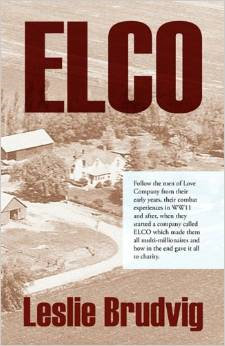
Weekly Self-Published Book Review:Elco

Book reviews are a great way for self-publishing authors to gain exposure. After all, how can someone buy your book if he or she doesn’t know it exists? Paired with other elements of your book promotion strategy, requesting reviews is a great way to get people talking about what you’ve written.

When we read good reviews, we definitely like to share them. It gives the author a few (permanent) moments of fame and allows us to let the community know about a great book. Here’s this week’s book review by Midwest Book Review:

 Elco

 Elco

Leslie Brudvig

Publisher: Outskirts Press

ISBN:9781432767273

War can forge bonds that last a life time. “Elco” is a novel by Leslie Brudvig about a troop of soldiers, who through their friendship, splits and reunion years later, create a business with their wide array of experience. Their friendship is tested, and they drive to do good in the world. “Elco” is a fine novel focusing on the extent that friendship can go, highly recommended.

Friday Conversations With A Self-Publishing Writer 01/02/15

HAPPY NEW YEAR!

Have you written your “list” yet?  Your “to-do” list of what you want to accomplish in the New Year?  One person I know writes out a This-Will-Never-Happen-In-My-Life-Again list.  Another creates a list titled: I Will Never Think of These Things Again!  Yep.  We all have ways of dealing with the beginning of the New Year—or the beginning of anything new.  However, from my writer’s perspective, I hold on to a lot of things from years and years ago—all those unfinished manuscripts that I’ll get to, someday.

Thomas Jefferson (the fella who wrote the Declaration of Independence and became the 3rd President of the United States of America) said: I like the dreams of the future better than the history of the past.  He was a BIG dreamer, that’s for sure, and his writings have encouraged and inspired millions of people long after his departure from this earth.  I remember a history teacher saying that Jefferson considered writing the greatest gift given to humans because they could then see their thoughts on paper and re-consider them.

One of my favorite authors, C. S. Lewis is quoted saying, “The future [is] something which everyone reaches at the rate of sixty minutes an hour, whatever he does, whoever he is.”  Gosh, why didn’t I think of that?  Does he mean that when I try to find time to complete the manuscript of my current book, I could, if I would?  I do become a bit annoyed with myself when “time flies by” so quickly and I’m letting myself be stuck on a point of minutia research.  When will I learn to “move along” and come back to that piece in the re-write?

SO…here is my 2015 New Year’s list for writers…you and me:

  1. Follow David Copperfield’s advice when he says, “My dreams are my dress rehearsals for my future.” Literally, allow yourself to dream about plotlines and characters. The writing will flow easier and faster.
  2. READ at least one excellent book a month! If the book doesn’t meet expectations within the first 50 pages, set it aside and select another. Time is precious and we only want to absorb the best writing techniques.
  3. WATCH movies or a television series that is similar to the genre you’re writing. Visually capture actions and events and the essence of the characters, especially their attitudes.
  4. LISTEN to a “Talk” radio or TV show and make notes on the guests as well as a few of the interesting questions and responses. Many of the guests will be actors and they often offer insights into HOW they develop their on-screen personae.
  5. TALK more often to Librarians and bookstore staff. They are the folks who know books and know about the people who purchase them. Recommendations from them, about books in my/our genre, are extremely valuable.
  6. SCHEDULE daily writing time!!!!!! Whether it is 15-minutes or 8 hours a day, guard that time with your life and WRITE something that develops your project.
  7. PLAN publishing!!! If you are a person to must have your manuscript “accepted” by a mainstream publisher, start developing your strategy to break through those very thick doors. However, as you know by my previous blogs, I highly encourage all writers to do their research in the self-publishing field and get your book in print! It literally breaks my heart when I see authors languishing and unable to write their next book because they’re “waiting to hear” from a mainstream submissions editor.

A final thought: this month opens the 2015 door to many new and wonderful adventures.  May your published book(s) be among them!

Royalene ABOUT ROYALENE DOYLE: Royalene Doyle is a Ghostwriter with Outskirts Press, bringing more than 35 years of writing experience to authors who need “just a little assistance” with completing their writing projects. She has worked with both experienced and fledgling writers helping complete projects in multiple genres. When a writer brings the passion they have for their work and combines it with Royalene’s passion to see the finished project in print, books are published and the writer’s legacy is passed forward.

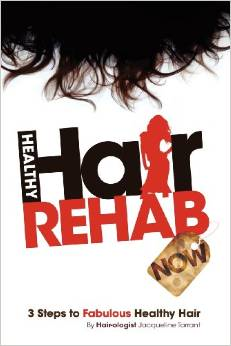
Weekly Self-Published Book Review: Healthy Hair Rehab

Book reviews are a great way for self-publishing authors to gain exposure. After all, how can someone buy your book if he or she doesn’t know it exists? Paired with other elements of your book promotion strategy, requesting reviews is a great way to get people talking about what you’ve written.

When we read good reviews, we definitely like to share them. It gives the author a few (permanent) moments of fame and allows us to let the community know about a great book. Here’s this week’s book review by Midwest Book Review:

 healthy hair rehab

 Healthy Hair Rehab

Jacqueline Tarrant

Publisher: Outskirts Press

ISBN:9781432784065


I have to say when I first received this book to review I wondered how anyone could write so much about hair, but I was very pleased at what I found. The author, Jacqueline Tarrant, will open your eyes to the whys and how’s of hair management. This wonderful author knows her hair and has many years of training behind her, so you can be assured that what you are reading is from someone who knows.

There are many topics in this book. Here are a few that I found fascinating: Can Prescription Drugs Cause Hair Loss?; The Link Between Your Health and Your Hair; and When Should You See A Doctor. She gets right to the root of these problems and helps with solutions. Ms. Tarrant explains so many areas concerning our hair, from thinning, graying, frizzy, to types of hair and what you should eat to help your body and your hair. I could go on and on about the information that is packed in this read, but that’s for you to find out.

Let me say this, every woman, and man for that matter, should have this book in their home. The information inside will shed so much light on questions we all have asked but never knew the answers to. This is an outstanding read and one I am proud to highly recommend. Well done, Ms. Tarrant!

Friday Conversations With A Self-Publishing Writer 12/26/14

CHARACTERS VII

As the Christmas decorations start coming down, there is an element of wistfulness that remains.  Even though the reality of Peace on Earth is not yet fact, many have enjoyed the feeling of Peace and LOVE, and I join them in wanting to hold on to that.  However—as I conclude this year’s discussion on the characters we’re creating within our books—I must offer a few closing thoughts about the antagonist character.  That person is (after all) the balance, the weight on the opposing scale, for the hero of the story.  Yes, we certainly have many “opposing weights” in this world (in history and present times) to use as examples.  But rather than name-names, let’s simply look at components that make the bad guys, bad.

POWER.  History teaches us that this one element holds the key to corrupting the ethics of even the most honest and compassionate human being.  Abraham Lincoln is quoted saying: “Nearly all men can stand adversity, but if you want to test a man’s character, give him power.”

HATE.  Author Steve Maraboli provides an excellent description of this concept and how infectious it becomes.  Steve says: “Most haters are stuck in a poisonous mental prison of jealousy and self-doubt that blinds them….”  The picture of a “poisonous mental prison” is exactly the element that can help a writer understand the Antagonist character.

FEAR.  This emotion is often recognized by scientists as the “first emotion” in humans—associated with survival.  An old German Proverb makes it easier to understand: “Fear makes the wolf bigger than he really is.” So, when the antagonist fears the protagonist (and other characters) in your story, bad things stir within them, causing harmful acts.

CONVICTION.  This element is needed in both the antagonist and protagonist and allows writers to develop scenes ranging from subtle, quiet conversations to full-blown war.  Daniel Webster (the dictionary writer) said: “A strong conviction that something must be done is the parent of many bad measures.”  So true…especially when your antagonist character decides to blow up the bridge—killing 20-30 people—when a simple blockade would do.

Lastly, an antagonistic element that has been more recently recognized and defined is DISSOCIATIVE DISORDER.  When humans “disconnect” from society (family, community, etc.) all the characters in the story are adversely affected.  This character would suffer depression, anxiety and have a distorted perception of people and things around them.  Their own sense of identity would blur and become fragmented.  Today there is a whole career path in the field of Criminal Psychology, helping law enforcement deal with the thoughts and beliefs of “characters” that play a role in initiating and sustaining criminal behavior.

So it is, my writing friends, that as this year of 2014 comes to a close, I remind you of absolute need for BALANCE in story-writing.  Developing your protagonist and antagonist characters (as you “sit” them around the table) may possibly be your biggest challenge with the greatest reward.  Readers today love the detail and are more informed about the world and people who inhabit it than ever before.  That’s great…because writers have an ever growing “pool” of characters to use as examples in the blending of our “people-on-the-pages.”

May 2015 bring you new ideas, faster typing fingers, and just the right self-publisher to make all your dreams come true!

Royalene ABOUT ROYALENE DOYLE: Royalene Doyle is a Ghostwriter with Outskirts Press, bringing more than 35 years of writing experience to authors who need “just a little assistance” with completing their writing projects. She has worked with both experienced and fledgling writers helping complete projects in multiple genres. When a writer brings the passion they have for their work and combines it with Royalene’s passion to see the finished project in print, books are published and the writer’s legacy is passed forward.