Friday Conversations With A Self-Publishing Writer 2/14/14

PICTURE THIS!

When a person includes 95 photos and a few illustrations in a memoir, readers will enjoy a unique and very personal adventure through time.  Such was my consulting/ghostwriting experience a couple years ago at the completion of the beautifully expressed life-stories of two exceptional people.  An extra bonus for me was that their project reinforced my understanding of the relation between photos (or illustrations) and story-telling.

During my school years, I remember several teachers telling me, “Royalene, you are definitely a visual learner.”  I think they were frustrated by that revelation because it created a challenge for most educators of that era—except the art teacher, of course.  However, as I grow into my chosen profession of writing—creating visual images with words—I appreciate their early analysis and I continue learning how to use this element to my benefit.

“Art,” they say, “evokes emotion,” and the artist/photographer will utilize this to express the essence of a moment captured in a millisecond of time and space.  The writer must carry this concept further by selecting words, and combinations of words, that transport instant images into the readers’ view—images that evoke emotion.  This ability will not only communicate their story well, it will also carry an author to the top of the Best Books list and possibly set them up for movie and/or television acclaim.

The visually shared experience will also have a greater sustained impact—one that will bring about contemplation of the various elements of the story and lead readers to discuss your book as their next Book Club selection!  Here are a few tips for writing visually:

LOOK FOR the emotion in your characters AND their environment.  Dissect the emotional anatomy of each of these elements, such as:

  • What is the motivation behind a character’s actions, attitude, and perspective?  What has your character experienced that brings about their reaction(s) to the events?  Did they suffer physical trauma that brought an emotional response?  What are they holding on to from their past that is creating current circumstances?
  • What is the emotional impact of their environment?  Do they live in a mansion or tent?  Is there a lawn—mown and manicured—or is it a field of weeds?  Has there been fire, flood, or drought devastation?  Can they hear the birds singing?  See flowers blooming? Watch butterflies float through the air?  Is the air so clear the brilliant blue of the sky is visible, or is the fog/smog so thick vision and breathing are severely hindered?

My client/friend’s memoir told the story using all these elements, and I am the richer for reading it.  That is my hope for all writers—that we can enrich the lives of our readers and enjoy every step of the process.  And if expressing the emotional elements are tough for you, don’t hesitate to accept help.  There are editors and ghostwriters out there—partnering with self-publishing teams of professionals who will help you complete your work.

Royalene ABOUT ROYALENE DOYLE: Royalene Doyle is a Ghostwriter with Outskirts Press, bringing more than 35 years of writing experience to authors who need “just a little assistance” with completing their writing projects. She has worked with both experienced and fledgling writers helping complete projects in multiple genres. When a writer brings the passion they have for their work and combines it with Royalene’s passion to see the finished project in print, books are published and the writer’s legacy is passed forward.

Weekly Self-Published Book Review: TaNellie

Book reviews are a great way for self-publishing authors to gain exposure. After all, how can someone buy your book if he or she doesn’t know it exists? Paired with other elements of your book promotion strategy, requesting reviews is a great way to get people talking about what you’ve written.

When we read good reviews, we definitely like to share them. It gives the author a few (permanent) moments of fame and allows us to let the community know about a great book. Here’s this week’s book review by Midwest Book Review:

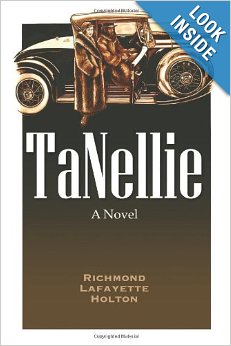
 tanellie

TaNellie

Richmond Lafayette Holton

Publisher: Outskirts Press

ISBN: 9781478714354

Reviewed by Michel Violante

“TaNellie” by Richmond Lafayette Holton takes place at the end of the Depression in Cleveland, Ohio. TaNellie is a well-educated, polite and sophisticated black pimp, and all his working girls are white. He protected and treated all of his girls well, didn’t abuse them, let them keep their tips and didn’t even force them to stay with him, but he also set some important rules. TaNellie builds a relationship with everyone in Cleveland’s under world thanks to his charm and good heart.

The reader is then taken into the past to learn about how TaNellie got to be born in Cleveland. It is here that the author creates an unbelievable plot by people connecting with each other through the twists and turns of life.

Holton’s story is like nothing I have read before. He presents a well written storyline filled with unexpected and thought provoking twists in this complex piece. The characters are well developed, colorful, and interesting. Cleveland set in the late 30’s and 40’s gave the story the perfect canvas. Although Holton takes the reader back in time more than once, the plot flowed perfectly throughout.

I must admit that when I picked up this book I thought I was going to read another typical mob story. I was wrong; instead I found a complex, colorful, thought provoking, and well written novel that entertained me and surprised me from the beginning to the end. Holton also presented the reader with a refreshing view of an era in American history that is usually presented through a clichéd lens. The crafting of the book was also of great quality: well written, professionally edited, a pleasure to read.
I truly enjoyed “TaNellie” by Richmond Lafayette Holton and recommend it to anyone who likes different depictions of topics that have been overdone by Hollywood. “TaNellie” was definitely a great read and a novel with a twist!

Friday Conversations With A Self-Publishing Writer 2/07/14

FLASH-WRITING

Back in the day, when prose and poetry readings were encouraged at coffee houses—and listeners snapped their fingers instead of applauding—editors from publishing houses frequented many of those dark rooms.  A “literary renaissance” was “happening” as individual writers stepped into church basements and back-alley saloons to give their work a voice.  Some of those we still read today were published by forward-thinking, yet mainstream, publishers.

Today’s writers live in a New Universal Renaissance—the flow of actions, events and concepts that even the Internet cannot contain.  The cultures of our world’s populations are being developed—positively or negatively—even as I write this blog.  People, politics, mega-business, health industries, Faith centers and yes, even sports, create an ebb and flow that seems to carry the world away.  Who can possibly make sense of it all?  Writers!  You and me!  And we no longer have to scribble our writings on coffee-house napkins and see them disappear.  We have a much better option!  Self-publishing!

Sitting beside the advantage of self-publishing is the necessity to write well.  I’ve talked about being organized and researching and writing from the heart—and each of those elements are essential.  But HOW do we start? WHERE do we find that one thing worth writing about?  It comes from Flash-writing, of course!  Some folks—from the 60s—might call it stream-of-consciousness writing, and the concept is similar, but not quite the same.

The similar part looks like this:  Find a comfortable spot—maybe in a favorite room and/or chair—and set your coffee, tea or Bailey’s beside you.  If this place happens to be an inspiring location, that is even better (a park, library reading room, art museum).  Setting up beside a large window-with-a-view is also a good option.  Then grab your preferred writing tool—paper and pencil, laptop, or iPad and WRITE!  Write anything that comes to mind.  Doodle.  Draw.  Scribble.  Scrawl.  PLAY with words.  If a person (character) pops into your thoughts, write about them.  If you’ve always wanted to travel to Mars, start planning the trip.  Write…write…and write some more!  That is the basic stream-of-consciousness method.

My adaptation: DO all that in 15 minutes or less!  This is Flash-Writing, and I’ve had more success, personally, by exercising my creativity in flashes than from hours of trying to force stream-of-consciousness thoughts.  Have you seen a YouTube clip of a Mob Flash-dancing?  What FUN!  And fun is exactly what writing is all about.  When the fingers are moving and the ideas are racing, we are having fun!  And the most fun of all comes when we hold our completed book IN our hands.

Did you know that some of the most well received movies/films came from short (in some cases very short) stories?  There is a 640 page book by Stephanie Harrison—a university professor—telling the true stories of some of these authors who became famous by “flash-writing” their ideas and developing them into Short Stories.

SO…GO HAVE FUN!  Let your voice be heard!  Write a short story!  Write several short stories!  Make a collection of them and GET THEM PUBLISHED!

Royalene ABOUT ROYALENE DOYLE: Royalene Doyle is a Ghostwriter with Outskirts Press, bringing more than 35 years of writing experience to authors who need “just a little assistance” with completing their writing projects. She has worked with both experienced and fledgling writers helping complete projects in multiple genres. When a writer brings the passion they have for their work and combines it with Royalene’s passion to see the finished project in print, books are published and the writer’s legacy is passed forward.

Weekly Self-Published Book Review: Twenty-Eight Snow Angels

Book reviews are a great way for self-publishing authors to gain exposure. After all, how can someone buy your book if he or she doesn’t know it exists? Paired with other elements of your book promotion strategy, requesting reviews is a great way to get people talking about what you’ve written.

When we read good reviews, we definitely like to share them. It gives the author a few (permanent) moments of fame and allows us to let the community know about a great book. Here’s this week’s book review by Midwest Book Review:

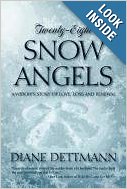
 Twenty-Eight Snow Angels

Twenty-Eight Snow Angels

Diane Dettmann

Publisher: Outskirts Press

ISBN: 9781432777043


When hit with loss, it can be so hard to simply continue living. “Twenty-Eight Snow Angels” is a memoir of loss from Diane Dettman as she tells her own story of being hit with the worst life can throw at her, losing love, and finding worth once more. Dedicated and uplifting, Dettmann hopes others will take her inspiration to find their own way through life. “Twenty-Eight Snow Angels” is written with much care and dedication, highly recommended.

Friday Conversations With A Self-Publishing Writer 1/31/14

FRAMED…

In my field of ghostwriting and concept consulting/building, I truly enjoy working with autobiographies/biographies, memoirs, histories and philosophy/faith projects.  These nonfiction genres allow the authors to weave their own experiences into the pages and breathe life into the details.  Although classified as fact-based, true-life books, they really are stories that carry a personal impact connecting author and Reader.

A current client is struggling—BIG TIME—to “put all the pieces together” for her book.  There are years of scribbled notes literally jammed into shoeboxes, not to mention the bigger box that holds the many pages of research materials.  Because she has had several “false starts,” we at least have somewhere to begin.  So, as I’m jumping into the non-fiction waters with this lovely lady, I wanted to share a few basic guidelines with our blog readers—and writers.

Nonfiction writing requires a framework—a definite perimeter or border to keep the author from racing down rabbit trails that not only distract readers, but also diminish the work-at-hand.  Here are my seven strategies for developing THE BEST nonfiction book:

The Topic:  With one or two sentences—not to exceed 38 words—tell yourself what are you writing about.  Be very narrow-minded here.  This is your “big idea” and the essence of it will be the heart of your book.

The Collection Box: (or file cabinet drawer, or large 3-ring binder notebook, or….).  Use that 38-word statement you’ve just created and print it out in BIG, BOLD TYPE.  This is the label for your collection of materials.  It is also the first thing you see when you work on your book and it is meant to inspire your thinking processes.

Sub-Topic Files:  You’ve probably already collected several pieces of information that relate to your topic.  Pull out those file folders and start organizing these pieces into sub-topic files.

Color-Coding:  As you build this collection of sub-topics, use color markers (or stickers) to mark the files that carry the most vital information.  Most writers will “file” their collection alphabetically, so the color-coding will allow you easy access to crucial facts when you need them.  For example:  Red = must be included; Orange = include; Yellow = good information; Blue = possible connections; Green = opposing opinions.

Bibliography File:  THIS IS AN ABSOLUTE MUST!  Always give credit to the “source” of your facts.  Unless you, yourself, are the source—the authority behind a statement—every fact, figure, quote, statistic, report, etc. must be acknowledged.  This can be woven into the manuscript; however, I always recommend that a bibliography be included at the end of non-fiction books.

To Outline or Not To Outline:  Every nonfiction writer I know has shown me an outline of their books.  Many end up using it—or most of it—as a Table of Contents.  So I must agree that it is useful.  However—don’t let an outline trap you.  Keep that 38-word statement fresh in your thoughts so that you will create a read-able book that is worth reading.

PLAN to Publish:  No one should do all the work of writing a book and then put it in a drawer.  The information you’ve gathered and poured your heart into is meant to reach a lot of people.  So once you have that Topic Statement, start your research into publishers.  I am one who believes in self-publishing; however, if your Topic is a “hot topic,” there might be a publishing house out there for you.  But NO MATTER WHAT, get your book IN PRINT!

Royalene ABOUT ROYALENE DOYLE: Royalene Doyle is a Ghostwriter with Outskirts Press, bringing more than 35 years of writing experience to authors who need “just a little assistance” with completing their writing projects. She has worked with both experienced and fledgling writers helping complete projects in multiple genres. When a writer brings the passion they have for their work and combines it with Royalene’s passion to see the finished project in print, books are published and the writer’s legacy is passed forward.