Conversations: 4/29/2016

THE MUSIC OF WORDS part FIVE

Well, here we are—at the point where you’ve decided I will not talk about the REAL elements of poetry: forms, genre and techniques. I’m not a fan of suggesting that poets lock themselves into specific formulas. However, I do see the value of practicing these forms (within their accepted genres) to increase an individual’s personal writing voice and form. Here are brief definitions of some of the forms utilized today:

poetry

  • Ghazal: common in poetry from Arabic, Azerbaijani, Bengali, Persian, Turkish and Urdu cultures this form has from 5-15 rhyming couplets that share a refrain at the end of the second line. Each line is identical in meter.


  • Haiku: a very popular form of unrhymed verse containing three sections in a structured 5-7-5 pattern. This form originated in Japanese poetry and often contains a “cutting or seasoned word” at the end of the poem.
  • Ode: This form comes from ancient Greek culture, having three parts: a strophe, an antistrophe and an epode. The strophe and antistrophe often offer conflicting perspectives and the epode looks at both intending to offer a clearer perspective. Odes were often sung as creative minds attempted to influence peoples of their time.
  • Shi: the main type of classical Chinese poetry with variations of folk song, old style, and modern style each with rhyming elements. They are most often considered folk ballad poetry and delivered in song.
  • Sonnet: This is the most commonly known form of poetry in modern times. It is a “set-rhyme” containing exactly fourteen lines with a logical structure. The first four lines introduce the topic, the second four elaborates and the third puts forth a perceived problem (usually a couplet or two lines) giving a twist to the logic-lines. The very distinct rhyme pattern is: a-b-a-b-c-d-c-d-e-f-e-f-gg.
  • Tanka: widely used in today’s Japanese poetry, this form is unrhymed with five sections totaling 31 “units” structured in a 5-7-5-7-7 pattern with a shift in tone and subject between the first three lines and the last two.
  • Villanelle: This form of poetry could almost be called an American/English form because of its popularity with poets such as Dylan Thomas. It contains nineteen lines made up of five triplets with a closing quatrain. There are two refrains (attractive as a musical form), concluding with two refrains.


It is my hope that reading these short definitions will not discourage “the poet within” you. If you’re just entering the world of poetry, remember that these forms can be bent a little by the author to be useful in multiple genres that look for the unusual. These genres include: Elegy, Epic and Dramatic poetry; Light verse and Lyric verse; Narrative, Fable and Satirical poetry; Prose and Speculative poetry.

Each of these forms and genres will also contain the basic elements of writing skills such as: rhythm, meter, metrical patters, alliteration, rhyme and rhyming schemes—and—the visual form of lines and stanzas. It is up to the poet/author to intrigue reader/editors and leave them demanding MORE of your work. Let your light shine and poetry fans will snap up all your published works! ⚓︎

RoyaleneABOUT ROYALENE DOYLE: Royalene has been writing something since before kindergarten days and continues to love the process. Through her small business—DOYLE WRITING SERVICES—she brings more than 40 years of writing experience to authors who need “just a little assistance” with completing their projects. This is a nice fit as she develops these blogs for Outskirts Press (OP) a leading self-publisher, and occasionally accepts a ghostwriting project from one of their clients. Her recent book release (with OP) titled FIREPROOF PROVERBS, A Writer’s Study of Words, is already receiving excellent reviews including several professional writer’s endorsements given on the book’s back cover.  

Royalene’s writing experience grew through a wide variety of positions from Office Manager and Administrative Assistant to Teacher of Literature and Advanced Writing courses and editor/writer for an International Christian ministry. Her willingness to listen to struggling authors, learn their goals and expectations and discern their writing voice has brought many manuscripts into the published books arena.

Conversations: 4/22/2016

THE MUSIC OF WORDS part FOUR


Okay…you enjoy writing poetry. When the thoughts and words are flowing onto the page you’re having FUN! Then the ideas seem to dry up. No one finds these moments, days, or weeks enjoyable. SO what to do? Over the years I’ve heard multiple responses to this question and have shared many of them in previous blogs. However, I don’t believe I’ve talked about the concept of looking to your monthly calendar page. Now, I know that sounds weird, and I thought it was too when I first heard it. Here is explanation I received.

Whatever month you’re residing in at the time, open a web-search with the words: January (February, March, etc.) holidays and events. The topics you find there will definitely bring laughter into your voice and provide just the inspiration you need to bounce back into writing. Since this is the month of April, here are a few topics to consider—and research.

  • National Humor Month: WHO is (or has been) your favorite humorist? I have two—Red Skelton and Robin Williams. Their biographies and viewing YouTube clips of their work will definitely inspire.


  • International Guitar Month: Have you ever been to a café-poetry-reading session when the background sounds are beautiful guitar music? This is an environment where the music of words really explodes.
  • Keep America Beautiful Month: Most of us have yearly calendars that show us the beauty of our country. There are also amazing websites that offer photographs galore from photographers past and present that display unique “corners” of our beautiful America. Combining visual inspiration with guitar melodies will definitely set the stage for your next poem and/or series of poems.
  • April 27th is National Tell A Story Day: Although this tradition started in Scotland and the UK, folks in the U.S. quickly adopted it. Poetry-storytelling is quite popular around the world and it doesn’t matter if it’s a fiction you created, or folklore, or a true story. Libraries celebrate this day by inviting storytellers to come and tell their stories. This is a great way to get your poetry books before the listening public.
  • The last Friday in April is National Arbor Day: Celebrated since 1872, it began in the flatlands of Nebraska and is focused on helping our natural environment thrive. Millions of trees are planted on this day—by thousands of outdoor and family groups. Participating and observing these activities can certainly be inspiring. However, what a great environment to bring a cooler of drinks to share and then share some of your poetry (maybe about trees) with these hard working tree planters. Did you know that the Latin word for tree is arbor? There’s another bit of trivia to inspire you.

arbor day

The poets I know who have used this method to trigger writing ideas have really enjoyed it. I hope you will too. And remember—NEVER STOP WRITING. You have the heart and soul of someone who sees things differently than the average writer. What you give to the world is irreplaceable! So, once you’ve completed a collection of your work, PUBLISH! ⚓︎

RoyaleneABOUT ROYALENE DOYLE: Royalene has been writing something since before kindergarten days and continues to love the process. Through her small business—DOYLE WRITING SERVICES—she brings more than 40 years of writing experience to authors who need “just a little assistance” with completing their projects. This is a nice fit as she develops these blogs for Outskirts Press (OP) a leading self-publisher, and occasionally accepts a ghostwriting project from one of their clients. Her recent book release (with OP) titled FIREPROOF PROVERBS, A Writer’s Study of Words, is already receiving excellent reviews including several professional writer’s endorsements given on the book’s back cover.  

Royalene’s writing experience grew through a wide variety of positions from Office Manager and Administrative Assistant to Teacher of Literature and Advanced Writing courses and editor/writer for an International Christian ministry. Her willingness to listen to struggling authors, learn their goals and expectations and discern their writing voice has brought many manuscripts into the published books arena.

Conversations: 4/15/2016

THE MUSIC OF WORDS part THREE

Impressions of Nature in Black and White by Wiliam Carlson

With the recent release of his book of photography and verse, IMPRESSIONS OF NATURE IN BLACK AND WHITE, author Bill Carlson quoted one of the most famous composer/pianists of all time at the close of his Introduction saying, “As I ponder the thousands of spectacular moments I’ve enjoyed while creating my portfolio of photography, I add this additional thought, attributed to Ludwig Van Beethoven: ‘Mother Nature is the Revelation of God.’” This recognition of the marriage between sight (photography), sound (symphonies), and poetry is a more complete definition of what is being honored each April—the National Poetry Month. And what all writers can learn from exploring the best of past and present poets is their unique ability to touch a Reader’s heart and soul with their words.  Here are a few of the best pieces of writing advice that I’ve collected from poets over the years:


  • “People will forget what you said, people will forget what you did, but people will never forget how you made them feel.” Maya Angelou
  • “The moon gives you light, And the bugles and the drums give you music, And my heart, O my soldiers, my veterans, My heart gives you love.” Walt Whitman
  • “I am not a teacher, but an awakener.” Robert Frost
  • “Draw a crazy picture, Write a nutty poem, Sing a mumble-gumble song, Whistle through your comb. Do a loony-goony dance’ Cross the kitchen floor, Put something silly in the world That ain’t been there before.” Shel Silverstein
  • “Every answer asks a more beautiful question.” e.e.Cummings
  • “Those who dream by day are cognizant of many things that escape those who dream only at night.” Edgar Allan Poe
  • Mistakes are a fact of life. It’s the response to the error that counts.” Nikki Giovanni
  • Work like you don’t need the money. Love like you’ve never been hurt. Dance like nobody is watching.” Mark Twain


Are their poets, artists, musical composers, lyricists, sculptures, banjo players you know who inspire your work? What about the famous photographers of the world? The renowned magazines National Geographic and Life have published a collection of photos from on earth and beyond—just for your inspiration pleasure.

We writers can also learn the importance of tenacity. Most know that Beethoven was almost totally deaf by the last decade of his life. Yet he never stopped creating beautiful music. Maya Angelou survived a very difficult life in her early years. And yet, each poet was able to reach inside and find their “muse”—that irresistible presence (or voice) that draws the artist toward their light of creativity.

What you are writing today may just be the next piece of poetic inspiration the world needs. If you notice things that others don’t see or sounds that others don’t hear and find meaning in your dreams, you are a poet/writer. If you are never satisfied with quick explanations but seek the truth, you are a poet/writer. Don’t wait for applause. Many may not “get” what you’re writing, but you must not stop.

Study the greats. Find your own voice! Write and write and write! Then…PUBLISH! ⚓︎

RoyaleneABOUT ROYALENE DOYLE: Royalene has been writing something since before kindergarten days and continues to love the process. Through her small business—DOYLE WRITING SERVICES—she brings more than 40 years of writing experience to authors who need “just a little assistance” with completing their projects. This is a nice fit as she develops these blogs for Outskirts Press (OP) a leading self-publisher, and occasionally accepts a ghostwriting project from one of their clients. Her recent book release (with OP) titled FIREPROOF PROVERBS, A Writer’s Study of Words, is already receiving excellent reviews including several professional writer’s endorsements given on the book’s back cover.  

Royalene’s writing experience grew through a wide variety of positions from Office Manager and Administrative Assistant to Teacher of Literature and Advanced Writing courses and editor/writer for an International Christian ministry. Her willingness to listen to struggling authors, learn their goals and expectations and discern their writing voice has brought many manuscripts into the published books arena.

Conversations: 4/8/2016

THE MUSIC OF WORDS part TWO

I REMAIN AMAZED by the productivity potential of poets (such as Lois Beebe Hayna—see last week’s blog) who have that unique ear and perspective that other writers work so hard to develop. I’ve gleaned a few pointers from her regarding the creative process of writing poetry. I also believe these concepts apply to writing well in all genres. Here are the main tools she’s given me:

  1. “You must have a good sense about words and their definitions, in order to be a good writer. However, you must be in love with words in order to be an excellent writer.”  Truer words were never spoken! If I’ve learned nothing else from Lois it is this: know the definition-s of the words—the dictionary definitions, the slang definitions and the social/cultural definitions.  That is where true creativity comes in play—knowing which definition fits best in the specific spot you’re placing it, or the play of multiple definitions that allow the reader a variety of ways to interpret what is on the page.
  2. Write about the things that interest you: what you care about, what you know about and/or what you might be considered an expert in. There is no substitute for being passionate about your subject matter. If you are bored with the topic, your readers will also be bored.
  3. Don’t be afraid to research! Even though you are comfortable with what you know about a subject, there is always more to learn. In this day of instant information what was accepted as fact yesterday may be totally inaccurate today. Readers will catch authors in misstatements very quickly and that is not the desired reputation to build.


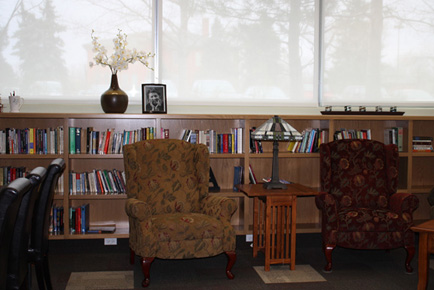
With these three key components you, too, will create music with the words you write. Because Lois is willing to release her work to literary journals, chap-book editors, contests and university publications, her poetry (and perspectives) have reached into thousands of homes. Yes, there were the rejections to deal with, but she did not let those stop her. Today there is a Library Room at Regis University (Denver, Colorado) named for her: The Lois Beebe Hayna Creative Writing Center. In it you will find several binders of her published and unpublished writings and young poets sitting at desks or curled up in a cushioned chair—writing!

Lois Beebe Hayna Creative Writing Center
Lois Beebe Hayna Creative Writing Center, courtesy of the Regis University website

I’ve heard writers groan about being “stuck” or experiencing “writers’ block.” Lois Hayna never let us use those words around her, always directing us to discover something new about the things that interest us and then “just let the words fall onto the page. Once they’re there, you can enhance the concepts, cut what doesn’t work, and fine-tune the piece to speak to you.”

SO, where are you in the process of creating your next—and best—piece of writing? Are you researching a new and different subject matter that caught your eye on last night’s TV-news? Did you hear someone use a word in conversation that didn’t fit—triggering discord in your writing ear? Or, have you been writing pages and pages on your favorite topic and are ready to talk to a publisher? Wherever you are—don’t stop! Keep going! You may just be the next author to have a Library Room of creative inspiration named after YOU! ⚓︎

RoyaleneABOUT ROYALENE DOYLE: Royalene has been writing something since before kindergarten days and continues to love the process. Through her small business—DOYLE WRITING SERVICES—she brings more than 40 years of writing experience to authors who need “just a little assistance” with completing their projects. This is a nice fit as she develops these blogs for Outskirts Press (OP) a leading self-publisher, and occasionally accepts a ghostwriting project from one of their clients. Her recent book release (with OP) titled FIREPROOF PROVERBS, A Writer’s Study of Words, is already receiving excellent reviews including several professional writer’s endorsements given on the book’s back cover.  

Royalene’s writing experience grew through a wide variety of positions from Office Manager and Administrative Assistant to Teacher of Literature and Advanced Writing courses and editor/writer for an International Christian ministry. Her willingness to listen to struggling authors, learn their goals and expectations and discern their writing voice has brought many manuscripts into the published books arena.

Conversations: 4/1/2016

THE MUSIC OF WORDS

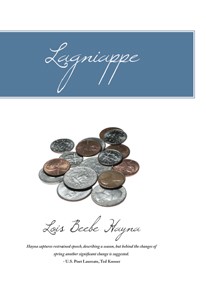
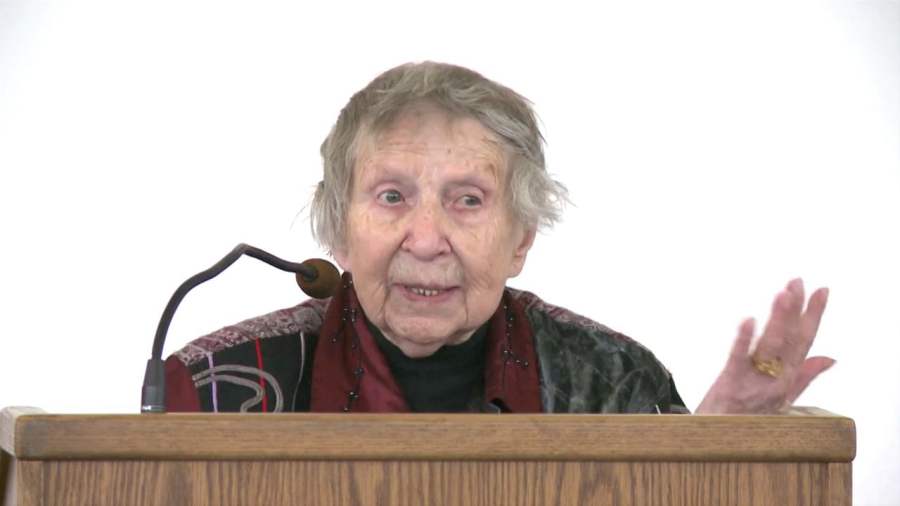
It was in early 2014, I believe, that I mentioned my creative writing mentor, Lois Beebe Hayna, in my blogs. She had just turned 101 years young and was actively writing and selecting poems to publish her next book of poetry titled Lagniappe (released in December 2014). The word lagniappe means a little bit extra. Lois tells us that she feels she’s been given extra time in this life to write poetry, and that’s exactly what she intends to continue doing. Today at 103, she ignores the physical challenges of losing her hearing and eyesight, and continues to create her unique music with words.

Lagniappe-206x300

This month marks the 20th anniversary of National Poetry Month, and I can think of no better way to honor the great poets of history—past, present, and future—than by sharing Lois’ story of becoming a highly respected poet and mentor to anyone who knows her and reads her works. The following is how Lois speaks about her writing life “in brief” calling it “a cautionary tale.”

Lois Beebe Hayna
[ Lois Beebe Hayna ]
“If you want your life to include writing or painting or any of the vocations which don’t produce a paycheck, nobody’s going to make it easy for you. Nobody’s even going to take you seriously until after you’ve somehow done it. In my case, friends and neighbors had plenty of reasons to caution me. I grew up in a one-parent family in the tiny village of Vesper, up in the center of Wisconsin. It was the middle of the Depression—that big one—and I think we knew no one who was not worried about his future. Even the best of farmers were going bankrupt.

I went from our two-room school which did offer good teaching, to high school in neighboring Wisconsin Rapids, and then I taught a one-room rural school, fortunate to be hired. During that winter I learned I’d been awarded a partial scholarship which allowed me to enter the University of Wisconsin at Madison. Aside from great classes and wonderful teachers—among them S.I Hayakawa and Helen C. White, William Sumner, and R.E.N. Dodge, I met other writers and even published a few poems.

The Depression was still on. A degree helped no one find work, and certainly nobody was paying for poetry, then or now. We drifted into low-paying jobs or no-paying research, or, as in my case, got married; which introduced me to the southern states.

After three children and many moves, I found myself newly-divorced in Denver, Colorado, at a time when luckily for me, jobs had become available, never mind that for someone with no training or experience, the pay scale was dismal. But the children grew up. I remarried, and somehow, though I still read poetry avidly, I thought my chance for writing was past.

Only a remark from a college classmate sent me back to see if I still had anything to say, or any skill in saying it. I was in my early sixties. I was that close to never writing anything.”

SO POETS! Writers of one or multiple styles! Follow this example. NEVER QUIT! Hang in there and keep writing! And don’t hesitate to self-publish! Should you be as blessed as Lois Hayna and live into your 100s, you’ll deeply enjoy holding ALL your books in your hands! And, so will your fans! ⚓︎

RoyaleneABOUT ROYALENE DOYLE: Royalene has been writing something since before kindergarten days and continues to love the process. Through her small business—DOYLE WRITING SERVICES—she brings more than 40 years of writing experience to authors who need “just a little assistance” with completing their projects. This is a nice fit as she develops these blogs for Outskirts Press (OP) a leading self-publisher, and occasionally accepts a ghostwriting project from one of their clients. Her recent book release (with OP) titled FIREPROOF PROVERBS, A Writer’s Study of Words, is already receiving excellent reviews including several professional writer’s endorsements given on the book’s back cover.  

Royalene’s writing experience grew through a wide variety of positions from Office Manager and Administrative Assistant to Teacher of Literature and Advanced Writing courses and editor/writer for an International Christian ministry. Her willingness to listen to struggling authors, learn their goals and expectations and discern their writing voice has brought many manuscripts into the published books arena.