Book pricing – authors, what are you worth?

An interesting article published not long ago profiles one author’s success self-publishing over more traditional publishing models, most notably in terms of higher net royalties on book sales. In fact, the case study recorded significantly higher royalties on a relatively low quantity of book sales.

The book pricing advantages of self-publishing is no stranger to this blog, nor the increasingly successful population of authors who follow that path. While book pricing has a notable effect on your book sales and marketing efforts, your pricing decisions fall into the production (or even planning) stage.

Also interesting, this particular article also mentioned that writers should never have to pay for publishing upfront.

Compelling isn’t it? I’ve worked with many authors who have been pulled in by that concept, but in the end find themselves a book of average production quality sold back to them at highly marked-up costs which would find difficulty competing in any retail market.

Free publishing mirrors the traditional model, and its easy to find validation in your writing through an organization that would publish material for free.

But…

Publishers are businesses and need to make money too, after all. Often this free publishing model really only puts self-designed books right back in the hands of its author, not readers.

One successful alternative does involve upfront publishing fees, which opens a direct contract between authors and publishers including quality, professional production on books that are competitively sold in the marketplace, where readers buy books. Make sure your self-publishing choice includes those things like cover design, interior formatting, and full distribution. Also, as previously mentioned– and the significance here is worth the redundancy – make sure your publisher offers pricing flexibility (control) and 100% royalties on book sales.


Share this Post

Guest Post: Ask the Book Doctor

The Book Doctor offers Typography & Dialogue advice for the self-publishing writer…

Q: When I first started on a novel in 1995, publishers wanted italicized words to be underlined instead, even though we had the capability of changing the font on our computers. Is this still the case? Can we now use the appropriate font, or must we inquire from each publisher? I have visions of having two manuscripts, one with and one without italics.

A: It’s always best to check with the publisher, but The Chicago Manual of Style says to use italics. If you do use underlines, tell the publisher your intent that underlined items are to be set in italics in the printed version.

Q: In Write In Style I did not see anywhere you may have addressed this directly, but when writing internal dialogue, I take it from your book that you would never say he told himself or I told myself something. Is that correct?

A: This conclusion might be drawn from the fact that in my book I say “thought to himself” is redundant, because we cannot think to anyone but ourselves. We can, however, tell other people things, just as we can tell ourselves things, so I have no problem with saying he told himself, she told herself, or I told myself.


Share this Post

What’s your question about writing or publishing? Bobbie Christmas, book doctor, author of Write In Style (Union Square Publishing), and owner of Zebra Communications, will answer your questions, too. Send them to

More on Book Titles for self-publishing authors

How effective is your title? Did you know that a professional, optimized book title can, in some cases, mean literally thousands of extra dollars in book sales? We recently covered book title news and the importance of your cover in your book marketing efforts.

You may still be considering among a number of book titles, even if your manuscript is near complete or even complete. Or, maybe you’ve had the title of your book in your mind for a long time, even before you began writing. In either case, let’s take a closer look at the importance of book titles.

People do judge books by the cover, and that includes the book title. Effective book titles can sometimes mean the difference between lackluster sales and a very successful self-published book, especially in today’s marketplace.

Amazon is by far the largest book marketplace, and as we know, it an exclusively online retailer. The fact is more and more readers are finding products online, and books are no exception. With that dynamic it is increasingly important that your book title be rich with keywords and key phrases – search terms that potential customers might type into Amazon & Google when looking for information on the topic of your book.

This is particularly true for non-fiction books, but fiction and even poetry can benefit from a well chosen title and subtitle. You may be thinking wait a minute, I don’t want to dilute the artistic value of my book with an optimized book title. The good news is that you don’t really have to. Online sales don’t require that your subtitle be included in your actual cover design. However, it is valuable for them to be included in the distribution information for your book in places like online databases and the copyright registration. This helps with search engine optimization.

Here is what we suggest you consider in selecting your book title and subtitle:

  • Consider its originality and/or uniqueness
  • Review your title suggestion and synopsis to compile a list of keywords and/or phrases for your book
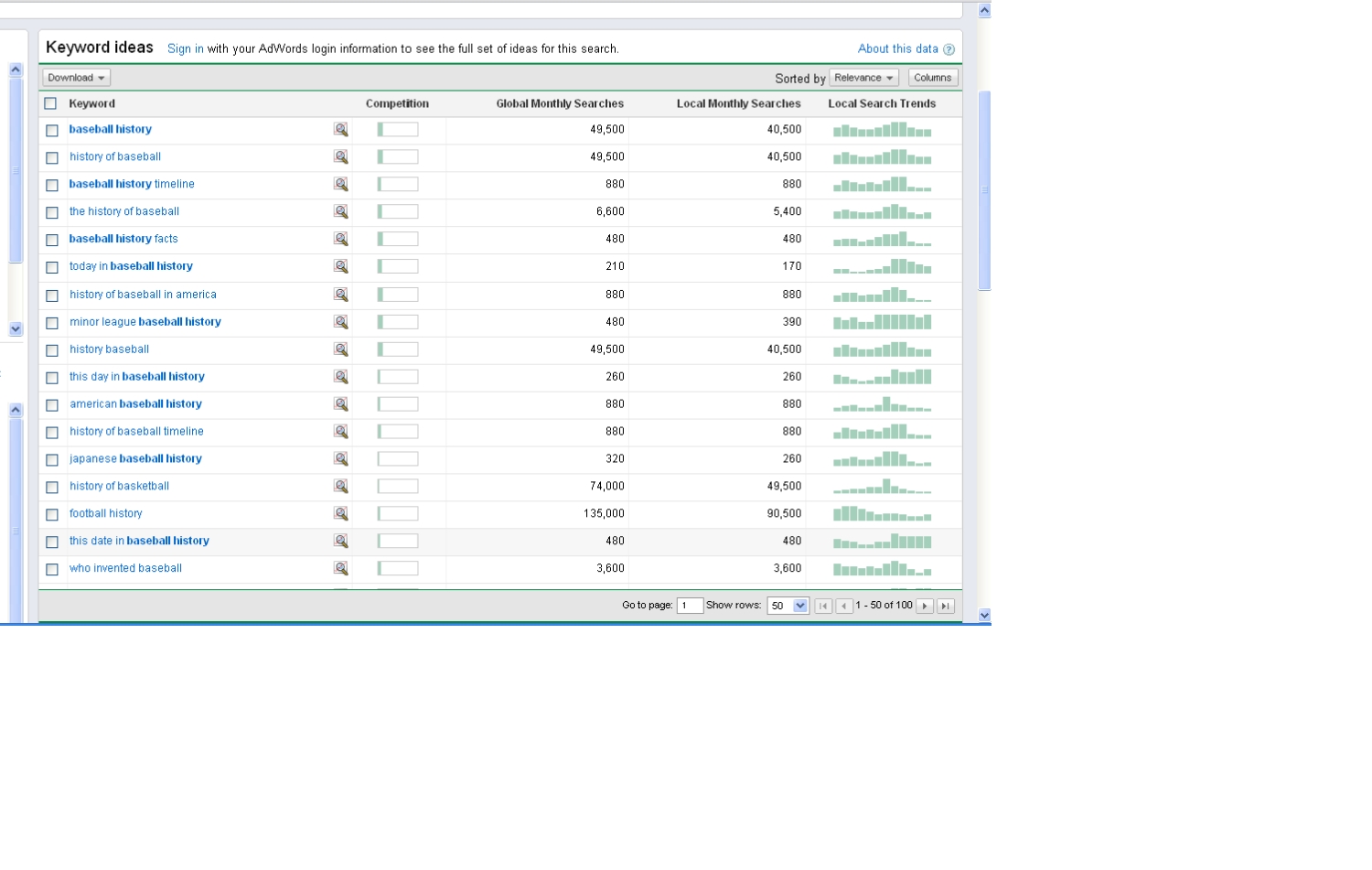
  • Search and Google databases for other previously published books with titles similar to yours. Here is a screen shot of a simple Google search result on “Baseball History” for example (click image to view regular format in your browser:


    Share this Post

You can’t judge a book by its cover

Ah, but you have judged many a book by its cover, and will again. So, too, will readers considering purchasing your book whether in the brick & mortar store or online at sites like Amazon. This is a great opportunity for self-publishing authors.

We discussed recently the important of well written sales copy for your book’s back cover. Let’s flip it around. Literally. Your book’s cover is one of the singe most important elements in generating sales, especially online and before reader interest grows virally.

A book has around 3 seconds to gain a reader’s or buyer’s interest. That dynamic is becoming increasingly more important as the number of books published each year continues its staggering growth. Quality, custom cover design should be a top priority for any self-publishing author. Many self publishing services actually require authors to submit or create their own designs from generic templates. Your writing most likely didn’t come from a template, and neither should your cover. And the reality is, many writers are not necessarily experienced designers. When research publishing options for your book, make sure yours offers the custom cover design options that give your book the strongest head-start possible in finding reader’s hands.
Then, begin recruiting judges.


Share this Post

Guest Post: The Book Doctor on Ghostwriting

More on ghostwriting for self-publishing authors from the Book Doctor…

Q: Where can I find an established writer to write my husband’s story?

A: Let’s first discuss the term “established,” because I want to be sure you are informed about the writing business. Most established authors and ghostwriters will not co-write a book without getting paid up front, because their time is valuable, they know how difficult it is to sell a book to a publisher, and they know that even if a publisher buys the book, the royalties on it can be abysmal. For those reasons, established writers won’t “write on spec,” as we call it, a term that refers to the speculation that the book might sell, and if it does, the writer would participate in the royalties. Unless you have $10,000 to $25,000 to pay an established writer or ghostwriter, look for someone who is not yet established. For a writer willing to work on spec, call around to find a college with an MFA program in creative writing. Ask the professor how to get your request to students. Perhaps one of the students will take on your husband’s story as a writing project and use it toward getting a degree.

If, however, you have the funds to pay an established ghostwriter for your book, many are registered with writers organizations. Search the Internet, and be sure to get references on the person you choose.


Share this Post

Bobbie Christmas, book doctor, author of Write In Style (Union Square Publishing), and owner of Zebra Communications, will answer your questions, too. Send them to Bobbie@zebraeditor.com. Read more “Ask the Book Doctor” questions and answers at http://www.zebraeditor.com