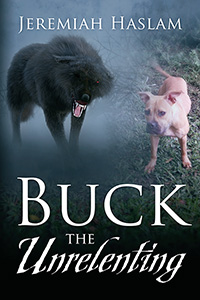
Virtual Book Tour Blog Post – BUCK The Unrelenting by Jeremiah Haslam

Faith, courage, and the bond between humans and their loyal companions take center stage in Jeremiah Haslam’s inspirational novel BUCK The Unrelenting. A powerful tale that channels the spirit of classics like The Call of the Wild and White Fang, Haslam’s story reminds readers that even in the face of loss and hardship, faith can light the way forward. As part of his virtual book tour, we’re celebrating this moving debut with a few fun and thoughtful extras that bring the world of Buck and his family to life.

Top 5 Reasons Readers Love BUCK The Unrelenting

  • A story of faith and perseverance that uplifts and inspires through every chapter.
  • The unforgettable bond between Buck and his family, showing the redemptive power of love.
  • A deeply human portrayal of loss and courage set during the Great Depression.
  • A faithful message woven naturally into a powerful, adventure-driven story.
  • Its universal themes of hope and resilience, appealing to readers of all ages.

Soundtrack for BUCK The Unrelenting

Every great story deserves a great soundtrack. If BUCK The Unrelenting had one, it might sound like this:

  • “Eye of the Storm” by Ryan Stevenson – for its message of perseverance through faith.
  • “You Raise Me Up” by Josh Groban – echoing the spirit of renewal after hardship.
  • “Brother” by NEEDTOBREATHE – a tribute to loyalty and family bonds.
  • “Oceans (Where Feet May Fail)” by Hillsong UNITED – capturing the courage to trust in divine strength.
  • “Amazing Grace (My Chains Are Gone)” by Chris Tomlin – symbolizing redemption and faith’s triumph.

Character Introduction: Meet Buck

Buck isn’t just a dog—he’s a symbol of steadfast courage and unbreakable faith. Born on a small mountain farm and raised by a God-fearing family, Buck’s journey mirrors our own struggles and triumphs. If Buck could speak, here’s what he might say:

  • What drives you, Buck?
      – “My family. Their love gives me purpose, and their faith gives me strength.”
  • What’s the hardest challenge you’ve faced?
      – “Losing my mother. But I learned that even through pain, there’s purpose.”
  • What lesson do you want readers to remember?
      – “Never stop fighting for what’s right. Stay strong. Stay faithful. Stay unrelenting.”

Jeremiah Haslam’s Book Club Picks

If you loved BUCK The Unrelenting and want to explore similar stories of faith, perseverance, and the beauty of God’s creation, Jeremiah recommends these inspiring reads:

  • White Fang by Jack London – A classic about nature, loyalty, and redemption.
  • The Yearling by Marjorie Kinnan Rawlings – A tender story of love and loss in the natural world.
  • Where the Red Fern Grows by Wilson Rawls – A coming-of-age story defined by courage and compassion.
  • The Shack by William P. Young – A spiritual journey of healing and faith.
  • Because of Winn-Dixie by Kate DiCamillo – A heartwarming reminder that love and friendship can heal all wounds.

Bookish Fun Facts about BUCK The Unrelenting

  • Jeremiah Haslam named Buck after a real dog he owned as a teenager—a tribute to the pet who taught him unconditional love.
  • The story’s small-town setting was inspired by Haslam’s own rural upbringing and love for community.
  • Many of Buck’s heroic acts were inspired by true stories of dogs who saved their owners’ lives.
  • Jeremiah wrote parts of the novel during quiet reflection and prayer, believing God guided the story’s tone and message.
  • Readers often say Buck reminds them of their own pets—their loyalty, strength, and faith in times of trial.

Filled with heart, hope, and divine purpose, BUCK The Unrelenting is more than a story—it’s an uplifting journey about faith’s power to overcome adversity. For anyone who has ever loved a dog, faced a hardship, or believed in second chances, Buck’s story will remind you that you, too, can stay unrelenting.

Available now through Outskirts Press, Amazon, and major online retailers. Learn more at OutskirtsPress.com or wherever books are sold.

This content was enhanced through collaboration with AI-powered creativity applications.

Top 5 Reasons to Read Harper’s Bizarre During Mike Thorne’s Book Tour

• A gripping small-town crime story reminiscent of authors like Karin Slaughter and Greg Iles.

• A cast of complex characters, each grappling with secrets, vengeance, or redemption.

• The blend of psychological insight and suspense keeps readers hooked from the first page.

• Themes of rumor, justice, and community upheaval create rich book club discussions.

• A uniquely Southern atmosphere that brings readers right into Harper’s streets and homes.

Playlist for Harper’s Bizarre

• Every Breath You Take – The Police (echoing the novel’s themes of surveillance and obsession).

• Sweet Dreams (Are Made of This) – Eurythmics (a haunting 80s vibe fitting Brad’s hallucinations).

• In the Air Tonight – Phil Collins (perfectly mirroring tension before a showdown).

• Don’t Stop Believin – Journey (a reminder of resilience amidst chaos).

• With or Without You – U2 (channeling heartbreak and fractured relationships).

Meet the Characters

• Chief Grady Noland – A steady leader, but one whose health and sanity are tested by Harper’s bizarre crimes.

• Brad Childers – A troubled young man whose hallucinations spiral into deadly consequences.

• Jesse – A manipulative influence who pushes Brad into horrific choices.

• Bone Ludlow – A vengeful ex-husband driven to destructive extremes.

• Nancy and Danny Dewberry – Caught in the fallout of violence and revenge.

Author’s Book Club Picks

If you enjoyed the layered psychological suspense of Sharp Objects by Gillian Flynn, you’ll be hooked by the complex characters and dark secrets in Harper’s Bizarre.

If you were drawn into the Southern setting and hidden crimes of Natchez Burning by Greg Iles, you’ll feel right at home in the college town of Harper.

If you loved the twisty domestic thrills of The Couple Next Door by Shari Lapena, you’ll find similar shocking turns and betrayals in Harper’s Bizarre.

If Ordinary Grace by William Kent Krueger resonated with you for its community drama and moral questions, you’ll appreciate how Harper’s Bizarre explores the ripple effects of rumor and tragedy.

If Murder in Memory by Mike Thorne intrigued you with its psychological depth, Harper’s Bizarre continues that legacy with even greater suspense and intensity.

Bookish Fun Facts

• The author, Mike Thorne, spent nearly four decades as a psychology professor—giving his characters rare depth.

• He has published over 1,000 articles in numismatic magazines, proving his range of interests beyond fiction.

• His short story Worms placed ninth in a Writer s Digest competition with over 2,000 entries.

• Thorne loves British TV mysteries, which influence the tone and pacing of his crime novels.

• The fictional town of Harper was inspired by the charm and gossip-filled dynamics of real Southern college towns.

Where to Find It

Harper’s Bizarre is available in paperback and hardback with worldwide distribution through Outskirts Press, Amazon, and major booksellers. Readers can also learn more and purchase directly for a 10% discount at: https://outskirtspress.com/harpersbizarre

This content was enhanced through collaboration with AI-powered creativity applications.
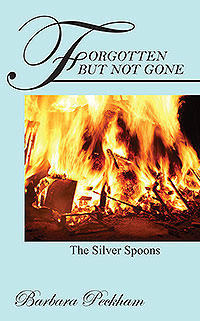
ORIGINAL BOOK REVIEW: “Forgotten But Not Gone” by Barbara Peckham

OFFICIAL DESCRIPTION*:

Forgotten But Not Gone is an interwoven story about a married housewife and part-time librarian living in coastal Massachusetts in 1965. She is happy and very active in her life there. However, she has a background that no one knows about except her husband, George, and even he doesn’t know anywhere near the whole story. He knows that she has amnesia about her early childhood, but very little else.

All Liz really remembers is that, at the age of about fourteen or fifteen, she found herself running, panicked, down an Appalachian mountainside. She had no idea then, nor did she now have any memory of what had happened before that, what she was running from, or what had frightened her so much. Now she seldom thought about it. She had managed to get on with her life and what was past was past.

That is, until, one day a strange letter arrives in her mailbox. It appears that someone know things about her that she doesn’t even know, and it frightens her. Not long after, other occurrences begin, and they escalate more and more in intensity and danger. She is sure all this has to do with the past she can’t remember, and she begins to fear for her life. She has had, ever since she can remember, some silver teaspoons with initials engraved on them, and a diamond ring, but she has no idea whose they were or what the initials mean. Did she steal them? Is someone finally going to find her? Then a teaspoon exactly like hers turns up in the collection of a friend. Where did she get it? How are they connected?

Still, try as she might, all she can remember is that she ran until she came across a hardscrabble farm, where an elderly couple took her in. They treated her like the daughter they had lost. She stayed and worked the farm with them until, after a few years, they died, one shortly after the other, and she was forced to leave the only home she remembered to go out on her own with few resources and little education. The years following were years of hard work and night school.

The story weaves back and forth between the present, [with] Liz revealing more of her past, a mysterious man who has come to town with a vengeance, and a young woman who has in her possession another of the silver spoons. All comes together at the end with a terrible fire, and the truth comes out.

REVIEW:

Once upon a time, a girl stumbled out of the thickly forested Appalachian foothills and into the lives of an elderly couple on a small farm. Uncertain of what had happened before she entered the forest, her exact age, and even her own name, the girl is dubbed “Nell” and nurtured by the Ekburgs until their deaths send her out into the world, ready to make a new life for herself under a new name, and equally determined to make new memories to replace the ones she’d lost.

Thus begins the story of Forgotten But Not Gone: The Silver Spoons, a new cross-genre historical fiction plus mystery novel from Barbara Peckham. The novel leaps twenty-odd years into the future, and catches up with Nell, now Mrs. Elizabeth (“Liz”) Everson, living a calm life as a part-time librarian and housewife just prior to Halloween in 1965. And yes, a set of silver spoons really does connect the dots between the stories of Nell/Liz/? and those of the book’s other point-of-view characters, including her husband George, the young Joyce, Liz’s new friend Elaine, the local police chief, and an unnamed mystery man who thinks he knows exactly what happened during Liz’s forgotten years––and is determined to punish her for it.

Told in a combination of straightforward narrative and flashbacks from their prior lives, Forgotten But Not Gone: The Silver Spoons perfectly melds those elements it borrows from historical fiction and cozy mystery genres. Peckham has an eye for detail, walking her readers back through the years to a time when phones were analog and had those spiral cords (you still can find them for sale as ‘antiques’ on Etsy, which makes me feel absolutely ancient), and when people sent letters that were made of actual paper. She also embraces all of the pomp and circumstance (and obsessive planning) behind many a community celebration of the variety still common in older, tourist-friendly East Coast shore towns. As a librarian, Liz enlists Elaine and her other Book Club friends to assist in organizing Seaside’s Christmas parade and neighborhood gathering––a subplot that is blessedly free of the sinister elements that are becoming routine in the Everson household all of a sudden. It is here, with her friends around her and a project to complete, that Liz’s fundamental personality really shines––and her natural aptitude for winning people over. It’s only when Liz returns home that she is haunted by danger, and the nagging feeling that someone is out to get her for things she can’t even remember begins to sink its claws into her mind.

So, what happened in those years she’s forgotten? I can’t tell you exactly, since to do so would be an unforgivable spoiler, but Peckham weaves together the various elements of the novel into one, cohesive, and compelling story of fractured and found families, suspense and seeking sanctuary, and the making of a whole and complete life.

At a time when the world seems to be either on fire or consumed by some other tragic breaking news, Peckham invokes an era when the local police were also neighbors and friends, when daily life felt comfortable like a favorite sweater, and when libraries were the surest place to discover critical information in a mystery so old the trail is beyond cold––it’s pure ice. And I find this somewhat ironic, given that fire and ice (or at least, icing bruises) are common themes in Forgotten But Not Gone: The Silver Spoons. I heartily encourage you to take a peek at this novel if you liked Big Little Lies but wished that people would just talk to each other and figure out a solution together, or if you find yourself hankering for a seasonally appropriate read in the months between Halloween and Christmas. After all, we all need a satisfying spook every now and then.

IN SUMMARY:

Compassionately written characters learn crucial details about their own lives in this cozy, genre-bending novel from Barbara Peckman. Forgotten But Not Gone: The Silver Spoons is exactly the right book at the right time for those of us who love old houses and old towns and old memories relived.

WHERE TO BUY?

You can find Forgotten But Not Gone: The Silver Spoons wherever good books are sold, including Amazon and WalMart. You can also find out more about Joseph Bylinski’s work on the book’s Outskirts Press author page.

WHAT NEXT?

I’m digging into Rambling With Milton next, a novel that follows a journalist and columnist whose youthful ideals about romance remain unfulfilled after a long and successful career. A significant chunk of this romantic work of fiction is set around a Christmas play and the long road to recovery one woman faces as she falls in love. The premise is exactly the sort of thing to have me restocking my kleenex supplies, so I will update you with more information in the days to come!

I received a copy of this book in exchange for an honest review. 

* Courtesy of Amazon book listing.


SONY DSC

ABOUT KENDRA M.: With nine years in library service, six years of working within the self-publishing world, as well as extensive experience in creative writing, freelance online content creation, and podcast editing, Kendra seeks to amplify the voices of those who need and deserve most to be heard.

Friday Conversations With A Self-Publishing Writer 03/27/15

CREATING THE MOMENTS OF EXPERIENCE

In the study of Philosophy, the term “empirical knowledge” refers to knowledge based on experience. As professors and students dig further, they discover that experience is also the processed and unprocessed thoughts perceived after an event occurs.  From those thoughts, wisdom is gained as people/characters reflect and/or interpret the actions and events of their lives.  German Philosopher, Friedrich Nietzsche once said: “To live is to suffer; to survive is to find some meaning in the suffering.”

What I’ve just described is the heart of and the “act” of writing and reading fiction. In the course of our lives, we will never be able to experience what it is like to live in all the societies/cultures around the world—or all the times/eras. However, through fiction novels we can imagine it. Some might argue that non-fiction facts provide a clearer picture and understanding. I politely disagree because it is in the EMOTION of the moments of life that we are able to truly grasp the essence of what has happened.

Back when I was teaching, we did a week-long exercise in Emotion, Mood and Motivation. My question was, “Which comes first?” Does the mood of the moment create the emotion that motivates the action?  OR…does a character’s deep-seeded motives create the mood that then creates the emotion and action? OR…(well, you get the idea).  Here comes the really fun part of writing fiction. Writers get to jump into those motives, moods and emotions of each of their characters and discover new experiences for their readers to experience.  Here are some ideas to help you in developing your skills and abilities in this area.

  1. Fiction author, Orson Scott Card suggests focusing on motivation: “Instead of writing about feelings, write about WHY your characters are doing the things they’re doing.”
  2. If your readers need to know that the main character is “full of fear,” stay away from telling that fact—show the emotion. Example: the house is quiet and peaceful…the cat knocks over her water dish…the main character JUMPS into the corner of the room behind the couch and bursts into tears.
  3. Mood music. The world of movie-making uses this element to the max and we’ve all experienced it. This can be—and must be—accomplished in fiction writing, too. Much like an artist paints a masterpiece, the use of description (yes, adjectives) is an art to itself. READ the master-authors who utilize this gift and you will develop it, too.

Folding these elements of Mood, Motivation and Emotion into your characters will greatly enhance your ability to give readers exactly what they are looking for in Fiction Novels—their subconscious (and often conscious) need to experience life from another perspective. No two characters (or people) will react to events and circumstances in the same manner. And, as the character experiences more of life, they may not react as they did previously.

The excellent Fiction Author will grasp these elements of writing and never let them go, but continue to develop them throughout their writing lifetime.  That is my hope for every reader of this blog, that you will write and publish the very best quality of Fiction Novels and reap all the rewards!

Royalene ABOUT ROYALENE DOYLE: Royalene Doyle is a Ghostwriter with Outskirts Press, bringing more than 35 years of writing experience to authors who need “just a little assistance” with completing their writing projects. She has worked with both experienced and fledgling writers helping complete projects in multiple genres. When a writer brings the passion they have for their work and combines it with Royalene’s passion to see the finished project in print, books are published and the writer’s legacy is passed forward.

Friday Conversations With A Self-Publishing Writer 03/20/15

A BIT MORE ABOUT THE PLOT

When I was still in the high school classroom (teaching advanced writing), I borrowed the Science and Biology teacher’s skeleton for a day. I found it to be a very useful visual in my efforts to explain the importance of actions and events when building the storyline (plot) of short stories and novels. This illustration is from the free ClipArt files and I especially like that the figure is IN MOTION…as the plot should be.

skelton

There is an ongoing discussion among writers as to whether Characters drive the Plot or the Plot drives the Characters.  I’m in the first camp—because it is the re-actions of the characters (to the plot action/events) that keep Readers turning those pages.  The skeleton illustration demonstrates that the brain (character thoughts, emotions) send the signal to the other parts (plot action/events) in order to move forward.

I can, however, acknowledge the other discussion position because if there was no “hand” to send a signal to (no planned plot event or action) then nothing would happen.  Ah…the conundrum!

So it is that I focus on the concept of MOTION—moving forward toward my desired conclusion—when developing a plot for any length of fiction.  Here are a few ideas to help with that…

  1. Start with “The End.” Have you seen the TV commercial (mini-short-story) where the cowboy rides off into the sunset and is knocked off his horse by the words THE END? Knowing how you want your story to close should provide many ideas for the characters to “act out” in order to get there.
  2. Think dialogue. Some writers don’t consider dialogue to be part of the definition of PLOT. However, I offer this thought using the above scenario. The cowboy is knocked off his horse—injured—so there will be some type of re-action to that event and (for humans) it usually includes LOUD WORDS. What they say usually leads to the next step in the storyline.
  3. Consider HOT and COLD, never TEPID. Lukewarm, half-hearted plot points usually cause a reader to close the book and not pick it up again. Again, I’m NOT saying that there needs to be an explosion in every chapter. Cold/cool moments are very necessary in order to give readers a chance to consider what has happened, and what they “guess” might happen within the next pages.
  4. Take a look at the skeleton’s CENTER of gravity. The dynamics of motion rely on balance. It is the same with the fiction novel. Protagonists and Antagonists (and their supporting characters) need to be vitally present, active, and positioned throughout the story in a balanced manor.

I hope this running skeleton helps someone better understand the concept of PLOT—actions and events—necessary for excellent fiction writing. Just the “look” of those running bones should spur us all forward just to escape IT!  Smile….and enjoy many inspired hours of creative writing and publishing!

Royalene ABOUT ROYALENE DOYLE: Royalene Doyle is a Ghostwriter with Outskirts Press, bringing more than 35 years of writing experience to authors who need “just a little assistance” with completing their writing projects. She has worked with both experienced and fledgling writers helping complete projects in multiple genres. When a writer brings the passion they have for their work and combines it with Royalene’s passion to see the finished project in print, books are published and the writer’s legacy is passed forward.