Friday Conversations With A Self-Publishing Writer 12/26/14

CHARACTERS VII

As the Christmas decorations start coming down, there is an element of wistfulness that remains.  Even though the reality of Peace on Earth is not yet fact, many have enjoyed the feeling of Peace and LOVE, and I join them in wanting to hold on to that.  However—as I conclude this year’s discussion on the characters we’re creating within our books—I must offer a few closing thoughts about the antagonist character.  That person is (after all) the balance, the weight on the opposing scale, for the hero of the story.  Yes, we certainly have many “opposing weights” in this world (in history and present times) to use as examples.  But rather than name-names, let’s simply look at components that make the bad guys, bad.

POWER.  History teaches us that this one element holds the key to corrupting the ethics of even the most honest and compassionate human being.  Abraham Lincoln is quoted saying: “Nearly all men can stand adversity, but if you want to test a man’s character, give him power.”

HATE.  Author Steve Maraboli provides an excellent description of this concept and how infectious it becomes.  Steve says: “Most haters are stuck in a poisonous mental prison of jealousy and self-doubt that blinds them….”  The picture of a “poisonous mental prison” is exactly the element that can help a writer understand the Antagonist character.

FEAR.  This emotion is often recognized by scientists as the “first emotion” in humans—associated with survival.  An old German Proverb makes it easier to understand: “Fear makes the wolf bigger than he really is.” So, when the antagonist fears the protagonist (and other characters) in your story, bad things stir within them, causing harmful acts.

CONVICTION.  This element is needed in both the antagonist and protagonist and allows writers to develop scenes ranging from subtle, quiet conversations to full-blown war.  Daniel Webster (the dictionary writer) said: “A strong conviction that something must be done is the parent of many bad measures.”  So true…especially when your antagonist character decides to blow up the bridge—killing 20-30 people—when a simple blockade would do.

Lastly, an antagonistic element that has been more recently recognized and defined is DISSOCIATIVE DISORDER.  When humans “disconnect” from society (family, community, etc.) all the characters in the story are adversely affected.  This character would suffer depression, anxiety and have a distorted perception of people and things around them.  Their own sense of identity would blur and become fragmented.  Today there is a whole career path in the field of Criminal Psychology, helping law enforcement deal with the thoughts and beliefs of “characters” that play a role in initiating and sustaining criminal behavior.

So it is, my writing friends, that as this year of 2014 comes to a close, I remind you of absolute need for BALANCE in story-writing.  Developing your protagonist and antagonist characters (as you “sit” them around the table) may possibly be your biggest challenge with the greatest reward.  Readers today love the detail and are more informed about the world and people who inhabit it than ever before.  That’s great…because writers have an ever growing “pool” of characters to use as examples in the blending of our “people-on-the-pages.”

May 2015 bring you new ideas, faster typing fingers, and just the right self-publisher to make all your dreams come true!

Royalene ABOUT ROYALENE DOYLE: Royalene Doyle is a Ghostwriter with Outskirts Press, bringing more than 35 years of writing experience to authors who need “just a little assistance” with completing their writing projects. She has worked with both experienced and fledgling writers helping complete projects in multiple genres. When a writer brings the passion they have for their work and combines it with Royalene’s passion to see the finished project in print, books are published and the writer’s legacy is passed forward.

Friday Conversations With A Self-Publishing Writer 12/19/14

CHARACTERS VI

Tis’ the Friday before Christmas, and I’m thinking of all the people I’ve shared Christmases with over the years.  What a marvelous group of people to know and remember…AND…what great examples for Character Sketches.

One of my Great-Great-Great Granddads was an Indian Scout and married a Native American woman from a traveling clan of the Cherokee Tribe.  It is also told that he was “small-town” Sherriff who “held no account” with those who might discriminate or treat others unfairly.

Another Great-Granddad was a livestock buyer and “knew his horses.”  I’ve heard that one day—around 1905 or so in the big city of Denver, Colorado—he saw a freight-hauler standing beside a pair of horses hitched to a heavy overloaded wagon and someone whipping them unmercifully.  Great-Granddad jumped from his own horse, grabbed the whip from the hauler’s hand and whipped him “a bit.”

My Great-Grandmother, and Grand-Aunt raised Doberman Pinchers, lived in a small mountain community and owned and operated “the best bar & grille in town.”  When we visited with them, my treat was to help open the bar for lunch by “tasting” a vanilla-malted-shake made in the blender that normally mixed “other” beverages.

My Mother has been gone almost 20 years now, and yet I clearly hear her voice and recall her year-‘round example of love and faithfulness toward family and friends.  She also held the belief of excellence in work, giving quality effort for her pay.  She was an accountant/office manager by profession and a mentor to business owners and coworkers alike.  I remember one of our conversations when she wondered “where” I got my inclination to be a writer.  “No one on either side of the family has ever been a writer!”  And yet, my Family Tree is ripe with intriguing characters and potential storylines.

SO…maybe it’s time for you too to pause and collect your Christmas memories.  What were (are) the personality traits that have remained most solidly etched in your remembrances?  Was there someone who seemed so carefree—talking about God’s love so much that you wondered if they ever experienced any hardship and later learned that they’d been abandoned at birth and grew up in awful foster homes?  Did you sit across the table from an ancient ancestor who looked like her face was etched in stone only to discover that she’d been runner-up in the Miss America Pageant?  Were you a little frightened by the homeless family your Dad met outside the bakery and invited to dinner—then saddened as they shared their “story” of a fortune won and lost overnight? christmas tree

What stories of humanity—of human nature—would the Christmas Trees tell?  Would they reminisce about that first St. Nick (circa 315) who dropped coins into the shoes of the needy?  Would they speak of the German woman—the mother of a son about to be conscripted into Hitler’s army who fled the city, then befriended three American soldiers and three German soldiers leading them to discover the true meaning of courage and the true spirit of Christmas? (True story: starring Linda Hamilton, 2005).

OH SO MANY stories to write about!  Have you started planning your next writing project?  NOW is the time.  Write—Re-write—Publish!  And, may all your Christmases be BRIGHT!

Royalene ABOUT ROYALENE DOYLE: Royalene Doyle is a Ghostwriter with Outskirts Press, bringing more than 35 years of writing experience to authors who need “just a little assistance” with completing their writing projects. She has worked with both experienced and fledgling writers helping complete projects in multiple genres. When a writer brings the passion they have for their work and combines it with Royalene’s passion to see the finished project in print, books are published and the writer’s legacy is passed forward.

Friday Conversations With A Self-Publishing Writer 12/12/14

CHARACTERS V

Professional choices—the jobs we take that lead us into careers—are also a valuable part of character development.  Have you seen the new TV series FOREVER?  My hubby and I are enjoying it as he critiques the acting and I critique the writing.  The multi-time-period-plot is intriguing as the main character was born in 1779, yet is a New York City medical examiner in 2014.  Thus the career choice that carries the storylines throughout centuries.  Another intriguing element of this television series is the similarity to a novel written in 2003 by author Pete Hamill, who is not currently named in the credits that scroll after each episode.  Ah…but that is a topic for a different blog.

Everyone is employed in a “career” whether they are earning a paycheck or not.  Really?  The definition of the word EMPLOYED is: to occupy or devote one’s energies—to keep busy and/or engage in service to others.  So, for the sake of this concept, my perspective is that everyone—from the newborn infant who is busily “employed” in growing and learning to the highest paid wage earners on earth—“fits” this premise.

Now…let’s return to the FOREVER TV series.  In 1814 Henry (the main character) was employed as a medical doctor on a slave ship.  By the 1880s he’s become a “medical doctor/investigator” with Sherlock Holms propensities and joins the investigation into Jack-the-Ripper cases.  By WWII (1938-1945) he’s in the British Army tending wounded warriors.  Then in 1956 a crisis occurred that turned him away from the medical doctor profession and nudged him into the Medical Examiner position he now holds.  What a fascinating timeline to demonstrate the insights of one person’s (one character’s) professional choices in life.  The decision-making thought-patterns of THIS CHARACTER could do nothing else but seek positions (so he could earn a living) within the medical profession cadre of careers.

So, to assist you with the development of your characters’ careers, here are several elements to consider—components that reside within the characters that makes it impossible to work (be employed) in any other field than the one you (the author) have selected for them.

  • What are their natural skills and abilities—and working style? The character who is a natural portrait artist might prefer a structured indoor environment vs the scenic artist who hikes Pikes Peak or the graphic artist who works alone—at home.
  • What is their level of social interaction? Would they do well in a 9-5 office setting or a flexible outdoor construction job where they work independently?
  • What is their motive for accepting a job? Do they have family to support and “hope” to work in a career they enjoy? Or are they “pay-it-forward” people who seek employment in service or non-profit organizations?
  • Introvert or Extrovert? Does this character have “politician” tendencies…or…are they the behind-the-scenes person who wants to make a difference in the world by working for charities or writing blogs to influence those who are “out front?”
  • What are their stressors? Would they be the fireman or military person who stays “cool” in the most stressful of situations? Or do they have psychological issues that cause them to be frightened by everything and everyone?
  • IF their chosen profession comes with salary, how important is their paycheck to them? If it does not “pay monthly,” what other benefits do they draw from it?

OH….I’m so blessed to be a writer and a ghostwriter!  Some level of each of these elements play a part in my work every day, whether I’m “the character” or not!  Plus, it is an amazing feeling to see my clients become published authors and reap multiple benefits!

Royalene ABOUT ROYALENE DOYLE: Royalene Doyle is a Ghostwriter with Outskirts Press, bringing more than 35 years of writing experience to authors who need “just a little assistance” with completing their writing projects. She has worked with both experienced and fledgling writers helping complete projects in multiple genres. When a writer brings the passion they have for their work and combines it with Royalene’s passion to see the finished project in print, books are published and the writer’s legacy is passed forward.

Friday Conversations With A Self-Publishing Writer 12/05/14

CHARACTERS IV

OKAY…the wildness of the Christmas/Winter Holiday season is upon us!  What a marvelous time to observe characters!  According to the PEWS Research Project for Excellence in Journalism 2012 report, the majority of the top-selling magazines are people focused.  I call them GS’s (gossip-spreaders).  The journalists who write for them call them M&Ms (money-makers).  Whatever the label, the techniques used in developing these “people stories” are excellent tools for serious fiction and non-fiction writers.  And there are millions of readers to prove the relevance of their methods.  Among the fifteen top best-selling magazines (which include People, Better Homes and Gardens, Reader’s Digest, Good Housekeeping, Family Circle and Sports Illustrated) over 26 million readers each month “observe” their favorite “characters.”

Here are a few tips we might consider adopting when developing real or imaginary people to walk and talk in our stories.

  • Vices and Victories. These two elements in a person’s life hold great interest for readers. Recently a much admired TV personality was “exposed” in the media (followed by multiple magazine articles) for “crimes against others.” Even though the revelation broke many hearts and diminished the trustworthiness of humans on this planet, readers still want to know more and are buying the magazines (with books to follow, I’m sure) to accomplish that. THE OTHER side of that coin is the “true stories” of victorious living—about the people who have overcome disease and disabilities (Christopher Reeve/Superman) or great tragedies in their lives (Holocaust and/or natural disaster survivors).
  • Children and Pets. When Liza Minnelli talks about her Mom, Judy Garland, or Stella McCartney mentions her Dad, Paul, journalists are there to tell the story. When Sandra Bullock carries her rescued dogs down the street or Serena Williams cuddles her pet Yorkie on the tennis court sidelines, it creates “news” AND a look into their personalities. YOUR CHARACTERS should be developed at this same level. PEOPLE want to KNOW the details. Even if those details are only briefly mentioned in the novel, they allow the reader to develop their own perspective of the characters.
  • Personal and Not-So-Private Relationships. Have you noticed the multitude of YouTube and celebrity tabloids that constantly headline “Then and Now” titles? Drew Barrymore (the little girl who screamed at the top of her lungs when meeting E.T. for the first time) is a writer’s dream as they “watch” her on-film and off-film life evolve. Ben Carson is also a major example of change-of-life experiences—from belligerent child who did poorly in school to neurosurgeon, professor and now potential presidential candidate. His life intrigues readers.

Bottom Line: Writers cannot avoid the necessity to be investigative observers who keep detailed, descriptive files of the life and living examples appearing right before our eyes.  The folks who buy our books do so for many reasons (LOOK for my blog series in 2015), and certainly a main one is the element of “self-identifying.”  Of course, no two people are ever exactly alike.  However, we all share commonalities in the good, bad and ugly of our lives and seeing those things PLAY OUT in the lives of storybook characters HELPS us define and redefine who we are and where we are going.

This is a FUN part of research that brings living, breathing characters to the pages of our books!

Royalene ABOUT ROYALENE DOYLE: Royalene Doyle is a Ghostwriter with Outskirts Press, bringing more than 35 years of writing experience to authors who need “just a little assistance” with completing their writing projects. She has worked with both experienced and fledgling writers helping complete projects in multiple genres. When a writer brings the passion they have for their work and combines it with Royalene’s passion to see the finished project in print, books are published and the writer’s legacy is passed forward.

Friday Conversations With A Self-Publishing Writer 11/28/14

CHARACTERS IIIfriday post

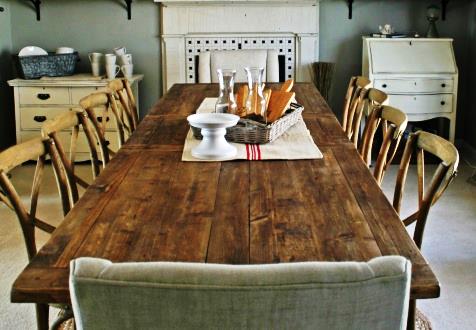
Let’s sit the table.  This is one character development technique that I’ve recommended to every writer. Oh?  You thought I misspelled (or misused) a word in that opening sentence?  Glad you noticed it because this concept may just be the formula needed to not only develop your characters, but “keep them in their places.”  Let me explain.

Most writers I know construct the people in their stories through bullet-point outlines of each “person’s” physical, mental, emotional, and spiritual elements.  I do, too.  However, as I’m doing so, I sit each character at The Table, starting with my protagonist and antagonist at opposites ends.  When I first started doing this, the exercise felt a bit cumbersome.  Then it became FUN especially when supporting characters were seated in the side-chairs.  Not every antagonist or protagonist ally will sit to their right.

SO…just for fun…let’s play with an example.  And, since it’s the season of Thanksgiving and the Native American Tribes graciously brought the Pilgrims a sumptuous meal, I’ll offer a brief slice of one possible scenario.  The year is 1621.  The setting is a very small log-cabin and tent village where the forest has been trimmed back and a “long table” awaits.

ENTER my Protagonist, Chief Listening Bear of the small Halawi Saponi Tribe.  He wears a headdress of shiny dark-brown-and-gold turkey feathers and not much else.  His Pilgrim friend (protagonist supporter) is Father O’Malley, who greets Chief Listening Bear warmly and directs the Chief to the head of the table—the position always saved for the Pilgrim’s leader, Colonel Alfred Raleigh (maybe my Antagonist—maybe not).  A hush is felt among the gathering participants, as Colonel Raleigh raises a bushy eyebrow, then offers a half-smile and moves to the other end of the table.

Now the other “players” in this drama must find their places.  Who sits to the left and right of the main characters?  Will only men be allowed at the table?  Would the Colonel’s Lieutenant position himself next to the Chief for intimidation purposes?  Or…might the Colonel’s daughter take her seat across the table from the Chief’s son—an immediate attraction visible between them?  Yes.  This table has much plot development potential, and knowing where each character “sits” (creating their position in the protagonist/antagonist plot) will help you keep their dialogue and actions true.

History tells us that ninety Native Americans brought dinner that day with only fifty-three Pilgrims present.  This was probably the total population of both villages.  What their interactions might have been are open to interpretation (and storyline development), even though we have some documentation.  However, the concept of people looking in the eyes of the person seated across the table, and the intrusion or comfort levels felt when seated between two other people, gives the writer a great amount of material to work with.

Now, here we are, all these years later, having celebrated yet another DAY of THANKSGIVING.  What a difference a couple hundred years makes!  AND YET…might some of those same feeling be alive and well today?  Writing about them—exposing potentially harmful attitudes—might just make our next Thanksgiving Season a brighter one.

Royalene ABOUT ROYALENE DOYLE: Royalene Doyle is a Ghostwriter with Outskirts Press, bringing more than 35 years of writing experience to authors who need “just a little assistance” with completing their writing projects. She has worked with both experienced and fledgling writers helping complete projects in multiple genres. When a writer brings the passion they have for their work and combines it with Royalene’s passion to see the finished project in print, books are published and the writer’s legacy is passed forward.