Conversations with a Self-Publishing Writer: 05/08/15

TREES…trees

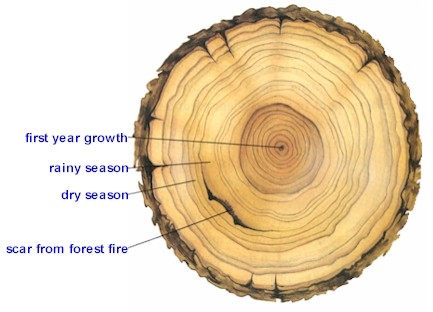
…AND THEIR SEASONS OF GROWTH are another excellent example of storyline/plot development. Most novel writers have experimented with the Peaks-and-Valleys plot progression plan. However, creating an illustration of a tree-trunk slice (shown here) allows me a much clearer picture of the actions and events I want to incorporate into my story—and the bumps they create along the way.

NOTICE: the “first year of growth” is solid. It is the burst of life that brings this tree (novel) into existence. For the novel writer, this living element is that short statement that informs editors (and the writer) exactly what this novel IS ABOUT.

An example of this—taken from Ted Dekker’s new novel, Hacker—reads: “My name is Nyah and I’m a hacker. I know things most people would never believe. Things that shouldn’t exist, but do.” This type of introductory statement evokes strong emotions and immediate intellectual interest. This is an excellent core idea that will develop an amazing novel.

NOTICE: the rings closest to the center/core are darker. They are filled with lots of nutrients that the tree absorbs as quickly as possible.  For the author, these rings must be filled with the details that will stir the reader’s passions and provoke them to solve the issues you’ve created for your characters.

An excellent example is given on the back cover of the novel Harbinger by Jonathan Cahn. It prepares reader’s to see the layers of evidence and intrigue that will be laid out before them. Here are the core statements: 1.) “Hidden in an ancient biblical prophecy from Isaiah…” 2.) “the mysteries revealed…foretell recent American events down to the exact days…” 3.) “the 3,000-year-old mystery that revealed the exact date of the stock market collapse of 2008…” 4) “the ancient prophecy that was proclaimed from the floor of the US Senate and then came true…and more.”

NOTICE: the seasons. The “rainy season” shows many layers of growth. The “dry season” is quite narrow. These correlate to rainy season chapters that hold more characters in them (usually additional supporting characters needed to progress the story). Then there will be the dry/parched, intense/shorter chapters that are needed to provoke or inspire readers with excitement.  Both of the novels mentioned above accomplish this with excellence.

NOTICE: the scar on the illustration.  This is a major element in novel writing that must not be left out. Actions and events in the lives of human beings cause scars. Each and every one of your readers will have their own scars—some fresher than others—and many deeper scars that are hidden even from themselves.  The excellent novelist will create an event—or several events depending on the length of the novel—that will touch memories held by their readers.

The first example of this that comes to my mind is the novel The Shack by William Paul Young. His back cover statement explains the scar concept in one sentence. “Mackenzie Allen Phillips’s youngest daughter, Missy, has been abducted during a family vacation, and evidence that she may have been brutally murdered is found in an abandoned shack deep in the Oregon wilderness.”

IF YOUR NOVEL feels stuck, try wrapping your story elements around the seed/core of it, and let it grow until it is FINISHED! Then publish it right away and start writing the next one!

RoyaleneABOUT ROYALENE DOYLE: Royalene Doyle is a Ghostwriter with Outskirts Press, bringing more than 35 years of writing experience to authors who need “just a little assistance” with completing their writing projects. She has worked with both experienced and fledgling writers helping complete projects in multiple genres. When a writer brings the passion they have for their work and combines it with Royalene’s passion to see the finished project in print, books are published and the writer’s legacy is passed forward.

Weekly Self-Published Book Review: Satan Thinks in Black & White: Racism in the Congregations of America

Book reviews are a great way for self-publishing authors to gain exposure. After all, how can someone buy your book if he or she doesn’t know it exists? Paired with other elements of your book promotion strategy, requesting reviews is a great way to get people talking about what you’ve written.

When we read good reviews, we definitely like to share them. It gives the author a few (permanent) moments of fame and allows us to let the community know about a great book. Here’s this week’s book review by Midwest Book Review:

satan thinks

Satan Thinks in Black & White: Racism in the Congregations of America

Ronald B. Jimmerson

Publisher: Outskirts Press

ISBN:9781432782467

Racism divides in many ways. “Satan Thinks in Black & White” is a Christian rally against racism from Ronald B. Jimmerson who states that the split within the Church between churches and denomination is what he believes to be the work of Satan and that races should come together and denounce Satan’s methods. “Satan Thinks in Black & White” is a strong pick for social issues and Christian collections.

Self-Publishing Week in Review: 5/05/15

As a self-publishing author, you may find it helpful to stay up-to-date on the trends and news related to the self-publishing industry. This will help you make informed decisions before, during and after the self-publishing process, which will lead to a greater self-publishing experience. To help you stay current on self-publishing topics, simply visit our blog every Tuesday to find out the hottest news.

Want to Succeed in Self-Publishing? Watch the Money: Tips from an Indie Author

In this Publisher’s Weekly article, author Mara Leveritt shares her publishing experience and tips for writers considering self-publishing. This is an interesting read for those thinking about self-publishing.

DIY: How to Request Permissions

Before an author can include song lyrics or a quote from a film in her book, she needs to get permission from the rights holder. This informative article tells you how and is a must read.

Georgia Webber on Dumb, Self-Publishing and Cartoonist Communities

Cartoonist Georgia Webber talks about her self-published series Dumb. This is a fascinating read for other self-publishing cartoonists.

If you have other big news to share, please comment below.

KellyABOUT KELLY SCHUKNECHT: Kelly Schuknecht is the Executive Vice President of Outskirts Press. In addition to her contributions to the Outskirts Press blog at blog.outskirtspress.com, Kelly and a group of talented marketing experts offer book marketing services, support, and products to not only published Outskirts Press authors, but to all authors and professionals who are interested in marketing their books and/or careers. Learn more about Kelly on her blog, kellyschuknecht.com.

Treat Yourself to Self-Publishing This Mother’s Day

Mother’s Day is not only the time to celebrate your own mom(s), but it also a great time for mother’s to splurge on themselves. Most of the time, mother’s give their all to their children. While that’s great, it’s also nice for them to occasionally do something for themselves.

Too often, mother’s feel overworked, overtired, and underappreciated. This year, why don’t you stretch that Mother’s Day bliss into the rest of the year… by allowing yourself to work on your writing project and finally reaching your dream of publishing a book. Here are three reasons why you should give yourself the gift of self-publishing.

1. You deserve a break.

Many moms give all their time and energy to their families and work. You struggle to find time to do the things you love, but you deserve a break. Let the dishes sit in the sink for the night, and spend some time writing.

2. It’s good for your family.

Moms who make time for their passions feel more fulfilled and are able to be happier, more patient parents. Giving yourself permission to work on your own project isn’t denying your children your time; it is giving them the gift of a happy, successful mom. They will be proud of you.

3. It’s also a gift to your family.

Self-publishing a book can be a great way to create a special, unique gift that your children can have forever. Whether you write a novel and dedicate it to them or pen a book filled with life lessons you want to teach them or publish a memoir sharing your life story or create a children’s books of the stories you tell them before bed, they will cherish your work forever.

Happy Mother’s Day!

Friday Conversations With A Self-Publishing Writer 05/01/15

GIANT TREES…tree

…BEGIN WITH A SEED. Okay, I’m a tree lover (hugger) who especially appreciates the giant trees that look down upon us with such authority.  As I begin my own process of developing a novel (that has been simmering in my thoughts for what seems like decades), I’ve started using the traditional 3×5 cards to plot the story—from seedling concept to full epic ending.  However, being a very visual learner, I’ve also decided to demonstrate the growth and connections of my plot-points by using the basic elements of the Tree-Form (with root system) as well. Here’s how it works (for me)…

  1. Create a file called The Plot TREE (or something like that). Pull in an illustration of a tree with roots, similar to what is shown here.
  2. At the ground-level base of the tree trunk add a 3-5 word statement about the event that starts the whole story.  (This event may—or may not—be the beginning of your novel; however, writers must keep themselves aware of the MAIN event.)  Use a Text-Box so the statement is set in place ON the Tree.
  3. BUILD your PLOT-LINES. Is the Main event connected to a “root” from the past?  If so, create a Text-Box that holds a 1-3 word identifying “clue” and place it in the ROOT section.
    1. If this is a generational event, there may be deeper root text-boxes.
    2. Because there are usually several semi-main events that form the foundation of a good novel, there may be several clue-text-boxes nailed to the tree trunk—in ascending order.
  4. Plot BRANCHES—storyline twists and turns—seem to develop easier using this visual aid.  Don’t hesitate to place several ideas ON the Tree and then let them simmer for a day or two. Then, go back and…
    1. Visualize those event-impacts on all your characters.
    2. Consider if one of the Branch Events fits another character better.
    3. THEN…move to the LIMBS…which will include actions and events in the lives of ALL the characters: Main Characters, Main Supporting Characters and Peripheral supporting characters.

Depending on the length of your novel, this process can be used for the work as a whole, or for individual chapters—all the way to “full foliage” tiny limbs and leaves.  A good exercise before starting your own novel is to select one of your favorite books (a short one) and “work” this process with its plotline. This will give you the feel for selecting your own plot-points and demonstrate where they grow on the Tree.

Of course, this developmental process is just one of many.  However, for my personal taste, I enjoy this method much more that other, more technical ones.  Bottom line, I hope that whatever system you select in building your novel, will work well for you so that your story flows upon the pages and you come to The End ready and excited to publish!

RoyaleneABOUT ROYALENE DOYLE: Royalene Doyle is a Ghostwriter with Outskirts Press, bringing more than 35 years of writing experience to authors who need “just a little assistance” with completing their writing projects. She has worked with both experienced and fledgling writers helping complete projects in multiple genres. When a writer brings the passion they have for their work and combines it with Royalene’s passion to see the finished project in print, books are published and the writer’s legacy is passed forward.