
S.O.S. – Writers Need Help, Too – Part II

SO you’ve “jumped off the cliff” and are diligently working to complete the book that’s been humming in your brain for years! You’ve outlined the plot from beginning to end. You’ve fleshed out the characters and built intrigue into their personalities. You’ve done your research and created multiple files of information about places, things, even weather patterns. The manuscript is almost complete, but you just can’t seem to quit writing it. Something is missing. Do you put those beautifully written pages in the drawer and wait—wait for the day, week, month or year when you’ll know what’s missing and can complete it?
PLEASE—don’t file that manuscript away! You’ve already sown your heart—and many hours of your life—into those pages. Take a big breath, and seek editorial help. Yes, I’m an “editor,” and IF we’re a good match, I’d love to help you. However, the purpose of this blog is to give you a few tips in finding THAT RIGHT MATCH so that your dream of publishing this book (and future ones, too) will become reality.
- With the speed of the Internet these days, your query to find “manuscript editors” or “writing coaches” or “writing consultants” will give many options. Warning: beware of those who call themselves superstar editors. Their fees will match their opinions of themselves.
- If your manuscript is a specific genre, search for “best” or “excellent” editors in that genre.
- Personally, I prefer to talk with prospective clients either in person or by telephone. This first “consult” should always be FREE. If someone wants to charge you for that time, it is a good indication that they are more interested in your $$ than assisting you complete your book.
- BE READY to give a clear, concise, conceptual idea of your story’s theme and the main characters who will be living the story.
- Prepare a list of questions that can be asked of each person you interview. This should include questions such as:
- Why are you in the editing profession?
- How many clients have you done work for; and may I speak with any of them?
- What do you consider as your editing strengths? Weaknesses?
- What are your fees?
- KEEP IN MIND that, even though you’ll be hiring an editor, you’re actually building a partnership. You and the editor you select will be co-workers, and that person must share the vision you have for your work. He/she will also:
- Make sure your storyline “flows” through the pages with clear, concisely written sentences that convey what YOU want them to say.
- That the voice of each character speaks to the reader as you (the author) intends.
- If the manuscript is non-fiction, they will ensure that your voice—your speaking patterns—are maintained. This is vital when you are asked to speak at book signings, conferences, etc.
Bottom line: Seeking editorial assistance is one of the best decisions writers can make. Not only does it rescue that precious piece writing from the Land of the Lost File Drawers, but it opens the path to publishing an excellent book that Readers will enjoy for generations. ⚓︎


 r book—Poems on Various Subjects, Religious and Moral—in 1773, three years before our Independence Day. She was born in Senegal (West Africa), sold into slavery at age seven, brought to American and was purchased by a Boston merchant. By age 16, she spoke fluent American-English and began writing poetry. Even though George Washington told her “the style and manner [of your poetry] exhibit a striking proof of your great poetical talents,” Wheatley still had to defend herself in court to prove that she’d written her book. This event became possibly the first “court recorded” recognition of African-American literature.
 f a working man from a working-class family who never forgot from where he came,” including his “youthful misadventures that involved drugs, shoplifting, and a little bit of hustle.” However, at some point in his young life he realized he had the FREEDOM to choose his next steps which took him into an Air Force career followed by his adventures in the corporate world. This inspirational and compelling memoir is proof that a man’s life need not be defined by his beginnings. Proof that the freedoms we enjoy—written into the Declaration of Independence—are alive and well today.
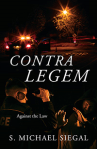 S. Michale Siegal is another amazing self-published author who has now produced his second fiction novel: Contra Legem. After retiring from nearly thirty-six years in law enforcement, Siegal has dedicated this novel to all of the men and women behind the badge who daily serve and protect our communities.
 Self Publishing Advisor