Friday Conversations With A Self-Publishing Writer 03/20/15

A BIT MORE ABOUT THE PLOT

When I was still in the high school classroom (teaching advanced writing), I borrowed the Science and Biology teacher’s skeleton for a day. I found it to be a very useful visual in my efforts to explain the importance of actions and events when building the storyline (plot) of short stories and novels. This illustration is from the free ClipArt files and I especially like that the figure is IN MOTION…as the plot should be.

skelton

There is an ongoing discussion among writers as to whether Characters drive the Plot or the Plot drives the Characters.  I’m in the first camp—because it is the re-actions of the characters (to the plot action/events) that keep Readers turning those pages.  The skeleton illustration demonstrates that the brain (character thoughts, emotions) send the signal to the other parts (plot action/events) in order to move forward.

I can, however, acknowledge the other discussion position because if there was no “hand” to send a signal to (no planned plot event or action) then nothing would happen.  Ah…the conundrum!

So it is that I focus on the concept of MOTION—moving forward toward my desired conclusion—when developing a plot for any length of fiction.  Here are a few ideas to help with that…

  1. Start with “The End.” Have you seen the TV commercial (mini-short-story) where the cowboy rides off into the sunset and is knocked off his horse by the words THE END? Knowing how you want your story to close should provide many ideas for the characters to “act out” in order to get there.
  2. Think dialogue. Some writers don’t consider dialogue to be part of the definition of PLOT. However, I offer this thought using the above scenario. The cowboy is knocked off his horse—injured—so there will be some type of re-action to that event and (for humans) it usually includes LOUD WORDS. What they say usually leads to the next step in the storyline.
  3. Consider HOT and COLD, never TEPID. Lukewarm, half-hearted plot points usually cause a reader to close the book and not pick it up again. Again, I’m NOT saying that there needs to be an explosion in every chapter. Cold/cool moments are very necessary in order to give readers a chance to consider what has happened, and what they “guess” might happen within the next pages.
  4. Take a look at the skeleton’s CENTER of gravity. The dynamics of motion rely on balance. It is the same with the fiction novel. Protagonists and Antagonists (and their supporting characters) need to be vitally present, active, and positioned throughout the story in a balanced manor.

I hope this running skeleton helps someone better understand the concept of PLOT—actions and events—necessary for excellent fiction writing. Just the “look” of those running bones should spur us all forward just to escape IT!  Smile….and enjoy many inspired hours of creative writing and publishing!

Royalene ABOUT ROYALENE DOYLE: Royalene Doyle is a Ghostwriter with Outskirts Press, bringing more than 35 years of writing experience to authors who need “just a little assistance” with completing their writing projects. She has worked with both experienced and fledgling writers helping complete projects in multiple genres. When a writer brings the passion they have for their work and combines it with Royalene’s passion to see the finished project in print, books are published and the writer’s legacy is passed forward.

Friday Conversations With A Self-Publishing Writer 03/13/15

SPRINGING INTO ACTION

S.I. Hayakawa (English professor, president of San Francisco State University, and U.S. Senator) is also known to have stated that writers of fiction must be aware that readers will demand a constant increase in the number and “variety of life experiences” they will experience in novels.  For me, this means that I need to have a solid PLOT in place—the actions and events—that my characters will walk through.  These are also actions, events, circumstances and scenarios that will provide the changes within the characters (as mentioned in last week’s blog).

Here are a few questions to ask while developing YOUR storyline/plot.

  1. Does the story interest you? If you’re working too hard to develop a plot that you think is good—or that someone else told you is “great”—STOP. Some writers I know literally break their story elements up (on 3×5 cards) and re-set (reposition) them. If it’s still not working, don’t hesitate to file it away for another day. Often, good pieces will find their way into other manuscripts.
  2. How is the story unfolding? Is it fast-paced enough to keep readers turning those pages? Or is it putting them to sleep? Unlike movies, you don’t need an explosion or car chase in every scene. However, the steps the characters are taking do need to offer the reader something, such as intrigue, mystery, curiosity or hope, to nudge them along.
  3. Are there enough complications and/or twists to drive the character development and cause your readers to consider what they would do in that situation? Once you’ve engaged a readers involvement to this level, you’ve captured an audience base for future novels.
  4. Is your plot “cliché,” predictable or a formula format? We’ve all “suddenly” found ourselves writing such a story because many of our early reading favorites have been just that—the basic “hero gets the girl” plot. As you’ve probably noticed in today’s multiple TV Marvel series, this genre/plot development remains a valid and profitable one. Happily, they are also mixing in a variety of actions and events that develop the characters in interesting and believable ways.

SO…bottom line…start with the basics of plot development.  Remember the book reports you had to do in high school? Most suggested the same outline for discussion as used by the authors to build their stories. If your geometry teacher were illustrating this, it would look a little like stair-steps with an occasional drop downward—then climb upward—showing crisis and recovery moments.  Somewhere toward the middle a discovery would be made that demonstrated the change in the way a specific character thinks and/or reacts.  And so it would continue until the dramatic, climactic end.

The development of the storyline/plot is often felt within the writer, too.  That’s actually a very good thing because it relates to point #1—Does the story interest you?  If writers fail to become involved with what is happening in their stories TO their characters, the novel will most likely fall flat.  IF you’re just starting your writing career, connecting with a trusted “reader” or ghostwriter can make all the difference in productive marketing after your book is published. Don’t hesitate to seek (and accept) good advice.

Royalene ABOUT ROYALENE DOYLE: Royalene Doyle is a Ghostwriter with Outskirts Press, bringing more than 35 years of writing experience to authors who need “just a little assistance” with completing their writing projects. She has worked with both experienced and fledgling writers helping complete projects in multiple genres. When a writer brings the passion they have for their work and combines it with Royalene’s passion to see the finished project in print, books are published and the writer’s legacy is passed forward.

Friday Conversations With A Self-Publishing Writer 03/06/15

MARCHING INTO SPRING

This month I want to especially encourage my Fiction writer friends.  A very famous author and professor—S.I. Hayakawa—once said, “Fiction is a tool to increase one’s experience of life experiences.”  I wholeheartedly agree.  I’m just now realizing (in my adult years) that the main reason I’ve always enjoyed reading books of fiction is because I learn so much—without the tedious work and/or study of history, psychology, sociology, cultures, governments and laws, etc.  One well written Fiction Book exposes me to all those elements of life, expanding my knowledge and often adding the component of mystery or adventure.

It seems that I have very little time for pleasure reading these days, so I’m becoming quite selective in what books I purchase, not wanting to be disappointed in them.  If you’ve read previous blogs, you’re probably aware that I’m a big fan of author Lloyd C. Douglas, most specifically his novel THE ROBE. From the very first page I walked back in time and became part of the events in the lives of those characters.  The first time I opened this book I wasn’t far from my teen years and immediately identified with the main character’s little sister.  She (and I) matured together, dealing with lost loved ones, questions about “proprieties,” ethics, faith, war and much more—all elements pertinent to my own present-day life.

For the Fiction/Science Fiction enthusiasts, another book that I would re-read IF I had the time is titled The Mote in God’s Eye by Larry Niven and Jerry Pournelle.  The basic info statement about it reads: “In 3016, the 2nd Empire of Man spans hundreds of star systems…. Intelligent beings are finally found from the Mote, an isolated star in a thick dust cloud. The ancient civilization (at least one million years old) are welcoming, kind, yet evasive, with a dark problem they have not solved in over a million years.”

BOTH books present readers with “real life” experiences IN unique settings of time and place.  Although the plots of these stories may seem dramatically different, they are basically quite similar.  But we won’t discuss that today.  Instead, I offer you the following Creative Writing for Fiction Readers pointers for your consideration.

  1. Does your novel immediately engage the reader in the mind-set and emotions of the characters?
  2. Are you providing enough background information (woven throughout the pages) that allows readers to understand why the characters DO what they do?
  3. Can readers describe the relationship dynamics between characters (friendships, siblings, marriages, co-workers, etc.)?
  4. Fiction readers want to know the characters well enough so that they can form an opinion about who they are and whether (or not) they admire them, dislike them, respect them or want to leave them on a deserted island somewhere because they are not fit for human companionship. Are your characters that well-defined?
  5. Do the characters—at least the main characters—evolve during the timeframe of your novel? (Suggestion: Watch the TV series Downton Abbey and observe the personalities as the development of these characters unfold.)
  6. Will your readers be able to discern whether a character’s actions were justified or unwarranted?
  7. Will your readers be able to “live” the lives of these characters?

Writing Fiction novels is quite possibly one of the most enjoyable of writing careers.  The character types you create will come alive in the minds of your reading Fans and bring you—Author! Author!—acclaim in the publishing and literary realms.  Film makers are also actively seeking the amazing characters only you can write-into-reality.

Royalene ABOUT ROYALENE DOYLE: Royalene Doyle is a Ghostwriter with Outskirts Press, bringing more than 35 years of writing experience to authors who need “just a little assistance” with completing their writing projects. She has worked with both experienced and fledgling writers helping complete projects in multiple genres. When a writer brings the passion they have for their work and combines it with Royalene’s passion to see the finished project in print, books are published and the writer’s legacy is passed forward.

Friday Conversations With A Self-Publishing Writer 02/27/15

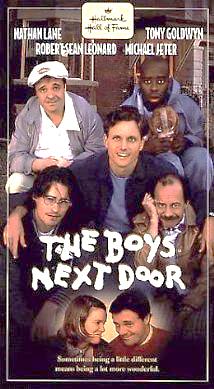
LOVE CAN SHINE A LIGHTthe boys next door


Not long ago I caught the end of a conversation in a grocery store parking lot.  In a very animated voice, the woman was saying, “…but you just can’t do that to someone who depends on others to do the right thing by them.”  My imagination flew into action as the group—two ladies and two gentlemen—got into a van and drove away.  The sign painted on the side door read: HELP For Disabled Children Is Here.  I wondered.

Do you remember Mother Teresa?  She passed from this earth in 1997.  However, while on the planet she taught us a lot about LOVE.  “I am not sure exactly what heaven will be like,” she is quoted saying, “but I know that when we die and it comes time for God to judge us, He will not ask, ‘How many good things have you done in your life?’ rather He will ask, ‘How much love did you put into what you did?’”  How will I answer that question?  Will examples of what I’ve written become evidence?

Back in 1996, I watched a TV movie titled: THE BOYS NEXT DOOR.  It was adapted for film from a stage play by playwright Tom Griffin. The story centers on a social worker (Jack) who found himself in a “job” that basically made him the “house-father” of four mentally challenged men living “regular” lives (to the best of their abilities) in a neighborhood house.  At one point in the story, there is a State Senate hearing that will decide the sustainability of this group home.  Jack and one of his charges (Lucien) are seated at the defendants table.  In this formal setting, the writer developed a short soliloquy, spoken by Lucien who steps aside from his mental illness for a few brief moments and speaks to the senators as if he were a “normal man.”  This superbly written dialogue is forever etched in my memory.  I would like to share the whole scene, but with limited space I will offer one quote.

Lucien stands up from the defendants table, straightens his rumpled suit and says: “I stand before you a middle-aged man…whose capacity for rational thought is somewhere between a five-year-old and an oyster.  I am retarded…damaged…sick inside from so many years of utter and profound confusion.…But I will not go away.…Damaged though I may be, I shall not wither, because I am unique and irreplaceable and part of you all.…Civilizations are judged by the way they treat their most helpless of citizens.  I am that citizen…and if you turn away from me, you extinguish your own light.”

Do you have such thoughts—such words—in your collection of BOOK ideas?  Are those concepts tossed about on scraps of paper or organized neatly in files?  PLEASE!  Don’t waste another minute!  Get your stories written!  The human condition of our world NEEDS to be encouraged!  There are too many lights hidden away under self-doubt and the fear-of-success.  You’ve been given the GIFT of writing—the skills and inspiration—to make a difference.  GET TO IT!

Royalene ABOUT ROYALENE DOYLE: Royalene Doyle is a Ghostwriter with Outskirts Press, bringing more than 35 years of writing experience to authors who need “just a little assistance” with completing their writing projects. She has worked with both experienced and fledgling writers helping complete projects in multiple genres. When a writer brings the passion they have for their work and combines it with Royalene’s passion to see the finished project in print, books are published and the writer’s legacy is passed forward.

Friday Conversations With A Self-Publishing Writer 02/20/15

LOVE CAN TURN HATE ASIDEthe long shadow


The month of February is also the celebration of BLACK HISTORY—recognizing the accomplishments and contributions of African Americans from the foundation of America to this very day.  I felt it fitting to highlight this concept of LOVE as stated in the heading, not to dredge up painful events but to demonstrate that WRITERS throughout history can—and have—made a big difference in creating harmony in the lives of millions around the world.

Do you recognize the name Daisy Gatson Bates?  I would have said “no” just a few years ago.  However, this publisher, journalist and lecturer played a leading role in the Little Rock Integration Crisis of 1957 and is honored for her lifetime accomplishments in the state of Arkansas on February 19th (or the 3rd Monday of every year) right along with remembrances of George Washington’s birthday and Martin Luther King.  As a foster child, Daisy attended the city’s segregated public schools.  In her teens, she learned that her birth mother had been raped and murdered by three local white men. No one was ever arrested and hate festered in her.  Her father told her: “Hate can destroy you, Daisy.  Don’t hate white people just because they’re white.…hate the humiliations we are living under…hate the discrimination that eats away at the South…and at the soul of every black man and woman.…Then try to do something about it.”  And so she did.

As an adult, Daisy and her husband published a local newspaper, the Arkansas State Press, utilizing her writing talents in her chosen field of advocacy journalism.  Stories about Civil Rights ran on the front page as well as the violations of the Supreme Court’s desegregation rulings.  However, the main stories that filled the paper spotlighted achievements of the black community in Arkansas.  Daisy had turned the painful events of her life into actively supporting those who wanted to change the segregated school system and increase opportunities for everyone.  Her clear and organized writing skills and positive attitude eventually led her to a position in the administration of President Johnson, working on anti-poverty programs.

Daisy wrote a memoir in 1962—The Long Shadow of Little Rock—which was banned throughout the South.  However, in 1988 the University of Arkansas Press reprinted it, after which it won an American Book Award.  President Bill Clinton (then Governor) said Daisy Bates is “the most distinguished Arkansas citizen of all time.”  In her later years, Daisy moved back to rural Arkansas, to concentrate on improving the lives of her neighbors (anyone who needed help) by establishing self-help programs that were responsible for new sewer systems, paved streets, a water system and community center.

Highlighting this woman’s life and accomplishments—as a person, journalist, publisher, author and advocate—exemplifies the points made by author Francine Rivers in my blog last week.

  • Tell the TRUTH, no matter how messy it is and get the details right.
  • Bad things happen. Ugly things. Sad and malicious things. There is also the TRUTH that good people make a difference. Their concepts of love, Faith, values, and doing what is right because it is right will make a difference.

Who is the person (or people) in your life demonstrating this element of LOVE?  Can their examples be incorporated into what you’re writing?  Do you need to write a True Story/memoir about their lives?  What is holding you back?  The WORLD needs more examples like this!  Write it! Get it PUBLISHED!

Royalene ABOUT ROYALENE DOYLE: Royalene Doyle is a Ghostwriter with Outskirts Press, bringing more than 35 years of writing experience to authors who need “just a little assistance” with completing their writing projects. She has worked with both experienced and fledgling writers helping complete projects in multiple genres. When a writer brings the passion they have for their work and combines it with Royalene’s passion to see the finished project in print, books are published and the writer’s legacy is passed forward.