Conversations: 4/28/2017

BENEFITS OF WRITING SIGHT AND SOUND SCENES – Part IV

Last week I mentioned that one of my favorite places to settle-in and be inspired is the Children’s section of my local library. They have an oversized, puffy rocking chair in one corner and a beautifully carved wooden rocker at the center where various people (sometimes authors) come and read aloud to groups of children. Being in this environment offers me the opportunity to observe the child’s world of uninhibited actions and reactions—their spontaneous abandon to the sights and sounds the experience and imagine.

Researching the benefits—and detriments—of Sights and Sounds can greatly enhance the authenticity of our writing. Here are a few things I’ve learned:

SOUND…

  • Specific sounds can “re-pattern” the brain’s ability to organize time/space/spatial perceptions.
  • Since the 1990s research is building to confirm that some of Mozart’s music may also be beneficial for developing spatial intelligence.
  • Making music and listening to music that contains and repeats specific tones and “hertz” (Hz) can be excellent stress reducers.
  • Congested, loud “music” and/or sounds (TV’s, radios, computers) can be highly disruptive, and may damage the cochlea of the ear.
  • For centuries, Native Americans have utilized drumming and pipe/flute sounds to bring rest to the ill, peace to overactive children and harmony/rhythm into their families.

SIGHT…

  • In February of this year, author Steven Ingrahm self-published a book titled When Nature Speaks. I am excited to get my hands on a copy because of his clear understanding of the discovery every writer must come to in order to develop their best work. Ingrahm states, “All of a person’s [Reader’s] senses can be stimulated at the same time, when they surround themselves in nature.…[we] all live under the same stars.”
  • Cursory glances at our environment leave writers in the depths of famine especially when attempting to connect to Readers they hope will become Fans. You’ve read the words before in my blogs: DETAILS—Readers need detailed visual descriptions in order to see what you want them to see—yes, even within short stories or novellas.
  • Humans require light in order to see. As with sound there are frequencies of light (wavelengths) which give our brains information through the lenses of our eyes. Those who write in the Sci-Fi genre will benefit greatly by researching concepts space/time and “the speed of light.”
  • Most great artists will agree that the use of “white space” is also quite valuable. Researching this concept from an artists’ perspective has given me new insight into the value of what, when or IF I reveal something in my novel.

This month we’ve talked about how (1) the beauty—or harshness—of the environment we create for our characters often gives the writer the contrast needed to carry the story. (2) There is great value in reading the works of other authors—in multiple genres—or open our eyes to other perspectives and the ways they express Sight and Sound. (3) Utilizing the five senses (sight, sound, touch, taste, smell) is not enough. We must tap into the other senses of pain, balance, motion, temperature and intuition/perception.

Finally, my friends, take your daily does of vitamins and build your physical strength. BECAUSE, once you’re published, you’ll be “out there” marketing your book(s) and enjoying being discovered⚓︎

sight and sound woman with headphones


Royalene

ABOUT ROYALENE DOYLE: Royalene has been writing something since before kindergarten days and continues to love the process. Through her small business—DOYLE WRITING SERVICES—she brings more than 40 years of writing experience to authors who need “just a little assistance” with completing their projects. This is a nice fit as she develops these blogs for Outskirts Press (OP) a leading self-publisher, and occasionally accepts a ghostwriting project from one of their clients. Her recent book release (with OP) titled FIREPROOF PROVERBS, A Writer’s Study of Words, is already receiving excellent reviews including several professional writer’s endorsements given on the book’s back cover.  

Royalene’s writing experience grew through a wide variety of positions from Office Manager and Administrative Assistant to Teacher of Literature and Advanced Writing courses and editor/writer for an International Christian ministry. Her willingness to listen to struggling authors, learn their goals and expectations and discern their writing voice has brought many manuscripts into the published books arena.
Conversations: 4/21/2017

BENEFITS OF WRITING SIGHT AND SOUND SCENES – Part III

One of the methods I use to kick-start my writing involves taking a walk through our local library and looking for Picture/Photo books. Not only do the beautiful scenic photos inspire me, but the details fill me with “What if?” questions—which, in turn, push me right back into writing. Sometimes I am captured by exquisite coffee-table-books that are strategically placed throughout the library; those oversized, thicker photo-pages with captions that identify the country, state, mountain range or desert location of the images. Other times I settle at a table in the History section or cozy into the big rocking chair in the Children’s section. Following are a few examples of these types of books and how to discover your own treasures in their midst.

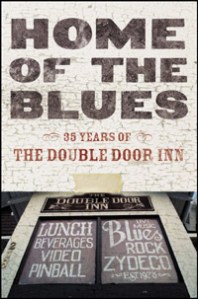
home of the bluesHome of the Blues by Debby Wallace and Daniel Coston is written from the perspective
of “IF the walls could talk.” These two authors (Debby a retired RN now freelance writer and Daniel an established photographer for magazines and CD covers) have done their research and reconnected the world with sounds of the past created in a place that continues to inspire us today.

If you are writing a “period piece” set in 1900s America, you’ll benefit from reading these pages and walking into the images of “The Days of the Blues.”

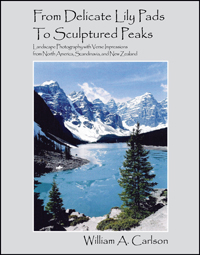
For sheer scenic imagery check out the books of photographer William A. Carlson: FROM DELICATE LILY PADS TO SCULPTURED from delicate lily pads to sculptured peaks by william a carlsonPEAKS: Landscape Photography with Verse Impressions from North America, Scandinavia, and New Zealand…or his second book of photography, IMPRESSIONS OF NATURE IN BLACK AND WHITE. Carlson’s work has captured the positive attention of American Landscape Photographer, John Fielder, which led me to begin turning the pages. Earlier I mentioned the value of details and these images gave me just that—the ability to imagine myself standing in these environments and experiencing my own “sensory responses” that are mentioned in his verses.

For those of us who utilize setting almost to the point of creating the places as additional characters in our stories, this genre of Nature/Scenic photography can be most useful. When we cannot be there ourselves, we can still have the opportunity to meld with such photos and imagine the prick of pine needles dropped from majestic, towering pine forests.

FROM these two basic genre/types of published works we can be inspired to:

  • Create a historic and/or seasonal location that meets the needs of our storyline.
  • Develop a fluid time—morning, afternoon, evening, “dark of night.”
  • Set the weather patterns that effect our characters.
  • Utilize each of the five senses: sight, sound, touch, taste and smell.

But don’t forget the sixth sense and the additional four (at least) senses that every one of your Readers will engage as they turn the pages of your book(s). They are mostly physical senses and include:

  • Pain: from physical, emotional, psychological injury.
  • Balance: the equilibrium that keeps us standing on our feet or seated comfortably in our chairs.
  • Motion: the active use of joints in our bodies that move our “parts.”
  • Temperature: the body’s sensitivity to internal and external temperatures.
  • The Intuitive or perceptive is what most call “the sixth sense.” However, many scientists today believe it is just as much a part of the human sensory system as the others.

Steeping ourselves in Sight and Sound environments, whether joining Outward Bound trail blazers or sitting comfortably at home, in a library or neighborhood park will enhance our writing skills. My writing always benefits when I take the time to build my memory bank (and files) with such images. I hope you will, too. ⚓︎


Royalene

ABOUT ROYALENE DOYLE: Royalene has been writing something since before kindergarten days and continues to love the process. Through her small business—DOYLE WRITING SERVICES—she brings more than 40 years of writing experience to authors who need “just a little assistance” with completing their projects. This is a nice fit as she develops these blogs for Outskirts Press (OP) a leading self-publisher, and occasionally accepts a ghostwriting project from one of their clients. Her recent book release (with OP) titled FIREPROOF PROVERBS, A Writer’s Study of Words, is already receiving excellent reviews including several professional writer’s endorsements given on the book’s back cover.  

Royalene’s writing experience grew through a wide variety of positions from Office Manager and Administrative Assistant to Teacher of Literature and Advanced Writing courses and editor/writer for an International Christian ministry. Her willingness to listen to struggling authors, learn their goals and expectations and discern their writing voice has brought many manuscripts into the published books arena.

Conversations: 4/14/2017

BENEFITS OF WRITING SIGHT AND SOUND SCENES – Part II

As mentioned last week, today’s Readers are addicted to the visual and sound effects offered to them in every part of their lives. However we know that there is nothing to match the human imagination as we read the words of a novel that create our own sight and sound experience.

With that in mind, I will mention one other book which my students selected for class discussion from the World Literature list: The Call of the Wild by Jack London. I’m sure they expected this to be a “quick and easy” grade because it is short and most had read it before. I won’t add their classroom experience here, but only say that they got more out of it than expected. However, now that working with writers of various levels of experience, I’ll share several concepts about Mr. London and his writing expertise that can benefit us, today.

  • London’s stories take the reader out of their comfort zone and force them to imagine, “What if.” Yes, the main character is Buck, the dog. Yet this character symbolizes a common mythic character who wins the day against all odds and returns to the peaceful bliss of nature. Did London develop this thread from reading such novels as Dickens’ Hard Times? Possibly. And it is alive and well today in the multi-media (magazine, book, film) super-hero productions.
  • This novel falls into the genre of “animal fiction.” However its blend of parable, fable and allegory is another reason it has never been out of print since first published in 1903. These three genre categories are excellent venues within which to practice and develop writing skills.
  • Finally, the bold content that almost forces Readers to feel the “flight or fight” adrenalin effect was part of London’s strategy to make a statement against what he saw as the destructive result of industrialization. His personal life experiences “in the wild” touched him deeply and he hoped others could appreciate its inspiration, beauty and value.

Most of us write and develop our novels to accomplish these same goals: offer examples of survival against all odds, inspire Readers toward happier, healthier lifestyles and (this is the BIG goal) never be out of print.

Now…keeping London’s Call of the Wild in mind—and the beauty of sights and sounds he experienced—consider the following book as a potential tool to inspire and develop your own creativity.

art experience and faith by william tolliver squireArt, Experience and Faith by William Tolliver Squires, a retired Art professor at the

University of Georgia and a current sculptor and painter, has been called a “guidebook of one artist’s evolving theory of his creative process.”  “Dr. Squires describes his early artistic career as…misdirected, without grounding in a mature sense of what is important in life and art. He now sees the best work of his life as…how the process is informed by a combination of his intuitive, spiritual self and his practical, rational self.”

I find it totally joyful when discovering additional ways to enhance my writing. It is even more exciting to share these tools with other writers! No matter what season we are in, or what genre we’ve chosen, ALL the tools to develop writing skills will help us produce the best book possible. Once that manuscript is completed then it’s time to publish! GO FOR IT! You’ll never regret it. ⚓︎


Royalene

ABOUT ROYALENE DOYLE: Royalene has been writing something since before kindergarten days and continues to love the process. Through her small business—DOYLE WRITING SERVICES—she brings more than 40 years of writing experience to authors who need “just a little assistance” with completing their projects. This is a nice fit as she develops these blogs for Outskirts Press (OP) a leading self-publisher, and occasionally accepts a ghostwriting project from one of their clients. Her recent book release (with OP) titled FIREPROOF PROVERBS, A Writer’s Study of Words, is already receiving excellent reviews including several professional writer’s endorsements given on the book’s back cover.  

Royalene’s writing experience grew through a wide variety of positions from Office Manager and Administrative Assistant to Teacher of Literature and Advanced Writing courses and editor/writer for an International Christian ministry. Her willingness to listen to struggling authors, learn their goals and expectations and discern their writing voice has brought many manuscripts into the published books arena.

Conversations: 4/7/2017

BENEFITS OF WRITING SIGHT AND SOUND SCENES

Have you found your perfect writing environment? Is it a room with bookshelves on three walls, a comfy reading chair in one corner and your computer desk in the other? Does the remaining wall hold a wide bay window, or French doors that open to your expansive tree-shaded yard? OR is your writing space the laundry folding table in the basement next to the washer and dryer?

Wherever your creative writing location might be, and whatever sights and sounds you may be dealing with as you develop your books, this month I will encourage you to allow your imagination the freedom to send exquisite sights and sounds to your Readers. Each new generation of scientific research proves validity of what authors known for centuries: Readers need to see and hear in order to feel what our characters are experiencing. When they do, they will buy—and keep buying—our books.

When I was teaching high school students World Literature and Advanced Writing, they taught me a lot about the value of communication because their “world” is now ninety percent (or more) visually enhanced soundtracks. So when I requested they read Hard Times by Charles Dickens they’d already heard the opinions of other students and the groans cascaded around the room. The “reading” assignment I gave them surprised even me: draw me a picture or create a cut-out collage of what you’re seeing and hearing about these characters lives.

Dickens wrote extensive descriptive paragraphs depicting a grim and grey town suffocated by industrial industries yet filled with the tapestry of Victorian daily life. The students met the challenge and became more aware of the life some of their ancestors survived. Will they be fans of Charles Dickens? Probably not. However, they will appreciate the view he gave them.

african SavannahTo balance their reading assignments a later assignment was Cry, the Beloved Country by Alan Paton. Here we are exposed to the sights and sounds of South Africa and the visual and palpable story of a Zula father’s search for his children. Often the beauty—or harshness—of the environment gives the author the contrast needed to carry the story.
Here are my first three tips to enhance or begin building your descriptive writing skills:

  • THINK MOVIE. Go to the library or your video collection or “on demand” selections on your TV and watch several movies that relate to the genre you’re writing. TAKE NOTES of the sights and sounds that effect and affect you.
  • OBSERVE the details as if you’re looking through a camera lens. Ask yourself “Why” the director focused on that/those images—then write out your answer.
  • LISTEN to the soundtrack. Replay the movie and close your eyes (or turn away from the screen) as you block out as much of the dialogue as possible and discover the sounds of this story. Be as descriptive as you can in explain (make notes about) what you’re hearing. If a separate soundtrack has been produced you can usually find that through libraries.

There are times I envy authors who lived and wrote their books in the 1800s or 1900s. Then I sit down at my computer, in my 10×10 “office” that I share with my husband, and open a narrow window to listen to birds and dogs and wind and the occasional neighborly conversation three floors below. This is my season to write—my heartbeat on the world’s timeline—and I want to offer my best writing skills to Readers of today and future generations. I hope that is your goal, too. Let’s enjoy this journey together. ⚓︎


Royalene

ABOUT ROYALENE DOYLE: Royalene has been writing something since before kindergarten days and continues to love the process. Through her small business—DOYLE WRITING SERVICES—she brings more than 40 years of writing experience to authors who need “just a little assistance” with completing their projects. This is a nice fit as she develops these blogs for Outskirts Press (OP) a leading self-publisher, and occasionally accepts a ghostwriting project from one of their clients. Her recent book release (with OP) titled FIREPROOF PROVERBS, A Writer’s Study of Words, is already receiving excellent reviews including several professional writer’s endorsements given on the book’s back cover.  

Royalene’s writing experience grew through a wide variety of positions from Office Manager and Administrative Assistant to Teacher of Literature and Advanced Writing courses and editor/writer for an International Christian ministry. Her willingness to listen to struggling authors, learn their goals and expectations and discern their writing voice has brought many manuscripts into the published books arena.

Conversations: 3/31/2017

MARCH INTO SPRING

WITH A SPRING IN YOUR WRITING STEP Part V

This week closes out my march into spring series looking at various book genres that meet my criteria of educational reading—while enhancing our writing skills. I’ve chosen the genre of Children’s Books because—as a parent, grandparent, great-grandparent—I’ve learned so much from our children and the books they love reading. However, I must warn you. Should you, too, delve into the shelves of Children’s book section of library or bookstore, you may get stuck there, too. With so many excellent books to tell you about, I’ve had difficulty selecting just a few.

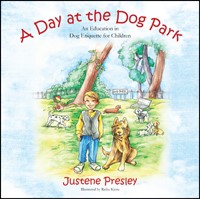
A Day at the Dog Park by Justene Presley is fun to read, educational for children (and adults) royalene6and gives writers a peek into “ordinary days” that just might be useful in “scene development” for your novels.
Everyone loves to imagine a child enjoying the day with a favorite pet dog. Meet Carter and his dog, Snickers. Carter’s mom takes them to the dog park, and their enjoyable day provides fun as well as practical lessons about the best way to make new dog friends. Carter explains that there are lots of different types of dogs, and goes through a six-step method for meeting a new dog. Carter also shares advice about what not to do.

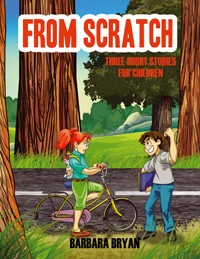
royalene7Author Barbara Bryan has published several books including this one titled: FROM SCRATCH, Three Short Stories. The theme is “Everyone Needs a Helping Hand.” I love this concept because I’ve always found it hard to ask for help. AND YET, being a writer/author I, too, have sought help to develop writing skills from character development to book marketing and more. But it’s not always easy to admit that we need help…and it’s valuable to learn when to offer help, too.
In these three wise and charming stories, Bryan explores the idea of helping from different viewpoints. You’ll meet three characters who fit this common theme in different ways. Catherine needs help, but doesn’t know how to ask for it…and she finds it in an unexpected way. Rooster gets some complaints about his cock-a-doodle behavior, but he realizes what’s really important when he’s called upon to save his family. And Wiley finds out that being rude and unhelpful to others can leave you out in the cold…literally. DID you notice that word viewpoints? Understanding the perspective of the characters we’re creating is a key component to making our novels great!

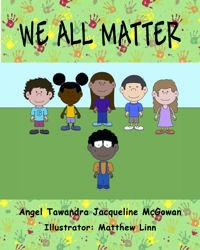
I just had to add this book: WE ALL MATTER by Angel McGowan. Not only is this an royalene8excellent story about a boy who is being overlooked and ignored by his classmates, which makes him feel all alone, it is authored by a young woman I would love to meet someday. McGowan broke into the publishing world at the age of fifteen and has been winning awards ever since. Her ability to expose the bare bones of issues that are harmful to our children (of all ages) will make a big difference in the lives of future generations!

As you turn to the next page of Mikey’s story he is so overwhelmed that he breaks his silence and blurts out exactly how lonely he’s been feeling. What happens next… (Oops! Better not give that away.)

Each of these books are written from passionate hearts—from writers who see the world with a unique perspective—like you. Don’t hold back! Write! Publish! Offer the world another chance to learn.  ⚓︎


Royalene

ABOUT ROYALENE DOYLE: Royalene has been writing something since before kindergarten days and continues to love the process. Through her small business—DOYLE WRITING SERVICES—she brings more than 40 years of writing experience to authors who need “just a little assistance” with completing their projects. This is a nice fit as she develops these blogs for Outskirts Press (OP) a leading self-publisher, and occasionally accepts a ghostwriting project from one of their clients. Her recent book release (with OP) titled FIREPROOF PROVERBS, A Writer’s Study of Words, is already receiving excellent reviews including several professional writer’s endorsements given on the book’s back cover.  

Royalene’s writing experience grew through a wide variety of positions from Office Manager and Administrative Assistant to Teacher of Literature and Advanced Writing courses and editor/writer for an International Christian ministry. Her willingness to listen to struggling authors, learn their goals and expectations and discern their writing voice has brought many manuscripts into the published books arena.