From the Archives: “Self-Publishing Success for The Shack”

Welcome to our new Tuesday segment, where we’ll be revisiting some of our most popular posts from the last few years.  What’s stayed the same?  And what’s changed?  We’ll be updating you on the facts, and taking a new (and hopefully refreshing) angle on a few timeless classics of Self Publishing Advisor.

∗∗∗∗∗

[ Originally posted: June 14th, 2009 ]

You can’t walk through WalMart or browse through an online bookstore without catching a glimpse of The Shack. This 256 page novel was written by William P. Young, a former salesman, and self-published with the help of two business associates. Once copied and bound at Kinko’s, The Shack is now a New York Times Bestseller.

Published under an imprint, Windblown Media, created by Young and two former pastors, The Shack had a $300 marketing budget. The three embarked on a viral marketing campaign (word-of-mouth, church-to-church, blog-to-blog) to get copies out.

The moral of the story: as a self-published author, you’ve got to know your readers, discover how to reach them and start spreading the word.

Not every self-published author aspires to be like Young, and for those who do, the chances may be one in a million. However, The Shack proves that traditional publishing is not the only path to success for authors.

∗∗∗∗∗

Back in 2009, when The Shack was still a relatively recent publication–and international phenomenon–we posted this tiny little blog as a kind of preface for a future blog series on viral marketing.  (See those posts here, here, and here.)  Little did we know just how big of a deal The Shack was going to become–after it was picked up by Hachette, it had sold more than 1 million copies as of June 2008, and 10 million copies as of January 2012.  Long before it was a commercial success in the hands of a big publishing company, however, The Shack was already doing splendidly.

We already know the story–how William Paul Young wrote an early version of The Shack and showed his wife, who told he needed to share it, so he made 15 photocopies that ended up circulating amongst their friends and their friends’ friends until Young felt compelled to ask the question: “Should I make a serious attempt at publication?”  And how he approached a pastor, Wayne Jacobson, for his advice–and then they ended up starting their own publishing house (Windblown Media) to print and distribute the book.  The rest, as they say, is history.

Only, that isn’t … quite … everything.  While The Shack certainly saw more bookshelves than it would have otherwise once it had the might and heft of Hachette behind it, that isn’t to say it wasn’t an enormous self-publishing success long before it became a commercial success.  Before Hachette took it on, The Shack had a marketing budget of only $300 dollars–an amount which paid for its website and little else.  Young, Jacobson, and fellow pastor Brad Cummings covered the initial printing costs and footed the bill to create Windblown Media by maxing out 12 personal credit cards.  Together, they sold the first 1,000 copies directly from that $300 website, and sold the initial print run of 11,000 copies in around 120 days.  Their second print run of 22,000 sold out in fewer than 60.  Their third print run of 33,000 was gone in 30 days.  All of these books were sold through simple word-of-mouth and the book’s website.  Donald Hughes of ChristianWritingToday.com writes that despite some legal disputes over the division of funds, “these men were present at a Christian self-publishing miracle, one that brings hope to many Christian authors.”

If we’re going to talk about the legacy of The Shack, the language of faith and miracles seems on point in more than one respect.  The book is deeply religious in content, yes, but its impact can provide inspiration for authors of all faiths and creeds (or lack thereof).  And even now, all these years later, The Shack is still moving copies.  It’s even being adapted into a movie with a big budget and a Hollywood cast headed up by A-listers Sam Worthington (of Avatar fame) and Academy Award winner Octavia Spencer (of The Help … and many other films).  The Shack is what it is because it found its ideal audience, and because its author was unafraid to write the book he really wanted to write–not just the book that publishers and agents wanted him to write.

We wrote about Young and The Shack back in 2009, but in 2015 this truth remains the same: The Shack is lauded as “intriguing,” “thought-provoking,” and “compelling” because self-publishing gave it a platform that traditional publishing did not; in choosing not to eradicate what made his book different and counter-cultural, Young made a deliberate choice not to give in to the industrial forces that erase authors from their own publishing experience.  If you take anything away from Young’s story, it’s to create the book that you need to create, in your voice, and to deliver it to your readers the way that you want it to be read. 

KellyABOUT KELLY SCHUKNECHT: Kelly Schuknecht is the Executive Vice President of Outskirts Press. In addition to her contributions to the Outskirts Press blog at blog.outskirtspress.com, Kelly and a group of talented marketing experts offer book marketing services, support, and products to not only published Outskirts Press authors, but to all authors and professionals who are interested in marketing their books and/or careers. Learn more about Kelly on her blog, kellyschuknecht.com.

From the Archives: “4 Myths About Self-Publishing Today”

Welcome to our new Tuesday segment, where we’ll be revisiting some of our most popular posts from the last few years.  What’s stayed the same?  And what’s changed?  We’ll be updating you on the facts, and taking a new (and hopefully refreshing) angle on a few timeless classics of Self Publishing Advisor.

∗∗∗∗∗

[ Originally posted: December 2nd, 2009 ]

There is a lot of confusion, controversy, and questions surrounding the terms self-publishing, vanity press, print-on-demand, etc. As you decide the best publishing path for you, let’s clarify some misconceptions some may have propagated.

1. MYTH: Whoever owns the ISBN owns the rights.
FACT: This used to be true. Nowadays, it is no longer true. Good self-publishing options assign the ISBN for the authors’ convenience, but still allow authors to keep 100% of the rights to their books. Be sure to check the contract.

2. MYTH: Independent self-publishing is different from publishing with an established organization because that publisher owns the ISBN.
FACT: It is true that the ISBN identifies the publisher of record. With reputable options, authors can supply their own ISBN as an option. Of course, if an author prefers the publisher to assign an ISBN for them, that should be an option too. And that’s what self-publishing is about – author choice and author control.

3. MYTH: New York publishers promote and market all their books.
FACT: New York publishers usually devote the lion’s share of their marketing budget to the top 1% (Harry Potter, for example) of the books they publish. The other books published during that season are victims of the sliced marketing budget. The majority of traditionally published authors are referred to as “mid-listers” and don’t get much support from their publisher at all.

4. MYTH: Printing a book with an off-set printer is the same as self-publishing it.
FACT: Printing a book is one facet of publication. Before a book can be printed, it needs to be designed. Then it needs to be printed. Then it needs wholesale distribution through Ingram and availability online with retailers like Amazon and Barnes & Noble. Then it needs fulfillment of orders and invoicing.

Printing a book with an offset printer accomplishes one of those steps. Publishing a book with a leading self-publishing option accomplishes all of them. Almost anyone can “print” a book, but what about all the other stuff that is required?

∗∗∗∗∗

So how many of these facts, as originally written, still hold true today?

Myth #1 remains a myth.  

This is because copyright laws and ownership rights act independently of ISBNs.  Your book, no matter when you purchase the ISBN, is copyrighted as soon as it is written.  You can buy the ISBN before, during, or after the book is written!  An ISBN is, quite simply, a numeric identifier for your book that renders it both salable and more findable (creating an ISBN creates a whole lot of metadata!).  Copyright is the larger issue when it comes to rights, so you always want to read the fine print of any publishing or self-publishing contract you sign.

Myth #2 remains … complicated.  

With the explosion of both “hybrid” and “indie” publishing companies, there’s a lot more range in 2015 in terms of options than there was only six years ago, in 2009.  Usually these companies offer “packages” or “bundles” that allow you to choose whether you want the company to handle your ISBN purchase or not.  For most companies, an ISBN purchase is part of even the more basic packages–but you can usually choose to opt-out.

Myth #3 remains a myth, at least to an extent.  

As indie, hybrid, and self-publishing firms grow more competitive, the traditional publishers have had to step up their game.  Even mid-listers get some attention–usually, at least–if on a much more limited basis than those books which end up being the top 1% … and according to industry experts like Russell Smith, mid-list authors have more reasons to despair than ever.

Myth #4 remains a complete and total myth. 

You might–might–be one of the lucky few authors who also possesses stellar design and printing skills, not to mention has a handle on ISBNs and copyright law.  You might even be one of those dauntless authors who has woven together a rich and active following on social media, and who knows how to self-market using more than just a couple of websites.  But most people aren’t.  One also has to consider how absolutely vital a professional editor is to a successful publication.  There are a lot of factors at play, and we’re not always the best judges of our own work.  In fact, we’re often our own harshest critics!

∗∗∗∗∗

So there you have it–at least as far as those particular myths go.  But I think it bears mentioning that we have some new myths these days!  Here are my top two propositions for New Myths of Self-Publishing:

Myth #5:  You will never make money off of your work unless you find a traditional publisher. 

Uh-uh, nope!  I think we’re far enough along in terms of industry development to see a range of stories from successes to failures, just as you do in any industry, traditional publishing included.  And also farming, sheep-herding, graphic designing, investment banking … and the list goes on.  But there are some big advantages that a self-publisher in 2015 has on a self-publisher back in 2009: namely, that self-published books are infinitely more findable now that there are enough resources and communities built around the indie, hybrid, and self-publishing concepts.  No author is guaranteed success, it is true, but with a good game plan and a lot of energy, you will make money off of your work.  How much is entirely up to you and whoever else you choose to bring on board the project.

Myth #6:  No one reads, reviews, or notices self-published books when they share a (possibly digital) shelf with traditionally published works.

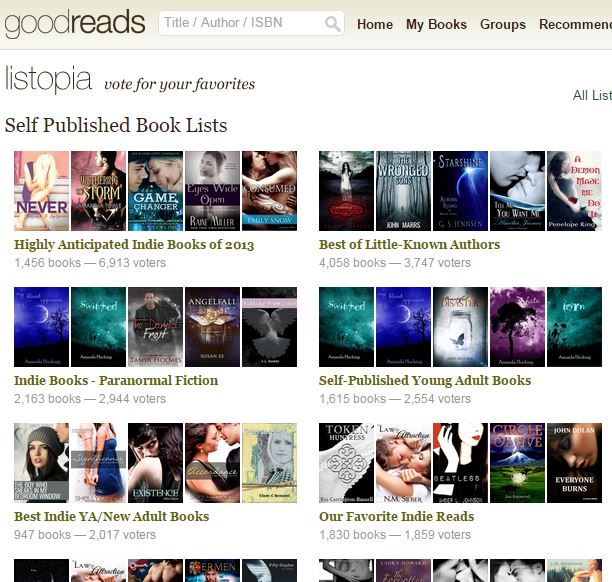
Oh, my.  Where to begin?  These days, with so many players dipping into the indie, hybrid, and self-published market, the production quality of many self-published books is on par with that provided by traditional publishers for even their A-list books (and we’re leaving aside the fact that they often neglect their mid-listers to a tragic degree).  And as for the argument that nobody reads self-published books, look at the data: in 2011, one retailer alone distributed over 2.5 million self-published books.  And that was in 2011!  The fact that authors like Hugh Howey end up being poached away from self-publishing into traditional publishing just goes to show you that plenty of people read and take note of a good self-published book.  Even Goodreads has dozens of book lists dedicated to self-published titles!  If it looks good on the inside and the outside, and if it’s written well, and if it’s promoted in the most effective ways that you can manage, then your book will find its readers.

Goodreads' self-published book lists

When push comes to shove, what lies behind many of these myths are two simple questions: Is it worth it?  And, will I fail?  The honest truth is that yes, self-publishing is 100% worth the work, especially if you’re passionate about putting the power and profit of reading into the hands of the people who deserve it most (and these people are of course, readers and writers).  And while failure and success are both subjective measures we dream up for ourselves, you will never be a failure.  You will simply be, as we all are, a work in progress. ♠

KellyABOUT KELLY SCHUKNECHT: Kelly Schuknecht is the Executive Vice President of Outskirts Press. In addition to her contributions to the Outskirts Press blog at blog.outskirtspress.com, Kelly and a group of talented marketing experts offer book marketing services, support, and products to not only published Outskirts Press authors, but to all authors and professionals who are interested in marketing their books and/or careers. Learn more about Kelly on her blog, kellyschuknecht.com.