
FEEDING THE SPIRIT of IMAGINATION II
I love imagining what my life would be like IF space travel was possible! What IF other people—on other planets—lived, worked, loved, and dreamed about that same thing? WHAT IF “evolved” technologies and medical care and transportation were real—today? OH, I love the “What If’s” and the development of answers from wonderful writers who have been imagining these same things for generations. Did you know that C.S. Lewis wrote Science Fiction? The story goes like this: Lewis’ friend, J.R.R. Tolkein “bated” him into writing other world novels and in response, Lewis used Tolkein as his “character type” for the main character of these three books adventures. The titles are: Out of the Silent Planet, Perelandra, and That Hideous Strength. How wonderful to be nudged into writing in this genre. I believe all writers should give it a try.
There is something exciting, rebellious, and m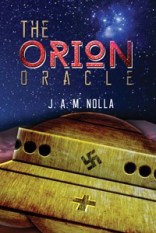 ost certainly adventurous in allowing our imaginations fly! One present-day author, J.A.M. Nolla, has done just that in his novel, The Orion Oracle. Nolla has researched WWII history, learned the facts behind Hitler’s fascination with other worlds and expanded those into interesting scenarios. His story carries readers, along with allied troops, deep into the Libyan Desert to investigate a secret abandoned German base. Will what they find there totally change how humans will view themselves in the future? Nolla has, indeed, developed multiple “What if’s” for readers to enjoy.
The power of IMAGERY is at the top of my list for developing strong Science Fiction novels. The great authors of this genre include: Ray Bradbury, Isaac Asimov, H.G. Wells and Jules Verne. We’ve all seen many of the films made from their novels. However, a study of the writing techniques they used on the actual pages of their novels is where we learn the most valuable lessons. Here are three points they might offer to us today.
- Like exposing a masterpiece of artwork by removing the velvet covering, give Readers bits of vividly described information about the scene/setting paragraph by paragraph. Allow them the opportunity to imagine it for themselves—because each of your Readers will design it in their own unique way. This gives them an actual place in the story.
- Write the action/events scenes as if you’re experiencing it with your characters. SEE through their eyes and describe what you are seeing, touching, tasting, hearing…and imagining is coming around the next corner.
- Expose the DETAILS bit-by-bit. Every nuance, every degree of shade and shadow, is a valuable tool that will draw Readers through the experiences you’re writing about.
Another of my favorite authors is Frank Peretti. Although he produces more novels in the Mystery/Suspense/Christian/Inspirational genres, he utilizes all of the above techniques to the max providing spellbinding novels that literally leave Readers breathless. As a master-storyteller, he incorporates what Readers know or assume as fact, with possibilities they’ve rarely (or never) imagined before—while giving them detailed descriptions of what he’s imagined.
Aren’t these the goals all writers have? To touch our Readers with information (nonfiction) combined with our own unique perspective (fiction) so that they might imagine other possibilities? Peretti tells writers, “Practice doesn’t make perfect. It makes better.” He is certainly an excellent example having authored more than 20 books. SO CAN YOU! ⚓︎

ABOUT ROYALENE DOYLE: Royalene has been writing something since before kindergarten days and continues to love the process. Through her small business—DOYLE WRITING SERVICES—she brings more than 40 years of writing experience to authors who need “just a little assistance” with completing their projects. This is a nice fit as she develops these blogs for Outskirts Press (OP) a leading self-publisher, and occasionally accepts a ghostwriting project from one of their clients. Her recent book release (with OP) titled FIREPROOF PROVERBS, A Writer’s Study of Words, is already receiving excellent reviews including several professional writer’s endorsements given on the book’s back cover.
Royalene’s writing experience grew through a wide variety of positions from Office Manager and Administrative Assistant to Teacher of Literature and Advanced Writing courses and editor/writer for an International Christian ministry. Her willingness to listen to struggling authors, learn their goals and expectations and discern their writing voice has brought many manuscripts into the published books arena.
 favorite category that nurtures my human spirit and that is stories about our animal companions. Yes, these pull on my heart-strings. But that is an excellent marketing tool that authors should not
 day is the category are the True Story genre—authentically written life events that offer perspectives for me (as a person and writer) and for the characters I am developing in my work of fiction. One such True Story is titled: A JOURNEY TO MANHOOD, The Village that Raised the Boy by Ty Burton. This is Mr. Burton’s first book and it is written with passion and acknowledges the value of teachers, coaches, mentors and friends who step-up to make a difference in someone else’s life. It gives readers the opportunity to understand “the high stakes that hang in the balance of every action we take.” Mr. Burton holds dual Master’s degrees in Administration of Justice and Human Resource Development. Although he did the University work to obtain these degrees, reading his book reveals that much of his education came much earlier in life.
 The second book I’ll mention today is titled: 17 HOURS: Tracking Down Our Runaway. This True Story is getting a lot of attention because of the “eminent threat” all young women must be aware of in the world we live in today. As the book cover states: “No family is immune to the dangers of sex trafficking.” The author, Diane Bassett, is one of many Moms whose beautiful daughter had been drawn into a dark world operating in local parks, a world that pushes naive girls into such no-win positions. Bassett’s story details their 17-hour journey to save their daughter’s life. The book also places a Tip Guide in the hands of every reader with resources that will help locate a runaway child.

 Self Publishing Advisor