Saturday Book Review: “More Heaven: Because Every Child is Special”

Book reviews are a great way for self-publishing authors to gain exposure. After all, how can someone buy your book if he or she doesn’t know it exists? Paired with other elements of your book promotion strategy, requesting reviews is a great way to get people talking about what you’ve written.

When we read good reviews, we definitely like to share them. It gives the author a few (permanent) moments of fame and allows us to let the community know about a great book. Here’s this week’s book review, courtesy of CharlesAshbacherReviews:

moreheaven

More Heaven: Because Every Child is Special

by Dr. Jo Anne White

Publisher: Outskirts Press

ISBN: 978-1478765479

Synopsis:

A Top 10 Amazon Best-Seller in 3 Categories! Autism – Special Needs – Children’s Health

Based on a true story, More Heaven: Because Every Child is Special about six children with autism and special needs and their teacher who gives them a chance at learning and life. Despite challenges and a lack of support, Miss Tina Randolph’s commitment to reach, teach, and inspire these children is unwavering.

By accepting their uniqueness and participating in their private fantasy world, while at the same time engaging them in the real world, she eventually succeeds. Tina, her teacher’s aide, Kaye, and the children mount a tireless, daily battle to shift the tide toward the acceptance of people who are different.

The experiment, begun in chaotic, uncharted waters, bridges the gap of understanding and paves the way for the inclusionary practices of education and society’s acceptance of children and adults with special needs. This is a road that continues to need paving, making the messages in More Heaven: Because Every Child Is Special equally relevant today.

The book evolved from an experiment in the Philadelphia school system in the late 1970’s in response to the 1975 Education for the Handicapped Act, ruling that public schools in the US educate all children with disabilities, despite their severity.

Previously, many of these special needs children were kept at home-isolated and denied access to the mainstream. More Heaven is a powerful story of compassion, determination, disappointment, triumph, and love.

More Heaven reaches in from the heart outward to all children; they will be heard!

Critique:

Five out of five stars

This is a work of fiction based on actual events and it is clear to the reader that it is far more actual than fiction. It is the story of a special needs teacher and her adventures and struggles in educating six children that have a lot of needs.

Given that thirteen years of daily education (K-12) is necessary to prepare the modern child to function in society, progress is almost always measured in small increments. That is even more the case with these children, in general they are in this class because nothing else has worked and their education level is much lower than their chronological age. Furthermore, they are not mentally challenged, underneath their behavior problems there is a great deal of intelligence and capability.

It is a story of struggle, frustration and very slow triumph as these children are gradually coaxed out of their self-imposed (and often defensive) bubbles. As you read this account it is clear how expensive the education of these children is and how important it is that it be attempted. For if they are not drawn out of their shells at a young age, it seems clear that they will never emerge. Leaving long-term institutionalization as the only alternative, which would be far more expensive.

reviewed by Charles Ashbacher ]

Here’s what other reviewers are saying:


“MORE HEAVEN: Because Every Child is Special” by Dr. Jo Anne White is a powerful book that is well written and heartfelt. Based on a pioneer teacher’s experience of working with children with autism and special needs, it offers rare insight into the minds and hearts of these children. It gives us an opportunity to enter into their inner world, experiencing their challenges and accomplishments. One caring teacher makes a difference in the lives of her students by never giving up and offering them more than education. Her unwavering hope, acceptance and love remain constant and through this constancy, their world enlarges and they expand into learning and trust.”

– Amazon Reviewer Dr. Joe Rubino

A heart-opening look at breakthrough work with autistic children. In these vivid stories drawn from the author’s journals, we step into the room with Dr. White: “When I look again, Eva’s outstretched on the floor, blankly staring out of a glazed smile. What magical incantations do I recite to break the spell?” And later: “Something big is taking place here—real play, non-verbal communication, one-on-one contact, and I marvel at all of it while reminding myself this is a beginning.”

Through the writer’s keen observing eye, we see so much of what is unique about each of six children—their agonies, their victories. “There are no promises though; we live in the moment here.” We come to share the author’s loving wish to nurture the children, and that is a very great thing.

– Amazon Reviewer Fran Shaw, Ph.D.

Book Trailer:

saturday self-published book review

Thanks for reading!  Keep up with the latest in the world of indie and self-published books by watching this space every Saturday!

Self Publishing Advisor

selfpubicon1

Saturday Book Review: “The Reluctant Soldier”

Book reviews are a great way for self-publishing authors to gain exposure. After all, how can someone buy your book if he or she doesn’t know it exists? Paired with other elements of your book promotion strategy, requesting reviews is a great way to get people talking about what you’ve written.

When we read good reviews, we definitely like to share them. It gives the author a few (permanent) moments of fame and allows us to let the community know about a great book. Here’s this week’s book review, courtesy of Books, Reviews, etc:

The Reluctant Soldier by Marnie Mellblom

The Reluctant Soldier

by Marnie Mellblom

Publisher: Outskirts Press

ISBN: 978-1478757405

Synopsis:

The Reluctant Soldier spotlights the “forgotten war” – Korea, in hundreds of letters written by Neil Mellblom, an Army combat reporter with the Pacific Stars & Stripes and the Third Division’s Public Information Office, the United Nations sanctioned police action comes to life. Neil received the Bronze Star for “aggressive reporting” which made the division one of the best known of the Korean war. It may be the definitive book on a soldier’s life in wartime. Funny, yet deeply moving, it records Neil’s growth from a cocky Montanan to a seasoned adult.

Critique:

If you are intrigued by historical books that this one will interest you. A soldier, Neil Mellblom, is a combat reporter for the Pacific Stars and Stripes. A collection of over one  hundred letters written by Neil Mellblom of the wartime experience. This is a non-fiction book mainly about his letters to his  Marnie. Will romance bloom during this time of fear? War at some time or another, is inevitable.  There will always be a group of people who can’t or won’t get along with another group. The war in this book, World War II, has forever remained in the hearts and minds of those left behind.  Whether you were part of the war, part of a family in the war or born later, World War II will never be forgotten.  War brings fear, and that fear is from, what is going to happen to me, to us?  War is a loss on all sides, loved ones are lost and souls are scarred for life.  Neil received the Bronze Star for “aggressive reporting”. He wrote of a soldier’s life, the funny, the sad and the transformation of a  cocky Montanan into a mature adult. Any man or woman who goes into the military field, whether it be war or not, should be treated with respect. Some lay down their lives for those at home, those who are friends, family and those who are unknown. The book is well written and has a pace that keeps your attention and yet, doesn’t bore you. Grab a copy of  THE RELUCTANT SOLDIER and journey through the world, seeing it through the eyes of Neil.

reviewed by Gayle Pace of Books, Reviews, Etc  ]

Here’s what another reviewer is saying:

The Reluctant Soldier by Marnie Mellblom is an interesting compilation of letters that her husband, Neil Mellblom, wrote her almost every day between September 1, 1950 as he was waiting to be shipped to Japan, and September 3, 1951, when he is home in Havre, Montana.

Marnie was an Army brat and her father was stationed at Carlisle Barracks. Neil had apparently joined the Army to become a journalist, had been trained as a reporter, working for six months on the Jackson, MI, Clarion-Ledger. Assigned to Carlisle, he met 20-year-old Marnie and they became close. When North Korea invaded South Korea in June 1950, Army shipped Neil to Japan where he first worked on the Pacific Stars and Stripes, an independent newspaper within the Army that covers military news. The paper sent him to Korea where he was ultimately assigned to the 3rd Infantry Division’s Public Information Office.

He assures Marnie repeatedly that he is staying out of danger. “Combat reporter” does not mean being shot at. In fact, it is not clear from the book exactly what he was doing as a reporter. Other than interviewing a Turkish general and having one of his stories picked up by UPI (without credit), he says very little about the stories he was writing.

Instead, his virtually daily letters to Marnie describe—more or less—his daily life first as a PFC then as a corporal during the war. “I got a shower today . . . a real accomplishment . . . they don’t have a fancy shower here—a tin-and-canvas-enclosed area a lard bucket with holes overhead—and a little Korean boy-san pours hot water in it as long as you stay under the bucket. . . . ”

“We adopted a boy today. No kidding, the three of us here found a little guy on the streets and moved him in with us. We checked on him, found his mother is dead, his father is sick, and one ten-year-old brother is roaming the streets somewhere . . . We washed him up, got his hair cut, and outfitted him with clothes. . . ” Six months later, the kid is the group’s houseboy and working as an interpreter.

“We’ve been writing stories on combat awards and decorations. I picked up a file on a lieutenant and a corporal who had been together on the same mission. Except for their names, the citations were identical to the word—they stayed under fire and evacuated about forty casualties. There was only one difference. The lieutenant was awarded the Silver Star and the corporal got the lesser Bronze Star . . .”

Now a personal note: Because I was in Korea for sixteen months, I was particularly interested in reading Mellblom’s book. The Army assigned me to the 7th Infantry Division just south of the DMZ in August 1955. What struck me was how closely my experiences two years after the cease-fire resembled his. He comments on the dust, the cold, the stink of the rice paddies, the Army SNAFUs, the drinking, the heat, the rainy season (Marnie’s letters to Neil were destroyed when his tent flooded), the importance of mail, the food (we said the combat rations we got in the field were better than the powdered eggs, dehydrated potatoes, and reconstituted milk the mess hall served).

Although The Reluctant Soldier contains pictures of Neil in Korea and some shots of Marnie’s family, the average reader would have been helped with a sketch map of Korea showing where, exactly, Neil was writing from. Also, a little more context would help. Neil either does not know what is going on with the war as a whole or he assumes Marnie knows by reading a newspaper and doesn’t bother. But few readers will know about the Pusan perimeter, the Inchon landing, the race to the Yalu, Chosin Reservoir (Neil participated in the evacuation from Hungnam Harbor), and the stalemate after January 1951—all of which would help Neil’s story.

The book contains an epilogue that adds immeasurably to the story. And for me, the book stirred up hundreds of memories. An interesting picture of the kind of war that most GIs experience.

– Amazon Reviewer Wally Wood

Book Trailer:

Saturday Book Review: “The Frog That Lost His Croak”

Book reviews are a great way for self-publishing authors to gain exposure. After all, how can someone buy your book if he or she doesn’t know it exists? Paired with other elements of your book promotion strategy, requesting reviews is a great way to get people talking about what you’ve written.

When we read good reviews, we definitely like to share them. It gives the author a few (permanent) moments of fame and allows us to let the community know about a great book. Here’s this week’s book review, courtesy of Literary Litter:

the frog that lost his croak

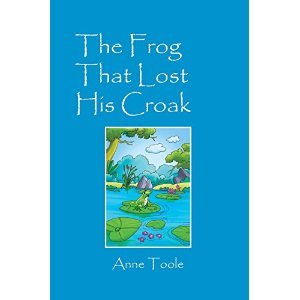
The Frog That Lost His Croak

by Anne Toole

Publisher: Outskirts Press

ISBN: 978-1478764137

Synopsis:

A little frog who loved to croak night and day, was very sad when his croak suddenly went away. While waiting and hoping for his croak to return, what valuable lessons did the little frog learn?

Critique:

A little frog who loved to croak night and day,
Was very sad when his croak suddenly went away.
While waiting and hoping for his croak to return,
What valuable lessons did the little frog learn?

(taken from the back of the book)

I like the pictures because it helps you understand what they’re saying in the text. I like that it rhymes because it’s easier to read. Then again, it’s also more fun to read.

There aren’t too many words per page, but there are some pages that have a little bit more than others. This book didn’t take very long to read.

I think kids about five or older would enjoy this book. Possibly younger children, if their parents read it to them.

You can predict what’s going to happen in the story from the title. I liked it because it gave you a heads up on what the book was going to be about.

How the little frog lost his croak, well he was croaking too much but he was also croaking in the rain. So the rain could have been how he lost his croak. I think the frog learned that he was noisy because he was croaking all the time and I think he was upset because he learned that he wasn’t listening to the other animals.

In my opinion, you can learn from books that have life lessons. This book was good because it had a life lesson in it.

reviewed Ashlee  of Literary Litter ]

Here’s what other reviewers are saying:

We’ve all known people who couldn’t stop showing off or bragging about themselves, and it happens with characters in stories, too. In this instance, it is a little frog who has a loud croak that he uses all day long. All the other animals are very tired of listening to him, but he is oblivious to their feelings and indulges himself all the time. When he loses his voice, he is forced to listen to the world around him and notice things like the beauty of birdsong or the sound of the wind whispering through the trees. By the time his croak is restored, he has learned to appreciate the sounds around him, to croak less and listen more.

This is similar to Marcus Pfister’s Rainbow Fish with the proud character so taken with himself and his abilities (or appearance), that he has no time to make friends or listen to anyone else. And just like the Rainbow Fish, the little frog has to learn his lesson before his situation can change. The story is told in rhyme and supported with brightly colored illustrations. Some of the wording may seem a bit awkward to adult readers, but the target audience of beginning readers will probably not notice.

Author Anne Toole was a first grade teacher and ESOL instructor before she began writing children’s books. She understands the issues that children deal with on a daily basis – making friends, what makes them special, fitting in, etc. This is the type of story that parents, teachers, and guidance counselors can read with a child (or a group), and then discuss the moral of the story.

– Amazon Reviewer Suzanne R. Costner

There was very little about the book on Amazon. It would be nice if a little more was entered about the book and author. The little paperback has 26 pages (unnumbered). It would be suitable to those learning to read or the little ones you read to. It has a lesson to be learned about boasting. The illustrator made some colorful and bright pictures to go with the story. The story, like most of Ms. Toole’s is in rhyme. This is nice, since it keeps the little one’s attention. The little frog that had a lesson to learn finds out that no one likes him since he has bragged too much. He learns to listen instead of croaking and discovers a valuable lesson. This is a easy to read book that will help teach the little ones that not everything is always about them but to think of others too.This is a great little book for your child’s bookshelf to be read and re-read.

– Amazon reviewer gayle pace


saturday self-published book review

Thanks for reading!  Keep up with the latest in the world of indie and self-published books by watching this space every Saturday!

Self Publishing Advisor

selfpubicon1

Saturday Book Review: “What Was I Thinking? Volume 1: My Brainy Best Friend”

Book reviews are a great way for self-publishing authors to gain exposure. After all, how can someone buy your book if he or she doesn’t know it exists? Paired with other elements of your book promotion strategy, requesting reviews is a great way to get people talking about what you’ve written.

When we read good reviews, we definitely like to share them. It gives the author a few (permanent) moments of fame and allows us to let the community know about a great book. Here’s this week’s book review, courtesy of The Fairview Review:

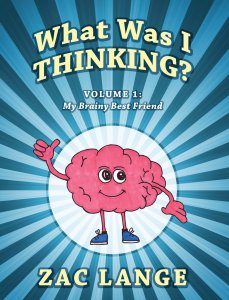
What Was I Thinking? Volume 1: My Brainy Best Friend

What Was I Thinking?

Volume 1: My Brainy Best Friend

by Zac Lange

Publisher: Outskirts Press

ISBN: 978-0996849005

Synopsis:

As everyone who has ever been a kid knows, mistakes and accidents are a part of growing up. “What Was I Thinking?” is a series that examines and finds solutions to an endless list of experiences that are universal to both children and families using the incredible tool of brainpower. It is told from the engaging, humorous, and relatable perspective of a young boy in the process of figuring out his place in the world, and whose creative mind, Brain, is his own best friend. “What Was I Thinking? Volume 1” encourages kids to celebrate their brains and their amazing potential. It also teaches the importance of using those powerful brains to think before acting, and to consider consequences both good and bad. Ultimately, the series wants to help kids be aware of their own thought processes, so they can make positive decisions for any given situation in their own lives. Hopefully, there will be fewer and fewer times when they have to ask themselves, “What was I thinking?”

Critique:

“As much as I love my brain, sometimes it seems like it takes a break for a while and forgets to tell me.” Who hasn’t had that feeling at one time or another? The narrator of the story imagines his brain snoozing in a hammock under some palm trees while taking a break. That is the reason he decides to kick a ball inside the house and winds up breaking his mother’s favorite vase. As soon as his mother sees the damage she asks, “What were you thinking?” Of course he didn’t think, he just did it. And then, when the damage is done, his brain decides to show up again. Kids and parents alike will recognize such a familiar situation and the results. Our narrator and his brain come up with a plan to avoid this trouble in the future; a plan which begins with STOP and THINK.

Readers will find plenty to laugh about in the story and the illustrations. The boy and his brain do everything together (except when Brain takes those unexpected breaks). A picture of the boy when he was a baby shows his brain nearby, also wearing a diaper. When the boy is at the playground, he is on one end of the see-saw and his brain is on the other. His mother is also shown in humorous ways. When she hears the vase break and runs into the room, she is shown dressed as a police officer and the boy is in a prison uniform. When he claims it was an accident, the picture shows his mother behind the desk at “Moms’ Olde Tyme Excuse Shoppe” pointing to ‘No Sale” because she does not buy his excuse. (That’s probably my favorite of the illustrations.)

Youngsters will enjoy the story line and see the similarities to their own experiences. Parents and teachers will appreciate the suggestion to stop and consider consequences before acting. Talking about what happens in the story can lead to a very helpful discussion on thinking things through instead of acting impulsively. It could also spark a class discussion where students might share their own memories of times when they should have taken a moment to consider their actions, but didn’t.

Recommended for children up through elementary school age, as well as the adults who care for them.

reviewed Suzanne Costner of The Fairview Review  ]

Here’s what another reviewer is saying:

Everyone has one and believe it or not you cannot function without one
You need to love it, admire it and use it wisely in order to succeed in life
It is always with you helping to guide you to make the right choices
It is your very best friend and you are never alone without this precious thing. Everyone loves friends, mom’s brownies or even just hanging out with friends. But, how any of us realize that our Brains share our feelings too and without it we would not be able to think!

Using your brain you can tell when something is sad, funny or just plain fun
Look at the pictures and see just how your brain helps you when you need to feel loved and wanted. Sometimes great things happen and it’s your brain that lets you know. Check out what happens when the bulb stays lit and you realize you have a great and fantastic idea. Great ideas come and guess where you get them? You experience things together so it is wise to take care of yourself and keep your best pal, your brain healthy!

You love to play with your friends and even have fun exploring outside and having adventures and my favorite things that helps keep my brain active, healthy and smart is reading lots of books just like this one and the ones the boy in the book is showing up that he is reading too. But, sometimes we are careless and mistakes happen when we forget to consult our brain and we accidentally kick something and our mother’s flower vase breaks and the flowers and water splatter all over the place. The author of this great book will now teach all children and parents some valuable lessons when this happens so that he understands that mistakes happen but it’s how we handle them in the present and hoping to avoid more in the future. You start by making a thinking chart and placing the words and heading it with Thought Process! Interesting as this is the first step to remembering what to do and not to do. Number one says: Do it when you admit to yourself that you forget to think before you did something and just did it! Excuses do not always work so sometimes we need to rethink our actions and create something to help us to remember. When you are not sure of what you do wrong check with you brain and find out! Ask “Where were you brain when I messed up? Hopefully the two of you will come to some sort of solution and figure out where you both went wrong!

After much deliberation and thinking and rethinking both our narrator, our little boy and of course our brain with the help of our creative author came up with what young children and even adults need to do before something else happens. Check out the Special List that gives you three steps that will help keep you out of trouble. If you stop and think decide if this could hurt and could doing this get you in trouble before you do it you might not do the wrong thing. If the answers to the last two questions happen to be YES: DON’T DO IT! The author continues with examples of how you can implement this great list to keep you out of trouble and not has to deal with mom’s consequences.

Each time you do something and if you are not sure stop and think, look at the chart, think again and figure out if you should do it or not. Check with your brain, remember no one is perfect, check out the checklist and see add who will be happy as a result of what you have learned and if you remember to Think before doing something. Learning is the best and soaking up as much knowledge and information will keep you and your brain healthy, smart, growing and having fun together now and forever. So, create your own checklist of who you want to make happy besides you and you can add things to your list like: Will I get a consequence if I do this? Will my parents be disappointed in me? Will I let myself down? Is there someone I can ask about what I am about to do before I do it and get into trouble? Stop: Look: Think and Listen. This is a great book for teachers to help children avoid getting consequences in school. This is great for parents to teach children how to understand the differences between doing the right thing and the wrong. Great for discussion groups and teachers and parents can even create lists of things that I do that are great and things that I know I should avoid and look at the lists to make sure you are not doing the ones that will get you in trouble. This is a great book for everyone. What Was I Thinking: I was thinking that I just read a great FIVE GOLDEN BRAIN BOOK! Your brain is what keeps you alert, alive, thinking and in the know: Keep reading, keep learning and keep out of trouble.

– Amazon Reviewer Amazon Customer

Book Trailer:


saturday self-published book review

Thanks for reading!  Keep up with the latest in the world of indie and self-published books by watching this space every Saturday!

Self Publishing Advisor
selfpubicon1

Saturday Book Review: “I Wonder: A Book for Children, Parents and Other Grownups”

Book reviews are a great way for self-publishing authors to gain exposure. After all, how can someone buy your book if he or she doesn’t know it exists? Paired with other elements of your book promotion strategy, requesting reviews is a great way to get people talking about what you’ve written.

When we read good reviews, we definitely like to share them. It gives the author a few (permanent) moments of fame and allows us to let the community know about a great book. Here’s this week’s book review, courtesy of The Fairview Review:

I Wonder: A Book for Children, Parents and Other Grownups

I Wonder: A Book for Children, Parents and Other Grownups

by Jane Altman

Publisher: Outskirts Press

ISBN: 978-1478765820

Synopsis:

This book is a treasure! It is unusual in its endearing and educational verses and illustrations for children and in its engaging and varied pieces for parents – and other grownups. The rhymes are appealing, the illustrations are wonderful and the writings range from heartfelt to very funny. All in all a must read.

Critique:

In “I Wonder,” Jane Altman has created a poem that children will feel is familiar from the start. It has a similar structure to that of “Twinkle, Twinkle, Little Star” that will help young readers easily catch on to the rhythm of the text. Each verse opens up the possibility for discussion about the various animals that are mentioned, elephants, mice, bats, etc. And the illustration for the final verse also allows the child to paste a photo of him/herself into the book and making it very personal. There is also a fantasy story titled “The Glow-Stones,” which portrays the ability of children to perceive the magical when adults only see the commonplace.

Within the second part of the book, Altman has a collection of poetry that is tailored for the adults in the family. Some are nostalgic in tone – pieces wondering over how children will grow up, how one would feel on the very last day of the one-hundredth year of life, or why youth fades away. Others reflect on more everyday occurrences such as admiring flowers or pondering why grass can be so much work to maintain. And then there is the comedic piece about an undergarment that t’aint fittin’ any longer. The whole book feels like a peek into someone’s journal and catching their changing moods from day to day.

This is a book meant to be read together and enjoyed together.

reviewed by Suzanne Costner  of The Fairview Review  ]

Here’s what another reviewer is saying:

The first section of part one contains a series of four line rhymes that generally have the same rhythm, one that reminded me of the song “Twinkle twinkle little star.” The structure is an image referencing the rhyme on the left side with the text on the right. There are fourteen such items, all but the last referring to animals. The last one is designed to reference the young reader.

The next section of part one is a short story about a small village near the ruins of a very old castle. No one ever goes into it and no one seems to care about it. When a young man decides to leave the village and go out in the world, a stone in the castle glows at him, so he stops to grab it and then takes it with him. Something similar happens when a young woman also starts her journey out of the village.

The two people then marry other people and have children, the story continues after their deaths when their children are going through their belongings and find what appear to be nondescript stones. They all return to the ancestral village and the children then see things in the castle that their parents cannot.

Part two is given the designation that it is for the parents and grownups and is a set of short segments of more complex verse. There are rhymes having various orders where the matches occur. For example, the section of verse called “What to Do?” has three line segments where the first two lines rhyme as well as the third lines of sequential sections. They are designed to be read to children, they will sound pretty good if the proper intonation is applied.

This is a good book for children, one that children will enjoy having read to them, for they have a natural affinity for rhyming verse.

– Goodreads Reviewer Charles


saturday self-published book review

Thanks for reading!  Keep up with the latest in the world of indie and self-published books by watching this space every Saturday!

Self Publishing Advisor
selfpubicon1